Currently viewing the category: "placebo"

60 Minutes did a great piece over the weekend on the business of depression–that’s right, BIG business–and whether the product that’s being sold to America (and the rest of the western world) is actually doing what it’s supposed to. Some experts (myself included) believe that the popular (read: highly prescribed) depression drugs–the selective serotonin reuptake inhibitors (SSRIs)–don’t do a whole lot for people that are moderately depressed, and the data seems to back up that notion.

However, antidepressants continue to be some of the most prescribed drugs in the U.S., and most of those people fall in the center of a bell-shaped curve. In other words, most people taking antidepressants probably aren’t getting much from them, as Harvard psychologist and researcher, Irving Kirsch articulates in the video. According to his research, many of the studies that show antidepressants not doing much more than placebo have been hidden by the manufacturers who lead the studies.

We call this selective publication, and I’ve been reporting on this phenomenon within the antidepressant manufacturing industry for over four years. In 2008, research showed that only one third of the studies conducted on SSRI antidepressants ever made its way out to the public. Can you guess which third gets published?

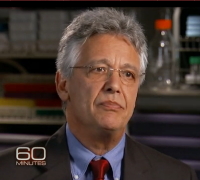
In the 60 Minutes piece below, you’ll see Dr. Thomas Laughren, FDA Director of the Division of Psychiatry Products rationalize why it only takes two favorable studies–even if ten come back unfavorable–for a drug to get approval by the FDA. Oddly, he doesn’t mention “cha-ching $$$” anywhere in the piece. Hmmm

Listen, I’m all for big business–a capitalist to the core–but there’s something wrong with pushing a drug onto millions of people, including children as young as six years old, when it isn’t doing exactly what it’s supposed to. And I wouldn’t care except there is also evidence that some of the side effects aren’t benign, or whether they are permanent. And that’s playing with people’s lives.

Again, I do not pull the public out of the equation because too many people are looking for an easy way out–and antidepressants sure promise that. Watch the piece below to see why easy ain’t always what it seems to be.
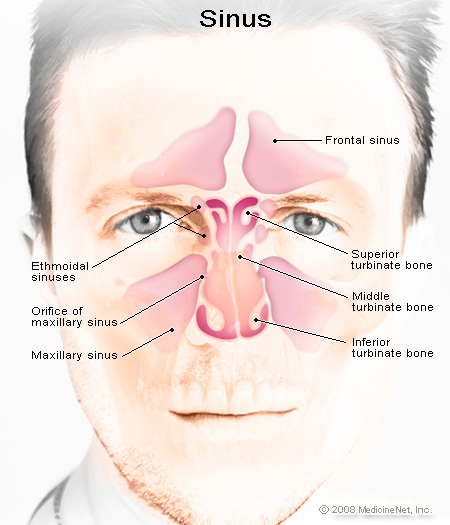

Further support for what I’ve been saying on this blog for years (and which has been obvious for decades)–a significant percentage of antibiotics prescriptions is unnecessary. According to a recent study, doling out antibiotics for sinus infections improved neither symptoms nor recovery time. And although patients may now have come to expect antibiotics to treat their inflamed, runny noses, doing so is actually leading to a rise in antibiotic-resistant strains of bacteria, a very dangerous scenario indeed.

The research conducted at Washington University in St. Louis, Missouri included 166 adults with moderate, severe or very severe symptoms such as sinuses and nasal discharge that lasted between 7-28 days. Some were given , others placebo, and the results showed that the antibiotics “did not result in a significant difference in symptoms compared to patients who received placebo.”

Said lead researcher Jay Piccirillo: “Patients don’t get better faster or have fewer symptoms when they get antibiotics. Our results show that antibiotics aren’t necessary for a basic sinus infection–most people get better on their own.”

Wait, let’s hear that again…”most people get better on their own.” And again…”most people get better on their own.” One more time, “most people get better on their own.” How many times do you have to hear it, people?

I have to keep saying it because I am blown away by the number of people still running to their doctor for the cold they just can’t shake. A full 20% of all antibiotics prescriptions are for sinus infections (inflammation and thick yellow or green mucus discharge)–the common approach taken by the very large majority of today’s western medical doctors. With 37 million Americans diagnosed with sinusitis each year, well…that’s a heck of a lot of antibiotics. And how many people actually finish their dose? Well, I don’t know the answer to that, but let’s just say more than a few people mention to me that they “had some antibiotics lying around.” WTF?!

The authors of this latest study have it right, so I’ll just finish with their words:

“We feel antibiotics are overused in the primary-care setting. There is a movement afoot, led by the Centers for Disease Control and Prevention, to try to improve the judicious use of antibiotics. We hope this study provides scientific evidence that doctors can use with patients to explain that an antibiotic is not likely to help an acute sinus infection.”

Werd to that.

AIDS researchers are baffled by the latest findings: The AIDS vaccine developed by pharmaceutical manufacturer, Merck Inc., has failed to prevent HIV infection in previously uninfected volunteers. To add to the mystery, those taking the vaccine actually had higher incidences of infection, leaving scientists and Merck officials scratching their heads in disbelief.

The study, a randomized double-blind trial, looked at two groups. The first was given a modified cold virus that was engineered to carry three synthetic HIV genes (genes native to the HIV virus but produced in the lab). The other group was given a placebo. Both groups received prevention counseling. All the volunteers in the study belonged to groups that were already high-risk for infection. The group receiving the vaccine were not only susceptible to infection, but they also contracted HIV at a rate of more than double the placebo group.

Huh? You mean, the group receiving the vaccine actually contracted HIV more than the non-vaccinated group? Quite the mystery, isn’t it? Here’s what makes this especially strange–it is not possible for the vaccine itself to have caused infection: It wasn’t HIV! Whoa. What happened then? Well, nobody knows. But you better bet I’ve got a theory.

Here it goes: HIV is not the sole factor causing AIDS. Before I take credit for this idea, just know I didn’t think of it. The first person I heard it from was a researcher at my alma mater, U.C. Berkeley Professor of Virology, Peter Duesberg. Let’s just say this controversial theory–this little bit of logic thrown in the face of scientific and political dogma–really grabbed my attention back in the early nineties when I first heard it. And now, here might be another piece of evidence hinting at its possibility. I won’t go into detail on his reasoning because it can get quite involved; and you can read it here on your own, anyway. Suffice it to say, however, that if you go against conventional wisdom, you will be ostracized and ridiculed by your peers, and also the public at large. Dr. Duesberg lost much of his funding in the form of research grants because of his controversial theory; and while I was still a student, he was forbidden from teaching–blacklisted if you will; censored; effin’ scary.

And so here we are with new research that makes no sense within the context of how we currently understand HIV and AIDS. But don’t expect the mainstream political and scientific machine to back off of their dogmatic position any time soon. When you have years and years, and billions and billions of dollars, invested in a paradigm, it’s pretty hard to give it up and look elsewhere.

This can be summed up beautifully by Anthony Fauci, director of the US National Institute of Allergy and Infectious Diseases, which co-sponsored the trials. The results are “both disappointing and puzzling,” he said. “Certainly, the failure of this HIV vaccine product was unexpected, but this setback should not and can not diminish our commitment to developing an effective HIV vaccine.” Stay tuned, but don’t expect me to win any research grants anytime soon, either.

Copyright © 2013 Dr. Nick Campos - All Rights Reserved.