Currently viewing the category: "disease"

More evidence that disrupted body rhythms affect health…negatively. I wrote a piece recently for the Champion’s Club Community on rhythmic sleeping. The premise: we do much better when we follow our natural rhythms, whether talking about dietary habits or sleep patterns. And by observing our rhythms, we’ll be less likely to throw our physiological fluctuations off.

Case in point: Researchers from Imperial College London found a connection between disruptions in the biological clock and type 2 diabetes. They found that people who have rare genetic mutations in the receptor for melatonin have a greatly increased risk for adult-onset diabetes.
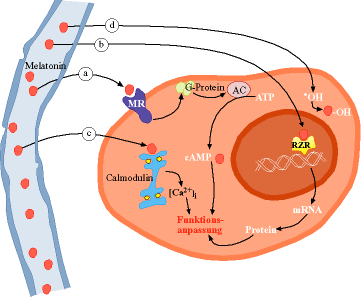
Melatonin (N-acetyl-5-methoxytryptamine) is a hormone present in numerous living organisms from animals, to plants, to microbes. In animals, circulating levels have an effect on many processes related to the biological clock (our daily sleep-wake cycles), among many other processes including cancer suppression.

Melatonin works primarily through activation of melatonin receptors (MT1 and MT2). Along with the sleep-wake cycle, melatonin influences insulin release getting the body ready for sugar metabolism following a meal. Mutations in the MT2 receptor (four rare ones to be exact) is associated with a six times increased risk of developing type 2 diabetes, which is a disorder of decreased insulin receptors causing insulin resistance and relative deficiency. The researchers report that the mutations of MT2 receptors disrupt the connection between the body clock and insulin release, resulting in abnormal control of blood sugar.

The investigators looked at over 7,000 people to evaluate the MT2 gene. They identified 40 variants associated with type 2 diabetes, four of which are very rare and make the receptor incapable of responding to melatonin. The effect of these four variants was then confirmed in an additional group of nearly 12,000 people. While the study found a link between the mutations and diabetes–no direct causal relationship was concluded.

So I go back to the main point of my thoughts on body rhythms–it’s best to maintain our rhythms for the most part. What I mean is that if you generally eat three meals a day, you’d be wise to not fluctuate from that rhythm, and eat at pretty much the same time every day. And the same is true for our sleep cycles: it’s best to develop and maintain a rhythm, so that you don’t disrupt your own metabolism by interfering with your natural body clock. Erratic sleep patterns are the quickest way to a sleep disorder, which will diminish health.

This current study is just further support of what I believe to be a universal principle of rhythm. Live within universal laws and you will feel–and demonstrate–the most vitality. Along with practicing the other six keys to optimal health, observing natural rhythms will help you avoid the extreme fluctuations that can lead to dis-ease.  Oscillate wisely.
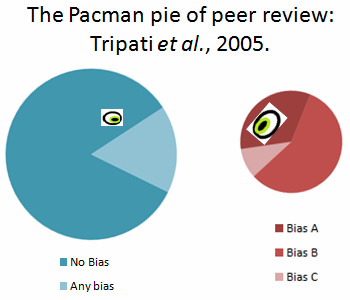
Another blow to the ‘genetics-is-the-answer-to-everything’ faction of medical science.  According to a recent study published in the Journal of the American Medical Association (JAMA), researchers often overstate the importance of biomarkers as links to disease, by citing papers that report the strongest associations, even when ensuing analyses downplay the connection.

The study looked at papers on biomarkers–biological characteristics, such as gene or protein activity, which can be used to monitor a person’s health–that had been cited more than 400 times.  These studies were then compared to others on the same biomarkers, and it was found that many papers were reporting stronger links between biomarkers and disease than were actually found in the majority of studies.  Even worse, many papers reported a stronger association than was observed in the largest single study of the same biomarker.

As an example:

A 1991 study that was cited 1,436 times found that patients with a high level of a compound called homocysteine in their blood had a 27.7-fold elevated risk for vascular disease. But a meta-analysis reported only a 1.58-fold increased risk.

Doh!

I love this because I know that there just is no such thing as true objectivity in science.  The fact that science is carried out by humans with beliefs and biases means that it will always veer in the direction of researchers’ own perspectives.  And that’s the way it should be!  Yes, we all want objectivity in science, but puh-leez–the universe (at least as it pertains to humans) is driven by our thought processes.  It is impossible not to affect observations, studies, or science as a whole by the human factor.

It takes a genius (Newton, Einstein, Watson/Crick) to drive a paradigm–the way in which we view the world.  The rest is up to the people of the era: WE direct science, art, politics, philanthropy, economics and education based on our own interpretations of the world.

So yes, there will be citation bias in science.  More reason to scrutinize the ‘genetics-is-the-answer-to-everything’ mind-set.  It ain’t.  In fact, my bias is that it merely plays a supportive role in most health/illness issues.  But that’s not our current paradigm, so I will gleefully chuckle at a distance every time some free-thinking scientists pick up on the current cultural biases at play during our attempts at objective observation.  Watch out climate researchers!

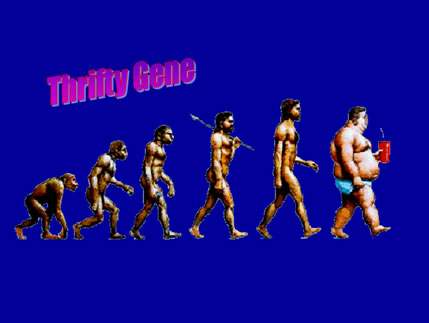
Just read a great article on human evolution and how advantageous traits are likely selected for over time.  It got me thinking again about the genetic theory of obesity.  Now you all know how I feel about this subject–I pretty much find it a convenient excuse to absolve obese people from their personal responsibility.  Put another way: Gene or no gene, you’ve still got to eat well, exercise, and practice discipline.  Hey, we all have to that.

But reading this article in the September issue of Scientific American (I know I’m behind…cut me a break…I’ve got kids) titled, How We Are Evolving, got me thinking that obesity very well may have a genetic link.  According to recent research, most traits that provide genetic advantage or disadvantage likely take tens of thousands of years to disseminate throughout a population, not the thousands of years a high frequency mutation was once thought to dominate natural selection.  I won’t get into the science here; read the article to get the details–it is excellent.  Suffice it to say that the data shows evolution to be a long, drawn-out process, as natural selection takes time.

Okay, so what about obesity?  Well, let’s just say there is a gene, or genes, that increase one’s susceptibility to becoming obese; we might just find that that genetic makeup actually does lead to enough of a disadvantage that it eventually gets selected out of the human genome.

Think about it like this: obesity offers a disadvantage by making a person more susceptible to illness and disease–like many cancers, heart disease, stroke, and the list goes on and on.  Up until now it hasn’t conferred enough disadvantage to be selected out of the population–that is, obese people can still pass on their genes.

However, as more of the population gets obese–34% of all adults in the U.S. and 300 million worldwide–less and less may find the opportunity to reproduce.  What do you mean, Campos?  Just a thought, but when approximately 20% of our children here in the U.S. are obese…that’s a BMI over 30!…there may come a time when these people are just not considered reproduction material.

Biologically speaking, organisms seek out the most fit individuals with which to mate so that the possibility of passing on one’s genes increases.  That’s the idea anyway.  As the numbers of obese individuals increases, as well as society’s disdain (just read the news!) for obesity, you might just see more of these people ostracized sexually.  Not large numbers right away, mind you–this is where the article got me thinking–but over time.  Could be tens of thousands of years.  Remember, natural selection works slowly.  I mean, things would really have to change societally for this to be considered no big deal.

And yes, obese mating with obese is always a possibility, but that will simply raise the risk, in my opinion, for the genes to become selected out.  This, of course, all predicates on whether a genetic cause (susceptibility?) of obesity actually exists.

My advice to everyone is, once again, gene or no gene, you can prevent obesity by doing the right things.  If my thoughts are correct–and sorry, you and I will never get to know–then you’ll be assuring your genes get passed on to future generations by removing and preventing obesity in your life.  Just a thought, anyway.

Does evolution apply to human health? Why do we so conveniently forget about the evolutionary process when evaluating 21st century health and disease? I mean, I know modern medical science is familiar with the concept, so why throw out evolutionary reason when analyzing today’s health issues?

Well here comes a branch of medicine, known as Darwinian medicine, dedicated to applying reason to rationale. Darwinian medicine is not your typical Cartesian philosophy–the one that says the human body is simply a machine, with various parts and systems, much like a clock; and that all processes can be understood by breaking the whole down to it’s most basic components–but instead see the human body as evolving through time to environmental factors the way all living organisms do.

A key area of focus in Darwinian medicine is the emergence of modern epidemics like asthma and obesity–modern diseases resulting from changes in the environment which our bodies cannot evolve quickly enough to. And these rapid changes in our environment can also be the result of human activity, and even caused by efforts to eradicate other diseases.

According to Randolph Nesse, a pioneer in the field from the University of Michigan states, “The epidemic of asthma worldwide may be directly related to our very effective world health efforts to eliminate worms from people.”

Another scientist explains that improved standards of hygiene could explain why societies in the rich world have become more susceptible to asthma, to allergies and to auto-immune diseases. Our push to eradicate diseases, and especially our attempt to protect ourselves via vaccination might be one cause of lowered resistance to some illnesses. Humans in less developed, poorer societies, “where parasites and microbial infections are high,” have lower instances of such ailments, Barnes said.

I’ve been pushing this idea since I started this blog, especially as it relates to the influenza virus and accompanying vaccine. If the influenza virus is rapidly mutating–that is, changing it’s makeup every year–doesn’t make sense just to encounter it and develop natural immunity? I mean it isn’t tuberculosis, for heaven’s sake. Yes, flu kills people–so do aligators. It’s not like we haven’t evolved in a way to outrun those grisly gators. This is true for microorganisms to. They have been around for milennea, and they’ll keep evolving. As living organisms, human beings need to keep up with the times, too.

You heard right – that miraculous healing art called chiropractic can actually prevent drug addiction. Here’s how: According to a large study conducted at the University of Wisconsin in Madison, nearly four percent of chronic pain patients abuse opioid drugs, such as OxyContin or Percocet. The findings are relevant because these numbers suggest that chronic pain sufferers are four times more likely to abuse opioid drugs then people in the general population (3.8% to 0.9% respectively). Since many chronic pain sufferers report great results through regular chiropractic care, it stands to reason that utilizing this exceptional form of bodywork can lower the risks of opioid drug addiction.

When it comes to pain, it is important to remember one thing, the function of pain is to tell you something is wrong. Whether that something is a biomechanical dysfunction or the onset of an organic disease (cancer, heart disease, etc.), the pain response acts as a warning signal to let you know that a problem is present. It seems that chronic pain is becoming more and more looked upon as an entity unto itself, and being treated as such with powerful opioid drugs. No doubt that occasionally the system goes haywire and pain develops for no apparent physical reason; however, this is more the exception than the rule (and likely due to other chemical, hormonal, neurological or organic imbalances), and it would, therefore, be prudent to find and correct the cause than simply treat the symptom with dangerous pharmaceuticals.

Drugs are important. They help us get over humps that can act as obstacles to our healing. Case in point: I had an emergency appendectomy last summer and I don’t know what I would have done without a couple – OK, seven – shots of morphine. The pain associated with appendicitis is excruciating – I was literally bowled over – and the opioid medication allowed me to handle the 22 hour wait for surgery. So I’m all for the drugs, man. But when they are prescribed simply for chronic pain – most commonly low back pain – something is seriously wrong.

I can’t say that all chronic pain sufferers can be helped by chiropractic care, but I know through my own observations, that far too many neglect to give it a serious try. If they are not fixed within one or two visits, they quit. And off to the pain specialist for a dose of OxyContin – the easy route, since pain will be alleviated quickly, although only temporarily. And since opioids also feel good – that is, they get you high – it’s no surprise that many people would rather take these addictive drugs, than suffer through chiropractic care and ice therapy, which takes longer and requires more work and has a financial commitment.

Fortunately, more people are looking to complimentary and alternative (CAM) health practices like chiropractic care, massage and acupuncture, to help alleviate their physical problems. According to the study, 54% of subjects had used or were currently using chiropractic care to treat chronic pain. Some other notable characteristics of CAM users are:

  • adults between 35-49 years of age
  • college educated
  • incomes above $35,000
  • have a holistic orientation to health.

And I would add wiser, more attractive, funnier, and all around better people. But, hey, that’s just my humble opinion.

TEMPUR-PEDIC PILLOW GIVEAWAY

Congratulations to Laurie H. of Los Angeles for winning the Tempur-Pedic Comfort Pillow in our Independence Day Raffle. Laurie says she’s especially excited since her neck has been bothering her. Nothing a little chiropractic care and a nice soft pillow can’t resolve. Thanks everyone for playing.
D.C.

Mandatory HPV vaccinations are once again at the top of the legislative agenda. California is the latest state to introduce a bill requiring girls entering sixth grade to receive the three standard doses of the HPV vaccine.

HPV stands for the human papilloma virus, a sexually transmitted organism that is the cause of genital warts and 70% of all cervical cancers. On the surface, this may seem like a good idea to protect the lives of young women of our society. However, forcing people to vaccinate themselves against a disease that results from lifestyle choices is simply preposterous. This is no morality trip – I don’t think this mandate, in any way, is going to encourage young women to engage in sexual behavior as some suggest. But, I do think that when it comes to our health, the choice should be ours alone.

Now, this is very different from the scenario of being at risk of developing illness by being in the same room as someone who, say, has measles, or tuberculosis or even the flu. You cannot catch HPV without sexual contact, so the public health is not threatened in any way. Using the argument that mandatory vaccination will save lives is using the ends to justify the means. It would be like vaccinating people against drugs and alchohol – a la A Clockwork Orange – to prevent drunk driving deaths.

Sound like an exaggeration to you? It’s not. Consider this: I have a beautiful, healthy and happy 14-month-old daughter, Delilah, who is the apple of my eye. I don’t know anything about this vaccine other than the government (i.e. the FDA) says it’s safe. Do you know how many substances the FDA has deemed safe that we found out later were not? Here are a few:

So why would I want to give a vaccine to my daughter that hasn’t been comprehensively tested? I’m never the first to try out the new version of Internet Explorer, either. Quite frankly, I’d rather take my risk with my daughter contracting HPV, then inject her with something I know very little about. That’s just my opinion. If you want to vaccinate your daughter, go ahead. Nobody wants to stop you. If I, or she, decide down the road that we should do it, then we will – just don’t force it down our throats.

Copyright © 2013 Dr. Nick Campos - All Rights Reserved.