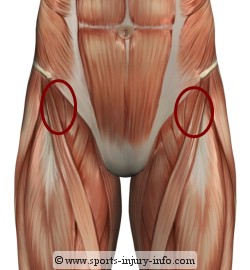
I’ll bet Steve Jobs didn’t consider this one: Apple technology might just be the origin of a new pain syndrome–iPad neck. I’m serious. iPad neck is walking into my office, and for a little while it’s had me confounded. But I see it all now. iPad technology is perfectly positioned for creating stiff necks.
Think about iPad technology: Flat tablet computer that can be placed on a table or other flat surface (coffee tables, beds, even on bent legs while lying in bed). But such a device laid horizontally flat forces the neck into a flexed position–that is, chin toward chest. And used propped-up against the legs while lying in bed…well, that’s extreme flexion, and guaranteed over time to cause neck pain and stiffness.
Listen, there are three common activities that are killers, and guaranteed to cause chronic neck pain: watching T.V. in bed, long-term reading or studying (otherwise known as student-neck), and now iPad necking. The prolonged neck flexion required by these activities will cause neck pain and stiffness.
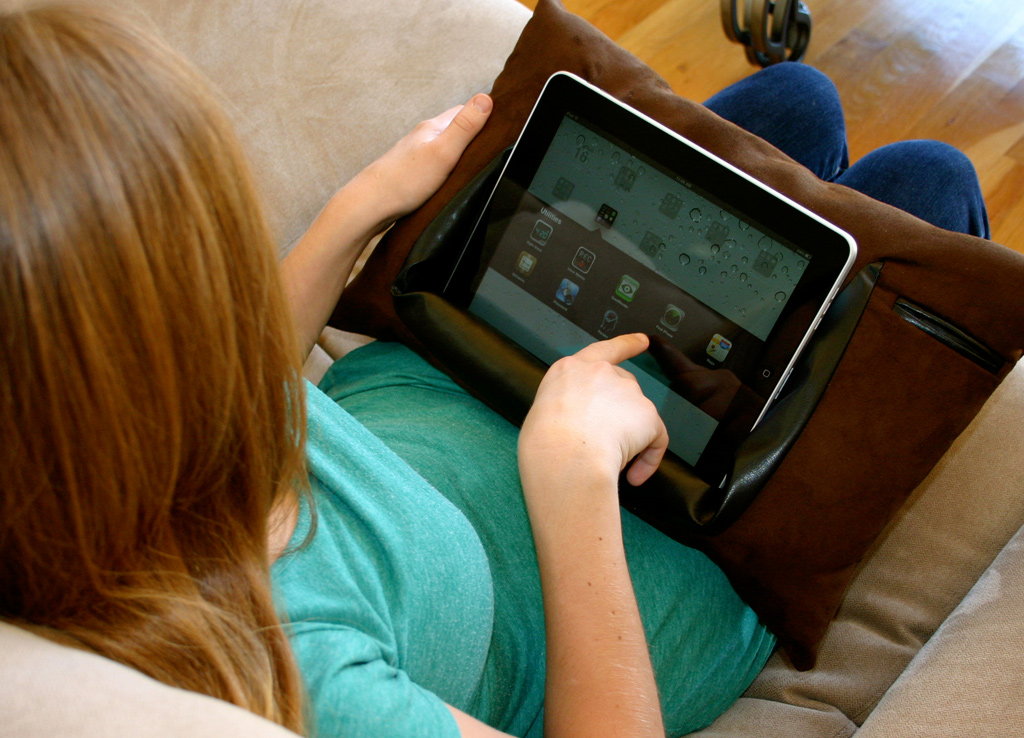 When the neck remains flexed it causes a strain on the deep neck muscles, which have to remain contracted to counter the neck flexion. I know it would seem as if the extensors (muscles along the spine on the back of the neck) relaxed during neck flexion, and they do, so why do iPad neckers feel pain in the back of the neck? They do so because the deeper neck muscles contract to keep the head flexed, and these muscles refer pain to the back of the neck.
Okay, no problem…a chiropractor or massage therapist can work it out. It would seem so…but what about when the pain remains after several treatments? It means the client is unknowingly iPad necking every night. So any bodywork practitioners reading this better ask your clients if they are working the iPad like they just spent $500 (which basically means ‘every waking moment’, so they can get their money’s worth).
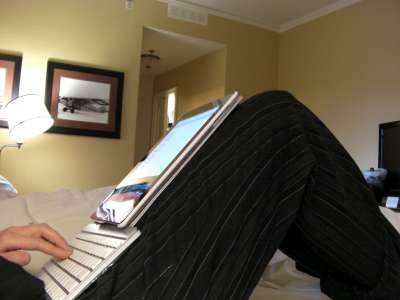
Once iPad necking has been established, you’ll have to enter the rabid dog cage and tell that person they’ll have to give up iPad necking in bed at night and maybe even take a week’s break altogether to bring some much needed relief to the poor beaten up neck. Please wear gloves and a beekeepers helmet, because taking an iPad from a user is like taking chocolate from a premenopausal junkie. Expect shrieking.
Anyway, that’s my observation. iPad neck is real. I’m seeing more and more of it in my office everyday (read this L.A. Times article on iPad users using in bed). And while the latest technology is certainly good for some things, tech designers aren’t often schooled in spinal biomechanics. Maybe they should be.