Currently viewing the category: "sports injury"

For twelve years I’ve been sports chiropractic in West Hollywood. I’ve seen my fair share of shoulder injuries and conditions. The one I see most is shoulder impingement syndrome, and I find the element most forgotten in this common sports injury is the biceps tendon.

Now you might think, “Wait…my doctor told me I have biceps tendinitis, but it just never got better.” Right–because biceps tendinitis is only 33% correct when it comes to impingement syndrome. Two other elements play a major role in this sports injury–the supraspinatus tendon and the subacromial bursa–and so solely focusing on the biceps will not solve the problem.

However…when a shoulder impingement is properly diagnosed, and all instructions are followed, as far as treatment and icing is concerned, then the element I find most responsible for any stubbornness to healing and persistence of pain is the biceps tendon.

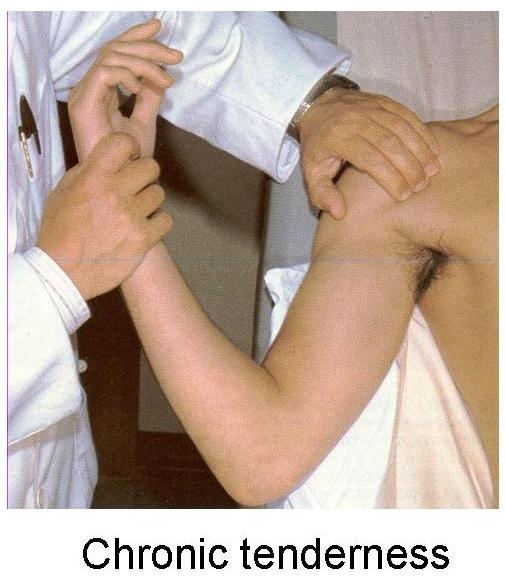
The final solution is two-fold. First is icing and cooling down that inflamed tendon. In the video below, I show the best way to ice the biceps tendon. It’s important to get the long head tendon out to the surface–you’ll get the most complete icing that way. To do this you will need to externally rotate the arm. I instruct my clients to do this seated in a chair or couch, or anywhere in which the arm can be help up and rotated outward. This movement brings the long head of the biceps from the deep interior of the axilla (arm pit) out to the exterior, and the back rest can be used to hold the arm in place, because remember icing should be done for fifteen minutes, no more, no less.

Watch the video to see how to best ice your biceps-persistent shoulder impingement syndrome, and we’ll discuss the second step in a future post.

This post isn’t really about ski racing, although it could be. Since I don’t know all that much about the sport, I won’t bore you with my version of its details. No this post is about something else that has caught my attention and has inspired me. A friend recently posted the video below onto facebook (thank you Tim V), and as I watched I observed the sports rehabilitative work that I am so familiar with because I do it everyday. Then I got to hear the words from the engaging athlete in the piece, and I became even more inspired. So this post is about something that gets my hairs standing on end. Hope you enjoy it too.

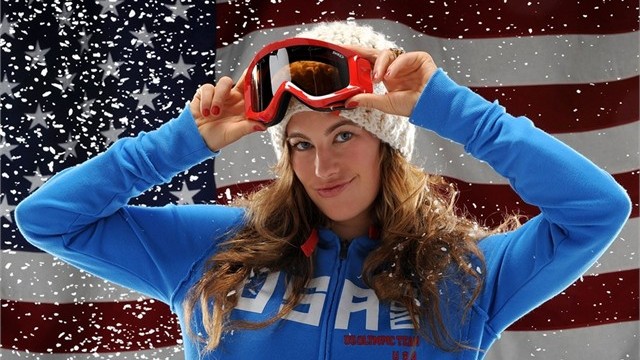
Resi Stiegler is a World Cup alpine ski racer from Wyoming and the daughter of Olympic champion Josef “Pepi” Stiegler of Austria. Forget that she is a member of my blood tribe, as my mother hails from Klagenfurt, Austria, but what she is striving to achieve, and what she must bounce back from to do it, including the path she’s taking to get there, are all sources of intrigue for me.

If you watch the video, you’ll see that Stiegler had a serious ski injury–leg fractures and ligament tears–laying her up for some time. Recall my recent article on rehabbing my friend from a major motorcycle accident. Unlike Stiegler, my friend had no ligament tears, yet the rehab was still a challenge. The skier, on the other hand, had a number of physical obstacles that she had to address in her rehab protocol, making it that much more challenging.

What really grabbed me about this video is the work Stiegler was doing to stimulate her proprioceptive system–a must in any sports rehabilitation program. Additionally she was challenging her stabilizer muscles by using the exercise ball, practicing yoga (although she makes no mention of it, she is doing a yoga asana in the video), and doing balance work with the additional challenge of playing catch with a medicine ball. She also mentions active release technique (ART), a powerful muscle treatment utilized by chiropractors and physical therapists. In my sports chiropractic practice, Stiegler would have also received a boost from regular chiropractic adjustments.

But her program seems to have worked wonders. Each one of the practices described above is powerful and were all likely contributors to her amazing comeback. Stiegler placed second in the World Cup slalom in Ofterschwang, Germany on Sunday–a career best for her.

Watch the video to see what gets me inspired about the world of sports rehabilitation (and please note some of the things she talks about at the end of the clip, which illustrates the crucial mental component, although she doesn’t talk about it in that way…she’s just living it). Bringing world-class athletes back from injury and competing again is a fulfillment to me like no other. And helping everyday folk get back to playing with their children, being productive at their jobs, and competing in their own hobbies is no less fulfilling. Watch the video to see what I love.

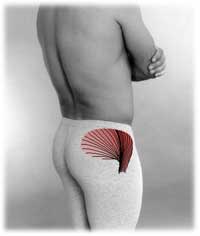
A few posts ago, I showed an excellent exercise to strengthen the gluteus maximus muscles.  Another gluteal muscle that tends to get weak, or lazy is perhaps a better way to say it, is the gluteus medius.  This hip abductor is located on the outer edges of the pelvis, and it functions to hold the pelvis upright as we stand and walk.

When the gluteus medius gets weak, it can leave you susceptible to pelvic subluxations, low back pain and even knee pain.  A recent sports injury and rehabilitation study showed that knee pain and problems in runners could be helped by strengthening the hip muscles, particularly the gluteus medius.

Watch the video below to learn the best exercise–hip abductions–to strengthen the gluteus medius hip muscles.

Ever had a sprained ankle? A real one–not a twisted or rolled ankle, which hurts too, but not in the same way a sprained ankle does. Sprained ankles are not fun. They hurt worse, in my opinion, than some broken bones, which hurt much less once they’ve been set. Not sprained ankles, though; they keep hurting for weeks, months, and for some even years afterwards. Ouch!

A new study published in The American Journal of Medicine showed that, although people who suffered ankle sprains got back on their feet quickly–some within two weeks–some continue to have problems for months or years following the injury. Being the most common sports injury, very little is known about the recovery process of sprained ankles, at least according to the study. Huh!?! Further, the risk of re-injuring the ankle was as high as 35%–the highest risk group being people highly active in sports.

Very, very interesting conclusions out of Rotterdam, the Netherlands. Being a chiropractic sports physician, I’m a bit amazed at the uncertainty of long-term ankle sprain prognosis. I don’t find any of the results unusual. Many, many ankle sprains are due to heightened risk caused by foot dysfunction. People who have gait abnormalities due to foot dysfunction have a tendency to roll their ankles. Throw these people on a basketball court–like your’s truly–and you increase the risk of ankle sprain exponentially. The solution–a pair of custom-made orthotics.

Orthotics are support devices that fit in the shoes. They correct for common dysfunctions of the foot and ankle–overpronation, oversupination, failure to extend the big toe, and so forth. Correct these dysfunctions and the incidence of repeat sprained ankles goes way down. I’m shocked there was nothing mentioned about orthotic support in the study’s report. I know the incredible results obtained through orthotic support personally–been wearing them for years, never another sprain–and professionally. If you’ve had a sprained ankle or have never fully recovered from one, find a qualified health practitioner, and have you feet evaluated for dysfunction. And if you need them, get a pair of custom made orthotics–they’ll change your life.

Copyright © 2013 Dr. Nick Campos - All Rights Reserved.