In an unusual display of rationality, the FDA rejected drug maker Merck and Co.’s bid to make it’s cholesterol lowering statin, Mevacor, available as an over-the-counter medication. Hallelujah! I almost can’t believe it.

Statins lower blood levels of LDL cholesterol (the bad stuff) by blocking a key enzyme necessary for the production of these lipoproteins. LDLs, or low density lipoproteins, are known to be precursors of atherosclerotic plaques, which harden the arteries and can lead to such cardiovascular diseases as heart attack and stroke, our leading killers in this country. As a result of this number one killer distinction, modern medical science has championed statin drugs as the savior of American heart health.

But wait, statins are drugs, and all drugs have physiological side effects, some of which can themselves cause illness and disease. To paraphrase 16th century alchemist and physician Paracelsus, “Poison is in everything, and no thing is without poison. The dosage makes it either a poison or a remedy.” Ah, so very true. Should we, therefore, really make what’s currently only obtainable by prescription available to the masses at the local drug store?

Well according to some brilliant and sound-minded physicians (and one altruistic pharmaceutical company), the answer is yes. Proponents believe that everyone, not just people with high levels of LDL cholesterol should be on statins. Statins are today’s aspirin, you know, the drug one celebrity doctor claims we should name a town after. Ha, ha, ha. Oh, the folly of it all.

According to one brilliant mind, the sharp intellect known as Dr. David Nash of Philadelphia’s Thomas Jefferson Medical College, “You should put this drug in the drinking water.” Whoa! Do you all feel as safe as I do? That’s awesome. I’m so happy to see that some of our nation’s most highly esteemed physicians think that mass medication is the answer to our health woes. Even better that they hold so much influence over public health policy. Effin’ right aye!

But, thankfully, wiser heads have prevailed…for now. In a 10-2 vote, an FDA panel rejected Merck’s bid. The panel felt that “too many of the wrong people would use the drug if it no longer required a prescription.” Uh, yeah. They based their conclusions on a study of nearly 1,500 people, where many wanted to buy the drug although they were poor candidates. I guess the drug companies want to maximize profits by pushing out the middle men–namely, doctors! Call me crazy, but I still think the physician is the best person to evaluate a person’s need for a potent drug–yes, even more than television commercials. I know, I’m so yesterday.

Here are some of the risks associated with statin drugs: permanent liver damage, rhabdomyolysis (read about this man’s experience here), nervous system damage, neuropathy, kidney damage, erectile dysfunction, temperature regulation problems, and amnesia (careful, you’ll forget to take your statins). For a more comprehensive list of dangerous side effects linked to statins look here.

Why rely on statins when blood cholesterol can be lowered most effectively through sensible diet (read my book, read my book), exercise, and supplementing with essential fatty acids. Furthermore, we know that LDLs alone are not “bad”. Only when they are oxidized (mostly by free radicals) do they become sticky, leading to plaque formation on the arteries. So by taking a good antioxidant (read my book, read my book), you can seriously lower your risk of developing atherosclerosis.

Unfortunately wellness isn’t as hip as mass medication is in the current health (?) paradigm. Summing up this idea is yet another proponent of mass statin consumption, New York‘s Mount Sinai Medical School physician and Merck consultant, Dr. Valentine Burroughs, “We’re still failing to prevent this epidemic (heart disease). It’s time to take bolder action, to try new approaches.”

Yeah, like spiking our drinking water. Sign me up, man.

Birth by cesarean section (c-section) has doubled in the last ten years. Statistics show that one in three American babies is now delivered by cesarean. A c-section is a form of childbirth where a surgical incision is made through a woman’s abdomen and uterus to extract the baby (or babies). While many of these procedures are medically necessary–to save the life of the mother or baby–a large number of women are electing to have cesarean sections as their first option, that is, without trying to deliver vaginally. In fact, elective c-section is all the rage in Hollywood today, with many a young starlet opting for one (or two as is purportedly the case with this out-of-control Hoochie Mama).

But, once again, I must point out that surgery is not without risks. This is especially true for the now routine c-section: Recent research shows that babies delivered by non-emergency c-section have a four times greater chance of having breathing problems. According to Anne Hansen of the Aarhus University Hospital, Denmark, one of the lead researchers in the study, the greatest risk is seen when the procedure is performed early on–before the 39th week of pregnancy. Therefore, she states, if a woman is going to elect for this procedure, it probably shouldn’t be done before this time. It is as of yet unclear why babies born by cesarean might have breathing difficulties, but researchers believe that stress hormones produced by the mother during labor actually help the baby’s lungs mature.

C-sections, without a doubt, are a blessing to any family who has had the horror of experiencing a dangerous labor. There was a time when either mother or baby, or both, might be lost during difficult birthing. Thanks to c-sections, though, many lives have been spared; and probably everyone reading this has a loved one in the world today because of this blessed procedure. But saying that, isn’t it a shame that so many women are choosing not to experience the incredible process of giving birth the old fashioned way? Aside from the bond that is established between mother and child during this laborious process, there must be physiological, hormonal, and–excuse my metaphysics, but–energetic benefits to the entire process. To just bypass this most natural act, this integral part of our evolution, seems a bit detached to me. What’s next? Portable colostomy bags? I mean, what the heck–it’s uncomfortable and…I really can’t be bothered, so…sheesh.

Listen, this isn’t a morality trip but, unless you know it’ll be a hazard to your health or the health of your baby, don’t opt out of the beautiful birthing experience. The labor is worth the pain. It was by far the greatest experience my wife and I have ever had (yes, better than mushrooms and whiskey, much better). And besides, it turns out it’s better for your baby too.

Check out this blogger’s hysterical take on elective c-sections.

And something on the more serious side.

A new study shows that a spoonful of honey goes a long way in quieting nighttime cough in children. When compared to cough syrup or no treatment at all, honey showed better results. Chalk one up for natural home remedies.

The authors of the study, which appears in the December issue of Archives of Pediatrics and Adolescent Medicine, believe that the honey may work by coating and soothing an irritated throat. The importance of these findings come on the heels of federal health advisories, which have recently warned that over-the-counter (OTC) cough and cold medicines shouldn’t be used in children younger than 6 (129 reported deaths from these products since 1969). As a result, manufacturers are taking some products for babies off the market.

I am personally pleased by these findings, not because I’m a “natural products” guy–I think medications are necessary in many instances–but because I really believe that people run far too often to what I think are useless OTC medications. No medication can carry out the healing process–only the body does that; they are simply easing symptoms that accompany, and are necessary for, healing to occur. So give the kids a dollop of honey and let it ride, baby–just let it ride.

Wanna know what the newest trend in health-care is? genetic testing. Basically, companies provide a complete genetic profile for the consumer at the cost of several hundreds of dollars, and these test are supposed to predict which diseases the buyer is susceptible to. Oy vey! What will they think of next?

First off, why would anybody want or need to know this information? Why, so they can do something about it, say proponents. Yeah, yeah–interpret that to mean: so they can seek out the appropriate medical treatment. Is that what life is about? Call it what it is–a new and lucrative market to exploit people who are afraid of illness and death.

A doctor recently asked somebody I know, “Do you want to know when you are going to die?” I thought that was such a profound question. Do you? Does anybody? What a useless way to occupy space and time in one’s mind, thinking about that junk.

Anyway, according to some experts, genetic testing is a waste of money and tells people little more than they would know from studying family history. No kidding. Christine Patch, a genetic counselor at Guy’s and St Thomas’ NHS Foundation Trust and a member of Britain’s Human Genetics Commission, said, “My message is you are wasting your money.” The reality is that genes do not work in a linear fashion–gene A always causing result B. Instead, many genes work in a complex manner, “and their ultimate effect is is influenced by environmental factors in ways that are poorly understood.”

With a few exceptions, humans pretty much have every gene–it’s just what is expressed at any given time. Environmental factors, emotional factors, and psychological factors all influence gene expression. These are some of the things I’d like to see investigated in the field of genetics. Until this time comes, save your money and live your life; nobody really wants to know when it’s their time to go.

Have I mentioned how important sleep is? Just another reason to catch enough shuteye–researchers have found that shift work (work that can disrupt normal sleep patterns like firefighting or long rounds in emergency rooms) can actually cause cancer by repeatedly disturbing the body’s internal clock. The internal clock is responsible for regulating circadian rhythms, a complex mechanism involved in many body functions including hormonal and neurological balance.

The study was carried out by the International Agency for Research on Cancer, the French-based cancer agency of the World Health Organization, which looked at several studies showing the links between shift work and cancer. In one study, it was found that women who work night shifts may have a 60 percent greater risk of developing breast cancer. In another study, tests in mice showed that circadian clock genes are disrupted in tumor cells. And in yet other studies, evidence shows that firefighters, who breathe in smoke, chemicals and dust and who also work shifts, have a higher risk of cancer and heart disease.

Scientists believe that the culprit in the cancer susceptibility may be the body’s response to light. The brain’s pineal gland produces melatonin, a hormone necessary for regulating the internal clock, and which also acts as a cancer fighting anti-oxidant. When repeatedly subjected to light and sleep deprivation, the body’s normal melatonin production is disrupted, which can lower the protective and balancing effects of melatonin.

Careers that are primarily shift work include firefighting, health-care, industrial, transportation, communications, and hospitality. I’d also like to point out that regular late-night partying with stimulants and narcotics would also fall under the category of extreme shift work. The agency stresses, though, that these findings are preliminary, and that it would take another five years to understand the situation fully and what can be done about it.

Shift work is going to be with us forever. Some jobs just require round-the-clock availability, period. However, it’s important to get the sleep while you can. If you’re a shift worker, then you’ve got to try to get your seven to eight hours consecutively and consistently. These finding may help employers manage shift schedules more effectively, helping their employees, and their businesses, in the long run. Until then, try to get used to a regular sleep routine within the constraints of your work schedule–it’ll save you years of exhaustion, or worse.

In the latest episode of The Dr. Nick Show (Episode 5) we discussed the question: Are chiropractors real doctors? Consider these knocks against my esteemed profession:

  • Not Educated–Chiropractors complete 4485 hours of study, MDs 4248. Chiropractors get more anatomy, neurology, diagnosis, x-ray, and orthopedics. Medical doctors, on the other hand, get no chiropractic training at all. Hmmm. See the full academic curriculum at my chiropractic alma mater.
  • Quacks–A quack is a person who pretends, professionally or publicly, to skill, knowledge, or qualifications he or she does not possess–sounds like those Dr 90210 boys.
  • Shamelessly sell themselves–Uh huh. And what’s this? Or this? Or this? Hey, I got nothing against shameless selling–wanna buy a book?
  • Not Recognized–Chiropractors are not recognized by any worthwhile institution outside of the Supreme Court, the federal government, state governments, Medicare, the Veteran Administration, and most insurance companies–
  • Not Prestigious–Chiropractors practice all over the world, and treat people from all walks of life including professional athletes, attorneys, auto mechanics, bankers, celebrities, doctors, farmers, mothers, psychologists, and on and on and on….
  • Just Not Real Doctors–doctor in Latin means teacher. Chiropractors have historically been the quintessential teachers of health and wellness, so chiropractors are literally doctors. If any other health care professional treats but does not teach, then perhaps they might need to reconsider the title.

So there you have it. If you still think that chiropractors aren’t real doctors…well, you’re certainly entitled to your opinion; however, let me be the first to tell you that the world is not flat, it does revolve around the sun, women can vote, and that club you’re carrying went out of style millennia ago. Unghhhh!!!

Riggidy-raow, ziggidy gadzuks, here I go…

Want to seriously gross out? Hocking up loogies is common practice in China. Eeeew!

That’s right, walk down any street in Beijing and you’ll enjoy the sights and sounds of people hacking up their lungs. Many people in China believe that spitting is actually good for your health. “It’s good to spit, it’s good for your health,” says a 40-year-old man unapologetically as he rubs his shoe over the foul puddle he has just created.

Spitting in China is culturally acceptable, however, the government is trying to stop it; mainly because it’s “uncivilized” (and the Olympics are coming, so better to be on civilized behavior), but spitting can also spread disease. Phlegm can carry microorganisms like bacteria or viruses, some of the health ills the Chinese have been plagued with. According to Li Yan, a respiratory disease expert at Beijing’s Xuanwu Hospital, air-borne respiratory diseases such as tuberculosis, pneumonia and influenza can be spread by the phlegm of a disease carrier. She said widespread respiratory infections, partly due to China’s polluted environment, and the population’s lack of hygiene awareness contribute to the spitting habit.

Well, apparently the Chinese government will have their hands full trying to curb an age-old habit. And it’s not just the spreading of disease; according to experts, expelled, phlegmy saliva freezes during the winter and becomes slippery like an oil slick, posing a danger to pedestrians and cyclists alike, who often slip and fall from a frozen piece of funk. Oh well, if you plan on going to the Olympics next year, just watch for the Hu Flung Fu.

Wanna guess what’s a huge quality of life issue for the elderly–not getting enough sleep. I know, I know, no surprises here, but my question is: does it have to be? According to a recent study published in The American Journal of Medicine, more than 50% of older Americans get less sleep than they need.

Dr. Harrison G. Bloom, a senior associate at the International Longevity Center-USA and associate clinical professor of geriatrics and medicine at the Mount Sinai School of Medicine in New York City says that “Sleep problems and sleep disorders are not an inherent part of aging (emphasis mine).” So something else is going on that’s keeping our older generations from getting the rest they need. I believe that sleep disorders in the elderly are primarily from three things:

  • Pain–many older people are suffering from chronic aches and pains. If they are seeing a typical medical physician, then they are probably getting plenty of pain pills, anti-inflammatories, and some good ol’ fashioned sleeping pills. However, none of these things actually helps remove the pain. Duh! No wonder they can’t sleep.
  • Multiple medications–many older folk are on more meds than they can count on both hands. Shame, shame American health care system. Check the side effects of any meds you’ve got lying around; I’ll bet $100 that 50% of them have insomnia as one of their potentials.
  • Charged mental chatter–this is the stuff that plagues all of us; however, older people often have more worries, therefore, less sleep.

So to answer the question: Does it have to be this way? The answer is NO. Older people can benefit from many of the same things younger people benefit from:

  • regular exercise
  • wholesome diets
  • pain management–or even better, a solution–see a chiropractor
  • mental exercises–reading, puzzles, mathematics, learning something new
  • mental balance–dissolve the charges (read my upcoming book to find out how)
  • meditation
  • find non-drug alternatives

The final entry above can only be accomplished by taking impeccable care of oneself. Really, everyone, you need to get a copy of The Six Keys To Optimal Health; it’ll show you the way.

Researchers in San Francisco have found that eating fiber-rich foods can reduce the risk of pancreatic cancer significantly. By increasing the amount of grains one eats, one can lower the chances of developing this fatal cancer by 40%. Just another knock against long-term Atkins dieting.

Pancreatic cancer is no joke, as few people survive it. This cancer is more common in men, especially smokers, but it can also be caused by long-standing periodontal disease (floss, people, floss). Knowing this, doesn’t it stand to reason that adding a couple of apples to your daily diet might be sound?

Fiber is the undigestible part of grains and vegetables–like broccoli, brown rice, carrots, lentils, millet, and quinoa to name just a few–which essentially scrape the walls of the digestive tract removing stuck-on food and debris (lay off the debris, rascals). It certainly doesn’t take a rocket surgeon to figure out the benefits of eating this stuff.

Personally, I eat an apple a day. Boy, does it root the olroto. Since you probably aren’t interested in my expounding on this, suffice it to say that an apple a day rolls the debris away quite nicely, indeed.

Here’s the kicker, though: The benefits of fiber do NOT extend to many popular heated breakfast cereals, researchers found. In fact, eating a diet high in packaged hot cereals actually increases the risk of pancreatic cancer. You don’t say? Thus, eating Cream of Wheat, Malt-O-Meal, Quaker Instant Grits and other packaged crapola on a regular basis might actually be worse than eating no fiber at all. Hmm…interesting. I think I read something like that in The Six Keys To Optimal Healthgreat book, read it when you get a chance.

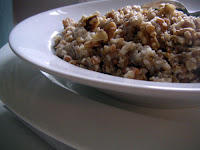
Here’s a great webpage that ranks the best and worst of hot breakfast cereals. I think if you’re going to eat a hot cereal, make it yourself from fresh, whole ingredients. All health food stores sell oats and other cereal grains in bulk, as well as natural honey, and nuts and other good stuff. I’m sure that once you get the hang of making the real deal, you won’t go back to the other junk. Check out how this chick, Vanessa, cooks hers up. Yum. Enjoy your fiber.

It’s been three months and I’ve stayed true to my commitment…well, pretty much. I’ve been taking vitamins–B, C, D, magnesium, some calcium, essential fatty acids, and alpha lipoic acid. I’ve been taking acidophilus every day; and I’ve done chlorophyll for a week once, and five days of apple cider vinegar. The biggest thing I’ve done recently, though, is quit eating sugar (November 8th was my last day). I didn’t stop eating carbs altogether, but when one cuts out refined sugar, the overall carb intake generally goes down. All I can say is WOW! It’s been just incredible. I started feeling different almost immediately. My appetite actually went up at first, but then normalized. My energy went up immediately, but then dropped. Then I felt crappy–withdrawal like symptoms. Now I feel better. I started craving sugar within a few days but practiced “mega-discipline”, and not only have the cravings diminished but I feel sort of empowered by the discipline part. Now I don’t want sugar, cuz it’s my thing. Snicker.

I’ve been working out regularly–gym two to three days per week, yoga every day, Runyon Canyon about once a week. Yoga has been great. It has really opened up some areas in my hips that were hurtin‘–hip flexors and quadriceps, mainly. Mostly I’ve been working on my posture by standing against the wall squeezing blocks between my legs–very powerful stuff. No handstands–none, nada, nunca–and I haven’t run Runyon, except that one time. Sigh.

But wait! Weight is down to 160. Woohoo! Haven’t had the ol‘ body fat recalculated, but I will before the year ends. I think the weight has more to do with cutting out the sugar than with anything else.

Getting sleep, but…running my ass ragged while awake, so I guess I’m balanced.

That’s it. One more month of reporting and we’ll see what I’ve accomplished with all of this. Woof.

Exciting news out of Finland: Vitamin D may provide protection against type 2 diabetes. In a recent study conducted by the National Public Health Institute, Helsinki, people with higher blood levels of vitamin D had a 40 percent lower risk of developing type 2 diabetes than those with lower levels of the vitamin.

And in another study, vitamin D was shown to lower the risk of developing many cancers. Wow! This study, conducted at Creighton University Medical School in Omaha, Nebraska, looked at 1,179 postmenopausal women who were free of any known cancers 10 years before the study started. The women were separated into three groups; one took calcium supplements, another, calcium supplements plus 1,100 IU vitamin D, and the third took placebo pills. After four years, the group taking the calcium plus vitamin D showed a 60% lower risk of developing cancer. But even more exciting was that after seven years, the risk was lowered by 77%. Booyah!

These finding show the mega-importance of taking a daily vitamin D supplement. According to this and other studies, taking three times the RDA levels of vitamin D3 (much better than the D2 derivative) will provide the beneficial effects. In practical terms it means taking 1,000 IU vitamin D3 every day. As experts point out, though, you never want to take more than 2,000 IU a day, as this can cause liver and kidney damage, among many other problems.

Vitamin D can be found naturally in fish and fish oils, and it is added to milk, cereals and orange juice. But the main source of vitamin D is the sun–ultraviolet rays stimulate the skin to produce vitamin D. Although the American Cancer Society acknowledges the finding “are intriguing”, they are currently cautious about recommending supplementation. Most Americans, however, are deficient in this essential nutrient; and with the concerns about people getting “too much” sun, it stands to reason that supplementation is a must.

Just think, something as simple as supplementing with vitamin D can significantly lower your risk of developing type 2 diabetes and many cancers (breast, colon and ovarian). In my mind, it’s a no-brainer. And the low cost of supplementation makes it an even more obvious health choice. According to Edward D. Gorham, adjunct professor of family and preventive medicine at the University of California, San Diego and a researcher on two vitamin D/cancer studies, “There’s enough evidence to recommend that people take 1000 IU of vitamin D every day. Doing so would only cost about 5 cents per person per day and could prevent several thousand cancer deaths each year.” If that ain’t enough to get you supplementing, nothing will.

It is well known that sleep deprivation leads to weight gain. But a new study shows that people who get adequate sleep might actually lose weight as they slumber–especially new mothers. Mothers who get five hours sleep or less a day at baby’s sixth month of life are three times more likely than women getting more rest (seven hours or more) to keep on their extra weight by one year.

The study conducted at Harvard Medical School and published in the American Journal of Epidemiology, looked at 940 women and found that the least rested mothers kept on 11 lbs. more than their well rested counterparts. According to Erica Gunderson, one of the study’s researchers, “We’ve known for some time that sleep deprivation is associated with weight gain and obesity in the general population, but this study shows that getting enough sleep–even just two hours more–may be as important as a healthy diet and exercise for new mothers to return to their pre-pregnancy weight.”

“Yeah, right!”, I can hear the Mommy and Me consortium hollering, “Easier said than done.” I know. That’s the conundrum all new mothers must face. I’ve watched my wife struggle with it for 18 months now–balancing sleep and caring for a child who is on her own schedule. This has been my suggestion: If baby is keeping you up throughout the night, then you just have to take catnaps during the day. My daughter has no problem sleeping for a couple of hours midday, and so I say take full advantage.

Most new mothers have a valid fear that baby won’t adopt a “normal” schedule if they let them sleep for extended periods during the day, but I think that it will happen naturally on its own. If baby nurses, then it’s probably a lot harder on Mama, I think, because many things can stir baby from her sleep; and nothing like the comfort of a warm booby to get baby through the night (I certainly can understand that). But, if you follow the old adage to “catch it when you can”, then at least you’ll be getting your seven to eight hours, despite it being broken up into shifts. I’m pretty convinced that your child will figure it out eventually and will want to sleep through the night himself sooner or later.

So, if you’re a new mother, think about your health and how important sleep is to it. Nobody benefits by your being sleep deprived–not you, not your child. And think about how good you’ll feel once your release that extra baby weight. Slim, trim and rested–a beautiful combination.

Donda West, mother of Kanye West, died last Saturday at the age of 58, from complications potentially stemming from plastic surgery. She was taken to the hospital after she stopped breathing at her home, and preliminary reports hint that she may have had an underlying medical condition that should have prevented her from receiving the surgery at all. The procedure–reportedly a tummy tuck–was performed by Hollywood superstar and Oprah plastic surgeon of the month selection, Dr. Jan Adams.

Another Beverly Hills plastic surgeon, Dr. Andre Aboolian, said that Ms. West approached him several months ago, but that he would not perform the surgery without a medical clearance. Dr. Aboolian’s objections were due to a “pre-existing condition” that he felt might cause complications, specifically a heart attack. Well, looks like the good doctor might have been right.

This sad and very tragic story brings to light a few points I’ve been trying to get across for awhile. First, plastic surgery is not without risks. I touched upon this in detail in my podcast on Anti-aging (Dr Nick Show, Episode 4) and also cover it in my upcoming book, The Six Keys To Optimal Health. Too many people are seeking the “cosmetic” option as if it were as simple as getting one’s hair done. Surgery cuts. Surgery scars. Surgery causes wounds. And here goes some Physiology 101: What happens when the body suffers a cut or a wound?–the blood clots in order to plug up the wound. What happens if a clot gets lodged into a blood vessel?–Thrombosis. What happens if that thrombosis breaks free and lodges into the lungs?–Pulmonary embolism; bye, bye. (Read my article on clots and emboli, it’ll explain things a little more.

Second, if you’re going to go forth with surgery, wouldn’t it make sense to get the best? Why would you half-ass it with some schmuck. If the first guy tells you that he won’t do it because of possible complications, and the second guys doesn’t tell you the same thing–run! Or is the new rack more important that your life? Hello!!!

I know, I know…”But he was on T.V. I saw him on Oprah: and, well, Oprah always picks such good books, so I figured the other guy was just trying to pull a fast one.” Oh wait, Dr. Adams isn’t board certified.

Here’s a tip: When one doctor says he won’t perform a procedure that’ll bring him lots of money–he’s ethical! When another one says he’ll perform a procedure that another one will not, he’s either been lied to (by the patient), he’s a maverick (not something to look for in a doctor), or he’s a money-grubbing jackass.

Here are a few other useful tips from Dr. Richard D’Amico, president of the American Society of Plastic Surgeons, who says that the number of non-board certified plastic surgeons performing cosmetic procedures is staggering:

  • pick a surgeon certified by the American Board of Plastic Surgery, which requires a doctor to graduate from an accredited medical school, have certain plastic surgery training and pass comprehensive exams;
  • if the surgery takes place outside a hospital, pick a properly accredited or licensed facility;
  • and patients must be thoroughly evaluated to ensure they are healthy enough to get through an operation, with checks for heart issues, diabetes or a history of blood clots.

And, I’ll add a few more:

  • never, ever get a procedure done in a foreign country–especially one that’s underdeveloped–in order to save a buck;
  • stop watching (and glorifying) Dr. 90210–these clowns are not board certified.
  • definitely don’t let your teenage daughter go under the knife unless she’s been disfigured in an accident or been burned–it’s not worth the risk.

We’ve got to pull the positive out of this tragedy that has befallen the West family, anyway. If it means that the pedestalizing of cosmetic surgery finally comes to an end–then good! And if it means that a few gynecologists, family doctors, oral surgeons and other medicos go back to their regular day jobs–even better. The world will be safer place, that’s for sure.

Pssst. Hey Buddy. Wanna buy a bridge? How about a flu shot? Yeah?…thought so sucker.

Alright, alright, maybe I’m being a little hard–most people don’t know. They only know what the authorities tell them.

Get your annual flu shot. Prevent the flu. Save your life. Isn’t that the mantra?

Recent reports show that the distribution of flu shots in the U.S. this year is at 103 million–an all time high. Well, I’ve got some bad news for ya–the flu shot is a scam. No, no–it’s not a conspiracy; your doctor really believes in it. And a couple hundred bucks a shot doesn’t hurt the believing process, either.

So how is it a scam? First off, it’s not 100% protection. That is, you can get a flu shot, and…still get the flu. How’s that? Well, according to the Centers of Disease Control (CDC), “It takes about two weeks after vaccination for antibodies to develop in the body and provide protection against influenza virus infection. In the meantime, you are still at risk for getting the flu (emphasis mine).” Furthermore, you can still get the flu due to the variability in flu strains–that is, the current flu vaccine protects (however questionably) against a particular strain, not all of them (also from the CDC; read here). And your protection also depends on the age and health status of the person getting the vaccine (more on this in a second).

Second, the flu virus is one of the most highly mutating organisms there is, so strains change all the time. That’s why you have to get a new shot every year (and don’t forget, a couple hundred bucks a shot also helps with this category). The bottom line is this: you don’t know which flu strain you’ll encounter, and even if it’s “this year’s strain”, you still don’t have total protection.

Lastly (and this is my favorite one), even though the flu shot is an inactivated virus (i.e. it has been killed), it still has potential side effects, and they are:

  • Soreness, redness, or swelling where the shot was given
  • Fever (low grade)
  • Aches

And if you use the spray mist:

  • runny nose
  • headache
  • sore throat
  • cough

And the mist in children:

  • runny nose
  • wheezing
  • headache
  • vomiting
  • muscle aches
  • fever

Call me crazy, but…ain’t that the flu?

So let me put this into perspective: You go to your doctor every year and pay good money for a vaccine that doesn’t work all that well, only protects you from a small faction of microorganisms that can cause the flu, and which actually causes flu-like symptoms. Uh…can I ask a question? WHY NOT JUST GET THE DAMN FLU?!?!

I know, I know, the authorities tell us that it’s for the protection of the elderly, the immunocompromised, and children. However, in the same breath they tell us that the effectiveness of the vaccine is age dependent; and I highly doubt that 20 to 60-year-olds are at the highest risk.

All I can say is this: I’ve never had a flu shot; I’ve had the flu plenty of times; I’ve had the runs, fever, and body aches; and I didn’t want to do anything. So I drank lots of water, and I slept a bunch. I got better, and I developed natural immunity–so, ultimately, I got stronger. Hey, listen–if you feel safer with a flu shot, then go ahead. And when you’re ready, I’ve got an excellent multi-level marketing business opportunity for you…and a bridge.

If you want to read more on this sham, here is an excellent piece published in the British Medical Journal.

And comments to that piece from skeptical MDs in the U.K. (read this because this is from the guys who are administering the shots, so perhaps they have some insights you and I do not have–please scroll down to read the comments).

AIDS researchers are baffled by the latest findings: The AIDS vaccine developed by pharmaceutical manufacturer, Merck Inc., has failed to prevent HIV infection in previously uninfected volunteers. To add to the mystery, those taking the vaccine actually had higher incidences of infection, leaving scientists and Merck officials scratching their heads in disbelief.

The study, a randomized double-blind trial, looked at two groups. The first was given a modified cold virus that was engineered to carry three synthetic HIV genes (genes native to the HIV virus but produced in the lab). The other group was given a placebo. Both groups received prevention counseling. All the volunteers in the study belonged to groups that were already high-risk for infection. The group receiving the vaccine were not only susceptible to infection, but they also contracted HIV at a rate of more than double the placebo group.

Huh? You mean, the group receiving the vaccine actually contracted HIV more than the non-vaccinated group? Quite the mystery, isn’t it? Here’s what makes this especially strange–it is not possible for the vaccine itself to have caused infection: It wasn’t HIV! Whoa. What happened then? Well, nobody knows. But you better bet I’ve got a theory.

Here it goes: HIV is not the sole factor causing AIDS. Before I take credit for this idea, just know I didn’t think of it. The first person I heard it from was a researcher at my alma mater, U.C. Berkeley Professor of Virology, Peter Duesberg. Let’s just say this controversial theory–this little bit of logic thrown in the face of scientific and political dogma–really grabbed my attention back in the early nineties when I first heard it. And now, here might be another piece of evidence hinting at its possibility. I won’t go into detail on his reasoning because it can get quite involved; and you can read it here on your own, anyway. Suffice it to say, however, that if you go against conventional wisdom, you will be ostracized and ridiculed by your peers, and also the public at large. Dr. Duesberg lost much of his funding in the form of research grants because of his controversial theory; and while I was still a student, he was forbidden from teaching–blacklisted if you will; censored; effin’ scary.

And so here we are with new research that makes no sense within the context of how we currently understand HIV and AIDS. But don’t expect the mainstream political and scientific machine to back off of their dogmatic position any time soon. When you have years and years, and billions and billions of dollars, invested in a paradigm, it’s pretty hard to give it up and look elsewhere.

This can be summed up beautifully by Anthony Fauci, director of the US National Institute of Allergy and Infectious Diseases, which co-sponsored the trials. The results are “both disappointing and puzzling,” he said. “Certainly, the failure of this HIV vaccine product was unexpected, but this setback should not and can not diminish our commitment to developing an effective HIV vaccine.” Stay tuned, but don’t expect me to win any research grants anytime soon, either.

Cognitive enhancement is a growing trend, and experts believe that long-term ethical and safety concerns of the practice need to be discussed. Cognitive enhancement is the use of drugs (like the ADHD drug, Ritalin) to boost memory and concentration–a practice gaining popularity among students and workers to increase performance in exams and at work. Experts also predict that drugs and medical procedures to improve intellectual performance are likely to increase significantly over the next 20 to 30 years.

Well, I guess human folly never ends. As I report in my upcoming book, The Six Keys To Optimal Health, Ritalin is one of the most commonly stolen drugs in the U.S. And who’s stealing it? Kids!–out of medicine cabinets and from school nurses. This just in: New Study Suggests Pediatric Ritalin Use May Affect Developing Brain (read it here).

Another brain-boosting drugs that has become popular is , the active ingredient in the narcolepsy medication Provigil (Dr. Nick Show, Episode 3). Oh, and check this out: Some other users of these drugs–medical students and exhausted medical residents on 36-hour shifts. Woohoo! Save me McDreamy, save me!

Cognitive enhancement is likely to become more mainstream. According to Dr. Tony Calland, chairman of the British Medical Association’s Ethics Committee, “We know that there is likely to be a demand by healthy individuals for this treatment.” Heaven forbid that mental excellence should be achieved through study and hard work alone.

What do you mean, Campos? It’s sort of like steroids for the brain.

Exactly. And when has artificial enhancement come without risk? As Dr. Calland says, “Given that no drug or invasive medical procedure is risk free, is it ethical to make them available to people who are not ill?”

Sure. Why not? How can it hurt?

Well, consider this: The human brain is an intricate and complex organ that operates through the precise synchronization of nerves and hormones. Why on earth would you want to tamper with that? Seriously, why? When are we going to learn that this is one frontier man can’t conquer. Not yet, anyhow. There is so much about the brain we don’t know yet. Why screw with it?

According to proponents, scientists in the future “may be able to provide more permanent fixes for bad memory or poor concentration through brain stimulation and neurotechnology.” They would do it through transcranial magnetic stimulation–sometimes referred to as “botox for the brain”–where magnetic pulses are used to stimulate particular brain regions, and deep brain stimulation, where electrodes are inserted into the brain to transmit tiny electrical currents. Ouch! I can see the late-night advertisements now: “Get a cortical six-pack while watching T.V. No work or heavy thinking necessary.”

According to experts, “over-enhancement” of the brain’s cognitive functions could have damaging side-effects. “It may, for instance, impair a normal brain’s ability to selectively filter out trivial or traumatic information, resulting in the individual being plagued by unwanted or traumatic memories.” Great, just what we need, more tortured maniacs in the world. Sigh…let’s just wait and see where this one leads.

Oh, the madness of erectile dysfunction. Seems like there are stiff problems surrounding the pharmaceutical and herbal remedies meant to treat this malapropos malady. According to new reports from the U.S. Food and Drug Administration, taking the impotence drugs Viagra, Cialis, or Levitra can bring on sudden hearing loss. A review done by the governmental agency found that 29 cases of sudden hearing loss were reported with use of these three drugs, with two thirds of the cases being ongoing.

And if that ain’t bad enough, researchers in Hong Kong report that many “herbal remedies” sold over-the-counter have untested variants of the same pharmaceutical agents named above. The illegal analogues of sildenafil and vardenafil (Viagra and Levitra respectively) are produced with minor changes to the chemical structures and then added to, or more accurately–concealed in–the supposedly natural mix. Unfortunately, chemical variants are neither tested nor reviewed by regulatory bodies, like the FDA, as patented pharmaceuticals are, and this can lead to problems.

For instance, a previously healthy 28-year-old man was recently hospitalized with an unsteady gait (called ataxia–a neurological issue) and frequent falling. It was discovered that he had been taking an anti-impotence “health product” for over a week before showing those symptoms. Funny that a healthy young buck would need an anti-impotence drug. But as you all know from my podcast on lifestyle drugs (Episode 3), many a young stud is taking erectile dysfunction drugs to enhance performance. Bad, bad idea, Padners.

For men who truly suffer from erectile dysfunction (ED), let it be known that problems with impotence may underlie an even more serious problem–heart trouble or vascular disease. Erectile dysfunction, or the inability to gain an erection is the result of poor circulation to the penis. In fact, drugs like Viagra work precisely by increasing blood flow–vasodilation it’s called–which allows the penis to engorge with blood. Failure to do so means that the body has encountered an obstacle, most likely a problem with the pump. So simply treating ED with drugs isn’t the answer. On the contrary, not only may it mask the true issue, but that kind of cover up can also prevent men from seeking out the care they really need; or prevent them from changing their lifestyle to promote good heart health.

Unfortunately, many doctors are missing this connection. Not a surprise considering the mass volume of impotence drugs prescribed every year. Furthermore, many men with erectile problems aren’t aware of the vascular implication, so they don’t discuss it in depth with their physicians. According to Dr. R. Parker Ward, an assistant professor of medicine and director of the cardiology clinic at the University of Chicago Hospitals, and lead author of the study linking ED to heart disease, “We as physicians should be asking about, and men should be reporting to their physicians, symptoms of ED, so it can be considered as we work to modify their risk — treat blood pressure, cholesterol more aggressively, advise healthy lifestyle changes like exercise and healthy diet.” Always better to treat the cause than to put on a band-aid, I always say. And this is one of those situations where a band-aid can ultimately cost you your life.

So if your having trouble standing up to the task, take it as a firm warning–get your heart checked, start exercising, and start eating a healthy, wholesome diet. And please be cautious of purchasing that “natural” impotence herb you’ve been considering. Chances are it’s not all that natural.

When one thinks of dangerous driving, driving under the influence is usually the first thing that comes to mind; but equally daunting is driving while drowsy. Drowsy driving kills more than 1,550 people a year in the United States and causes 71,000 injuries, according to the National Highway Traffic Safety Administration, which estimates there are 100,000 sleep-related crashes a year. In the U.K., Australia, and Finland, drowsy driving is reported as 10-30% of all crashes.

Men are more likely than women to drive while sleepy, and they have more than double the risk of actually falling asleep behind the wheel. Drowsy driving is also more common in younger people, especially those between the ages of 18-29. Sleep related crashes are more likely in the sleep deprived, which includes people who have been up on all night drug binges. In New Jersey, Maggie’s Law was enacted to prosecute people getting behind the wheel after being awake for 24 hours straight.

It’s Drowsy Driving Prevention Week. In its honor, I’m going to drink my third cup of coffee; and I’m going to urge you to pull over if you’re feeling sleepy and take a nap. Pushing it for one more mile just isn’t worth it. I can’t think of anything worse than waking up in a disaster zone with people dead (especially your loved one’s) because you doze off while driving. Hit the truck stop, man, and catch some zzzzzz’s. You’ll be happy–and alive–when you wake up.

More tips on preventing drowsy driving here and here.

Did you see 60 Minutes last night. Wow! They did a incredible piece on the mysterious dwindling of our region’s bee populations. What a fascinating, yet baffling, conundrum. Apparently, 90% of the beehives kept by professional beekeepers are dying out, or the bees are leaving, never to return, a rarity among honeybees, which are a eusocial community (specialized workers labor for and protect the reproductive queen). The bee’s labors are primarily gathering nectar and in turn pollinating the earth’s plants species. They don’t often leave their own.

According to the report, one third of our entire food source comes from produce dependent on bee pollination, so, naturally, it presents quite a problem that so many bees seem to be disappearing. Although it is as of yet unknown what is causing the diminishment of the bee population, experts believe that it has to do with pesticide use, viruses, and plain old bee stress that’s leading to the rapid demise of our most crucial allies.

As I point out in my upcoming book–The Six Keys To Optimal Healthpesticides are not only poisonous to man, they are toxic to many other useful species, including bees. Limiting our use of poisonous pesticides would certainly decrease our own health risks, but it might also help preserve some of the other precious lifeforms on this planet. Obviously, completely abandoning the practice of crop spraying is not practical–not economically, and not from the standpoint of providing food for the entire country. However, we can try to purchase more locally grown, organically farmed produce. That, at least, would lessen the need for massive crop spraying a little, you know?

What I found most interesting in the piece was that leading experts pointed out that bee populations are dwindling due to major stress. Honeybees are overworked–transported across country in trucks (I swear; check out the piece here) to pollinate a bevy of crops–usually feeding on a sole food source, and subjected to serious toxic exposure. Their weakened immune systems lead to their susceptibility to viral infections, and indeed, that’s what autopsies of dead bees has shown, major viral infestations. But as scientists point out, viruses are unlikely to be the primary cause of illness; more likely, bees are succumbing to opportunistic parasites which are able to thrive due to the bee’s weakened compositions.

Sound familiar? Yes, it’s exactly what happens to us when our bodies become weak due to the stresses of our lifestyles; we also become susceptible to illness under these conditions. It’s a universal theme. Dr. Marla Spivak, the foremost authority on honeybees in this country, confirms that stress plays a major part in the lives of honeybees. According to Dr. Spivak, “They mirror us. We have a really close association with bees. They reflect what we are doing.” In other words, their stressors are some of the same things we expose ourselves to on a daily basis.

So there you have it–watch the bees. What they’re experiencing is what we’re also going through, just on a larger scale. The extensive disappearance of bees is a good sign that it’s time to change. Let’s hope that we can start making the necessary changes before something drastic happens.

There’s an old Yiddish saying, “A nickel will get you on the subway, but garlic will get you a seat.” How true that is. Garlic, that sweet, succulent spice–also known as Allium sativum–just melts in your mouth and makes every dish delicious. Yes, in some people it can cause malodor; but the benefits of eating garlic far outweigh its pungent effects.

This miracle herb has been the subject of folklore and legend, and it’s home remedy uses are very well known. But new research shows exactly why garlic is so beneficial–it boosts the body’s production of a compound that relaxes blood vessels, increases blood flow, and prevents blood clots and oxidative damage. The compound, hydrogen sulfide (H2S), is produced by blood vessels and red blood cells when they come into contact with the chemical constituents of garlic. The exact compound causing the release of H2S is as of yet unknown.

The fact that we do not yet know which chemical component causes this incredible health benefit illustrates a very important point–one which I very adamantly stress in my upcoming book, The Six Keys To Optimal Health–and that is: It’s always better to eat whole, natural foods than rely on man’s synthetic versions. And the reason I give is precisely because we don’t always know which constituents do what. Moreover, we don’t know if compounds must work in conjunction with one another or if several work within the same biochemical pathway. Therefore, you gotta eat the real deal.

Saying that, we do know the effects of some of garlic’s constituents. For example, Allicin, which gives garlic its hot, burning flavor, has powerful antibacterial and anti-fungal properties. It also helps fight arteriosclerosis, dissolves fat, and is a mild antioxidant. Another compound, Beta-sitosterol, lowers blood cholesterol and may be useful in fighting benign prostatic hypertrophy (BNP). Garlic also contains calcium, folic acid, iron, magnesium, manganese, phosphorous, potassium, selenium, and zinc. And to top it off, garlic is rich in vitamins B1 (Thiamine), B2 (Riboflavin), B3 (Niacin), and Vitamin C.

Wow! Now tha-sa powerful.

Copyright © 2013 Dr. Nick Campos - All Rights Reserved.