Currently viewing the category: "death"

Bad news for seekers of sleep-help: Sleeping pills increase the risk of death, and the risk of developing cancer. A new study discloses that regular users of sleeping pills are four more times likely to die than people who don’t take them, not a good thing considering 5-10% of the U.S. adult population is said to be taking pharmaceutical sleep aids.

Sleeping pills that were linked to these risks included benzodiazepines such as temazepam or Xanax; non-benzodiazepines such as Ambien (zolpidem), Lunesta (eszopiclone) and Sonata (zaleplon); barbiturates; and sedative antihistamines.

According to the study, which looked at over 10,500 people, people who were prescribed up to 18 doses of sleeping pills a year were 3.6 times more likely to die than their counterparts who were prescribed none. And those prescribed between 18-132 doses were more than four times as likely to die. People  taking more than 132 doses a year had five times the risk of dying compared to those prescribed none. This was true regardless of age, but risks were highest among those individuals aged 18 to 55. Dang!

To add insult to injury, those people taking the highest doses of sleeping pills had the highest risk of developing cancers, including those of the esophagus, white blood cells, lung, colon and prostate. Although many potential explanations exist for the increases in cancers, preexisting health conditions was not one of them, leading one to conclude that the association to sleeping pills is meaningful.
Saying that, causation was not found in this study, only that there was an association between taking sleeping pills and increased cancers and death. In other words, it is not definite that the cancers and deaths were caused by the sleeping pills themselves. Equally likely is that people on the verge of either illness or death might have a disrupted enough sleep to warrant help. In fact, sleep problems are often the first to appear in medical or psychological conditions.

Dr. Daniel Kripke of the Scripps Clinic Viterbi Family Sleep Center, in La Jolla, CA and lead author of the study feels pretty strongly about the results, “For the particular sleeping pills studied, I do not see any time I would prescribe them.”

Other doctors disagree. For example, one Dr. Victor Fornari, director of child and adolescent psychiatry at the Zucker Hillside Hospital of the North Shore-Long Island Jewish Health System in Manhasset, N.Y. says,

“These are safe and effective medications when prescribed by a physician as part of a comprehensive treatment plan. Don’t stop taking these medications if you feel that you need them and are taking them with a doctor’s prescription, but be mindful that they shouldn’t be taken frivolously and there are alternatives such as avoiding napping, getting proper exercise, eliminating caffeine and doing other the kinds of things that improve sleep hygiene.”
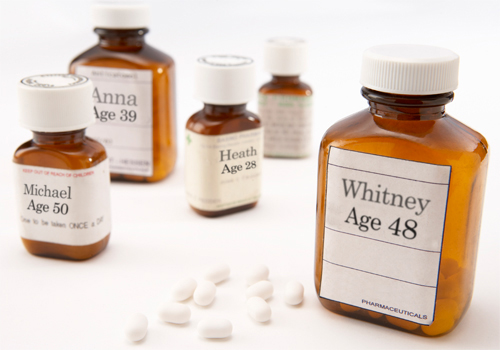
Good points and good advice from both doctors. Here’s the bottom line: Sleeping pills, like all drugs, have their usefulness. Chronic use, however, is a problem. If you need sleep aids to fall asleep most nights, then something else is going on. And let’s not forget how habit forming these drugs can be–the more you take, the more you gotta take, an so on.

If you are having problems sleeping, do what the good doctor Forni suggests: exercise, eat well, reduce caffeine, avoid naps…but most importantly, keep a rhythm. Nothing in my books leads to sleep disorders faster than an erratic sleep schedule. Do yourself a favor, focus on good sleep patterns and get the rest you need for healthy mind and body. And stay away from the sleeping pills–they’re killers.
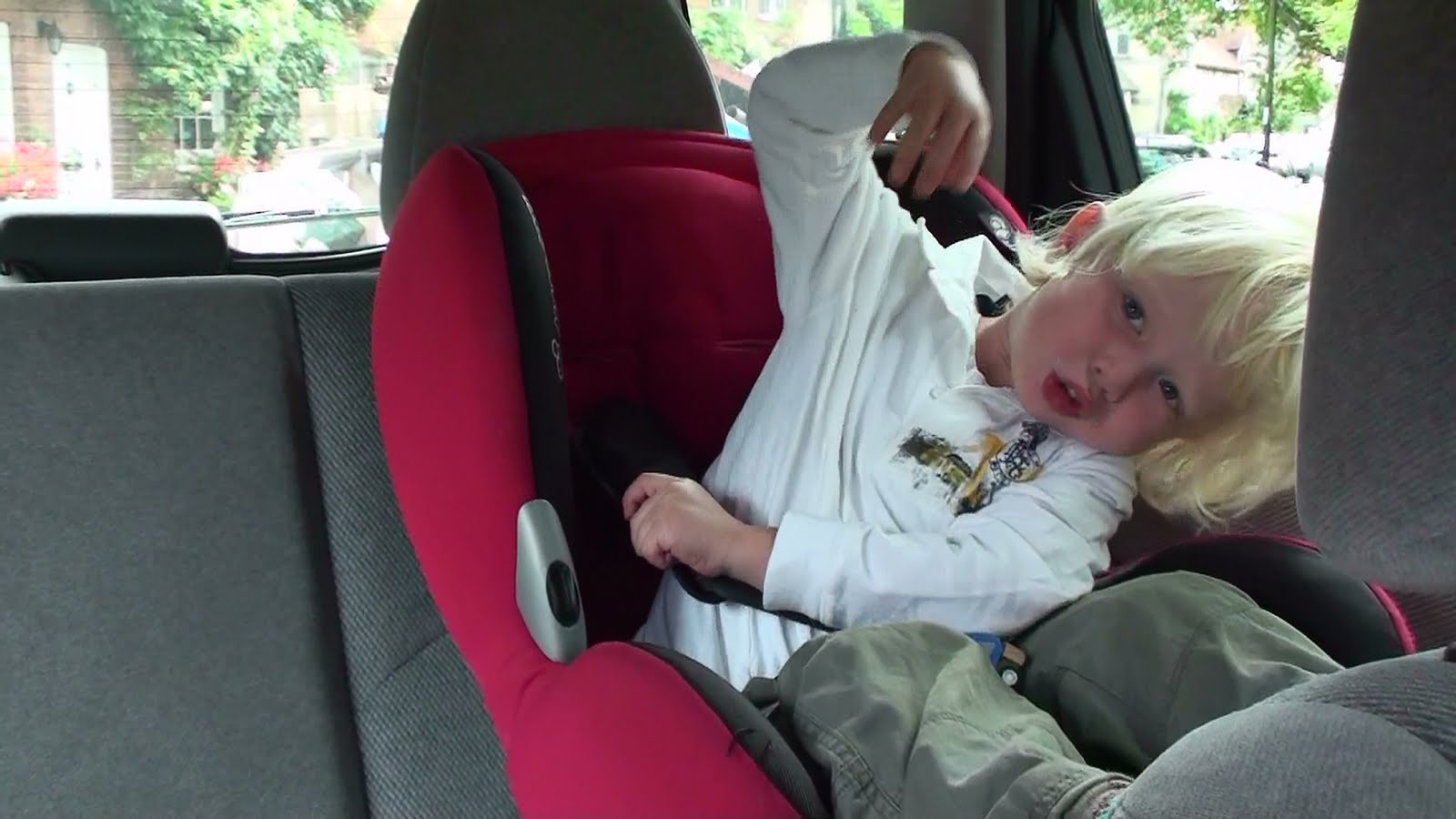
What’s the leading cause of death among four to eight year olds?  Car crashes.  What did researchers at Yale University’s School of Medicine find that many children as young as 12 months were adept at doing?  Getting out of their car seat harnesses.  Bad, Jimmy, bad, bad…

More than 40% of children that can unbuckle their restraints do so while the car is moving, prompting parents to pull over, reprimand and then re-buckle the child, according to a recent study.

The study was based on 500 surveys distributed at pediatric offices in Connecticut and will be presented on Sunday to the Pediatric Academic Societies meeting in Denver.

The idea for the study came after researchers treated patients from accidents caused by the unbuckling and parents, distracted by their children, looking away from the road.  Ooh…

Researchers believe that better engineered seat belts or alarms might be the answer.

I have first hand knowledge of this happening, as my youngest daughter at two and a half is a regular Houdini. But I really didn’t realize how common the problem is.  My daughter also likes to roll down the windows–gotta lock those suckers, but sometimes she gets me.

All I can say is just be careful, parents.  I sure hope engineers get on this problem fast.  I hate to hear of children injured simply because they were wiggly worms.  Maybe handcuffs and a tank of water will do.  Fingers crossed.

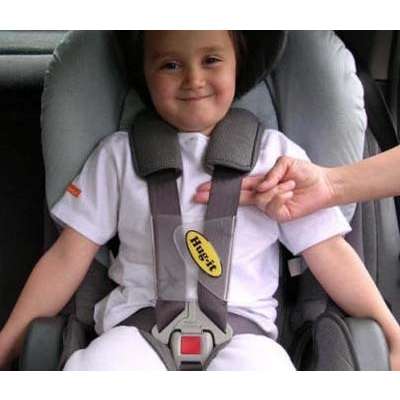
*Here’s something I found through a quick search called the Hug-it Harness.  Can’t vouch for it, other than it looks good.  If any of my readers (especially in the U.K.) use this device, I’d love to know what you think.


Bored to death? Don’t take it lightly. New research shows that boredom can actually have a negative effect on your health. In fact, the research suggests that the more bored you are, the more likely you are to die early.

A epidemiological study carried out at University College London looked at more than 7,500 London civil servants from 1985-1988 and asked if they had felt bored at work during the previous month. The researchers tracked down all participants that had died by April 2009 and found that those that had reported feeling bored were 2.5 times more likely to have died from heart problems than those that had not reported feeling bored.

Although the correlation was reduced when researchers corrected statistically for other risk factors like physical activity levels, the connection between boredom and dying was still significant.

“Someone who is bored may not be motivated to eat well, exercise, and have a heart-healthy lifestyle. That may make them more likely to have a cardiovascular event,” said Dr. Christopher Cannon, an associate professor of medicine at Harvard University and spokesman for the American College of Cardiology.

Hmm, could be doctor, could be. But I think that life thrives as we have a purpose driving us. Once that purpose diminishes, life starts to dwindle. It’s not uncommon for people to die shortly after retiring–there are studies documenting it. Why? Because if you find purpose in work, a sense of usefulness, then you have something to get up for every morning, a driving force if you will. When that drive goes, well…you go. Now no doubt, some people find purpose in other things like family, home, recreation, whatever. But as a way to understand why boredom can lead to heart disease and death, well it makes sense to me.

So do what you love and have a purpose behind it. If you can’t find a purpose in your day to day life, you might just be ready to move on to the next experience.

Some final words on the recent death of actress, Brittany Murphy. According to a forensic pathologist, attorney and medical-legal consultant, the 32-year old actress most likely died of drug toxicity. I know you are all thinking what I’ve already said, but since preliminary reports have the death listed as from “natural causes,” we can all sigh a collective, “No scheiße!”

Celebrity Web site TMZ is reporting there were “large amounts of prescription medications” on the nightstand when paramedics arrived at her Hollywood home, and that Murphy was “complaining of shortness of breath and severe abdominal pain” in the week before she died.

On Tuesday, pathologist Dr. Cyril Wecht (celebrity coroner that has worked on famous cases like Elvis Presley and JonBenet Ramsey) said on CBS’ The Early Show that although it’s possible Murphy died of natural causes, it would likely have been from a congenital heart abnormality (my words exactly); however, most people are aware that they have these disorders. More likely, he said, she suffered toxicity from a multitude of prescription drugs obtained both legally and illegally, a la Michael Jackson, Heath Ledger, and Anna Nicole Smith.

“When you have a 32-year-old person dying suddenly, and especially a celebrity in Los Angeles, you can place your bet down that it’s going prove to be a case of acute combined drug toxicity. And I bet you that this young lady tragically died in the same way that Michael Jackson did, and Anna Nicole Smith, and her son, Daniel Smith, and Heath Ledger — a combination of drugs that had been prescribed for her, prescribed for her husband, for her mother, in some fictitious names, probably by doctors who are very, very quick to make available anything that celebrities want, sometimes using knowingly fictitious names.

“So, even though these drugs are, quote, legal, unquote, they are, many times, illegally obtained. And it’s a tragedy. And it’s being played out everywhere in America every day, and we only come to know about it when it involves celebrities.”

The drugs in question? Ativan, one drug found in the Michael Jackson case, Klonopin, a drug involved in the Anna Nicole case, Hydrocodone, a common pain killer found in OD cases, and Vicoprofen, a form of Vicodin.

Another truism disclosed by Dr. Wecht, “I guarantee you that, if the pathologists at the Los Angeles coroner’s office had found something dramatic, like a heart attack, like a stroke, or like something of a definitive nature, would you have heard about it. The fact that they say that they’re going wait for toxicology tests and it will take a couple of months, you can be sure that this is going to prove to be a case of acute combined drug toxicity.”

Agreed. Either way, heartfelt condolences go out to Brittany Murphy’s family.

*Brittany Murphy was laid to rest this evening at twilight. RIP.

Right to life. Right to death. Wouldn’t you say that when it comes to our bodies, our own lives, we should be able to do as we see fit? Even if that means ending it all when we want to move on, doesn’t it? The right for people to make their own decisions with regard to their death is a controversial issue as old as man himself. Well one country has decided that it’s time to put the power of decision in the hands of the individual when it comes to choosing one’s death.

An Australian court ruled today that a quadriplegic man who has begged to be allowed to die has the right to order his care takers to starve him to death.* Western Australia’s chief judge Wayne Martin said the Brightwater Care Group would not be criminally responsible if it stopped feeding and hydrating the severely paralyzed 49-year-old, Christian Rossiter. The judge said the ruling had nothing to do with euthanasia, nor about the right to life. What this case had to do with is the right to direct one’s own medical treatment, period. Amen to that.

This ruling set a landmark precedence in Australia, where it is a crime to assist one in taking their own life. People convicted of assisting in this endeavor face life in prison. The judge found Rossiter neither terminally ill nor mentally incapable of making an informed decision, thereby allowing him to direct his own death. Rossiter’s attorney said it best when he stated, “It sets a precedent whereby people can easily refuse medical treatment.” And isn’t that the way it should be?

We can take a few lessons from our Aussie friends on this issue. First, the inability to direct one’s death is absolutely absurd. I know mine is not the popular opinion, but I feel that you should be able to do anything you want with your body, provided it harms no one else in the process. We already allow this practice to some degree with tattoos, piercings and brandings. Why is it OK to put a mental ring through one’s genitals, but not to be able to choose when to die? Duh!

Second, the right to direct our own medical treatment, it seems, is a basic human right. So why on earth do we settle for government mandates on vaccination, like they’ve recently done in New Jersey and Texas? Public health measures are understandable, so highly contagious diseases like measles, mumps, and whooping cough are certainly defensible when it comes to state and school policies. But the flu, human papilloma virus, and now swine flu? Are we crazy to allow the government to propose such mandated inoculations? I don’t want that crap in my children, and I think it’s my right to choose.

This Australian, individual’s-right-to-direct-medical-care, case is highly relevant to some issues here in the U.S. It’s our lives, our bodies and our families–it’s not the government’s place to direct our personal lives when it comes to our health and well being. Nobody knows better than we do about our own bodies, even if we do sometimes relinquish control to our doctors or others. And especially not the government and their consortium of idiots, responsible for shaping policy. They don’t know what’s best for our bodies more than we do–they’ve proven that time and time again.

*Just a side note: I personally wouldn’t choose to end my life as a quadriplegic person because as long as I have my brain, I value my life; but I certainly support everybody’s personal decision in this matter.

What costs society more, smokers or non-smokers? Think hard because I’m sure you think you know, but you’ll be surprised when you hear the answer. Very good, you guessed right: Non-smokers ultimately cost society more for one simple reason–they live longer!

New research conducted at Vanderbilt University, on the heels of yet another tax increase on tobacco products, shows unequivocally that every pack of cigarettes smoked saves the country 32 cents. That’s right, smokers actually save this country money. Although smokers cost $96 billion a year in direct health care costs and an additional $97 billion a year in lost productivity, they die sooner than non-smokers by about ten years. That additional ten years of life would cost more in general living expenses and further health care costs (Dutch researchers showed last year that smokers cost $326,000 from age 20 on, compared to about $417,000 for thin and healthy people). So why the witch hunt? Well let’s check it out.

What’s the tenor we live by? Life is good, death is bad; avoid death at all costs, right? Truth is that most people don’t want to think about death at all. But let’s not forget about the benefits: Death allows space and resources for new life forms. It maintains the constancy of energy flow. So why do we strive so earnestly to preserve individual life above all else?

Here’s my point: It seems that the goal of modern health care is to maintain life at all costs. Noble, yes, but not necessarily advantageous to humanity as a whole. It also forces us to vilify certain behaviors, certain indulgences–like smoking or obesity or promiscuous sex–that just don’t fit into the “we must live as long as we can” theme.

But I personally appreciate quality of life greatly. Now in that vein, I think smoking can be a detriment to having a quality life–that is, if you value being active, then you probably don’t want to smoke. I speak from experience on this–I smoked cigarettes for twenty years and my life is tremendously better now as a non-smoker for a multitude of reasons. However, I do admit that there were loads of benefits to smoking: it was something I enjoyed immensely to say the least (I talk at length about this in my book, The Six Keys To Optimal Health). So which is more important? I guess every individual needs to decide for himself; but either way, I’ll go with quality of life over quantity anytime.

That’s why I laugh when I see studies like the one above. It goes to show you that some things just aren’t what they seem; and thank goodness for people who actually take the time to think about them in their entirety. I’ll leave you with this: There are many benefits to not smoking, to being physically fit, and to caring for one’s health, no doubt–it definitely is the life I love to live. Saying that, however, there are also benefits to smoking, eating whatever you want, and focusing on things other than health. It’s your call. But don’t let ’em tell you it costs society more–that’s a political game.

Get ready for this one. I believe that people who are sick a lot–you know the ones: the co-worker who is often absent from work, your Aunt Tilly with the bad case of rheumatism, the lady down the street with 30 different maladies–create an internal environment of poor health. This unhealthy internal environment weakens the body, and over time, stresses of the external environment break down the body and lead to premature death.

What is this internal environment? It starts with the mind. People who see themselves as sick, people who use being sick as a tool for emotional support, and/or people who wholeheartedly buy into their illness as described to them by their doctors or the popular culture, lower their resistance and immunity, and hamper the innate healing power of their bodies. In other words, the mind that sees itself as sick, gets sick and stays sick.

BS Campos? Really, check this out: A recent British study found that people who were out sick from work for extended periods, even if generally “healthy” at the time of the study, were more likely to die prematurely than people who didn’t take such time off. What? Listen again: The study looked at approximately 6,500 government workers from 1985-1988 and followed them through 2004. The workers who had one or more periods of extended leave–out of work for more than one week–were 66% more likely to die in the study period than people who hadn’t taken such leave.

Now wait a second, Campos; weren’t these people simply ill to begin with? Of course, they’ll die earlier.

No. Many of the workers who died “were in good health at the beginning of the study,” according to Jenny Head, a statistician at University College London who led the study. True, it would make sense for people who had cancer or circulatory problems to need extended leaves of absence, and also to die earlier. However, the results also showed earlier death for people who had called in sick for minor complaints such as coughs and colds and flu. Wow! Mind tripper.

So I go back to my original point: People who see themselves as sick; that is, they believe they are ill, not well, unhealthy, and so forth, create an internal environment, through their thoughts, that weaken the body and leave them susceptible to early breakdown and disease, and eventually death. People who see themselves as healthy know they will bounce back, and that they will be OK. What do people who know they’ll be OK do? They move on with their lives. They go back to work, or don’t take off at all–they know that they’ll feel better shortly, so they keep on truckin’.

The researchers did not come to this conclusion. It’s mine. It hasn’t been tested yet, nor proved. It’s simply my theory. The researchers did not know the connection between early extended sick leave and premature death; they only found it a curiosity and thought it might be useful data for doctors to screen or be able to predict later illness and death in people. Yeah, I definitely think it’s good for that. But I also think I have a good working hypothesis. It’s the direction of my current research. Stay tuned.

As medical technology advances, modern society is increasingly faced with tough ethical questions–questions regarding right to life and quality of life issues. Take for example a new study which suggests that antibiotics are overused in people dying of dementia diseases and should be considered more carefully in light of the growing problem of drug-resistant superbugs. In other words, should people at the end stage of disease be given life-saving treatments despite the fact that time is not on their side? Or should medical practitioners consider the larger implications to the public health as a whole?

According to study co-author Dr. Susan Mitchell, a senior scientist with the Harvard-affiliated Hebrew Senior Life Institute for Aging Research in Boston, “Advanced dementia is a terminal illness; if we substituted ‘end-stage cancer’ for ‘advanced dementia,’ I don’t think people would have any problem understanding this.” What she is referring to is withholding antibiotics from people in the end-stages of Alzheimer’s disease, a fatal brain disease. Although many dementia patients die from infections like pneumonia, the underlying cause of illness and deterioration is damage to brain cells.

In the study, over two hundred people with advanced stage dementia residing in nursing homes in the Boston area were followed over an eighteen month period or until they died. Almost half the subjects died during the study. All subjects failed to recognize loved ones, had stopped speaking, were unable to walk or feed themselves, and were incontinent. Researchers looked at the patient’s medical records and found that 42% received antibiotics–many intravenously–within two weeks of their death. And here’s the kicker: The closer the patients were to dying, the more likely they were to receive antibiotics.

The problem with the practice of administering antibiotics to people near death is that we are in the midst of a superbug (antibiotic resistant strains of bacteria) epidemic; and the indiscriminate use of anti-bacterial medicines is more than a little to blame. Liberal prescribing of antibiotics is common in nursing homes, in children with ear infections, in adults with coughs and sore throats, and in many other ailments which, for the most part, will resolve on their own over time, or for which antibiotics are useless, like viral infections. But the fact is that, in nursing homes, the standard of care is for doctors to see the residents only one time per month or once every two months. According to Dr. Daniel Brauner, a geriatrician and ethicist at the University of Chicago Medical Center who was not involved in the study, “I’m sure a lot of these antibiotics were prescribed over the telephone.” I’m sure of that, too.

So the question remains: Should medical treatments be administered to people who are at the end stage of terminal illness? I’m certain there is no real answer. If the person is your loved one–your wife, husband, mother, father, and so forth–I’m quite convinced the answer will be YES! We all want the extra time with our closest family members. But in the bigger picture, perhaps a dignified death with the help “the old man’s friend”, as pneumonia was once called, is in order. As bioethicist Bruce Jennings, consultant at the Hastings Center, a research institute on medical ethics, says, “You might rescue the patient from life-threatening pneumonia and they live a few days, weeks or even months longer, but the extra time you have bought them by that rescue is not beneficial.”

Copyright © 2013 Dr. Nick Campos - All Rights Reserved.