Currently viewing the category: "soda"

Duhhhhh….does soda make you fat? Don’t know…but it might make you dumb. So says a recent study out of the University of California, Los Angeles, which observed what happened when rats were fed a steady diet of high-fructose corn syrup (HFCS), the principle constituent of soft drinks.

Researchers trained 24 rats over a five day period to complete a complicated maze (Barnes maze test, feeding them standard rat chow. They then randomly assigned the rats into four dietary groups: half receiving HFCS as their main beverage source, and half receiving water. Each group was then split into two, those with added omega-3 fatty acids to their diet (rat chow) and those without, so that the four groups looked like this:

  1. high-fructose corn syrup (HFCS) only
  2. high-fructose corn syrup (HFCS)  + omega-3s
  3. water only
  4. water only  + omega-3s
All four groups continued receiving powdered rat chow throughout (with or without the omega-3s). The results showed a few interesting things. First, although there was no difference in final weight or size of the rats, the HFCS groups preferred eating the sugar to the rat chow–they must have been American–although caloric intake stayed consistent among all the groups.

Second, although the rats were found to be in the same initial cognitive condition prior to their special diets, after six weeks the rats that were deficient in omega-3s showed a decline in memory, and thus a reduced ability to complete the maze. Hmmm…. And the results were even worse for the rats deficient in omega-3s and high in HFCS.

But even more interestingly is that the cognitive deficiencies (memory loss) were ameliorated by adding omega-3s to the diet. Whoa!… The researchers conclude that omega-3 deficiency led to a vulnerability of the rats’ brains to the high fructose corn syrup. Fascinating.
“The DHA-deprived animals were slower, and their brains showed a decline in synaptic activity,” said Fernando Gomez-Pinilla, a professor of neurosurgery at the David Geffen School of Medicine at UCLA. “Their brain cells had trouble signaling each other, disrupting the rats’ ability to think clearly and recall the route they’d learned six weeks earlier.”

The researchers believe that the lack of omega-3s caused the brain to become insulin resistant, which would increase the sugar concentration in the blood. This sugar dysregulation then, they think, disrupts the brain’s ability to process sugar, a necessary food source for the brain to process thoughts and emotions.

“Insulin is important in the body for controlling blood sugar, but it may play a different role in the brain, where insulin appears to disturb memory and learning,” Gomez-Pinilla said.

High-fructose corn syrup is commonly found in soda, condiments, applesauce, baby food and other processed snacks. The average American consumes more than 40 pounds (18 kilograms) of high-fructose corn syrup per year, according to the US Department of Agriculture.

“Our findings illustrate that what you eat affects how you think,” said Gomez-Pinilla.

“Eating a high-fructose diet over the long term alters your brain’s ability to learn and remember information. But adding omega-3 fatty acids to your meals can help minimize the damage.”

So the take home lesson here is two-fold: One, and for me the most important, is to make sure you are getting sufficient omega-3s in your diet. Because the typical western diet is high in omega-6s and low in omega-3s, then supplementing, in my opinion, is the best bet.

And two…HFCS is garbage! I’ve been saying it for over a decade, and nothing’s come along to alter my opinion. The typical American is both omega-3 deficient AND consumes too much HFCS. Think about that if you still can…
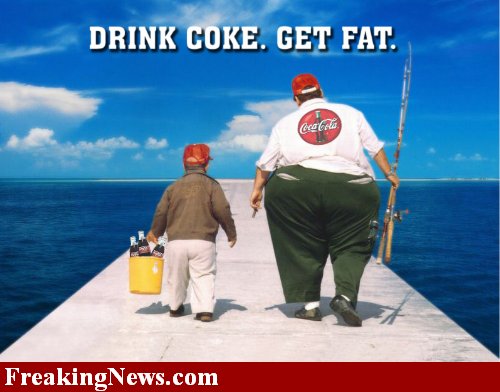

In my recent obesity debates, I noticed a disturbing trend among many proponents of fantastical new theories on obesity, which included some doctors: They were adopting a “obesity is far too complex to blame a singular (or few) product/action” position. As I remarked in an earlier post, I think this poorly thought out opinion only perpetuates the problem.  No less erroneous than the genetic theory of obesity, denying the obvious simply gives the obese person a reason to pull themselves, and their lifestyle habits, out of the equation. As a result, it ensures that obesity will remain a lucrative disease entity in need of a cure (à la cancer).

Case in point: In response to a recent report coming out of the Yale University Rudd Center for Food Policy & Obesity, that has showed soft drink manufacturers to be stepping-up advertising to children and teens, particularly blacks and Hispanics. The American Beverage Association, whose members include soft drink companies, disputed the study’s findings. Said the group’s Chief Executive Officer Susan Neely in a statement,

“This report is another attack by known critics in an ongoing attempt to single out one product as the cause of obesity when both common sense and widely accepted science have shown that the reality is far more complicated.”

Uh huh…listen up obesity enablers: Aspects of obesity may have some complexity to them, but how it originates physiologically in the individual isn’t complex. Any right-minded person not driven by profits or ego (doctors…) simply cannot deny that imbibing ten teaspoons of sugar (contents of one can of soda) will lead to metabolic and hormonal changes that ultimately cause obesity.  If you’re this person, forgive me but…you’re an idiot.

You’ve heard of “good” cholesterol and “bad” cholesterol–now meet their wicked stepbrother, “ultra-bad” cholesterol…so bad, it forms stickier plaques, and makes its carrier even more susceptible to heart disease and stroke.  Who’s got this badass sticky-plaque cholesterol?  Diabetics.  But before you think that’s not you…let me add prediabetics to the mix as well.

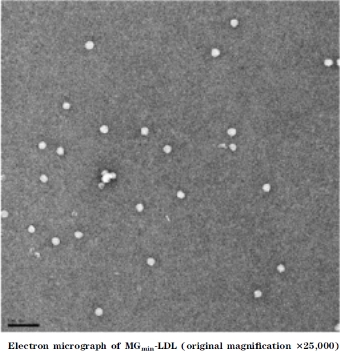
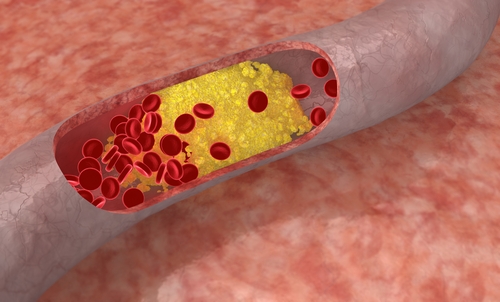
British scientist have found the super-sticky cholesterol by essentially recreating in the lab.  By glycating low density lipoproteins (LDLs), that is, by adding sugar groups to the molecule, they turned the “bad” LDLs into “ultra-bad” MGmin-LDLs.  The added sugar groups change the cholesterol’s shape, making it stickier and more likely to attach to blood vessel walls.  Once cholesterol sticks to the arterial walls, the plaques narrow the lumen (space), reducing blood flow and thus increasing the probability of heart attack or stroke.  Diabetics and prediabetics are at risk due to the higher levels of sugar circulating through the blood.

Of course, the discovering scientists (University of Warwick in the UK) and the medical community is excited because the findings uncover how a common type 2 diabetes drug, metformin, fights heart disease by blocking the transformation of normal LDL into the super-sticky LDL.  Which of course means greater possibilities for new drugs.

But my interest is from a different angle.  It’s for me to stand on a soap box and say: Please people, listen, decrease your sugar intake or remove it from your diets altogether.  Processed sugar is one of the greatest health impediments of the modern world.  The number of illnesses and organ diseases attributable to excess sugar in the diet are astronomical.

While in doctor school, I read 1,500 pages of pathology text required for the curriculum, and it was my observation that excess sugar (along with tobacco and alcohol use) is one of the primary causes of disease in contemporary civilization.  And our foods are filled with it.  Sugar is in everything!  From cookies and cakes, to sauces, meats, breads, cereals, soups, stews, children’s food…and the list goes on and on.

Fast food is laden with sugar.  But be not afraid…here, wash it down with a soda.  Yes, the American drink of champions!  I know I’m a freakin’ bummer, but somebody has to say it.  Drop the sugary, frosted, high fructose corn syrup-laden CA-RAP before your arteries get filled with super-sticky MGmin-LDLs.  Dang!  Seventy-nine million people in the United States today have prediabetes.  Freakin’ duh!

Let me put it in perspective: You know how you think the guy or gal you see smoking a cigarette is going to have a heart attack one day?  Now you can do the same for the soda drinker.  Think about it.

When it comes to weight gain, is one food-like substance worse than another?  Yes, say Harvard University researchers, and the biggest offenders are potato chips!  Whaddayaknow–worse than sodas, worse than fries, worse than candy?  Yup, chips were more than four times more fattening than sweets or desserts.  Dang!  I’d say, “Who knew,” but isn’t it kind of obvious?

The study (actually three studies combined) looked at more than 120,000 people over a twenty year period, analyzing their dietary and lifestyle habits.  The subjects were all health professionals and not obese at the start.  Their weight was measured every four years, and they detailed their diet on questionnaires.  On average, participants gained nearly 17 pounds over the 20-year period.  For each four-year period, food choices contributed nearly 4 pounds, while exercise–for those who did it–cut less than 2 pounds.

This is how foods broke down into the fattening quotient (pounds gained/4 years):

  • Potato Chips — 1.69
  • French Fries — 1.28
  • Candy — 0.41
  • Alcohol (drinks) — 0.41
  • Watching hour of TV a day — 0.31
  • Recently quitting smoking, 5-pound increase
  • People who slept more or less than six to eight hours a night gained more weight.

The researchers conclude that diet is more important than exercise when it comes to gaining or losing weight.  Although I definitely agree with this statement in context of today’s western society, I wouldn’t say that’s a physiological fact, thermodynamically speaking.  Today’s foods may just be harder to burn, but I don’t know that it is true for all foods (and can’t one, technically, get fat from an excess of any food?).  Okay, different subject, I know, but I will agree that our current obesity epidemic ain’t from eatin’ too many carrots.

This is a decent study, but I would say we should put things into perspective.  Many people believe that as long as they work out, they should be able to eat whatever they want…within reason.  Problem is, people grossly underestimate how many calories they are eating at any given time.  A great piece came out in Scientific American last year discussing a study which showed most people, oddly, miscalculate total calories when high-calorie items are accompanied by ‘healthy’ side dishes.  Subjects overwhelmingly assigned less calories to plates with cheeseburgers and celery, than they did to cheeseburgers alone.  Doh!  Think that might happen regularly in real life?

Listen, crap is crap is crap is crap.  Chips are crap, period.  Eat them more than a few times a year (seriously) and expect fatness.  Same for sodas, canned ravioli, frozen tater tots and doughnuts–sorry to break-up the party, but…

Do we really need a study to tell us chips and fries are not Jenny Craig material?  I wish not, but sadly…we do.  So now you know.  Do with it what you will.

New York Yankees pitcher CC Sabathia is reporting to spring training 25 lbs lighter.  The secret: He kicked the Cap’n Crunch.  Aw yeh, the former fat-boy is weighing in at a svelte 290, not bad for a 6’7″ frame.  And to think he did it all with one simple change.  Just think of what that might mean for you or your kids!

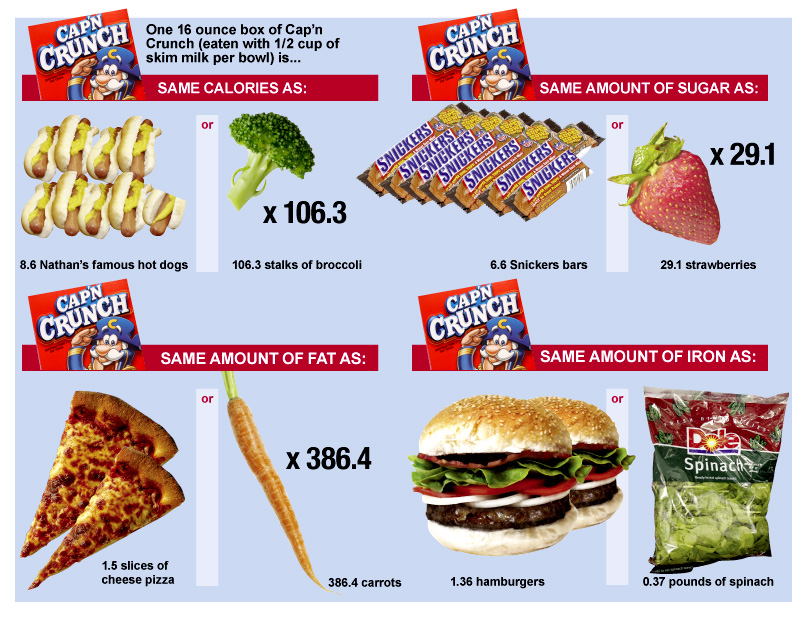
Sabathia, the Yankees ace, weighed in at a whopping 315 lbs last season, when he was knocking down a full box of Cap’n Crunch every day!  Each box of Cap’n Crunch has 12.59 servings, each serving has 12 grams of sugar, making a box of the sugary cereal contain a total of 151 grams of sugar.  Further, the nutritional info on the box lists the number of calories at 217 per double serving.  Therefore, a full box of Cap’n Crunch contains 1,366 calories.  Dang!

To put this into perspective, a soda (Coke, let’s say) contains 40 grams of sugar and 150 calories per 12 oz. can.  More perspective: one teaspoon of sugar equals about six grams; therefore, a can of soda has about seven teaspoons of sugar (see video below**).  Even more perspective: Most sugar packets found in the U.S. have approximately 4 grams of sugar, thus a can of soda contains ten packets of sugar (U.S.).

Now back to Sabathia.  His one full box of Cap’n Crunch a day gave him a sugar equivalent of drinking 4 sodas, 25 teaspoons of sugar, or 38 sugar packets.  Nice, CC…nice.

*A report released in 2009 by the Rudd Center for Food Policy and Obesity at Yale gave Cap’n Crunch’s Crunch Berries the worst nutritional score of any cereal marketed to children and families. ~ from Wikipedia

How about your kids?  Do they eat Cap’n Crunch?  Fruit Loops?  Frosted Flakes?  Do they drink soda?  These cereals and soft drinks have been staples in the American diet for the last fifty years, and it’s not because people aren’t consuming them.  It’s not just 6’7″ professional athletes eating this junk, either.  It’s little Timmy, and little Rainflower, and maybe even you.

Listen, next time you’re thinking about feeding Junior the Cap’n Crunch, why not just give him a Snickers bar?  Same amount of sugar as in a two-serving bowl of the Crunch.  And is it any wonder we are in the midst of an obesity (and diabetes) epidemic?

**Please watch the video below to get great perspective on the amount of sugar contained in a soda:

Finally, a useful suggestion for health reform–tax sodas! Well, by golly…I think they’ve got something there: Tax the nutritionally inert liquid sugar that Americans are severely addicted to, and yes, a solution. One solution. Small solution. But a great start.

Here are the facts. Sodas are the number one consumed beverage in the United States. They contain about 100 calories and ten teaspoons of sugar. Diet sodas add their own twist. While having zero calories, a large study conducted at the University of Texas Health Science Center in San Antonio showed that people who drink diet soda regularly are 41% more likely than regular soda drinkers to become obese. What??? You heard right, the zero calorie drink actually makes people more susceptible to obesity; and it’s because of aspartame, the artificial sweetener, that people pack on the pounds.

According to researchers, aspartame fools the body into thinking it will be receiving sugar–an energy source–but that sugar never comes; so the body is left wanting. What happens next is that our diet soda drinkers reach for something to satisfy that sugar urge, and they overindulge. Not convinced? Then ask yourself why the discrepancy in physicality. Why are diet soda drinkers anything but emaciated? Hmmmmm….

Since soda–diet or regular–is garbage, and it’s contributing enormously to the obesity problem (and consequently, outrageous health care costs), then why not tax it? We tax tobacco, alcohol, and mary jane (oh yeah, not yet), why not the simple syrup? Americans drink enough soda that a tax would generate an estimated “100 to 200 billion dollars over a 10-year time frame.” Sounds like a no-brainer to me.

Listen, health care cost are significantly related to lifestyle behaviors. If you want to socialize health care, then don’t just punish everybody across the board; tax those most negligent. Tax the smokers (I’ll pay my share), the boozers, and the junk food junkies. My position has always been, “Don’t just single out the fast food restaurants; nail the soda manufacturers too.” That’s fair–and accurate. Bingo.

And I’ll be pleasantly surprised if they ever get how much the chronic pharmaceutical drug users cost us–you know, people who prophylactically or habitually take statins, antidepressants, or any other drug that doctors are pushing on the public like the sky’s the limit. Yeah, tax all those negligent people involved in making our system “broken”.

You know how I feel about demonizing fast-food restaurants–I don’t like it. But I can wholeheartedly agree with this: Get junk food out of U.S. schools! Bingo.

Don’t take my position on fast-food joints as being soft on the junk–I’m not. The consumption of fast-food is without a doubt a major factor in the obesity epidemic. Let’s call junk food–of which soda is the primary offender–an American obsession. And this love affair with crap is precisely why Americans are blowing up to massive proportions.

Yes, take the junk out of schools and homes. If people want to eat junk food occasionally then a fast-food restaurant, or candy store, or ice cream shop, or pizza parlor is where they should do it. Just like a bar or a whorehouse–a fast-food restaurant should be a place to satisfy one’s indulgences, not be a dietary staple, plain and simple. And the only way to control impulses is through discipline and responsible child rearing. You want to be the Norm Peterson of the local chicken dump?–that’s your monkey. But we certainly don’t need to give junk food to our children–they’ll get it on their own. Banning fast-food restaurants, however, is not the answer. Accept junk food as an occasional indulgence and use with moderation. If we treat it like liquor, then we should have no problem.

My wife was reading my earlier blog on government funded gastric bypass surgery, and while looking at The Biggest Loser before and after pictures, noted that many of the people submitting photos had cut out soda.

Ah, soda–the lowest common denominator in obesity. If someone is obese, I’ll bet the farm they drink soda. And diet soda is no healthy alternative, yet I’m sure many people think it is.

Without a doubt, my lovely wife was astute in picking out that common act–quitting soda–that leads to dramatic weight loss. I’ve said it again and again and again: Cut the soda or you’ll never lose weight. And if you do kick the habit, you’ll see the pounds shed quickly and permanently–that is, as long as you remain permanently abstinent. Read the interview I conducted with comedian Eddie Pence. He lost 15 lbs like that (finger snap), just by kicking Diet Coke.

It’s up to you: Lose the soda and lose the pounds, or keep drinking that crap and settle for a stomach staple.

Here’s a little story about how politics, helped by the media and popular culture, can influence belief to such a degree that even health practices change. I’m sure nobody reading this is ignorant of the fact that global warming is one of today’s hippest issues, right up there with saving Africa. Global warming is so hip that it threatens to influence nearly every facet of life, from business to engineering to development. But not until now has it touched the health sector.

According to recent reports, global warming may increase the incidence of kidney stones in the U.S. in the coming years. Researchers at the University of Texas estimate that the number of kidney stones will increase by thirty percent over the next few years. Kidney stones are caused by the crystallization of dissolved minerals in the urine, usually from low water levels in the body, or dehydration. The researchers point out that as temperatures rise more people will become dehydrated leading to a higher production of kidney stones.

Well, you’ll get no argument out of me that dehydration is a growing concern. But I have to say, blaming it on global warming is pure, unadulterated horse manure. Let’s try a little more obvious reason, like too many people bypass drinking water for the more accessible and heavily marketed soda pop. Duh! No, no, it must be global warming. Oh heavens Longhorns, can you get less original? The scientists at UT point out that an increase in kidney stones is already being seen in the southeastern belt of the U.S.–that includes Alabama, Arkansas, Florida, Georgia, Louisiana, Mississippi, North Carolina, South Carolina and Tennessee. I’ll bet if the numbers are crunched they’ll show that that region has a super-high imbibition of sodas, sweetened iced tea, and liquor–all of which are highly dehydrating. And I can tell you that all three of those beverages will lead to an increased development of kidney stones. BS Campos…it has to be global warming. Yes, I know.

I really don’t care what method is used to get people to drink more water–I feel it’s that important to human health. But here’s the problem: Just four months ago, the consensus from the scientific community was that the necessity of drinking water was just a myth. Remember my earlier post on the subject? And if you’ve read The Six Keys To Optimal Health, you know that I’m adamant about proper hydration. You would also know from reading my book that some scientists think that drinking water can be harmful to one’s health. And many people watching the nightly news, or listening to their family physicians believe that you can get most of your body’s water through the food you eat (I swear, I’ve heard this nonsense before). Yet today…science has found that proper hydration is now necessary because of global warming?!?! Whatever.

I guess I’m gonna just give in and jump on the ol’ global warming bandwagon. So here goes some health news I’d like to see:

  • Global Warming Causes People to Need More Chiropractic!
  • Global Warming Makes People Vitamin Deficient.
  • Global Warming Reduced by Exercise.
  • Global Warming Caused by Excessive Statin and Antidepressant Use.

Yeah, that’ll be the day.

Spent the day in downtown L.A. fulfilling my civic duty. Jury duty called and I was promptly selected–aargh!

While having lunch in the local food court, I couldn’t help but notice a very interesting observation: about 90% of the people in my view were drinking soda. I am certain that I saw a couple hundred people, so that’s a heck of a lot of soft drinks. I counted a few water bottles, but mostly I saw people drinking out of waxy soda cups, the kind you typically find at fast food restaurants. True, it might have been water, but since I know the national soda consumption numbers, which are astronomical, I’m sure these people were drinking what most Americans choose–good ol’ fashioned candy pop.

I couldn’t help but think about the weight loss industry too; about how it’s booming, and about how promising its future looks. How many people in this country are trying to lose weight right now? How many of you reading this are?

Well I’ve got a real buzzkill for you: You are never going to lose weight if you don’t give up your sodas. I know, I know–eff you, Campos!–because people feel strongly about their soft drinks. Never have I received so much resistance when suggesting a habit kick than when suggesting people stop drinking soft drinks–not from smokers, not from heavy drinkers, not from heavy sushi eaters. Nope, soda drinkers beat them all. They come up with all kinds of reasons why everything but soda is bad for them. Soda is not that big of a deal. Yeah, right.

I used to drink soda, I get it. You can pound these things all day long. Some people nail six or more in 24 hours! That’s pure, unadulterated liquid sugar. No nutrients, no vitamins–pure calories, pure sludge. I’m telling you, you can watch every other thing you eat. You can work out seven days a week. You can get liposuction and a stomach staple. But if you keep drinking sugar, you’ll never lose weight. I’ve been there, done that. Believe me soda is the first thing you must kick if you’re ever going to drop pounds. Next is booze, but that’s another story (don’t worry, I’ll get to it one day).

Here is the scary thing: Most people I observed at the food court seemed to be employees of the legal court. I know because I followed a bunch of attorneys down there; figured they’d know the best place to grub. They did. But no way I could eat that way every day. However, as I clearly saw, many people in downtown L.A. do. I didn’t see many other places to eat in the area. Funny, but my pompous L.A. arse always assumes that we know better in this town, but clearly we don’t. I can’t even imagine what it’s like in other less health-conscious cities like Houston, Oklahoma City or Vegas.

So here’s the skinny: If you wish to lose weight, drop the sodas, man; it’s the only way. But if you love your sodas so much that you can’t kick the habit, then don’t be so hard on yourself–enjoy your coke and your smile, and just be content with the extra 20 pounds.

If it ain’t enough that sugary drinks (read: soda, diet soda, juice cocktails, and energy drinks) contribute to obesity, a new study shows that they may also increase the risk of high blood pressure, heart and vascular disease, as well as metabolic syndrome – all of which may lead to diabetes and heart disease.
A new study shows that sugary drinks can lead to higher uric acid levels, which, in turn, can lead to disease. It is no surprise that soda is the number one drink Americans choose, even ahead of water, but here go some more interesting statistics. People who drink more than one soda a day have:

  • 31% greater risk of becoming obese.
  • 30 percent increased risk of adding belly fat.
  • 25 percent higher risk of developing high blood triglycerides or high blood sugar.
  • 32 percent higher risk of having low HDL (good cholesterol) levels.
And now, as we are learning, higher uric acid levels. Uric acid is the body’s natural breakdown product of protein. When blood levels of uric acid are high, it can lead to disorders such as high blood pressure, heart disease, diabetes, kidney stones, gout and more.
These conditions don’t happen over night, so if you are a soda drinker, you can halt their progression by cutting down or quitting soft drinks altogether. The reality is that soft drinks provide nothing by way of nutrition – and they certainly don’t get you drunk – so my question is: Why?
“Well they taste good.”
They taste good?
“Yeah. They taste good.”
Sheesh. At the risk of standing on a pulpit, here. Aren’t good tasting things supposed to be occasional treats. We’re drinking this stuff more than water. Did you know that without water there would be no life at all? Anywhere?
How can we drink more soda than water? I’m sorry but it’s beyond me. Please enjoy a soda now and again, but, well, we all know at least one person who drinks three, four, even six cans of soda per day. Is anybody still perplexed as to why obesity is epidemic in this country? Still scratching your heads over America’s world health rankings? I promise you’ll be hearing more about soda’s ill effects on health in the years to come. But fear not Coca-Cola shareholders – soft drink companies will not be going out of business anytime soon. Heavens no. They’ve already firmly established themselves in the next big market – bottled tap water. Stay tuned for more.
Copyright © 2013 Dr. Nick Campos - All Rights Reserved.