Posts by: "Dr. Nick Campos"
See Part One here.

PIP was placed into liquidation in March 2010 with losses of 9 million euros after the French medical safety agency recalled its implants. In a subsequent inspection of its manufacturing site, officials found it was using industrial silicone not approved by health authorities, and only about a tenth as expensive as approved gel.

An investigation found a majority of implants made by PIP since 2001 contained the unapproved gel. Industrial silicone is used in a range of products from computers to cookware.

While all breast implants can burst, especially as they get older, “these implants have a particular fragility” and appear to pose risks of rupture earlier in their life spans than other implants, said Jean-Claude Ghislain of the French health agency AFSSAPS. France’s state health care system normally pays for implants for medical reasons, such as after a mastectomy, but not for cosmetic implants. About 80% of those with the PIP implants had them for aesthetic reasons.
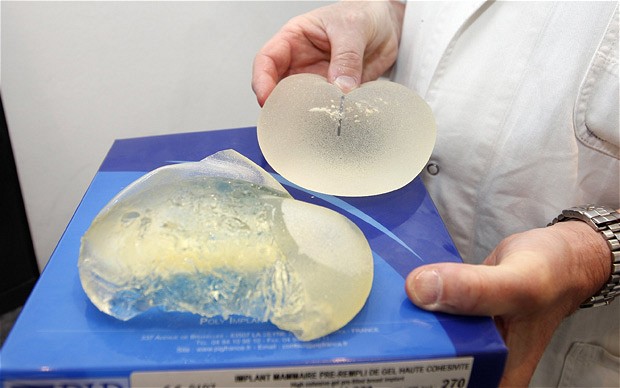
A PIP lawyer says the company recognizes that its products were defective but argues that it is being unduly singled out.

“The implants had flaws but the PIP implants are not the only ones on the market that had problems,” said lawyer Yves Haddad. “The reality is that everyone who makes implants has a percentage of failures.”

According to him, company founder Mas is in France but does not intend to make public comment.

What can I say? Shocking is all that comes to mind. My heartfelt sympathies go to the women affected by this shameful act. Hopefully, everything will be sorted out quickly and decisively; but most importantly, may all the women involved get resolve with the most minimal consequences.
*Most of this piece consists of excerpts coming from various sources including Reuters, Associated Press, BBC and ChannelNewsAsia
Jean-Claude Mas

Hold onto your hats with this one, folks–it doesn’t look pretty. The chief executive of a French company whose questionable breast implants are under international scrutiny is on the Interpol police agency’s most-wanted list.

According to recent reports Jean-Claude Mas is wanted by Costa Rican authorities for crimes involving “life and health.” It bears a photo of the 72-year-old Mas but does not elaborate on his alleged crimes or link to Costa Rica.

France’s health ministry Friday advised 30,000 women with breast implants (silicone) made by the now-bankrupt Poly Implant Prothese (PIP) to have them removed, saying that while there is no proven cancer risk, they could rupture.

Tens of thousands of women in over 65 countries around the world have the same implants, made from industrial rather than medical quality silicone, although some reports have the number as high as 300,000 worldwide. Most of them live in South America and western Europe.

250 British women are suing for compensation after being fitted with the suspect breast implants. Some 42,000 women in Britain are thought to have the implants, according to a government watchdog, the Medicines and Healthcare Products Regulatory Agency (MHRA). The silicone gel implants, made by PIP, appear to have an unusually high rupture rate and fears about possible health risks are spreading.

French and British authorities appear to be taking very different approaches to the potential dangers. France has take the costly (euro60 million or $78 million) and unprecedented steps of offering to pay for the 30,000 women to have their implants removed.

In Britain, Chief Medical Officer Dame Sally Davies said:

“Women with PIP implants should not be unduly worried. We have no evidence of a link to cancer or an increased risk of rupture. If women are concerned they should speak to their surgeon.” 

According to Davies, removing implants “carries risks in itself.”  She does say, however, that women with these implants should be checked by their surgeons. 

MHRA in Britain says that France has reported rupture rates of around 5% for PIP implants, compared with 1% in the UK. Eight cases of cancer have been reported in women with the implants but the French authorities say these are not necessarily linked to faulty implants.

French  Health Minister Xavier Bertrand urged French women to have the implants removed as a “preventive measure,” but said that it was not “urgent.” The French Government did not move quickly enough for thousands of French women that marched on Paris to demand more attention to worries about what might be happening inside them. Images of leaky, blubbery implants and women having mammograms have been splashed on French TV. 

The implants were exported from France to Latin American countries such as Brazil and Argentina, and Western European markets including Britain, Germany, Spain and Italy. Local investigative police in Costa Rica said a man identified as Jean Claude Mas Florent was arrested by national police in Costa Rica’s Cartago province on June 1, 2010 for reckless driving under the influence of alcohol, a crime that can carry a jail sentence. He was given a court date in November 2010 but fled the country. It was unclear if there was any link between that arrest and the Interpol notice.

Concerns in France first surfaced about two years ago when surgeons started reporting abnormally high rupture rates, leading to a flood of legal complaints, the company’s bankruptcy and a scandal that has spread across the world.  

In the U.S., concerns about silicone gel implants in general led to a 14-year ban on their use, in favor of saline-filled implants. Silicone implants were brought back to the market in the U.S. in 2006 after research ruled out links to cancer, lupus and some other concerns.

Australia’s healthcare watchdog says about 8,900 of the implants were used in women there, some of whom had complained about splitting and leaking.

Germany’s medical safety board advised women with PIP implants to consult their doctors for checks, but stopped short of recommending their removal.

Go to part two here.

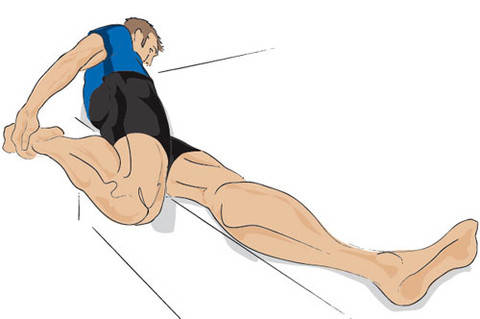
The adductor muscles of the legs are in the inner part of the thighs. They attach from the pelvis to the inner thigh bone (femur) and knee. As they are named, they adduct, or bring the leg toward the midline. Short adductors include the adductor longus, adductor brevis, and the pectineus muscles, while the long adductors include the adductor magnus and gracilis muscles.  Each adductor group has its own unique stretch.

The short adductors attach from the pubic bone to the inner thigh. A great stretch for these muscles is called the frog stretch, which I demonstrate in the video below.  There are three levels of this stretch, each one giving a little extra length to the short adductors.

Although some people have weak adductors, which require strengthening, many people get tight adductors instead. If your adductors are tight, try the frog stretch; and if you are unsure, try the frog stretch as well–it will let you know if you have tight adductors. Have fun.

In the last post I discussed L.A. Unified’s failed first attempt at introducing “healthy” menu items into the school lunch program. Not only have school kids rejected dishes like black bean burgers and quinoa salad, but a black market junk food trade has cropped up as a result. And my response is…yeah, no kidding.

Listen, I can appreciate the attempt by a large institution like the L.A. Unified School Lunch Program to combat obesity, diabetes and other illnesses by introducing healthy foods–but black bean burgers? C’mon! I was fortunate enough to be raised on health foods, as my mother was a health nut back when it was considered real weird, and I still wouldn’t eat any of that yuck they’ve tried serving to those kids.

It’s not that there is anything wrong with those foods, but there is a severe misconception as to what “healthy” is, and what it is not. Vegetarianism is not automatically healthy, nor is meat eating unhealthy–that notion is utter nonsense! However, some people believe just that–and L.A. Unified has sure tried jumping on that bandwagon. Here’s some advice for school boards: Only vegetarians will eat purely vegetarian. Duh! Take a poll at the very least.

Further, mass produced anything is not healthy. When multiple people handle food, the health-factor diminishes progressively with each set of hands involved. And add to that a variety of preparation styles, and…well L.A. Unified is getting to see the result. It’s pretty hard to mess up a burger, but chicken curry? Ha ha ha…

Now in the last post I stated that my words would likely provoke some people that feel school lunches are an inalienable right–and maybe they are–but I never ate them as a child. Why? Because they were disgusting…at least to my palate.

And I won’t subject my children to that mess either. Instead, my mom made us bagged lunches–sandwiches, fruit and an occasional cookie. In high school I would sometimes sell my sandwiches to classmates. They loved them, and they would beg me to sell daily. They loved them for one simple reason: My mom’s bagged lunches were delish. She took the time every evening before the next school day to prepare them, and yeah, sometimes I wished I could have the yuck they were selling at the high school cafeteria–but not very often.

So if you care about your child’s health and nutrition, bag their lunch every day. If it’s just too hard (I know, I know–my mom was a single parent, too, who worked full time to make ends meet–and she bagged our lunch anyway), then keep sending your kids to the school lunch line. Maybe school lunch programs will get it right one day.

The following two posts are not for school districts or their lunch programs–they are for parents. I am writing these posts for individuals, not for the mass consciousness behind government programs. Although I fully understand the utility of mass institutions, like school lunch programs, particularly for people who’d rather not think or act for themselves, I happen to know that some people prefer to take care of themselves–that is, they appreciate certain qualities of life, like what kind of foods their family eats.

I don’t necessarily mean that as an insult, since we all have areas in which we would rather just have help than personally take the bull by the horns. But I am certain that people falling into this category with regard to their children’s lunches–those that would rather subject their kids to school lunches than prepare bag lunches from home–are going to be pissed off by what I have to say. Oh well…

It appears that school kids in Los Angeles are rejecting the new “healthy” meals they’re dishing up at L.A. Unified these days. The L.A. Times reports that the new menus introduced into the public school system as a part of the campaign to combat obesity, diabetes and other health problems has been a massive flop. Not only are kids not biting into the health food fare, but underground junk food markets are popping up at most schools, some even being run by teacher that feel sorry for the starving children. Crazy, I know…but can’t say I’m surprised. I’ll explain why.

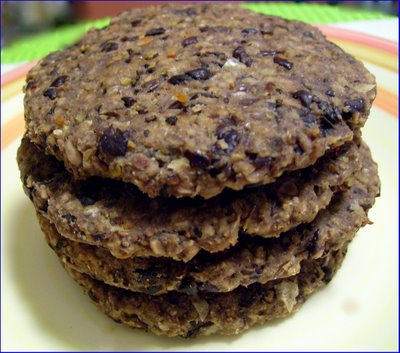
First, let’s take a look at some menu items being served at school cafeterias in Los Angeles: black bean burgers, vegetarian curries and tamales, quinoa salads and pad Thai noodles, beef jambalaya, vegetable curry, lentil and brown rice cutlets, quinoa and black-eyed pea salads, and Caribbean meatball sauce. Duh!

Who the heck would eat that stuff? I’m sorry L.A. Unified but that’s beyond stupid. Today’s children, raised on junk food, are not going to suddenly and drastically change their diets, even if First Lady Michelle Obama endorses that yuck. Wake up you brain-dead ideologues–I wouldn’t touch a black bean burger for anything, and I grew up eating healthy food. Sorry, that’s not healthy–it’s puke-inducing.  Listen to what the kids have to say about it

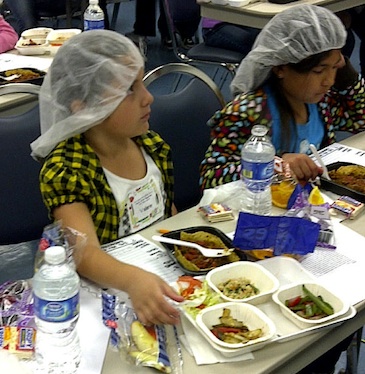
Iraides Renteria and Mayra Gutierrez don’t even bother to line up. Iraides said the school food previously made her throw up, and Mayra calls it “nasty, rotty stuff.” So what do they eat? The juniors pull three bags of Flamin’ Hot Cheetos and soda from their backpacks.  Yeah, no kidding. “This is our daily lunch,” Iraides says. “We’re eating more junk food now than last year.”

And it’s not just the type of foods L.A. Unified School Lunch Programs are serving, but the ways in which they are serving them. Reports are coming back from students and administrators alike of inedible food:

“The chicken pozole was watery, the vegetable tamale was burned and hard, and noodles were soggy,” said one 16-year-old

Other complaints included salads dated Oct. 7 being served on Oct. 17, although lunch program officials claim those dates were not for expiration, but instead “best used by”  dates. Either way, I don’t blame the kids—I wouldn’t buy that either. Who wouldn’t want food to be at its best?

As a result, student participation has been down–thirteen percent to be exact. And as an understandable backlash, the junk food black market has been booming. Students and teachers are coming equipped with candy, chips and even instant noodles to supply the hungry students.

So I reiterate that if children are raised on junk food, like most Americans are, and the food being served in school cafeterias is “like dog food” (according to one student), wouldn’t you expect them to reject it and go for what they know? Duh.

You can’t force drastic food changes on people, let alone children–that’s a recipe for disaster. School lunch programs could start by simply offering good quality foods. So keep the burgers and pizza, just make them with decent ingredients, and not the mass produced crap that large institutions typically purchase. I mean, my heavens, the school lunch budget increased a whopping 900% (from $2 million to $20 million)–start by buying fresh meat instead of frozen pre-made patties.

I like that L.A. Unified is attempting to make school lunches healthier, but serving Sloppy Quinoa-Joes ain’t gonna cut it. They’ve got to keep it within the comfort zone of the children. Fresh fruits and vegetables instead of canned or frozen is a good start, and I’m happy to report they have done that. But before introducing the same sort of yuck they serve at the Whole Foods hot deli counter…I’d invest in barf bags.

Ed Reed, superstar free safety of the Baltimore Ravens has this to say about natural health care:

In the off-season, a few other guys and I work with Dr. Clayton Gibson and his antiaging program in Miami every day for four hours. We do acupuncture, chiropractic work, foot detoxes…

Have I told you Ed Reed is my favorite player in the NFL?

Uh…booyah!

Just to show you how bad the childhood obesity numbers are getting, a recent study highlighted the problem among our nation’s kindergartners. Research conducted by the RAND corporation showed that today’s children are heavier than their counterparts of the 1970s and 1980s, and that these children run a real risk of becoming obese as adults.

The researchers analyzed data on nearly 6,000 white, black and Hispanic children who participated in the Early Childhood Longitudinal Study–a nationally representative sample–and had their height and weight measured over nine years, in kindergarten, first, third, fifth and eighth grades. They found that nearly 40% of kindergartners had a BMI in the 75th percentile, which means that they are heavier than 75% of their peers. This number is up from 25% in the 1970s and 1980s, when the growth charts were developed by the U.S. Centers for Disease Control and Prevention.

Although the 75th percentile is not by any means overweight or obese, it does show that, in general, children are getting bigger. Overweight (85th-95th percentile) and obese (>95th percentile) numbers for children did increase as well, however, to 28% and 12% respectively, up from 10% and 5% in each category. The largest gains were seen in Hispanic children and black girls.

Experts are unsure of the reasons for these findings but believe that readily available and convenient high-fat, high-sugar and highly caloric snack and processed foods, and less physical activity due video games, TV and less outdoor play time are all potential contributors.

The significance of these findings are not only that the number of overweight and obese children is on the climb, but that a large portion of children are on their way to blowing up, as signified by the high numbers in the 75th percentile. Without a doubt, overweight and obese children should be attended to, but a real danger lurks with these potential bigger kids, those in the 75th percentile, and the direction they might go as they grow.

Less children were on the lower weight end, too–about 14% were in the lowest fourth for weight compared with 25% in earlier generations and 18% were in the second lower quartile compared with 25% in earlier generations. While having some pluses, primarily less underweight and malnourished children, it merely shows how society, as a whole, is blowing up.

I still contend that these numbers are due to the types of foods Americans eat regularly. Processed foods, in my opinion, are the worst, since they are sold a wholesome foods in supermarkets and grocery stores. But too many are relying on fast foods, which is just hamburger joints, but delis, pizza, bagel shops, taco stands, and the list goes on and on. If it’s not whole, natural foods and you are not preparing them at home, then it’s fast food, period. Not good for the health, and certainly not good for the waistline.

Parents you have a responsibility to feed your tykes good food. They will eat junk food on their own–no need to have it around the house. And frozen, canned and packaged food isn’t any better, no matter what the label says. If you ain’t cooking it–it’s crap. Nuff said.

Bravo to the younger generation! Millennials have got it right—they’re cooking at home. And if you don’t know how I feel about that, then you haven’t been listening. The most predominant dietary advice I give is to eat whole, natural foods; and in that vein, you’re much better off preparing those foods at home than eating at a restaurant.

According to a survey conducted by Mintel, a market research company, home cooking has become increasingly popular among younger generations. The survey polled 2,000 adults over the age of 18 and found that 25% of respondents between the ages 18-34 said they “love cooking,” while only 17% of seniors and Baby Boomers said the same.

The survey also found that 51% of respondents eat at home primarily for dietary reasons, as “homemade meals tend to be healthier than restaurant fare and prepared grocery foods.” Nice!

Looks like the younger generation are doing thing the right way for the right reasons. I love it. What it means, I hope, is that this practice will be passed down to even younger generations. Millennials seem to be aware of the downside to the fast food revolution of their parents era, and they are smart enough to connect the poor-health dots. Once again  I say bravo to the younger generation: They’ve got it right when it comes to how they eat. Keep up the sage practice, kids—the rewards it has to offer are bountiful.

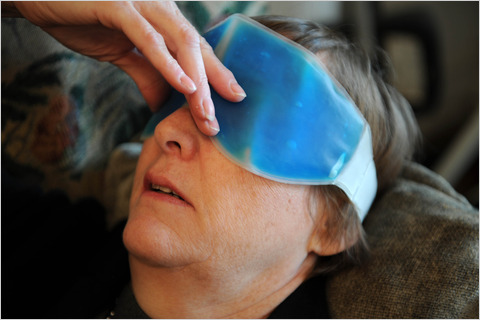
Was recently asked to say a few words about migraines and what to do about them. First it’s important to understand what migraines are. Migraines are severe headaches that have an unknown etiology–in other words, we are not exactly sure what causes them.

The symptoms of migraines are moderate to severe pulsating headaches, usually on one side of the head, with associated nausea, and very often with an aura–transient visual, sensory, language, or motor disturbances signaling the migraine will soon occur. Many people have a sensitivity to light, such that they have to draw the shades and spend the day (or days) in a dark room lying in bed. Women tend to be effected more than men by a 3:1 ratio.

I see plenty of migraine sufferers in my Los Angeles chiropractic clinic.  However, more often people come in complaining of migraines when in fact they have tension headaches instead. Tension headaches are a little easier to treat, since they are most often due to musculoskeletal issues (subluxation, muscle tension, etc). I have to ask incoming “migraine” sufferers if they have been diagnosed by a medical doctor, and if they are on medication. If the answer is no, my experience is that many of these people are having severe tension headaches, which can certainly be bad.

Most migraine sufferers have been dealing with their severe headaches for quite some time, and they have visited other doctors. While not a hard, fast rule, it is what I most often observe. When I ask about medication, if they tell me that they’ve tried Excedrin, and that it helps, that’s a pretty good indication that we are dealing with migraines. If they say that regular pain meds, like Tylenol or Advil work, then it’s probably not a migraine. Again these are not definite rules, just observations.

For tension headache sufferers, chiropractic care is phenomenal–I would say the success rates is in the 90 percentile. If the headaches originate from TMJ syndrome, then this needs to be addressed. Either way, a chiropractor is a pretty good choice for treatment.

For true migraines, the results of chiropractic are about 50/50. That’s because sometimes migraine headaches are set off by certain foods–wines, cheeses, and other substances like MSG for example–or are vascular in nature. However, saying that, it is still a good idea to try chiropractic for migraine sufferers because it does, in fact, help some people.

I have a young man that sees me for chiropractic care who suffers from migraines a few times per year. He has auras, so he definitely knows when the migraine is coming. If he gets in early enough, the chiropractic helps cut the headaches off at the pass. If he does not, then he suffers for about three days, totally incapacitated–can’t work, can’t socialized, done.

We believe that by adjusting the spine, it allows blood vessels to open and flow freely. Further, chiropractic adjustments free the nervous system from functional interference and thus migraine sufferers get a return to normal function both vascularly and neurologically, thereby clearing up the headache.

So my advice to people suffering from migraines is to get into a chiropractor right away when symptoms first arise. If it turns out chiropractic alone doesn’t do it, you might want to get checked by a medical doctor and get some migraine medication, which I understand from some of my clients that take them, they work pretty well in conjunction with the chiropractic care.

Hope that helps, Double L. Thank you for the great question.

Ladies: Are you over 50 and considering a boob-reduction?  Hope you’re healthy then, because a recent study shows that you’re at an increased risk for infection. That’s right. And on top of that, women over 50 also have a higher rate of wound-healing problems as compared to younger women, leading to a higher rate of repeat surgery to remove areas of dead skin (debridement). Something to think about if you’re considering a slash to the sag.

The study conducted at Johns Hopkins University looked at 1,192 women who had breast reduction surgery between 1999 and 2009 and found that the post-surgery infection rate for women over 50 was 2.7 times higher than for those under 40.
Researcher believe that the differences are due to age-related changes to hormone levels. Yes, of course! And the reason is that they found older women on hormone replacement therapy (HRT) were less likely to have post-surgery infections. Further, women who had undergone hysterectomy or removal of the ovaries, both of which result in large decreases in hormone levels, had higher rates of infection. Accordingly, the study’s authors conclude that doctors should investigate any factors that might effect hormone levels in women considering breast reduction surgery, and that hormone replacement therapy might be warranted in women with reduced hormone levels.
So why would I say “hope you’re healthy?” Because health isn’t simply which chemical or hormone we’re missing. When the body is in a state of wellness, it’s missing nothing. Why not instead encourage older women to do some things that might improve their health overall? Why not encourage younger women now to maintain their health to their best ability?
Spoke to a lovely lady this evening in my practice who told me that she does what she does cosmetically because it makes her feel better about herself, which in turn, motivates her to do other right things for herself (like exercise and eat well, etc). While I certainly understand where she’s coming from on an emotional level, I’d say it’s somewhat illogical reasoning: You alter yourself through surgery so that you feel better about yourself, and then you exercise and eat well?
Ladies, your body is yours to do what you deem appropriate. But I assure you that by doing the right things:

  • Exercising regularly
  • Drinking lots of water
  • Eating whole, natural foods
  • Supplementing with vitamin D and calcium
  • Visiting your chiropractor regularly
  • Getting regular body work
  • Being aware of your body (through gyno checkups and breast self-exams)
  • Minimizing alcohol and tobacco use
  • Practicing safe sex
  • Getting plenty of rest
…you should be healthy for years to come. And if you are in your fifties and pick up these habits now, your highly intelligent body will rebalance itself. If you don’t feel better about yourself then, it’s time for me to hang up my hands (sorry, I’m a chiropractor: it’s all I could think of…). At the very least, if you decide to get that breast reduction after all, then you’ll be in the best shape to handle the surgery.

You may not know this but…sometimes drugs used to fight one condition cause other equally health damaging conditions. Take chemotherapy, for instance: it’s immunosuppressive. In other words, it kills all cells–cancer and healthy immune cells together. Not a great thing when the immune system works 24/7 to keep us free from infection and cancers. But that’s the idea–kill all the cells, and let the body rebuild itself with healthy cells, yet sans the cancerous ones.

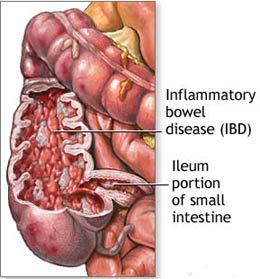
How about other disorders, like the inflammatory bowel diseases (IBD). Immunosuppressive drugs are often given to people suffering from ulcerative colitis and Crohn’s disease too. These conditions are inflammatory in nature–that is, the body goes through major inflammation of the digestive tract, usually the small intestine or colon, leading to abdominal pain, diarrhea, and bloody stool among other symptoms. To combat them, immunosuppressants are often used to shut down the body’s immune system to prevent it from attacking itself (autoimmunity). Unfortunately, some patients are developing skin cancer as a result.

In a recent French study it was found that both past and present use of a widely used class of immunosuppressants called thiopurines significantly increased the risk of non-melanoma skin cancer in inflammatory bowel disease patients. The increased risk was seen in all patients, even those under 50; however, it increased with age. As a result, researchers recommend that anybody taking thiopurines now or at any time in the past protect their skin from UV radiation and receive regular dermatologic screening, regardless of their age.

Non-melanoma skin cancer includes basal cell carcinoma and squamous cell carcinoma, which are the most common cancers diagnosed in North America.

I find these results and conclusions rather harrowing for two reasons. First, I strongly believe that these conditions are related to lifestyle factors like diet and toxin ingestion (smoking, for example). Although not necessarily straight forward in which foods are the causative factors, I believe most everybody has foods that they are sensitive to. Unfortunately, they may be foods that aren’t generally recognized as allergens–like the common wheat or dairy–but nevertheless cause the body to respond defensively to them. Repeated ingestion will ultimately lead to inflammation, which can become chronic and thus classified as IBD.

Second, why the treatment option becomes an immunosuppressive drug, in my opinion, is that doctors are simply at a loss at what else to do, so they go for broke–they simply attack the symptoms, or the body’s response–quite foolish I believe. It is not surprising to me that the risk of developing skin cancer goes up. Duh! Suppressed immune system leads to increased infections and increased cancers.

Finally, I think it’s ludicrous that the answer is to “protect oneself” from the life giving rays of the sun. This is just another case of being at a loss. We can’t figure out why our blessed drugs and medical ideology aren’t figuring out this skin cancer thing, so it must be the sun. Uh yeah, the source of all life in the solar system; the entity which provides energy for all living things, and we shouldn’t expose ourselves to it. C’mon.

Further, this anti-sun sentiment has been pushed by dermatologists and the entire medical profession to the degree that people are coating their skin with chemicals so as to prevent themselves from getting the healing and life sustaining rays of the sun. Puh-leeze! No doubt, baking in the sun like a freakin’ piece of bacon is unwise…but so is getting no sun.
Please medical profession wake up! Drugs cause skin cancer, and the inordinate amount of people walking the planet on multiple drugs they take daily is just as likely the cause of increased skin cancer as sun exposure is, probably more so. Thank goodness time acts as the greatest of observation tools.

Sigh…I know it’s hard to think about your health when so many other things need attention. I get it, not everybody eats, breathes and thinks health consciousness. But here’s the deal: Your physical body is your vessel. It carries your mind and your spirit, and as such, you really can’t do or experience much on the material plane without it. So it really does make sense to take care of it.

Here’s why I bring it up: I know that many people don’t think about their health much until there is a problem. Some people get as far as having a serious problem, one that is life threatening–like a heart attack–before they realize how important their body is. But when you get to that point, it much more difficult to bounce back–not impossible, mind you; just harder.

Take a recent study that showed that one in ten people that have angioplasty–a surgical technique to open clogged arteries–will land back into the hospital within 30 days.  The procedure, which includes the placement of a stent, or an artificial tube, into the blood vessel to create a new opening, and hopefully prevent further flow constriction. Worse yet, these individuals were more likely to die within a year when compared to their counterparts who were not readmitted to the hospital after their procedure.

A second study showed that the risk of rehospitalization remained after three years following the procedure. The rehospitalizations were for new procedures to open arteries, heart failure, heart attack or serious bleeds. According to study author Dr. Gianluca Campo, a cardiologist at the Azienda Ospedaliera-Universitaria di Ferrara in Ferrara, Italy:

Coronary artery disease is a chronic condition that needs chronic care. Just because a stent is placed or bypass surgery is done does not mean that you don’t need continued care in terms of preventing other episodes. You have the disease and have been treated for this episode. Now we need to treat the rest of you to decrease the chance that you will have another episode in the course of this chronic and progressive disease.”

Exactly. In other words, you still need to take care of your health. Listen, modern medicine is amazing at giving people a second chance, but that doesn’t mean you should just go back to business-as-usual. You need to observe all six keys to optimal health–diet, exercise, bodywork, mental health, rest & recuperation, and toxin avoidance (smoking cessation, for example)–and it has to become a top priority.

But even more importantly, why not just start observing these practices now? Many illnesses are lifestyle related. You do have a choice; and you ultimately have a hand in your illness and health. Once you get to the point of an angioplasty, you have suffered severe damage. My philosophy: Prevent it starting NOW. And if you’ve already had the experience of heart disease, and modern medicine has given you a second chance, don’t look that gift horse in the mouth. Live as if your body is your life vessel, and do the right things to preserve it. You’ll have more life to live that way.

Caloric restriction without malnutrition–heard of it?  Caloric restriction with optimal nutrition (CRON) or the Longevity Diet–these are all terms for the practice of reducing calories over the long-haul, and some studies have shown it to be beneficial in terms of aging and longevity. The practice has been shown to improve age-related health and to slow the aging process in a wide range of animals and some fungi. Pretty cool, huh?

While still inconclusive as to whether long-term caloric restriction can do the same for humans, results so far have been promising. Take a recent study, for example, that has shown caloric restriction improved heart function in obese people with type 2 diabetes.  The study analyzed the heart function and pericardial fat (too much can harm the heart) of fifteen obese people with type 2 diabetes before and four months after they started consuming a 500-calorie-per-day diet.

Age matched monkey (right) on caloric restriction

Four months after the participants began the low-calorie diet, average BMI fell from 35.3 to 27.5 (statistical obesity begins at a BMI of 30), and pericardial fat decreased from 39 milliliters (ml) to 31 ml.  And diastolic heart function also improved, which is a key measure in preventing congestive heart failure (CHF).

Although the BMI rose slightly when the study participants resumed their regular diets (after 14 month follow up), but interestingly, the pericardial fat stayed low.  Said  lead author Dr. Sebastiaan Hammer of Leiden University Medical Center in the Netherlands:

“Our results show that 16 weeks of caloric restriction improved heart function in these patients. More importantly, despite regain of weight, these beneficial cardiovascular effects were persistent over the long term.”

Interesting results these latest findings. Although I advocate no particular diet for people trying to lose weight other than eating whole, natural foods at moderate portions, I am a big proponent of caloric restriction as a lifestyle habit. Let me explain. I think that in the western world, as a rule, we all eat more than we really need to. Restaurant portions are generally huge, and all you can eat buffets are way too popular (at least in the U.S.). In fact, during a recent trip to Las Vegas, it was not lost on me that the longest line I saw for any event over a three day period was to the all-you-can-eat-buffet.
So in that regard, I am certain that we would all benefit, regardless of our size, from caloric restriction. Eating causes free radicals, and these lead to aging. Eating in moderation, obviously, decreases the amount of free radicals our bodies need to neutralize, which in turn decreases our risk of developing degenerative diseases.  The top three killers in the U.S.–heart disease, cancer, stroke–are degenerative diseases.
So although I am trying not to jump to any conclusions here, but when I see a life principle that’s true over a wide range of living organisms, I start to think universality. Essentially I believe that eating just enough to live, with an emphasis on good nutrition, is probably the best path toward longevity and natural anti-aging.

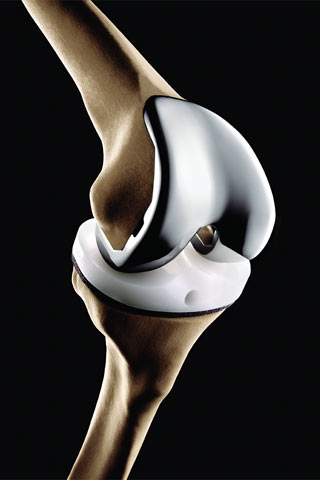
There goes the universe again–humbling man; showing him that, while his attempts to control nature may be noble, he still can’t do better when it comes to running living organisms. Take joint replacements, for example, long seen as modern orthopedic miracles (and in some ways they are), they are now being implicated in creating a painful inflammatory condition that could destroy bone and loosen the new joint.

According to new research, the titanium used to make artificial joints can lead the body to enter into an autoimmune inflammatory response, called Th2, that activates “alternatively activated macrophages,” a group of immune cells thought to be responsible for the bone destruction in the inflammatory condition.

The researchers believe that titanium chips slough-off the artificial joint surfaces, causing an allergic-type reaction, the type of inflammation associated with allergens and parasitic worm infections. The study was carried out in mice and results were published in the Journal of Immunology.

These new findings bring up two important points for me. One: I still believe joint replacements are too quickly recommended. Although joint degeneration is a real phenomenon, what causes it is of some misunderstanding by the medical profession. Joints don’t just break down. Often other biomechanical dysfunctions predispose to joint wear-and-tear, and by correcting them, the joint can readily be saved. In other words, too many replacements are happening instead of rehabilitating, and allowing self-healing. This is another paradigm problem, whereby orthopedic medicine believes joint breakdown to be random and arbitrary, and joint reconstruction a common necessity.

Two: I think that the researchers are somewhat off-base with their analysis, particularly that “alternatively activated macrophages” are responsible for bone breakdown. It is my understanding that alternatively activated macrophages are involved in the “resolution of inflammation and promotion of wound repair due to their anti-inflammatory, fibrotic, proliferative, and angiogenic activities,” which would make sense to me, as I would think the body would attempt to heal the area. The body sees titanium as foreign, and develops an allergic response to it. Classic macrophages, not alternatively activated macrophages, likely breakdown bone and promote the inflammatory response. The presence of alternatively activated macrophages is the organisms attempt to heal, the natural response of a living organism.

To my mind, why not just look to correct the underlying causes of joint breakdown? Chronically tight muscles, excess weight, foot dysfunction, chronic subluxations–all can lead to increased joint breakdown. But each one of these causes is ignored by some in the orthopedic profession. Why? Part of the reason has to do with everything looking like a nail to the hammer-wielder. In other words, professionals rely on what’s in their arsenal first and foremost. Unfortunately for you and me that means the cultural health authority always having scalpel ready for business.

The other reason is that–in the short term, at least–surgery is much easier than hard work required in rehab (About 773,000 Americans have a hip or knee replaced each year). For doctors and patients alike, easier is more attractive; and when the other causes are ignored (or denied), what better way to explain failure than the “no guarantee” nature of all surgical procedures.

My philosophy is simple and valuable in the long term. Always try conservative first, get the body back into operable biomechanical condition, and let the body do it’s own self-healing. The presence of alternatively activated macrophages should be proof enough that the body will always attempt healing, even in severely challenging situations (like having a foreign metal put into your body). If after a good-old-college-try at conservative care and self-healing doesn’t do the trick, then get the surgery. Conservative first, surgery last. Simple.

More evidence showing the dangers of vitamin D insufficiency, as a large new study shows that people with low blood concentrations of this vital nutrient are at an increased risk for dying of any cause. Any cause? Yes, and even more startling was that  by simply boosting low levels with vitamin D supplementation it cut peoples’ risk of dying in half.

According to the latest study, which looked at 10,899 patients at the University of Kansas Hospital, 70% were deficient in vitamin D, and they were also at significantly higher risk for a variety of heart diseases, including  hypertension, coronary artery disease, cardiomyopathy and diabetes. D-deficiency also nearly doubled a person’s likelihood of dying, whereas correcting the deficiency with supplements lowered the risk of death by 60%.

rickets_boy

Rickets

These numbers highlight previous research that has shown many North Americans to have insufficient blood levels of vitamin D. While Rickets due to vitamin D deficiency has been well understood for years,  the degree to which blood levels of vitamin D play a role in overall health and well-being is just starting to become clear: We now know that levels falling below 30 ng/ml are incompatible with good health.

According to the latest National Health and Nutrition Examination Survey, an estimated 25-57% of adults are vitamin D insufficient, while other studies have suggested the number is as high as 70%.  Cardiologists from the University of Kansas study have found that people deficient in D were more than two times as likely to have diabetes, 40% more likely to have high blood pressure and about 30% more likely to suffer from cardiomyopathy (diseased heart muscle) than people without D deficiency.”We expected to see that there was a relationship between heart disease and vitamin D deficiency; we were surprised at how strong it was,” said Dr. James L. Vacek, a professor of cardiology at the University of Kansas Hospital and Medical Center. “It was so much more profound than we expected.”
Vacek believes that so many people are deficient because they aren’t getting enough sun. Humans should get 90% of their vitamin D from the sun, while only getting 10% from food. We need sunlight to make vitamin D in our bodies, so 20 minutes per day is the minimum necessary exposure to maintain proper blood levels. With the fear of skin cancer looming large, many have taken to using sunscreens to reduce total sun exposure.

130571880-18130246

Experts say that in the Northern United States and Canada the sun isn’t strong enough during winter months to make sufficient vitamin D, even if the weather was warm enough to induce people to expose their skin for an extended period. To combat this seasonal deficiency, adults should get vitamin D levels checked by their doctors, and take vitamin D supplements.
This study definitely comes at an opportune time, as many in the medical field have dismissed previous vitamin D research as inconclusive, particularly the role supplements can play in returning the health to normal (or optimal) for those suffering from deficiency. I have wondered  for some time why so many doctors and med-policy stiffs have been so adamant at denying the research results on vitamin D. The only thing I can think of is that they just despise being wrong. I don’t believe it’s a pharmaceutical industry conspiracy necessarily, as many have been wont to do, but purely a clinging to old, outdated beliefs; really that’s the only explanation that makes sense to me, in light of some pretty solid data. I can certainly understand the uncertainty, but many of the previous studies have been well done, and they are vast in number, so really…what’s the problem?
I just think the old guard will never accept that they were wrong about supplementation from the start, no matter how well-intentioned their skepticism might have been; and I think many are wrong today for advocating minimal sun exposure for the masses. Some increases in skin cancer can be from chronic pharmaceutical use, too, you know…particularly medications that are immunosuppressive. It was easy to blame skin cancer on the sun in the past, but that was wrong. The sun is the most life-giving source in the solar system—avoiding it is just unwise. This latest vitamin D study is simply more evidence to support a universal truth.

This summer I was honored to be contacted by a dear friend who had just been involved in a horrible motorcycle accident. He was just coming out of his fifth surgery to repair a fractured femur (thigh bone) and tibia/fibula (shin bones) of his left leg. Through a combination of outstanding orthopedics and plastic surgery, the staff at Cedars Sinai had my friend patched up sufficiently to start a rehab program at my office. You can read his story here to get more of the fascinating details.
The program which I designed to get my friend back up and moving was a combined chiropractic, physiotherapy and neuromuscular reeducation, including extensive proprioceptive work to return balance and sense of position. We worked intensively for three months.  In that time we moved my friend from using crutches, to using a walking stick, to walking without assistance, to climbing stairs. Watch the video below to see his incredible recovery. You can see what is possible with the right care and the right frame of mind.

Rehabilitation following an automobile or motorcycle accident can return one to function and living a normal life. Watch the video to see evidence of this. I have marveled at the rapidity of recovery myself.

Hey! What’s your problem? No seriously, what problems do you have? Show me your problems and I’ll show you your blessings. Every problem, no matter how severe, has a something for us to be thankful for. But our minds create an environment of blindness—the inability to see how our problems are helping us grow.

Equally, no matter how minor a problem might seem to an outsider, for us it’s difficult. Would it help you to know that what I describe is a psychological necessity meant to guide your growth? We are problem solvers in essence; we are meant to seek and overcome. I know it’s tempting to wish that life were easy, if not simply easier, but that is an impossibility. The human mind functions in streams of consciousness, moving from one mystery to the next. Imagine if every mystery were solved…the mind would simply create new ones, because it’s an instinctual process. In fact, that is exactly what happens in each one of our brains constantly. Like I said, we are problem solvers.

So be thankful for your problems and their solutions. Be thankful for what you’ve overcome this year, and for what you’ll overcome the next. Be thankful even if your challenges have been of epic proportions, for those usually bring the largest blessings. Thanksgiving is the greatest of all holidays because it’s in the true spirit of honoring life—all of it—in challenge or calm…life is a blessing. Wishing you all a glorious Thanksgiving.

I was asked to say a few words about drug use, but not in the positive. Well darn-it, how could I resist? I’m guessing the request comes on the heels of my most recent posts on medical marijuana, of which I make no secret that I am in favor. But I wish to be very clear that my views on medical marijuana are not a condonation of recreational or irresponsible drug use. On the contrary, it’s precisely because I am so against the irresponsible and dangerous use of drugs that I advocate medical marijuana. When compared to the heavy-duty narcotics and other pain pills that are doled-out indiscriminately by doctors, believe me, medical marijuana is a blessing.

First and foremost, I am a former drug abuser, so I full well know what it means to be addicted. And I also know the down-side to heavy and/or long-term drug use. I have done it all, you name it, but alcohol and cocaine were my main weaknesses. I was also addicted to nicotine. For twenty years I smoked a pack a day.

My experience with drugs and alcohol were not all bad, though–I certainly learned a lot. If nothing else I came to understand how drugs can consume your life, how they can distort your view of the world, and how they could damage relationships. I got to experience how they could kill your motivation and prevent you from achieving your full potential. I was also exposed to a dangerous, seedy side of life that was full of mistrust, deceit, theft and violence, not to mention legal ramifications that could end a life of freedom by landing you behind bars for a long time. Yeah, lots of disadvantages to drugs; but for me it was a valuable education that will probably serve me, and hopefully others, for the rest of my life.

Despite medical marijuana being classified a schedule 1 controlled substance—high potential for abuse, lack of accepted safety for use of the drug or other substance under medical supervision, and no currently accepted medical use in treatment in the United States (not entirely true, but that’s the definition)—it does have definite benefits. In my lifetime, I have seen it help HIV+ men keep from wasting away by giving them an appetite when they had none. I have seen it help cancer patients. One elderly couple, who are in their 90s, and whom I treat chiropractically, have shared their stories with me about the unrelenting pain they feel on a daily basis due to the cancer they each have; and how not even the Fentanyl* patches their doctors put them on would bring relief. Only medical marijuana did that. That’s right—these people in their 90s could only find relief from the intense pain they felt 24/7 by smoking a joint. They were not hippies; they had never had marijuana in their lives until they were sick with cancer. And it helped them. Duh!
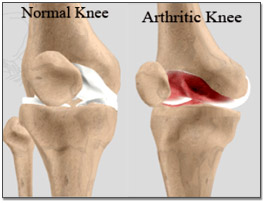
Listen, drugs in and of themselves are not bad. They are helpful, even necessary, in many instances. I’ve needed the help of pain killers. An attack of acute appendicitis in 2006 showed me just how useful morphine could be (although not 100% effective and highly addictive). Whether antibiotics, sedatives, pain meds or steroids, each has a short-term use; but too many doctors give them to people long-term, as an easy yet temporary fix, instead of looking for real, long-term and self-directed solutions.  And it’s this that leads to serious problems.

Let me ask you a question. What do the following people have in common:

  • Jimi Hendrix, John Belushi, Sid Vicious, River Phoenix and DJ AM?
They all overdosed on recreational drugs.
And how about these people:
  • Elvis Presley, Keith Moon, Anna Nicole Smith, Heath Ledger and Michael Jackson?
In both groups the common theme was an irresponsible use of the drugs. So regardless of whether a drug is illicit or legal, using it carelessly is foolish, and it can lead to illness or death.
That doesn’t mean drugs are bad by any means. Worshiping and relying on drugs, however, is unwise. And that goes for medical marijuana too. But if a substance can help cancer patients, people with HIV and people that suffer from chronic pain find relief, and maybe even help them survive (by increasing appetite), and that substance has low-risk side effects when compared to harder drugs like narcotics, then shouldn’t we use it? Shouldn’t we at least study it to see what medicinal benefits it might contain, and do our best to understand it?
That’s not me condoning drug use. I have lived both a life of drugs and a drug-free one—and I can say without a doubt that I prefer being straight, sharp and clear of mind. But I don’t knock recreational drug use, either, if the user can do so responsibly. However, rehab centers and city morgues are filled with people who couldn’t, and frankly, that could be you one day.  So if you value your life, it’s better to stay clean.
That, however, is the farthest I will go with wagging a finger at society, because I know we can’t both live in a culture where taking prescription drugs is considered ‘normal’, and expect others to not do so recreationally. That would be a fantasy.
*Fentanyl is a schedule 2 controlled substance–high potential for abuse, currently accepted medical use in treatment in U.S., and currently accepted medical use with severe restrictions. Abuse of the drug or other substances may lead to severe psychological or physical dependence (not true of marijuana).  Medical cannabis (currently a schedule 1–see above) would be more appropriately placed in this category, and probably most appropriately as a schedule 3.

Immediately following the verdict in the Conrad Murray trial, I was asked my opinion on the outcome. I think my perspective is probably much different than most peoples’, but as far as the outcome is concerned, I think it is the obvious right one. No doubt, Murray operated outside the protocols of his profession–I mean it’s unfathomable to think his activities were the accepted standards of his specialty.

But I don’t see why what Conrad Murray was doing with Michael Jackson was so shocking. I am quite certain that his practice of providing Jackson with heavy-duty drugs (propofol), literally by acting as the drip-applier, is not uncommon. On the contrary, it’s simply an extreme version of what happens in western medicine every day. But it’s hard for people to understand some of these harsh realities.

To begin with, Michael Jackson was the biggest celebrity in the world.  Do not underestimate that power. If he wanted drugs, he was going to get them. Now my personality is such that I probably wouldn’t have done it, if I was in Murray’s position. With the kind of money and power Jackson had, using a drug of that magnitude will never end well, because there could be no limit, no potential end–not when you could raise the stakes well beyond most people’s morality threshold.

However, knowing what every doctor should know about his or her patients, it couldn’t have been too hard for Murray to see how far gone MJ was already. Plain and simple, the whole thing was a disaster waiting to happen.

So since I am certain that any person with enough money can get whatever they want at anytime, if it hadn’t been Conrad Murray, it would have been someone else. In fact, I know this to be a common rationalization among doctors when pushed to answer why they dispense drugs, even when knowing the drugs will be of questionable value (like prescribing antibiotics for a viral infection). I once asked one of my chiropractic college teachers, who was an MD, why this practice seemed so common among medical professionals, and she answered, “We give a prescription because that’s what the patient wants; we know they’ll just go down the street, otherwise.”

Exactly…and I’m not knocking it.  Like I said before, it wouldn’t be my style, but I totally understand.  Listen, when $150K is being waived in your face–per month!–I’m sure you’d think about it too. We can all get moralistic about it, but…well, that’s a lot of money.

But here’s where Murray really screwed up: It appeared to me that he had no emergency plan. He never considered what he would do if precisely this scenario played out. Duh! That became evident when witness testimony came out describing how he acted in the moments immediately following the mishap–he was in a panic!

It seems to me that if you are taking that position–some mega-celebrity’s medical drug dispenser–then you you have got to be prepared for the worst. It’s not a matter of whether the celebrity-druggie is going to die or not, but when. Don’t you prepare for that? I mean…what does the outgoing doctor say, “Don’t worry Conrad, ol’ boy–I’ve been knocking MJ out for a decade. Just give him a hit every four hours–he’ll be cool.”?

Hey, many physicians have done it in the past–think Elvis’ and Anna Nicole’s doctors–and many more will do it in the future. And I think MJ knew he wasn’t long for this world–how couldn’t he? He wasn’t dumb.

Murray, you take a job like that, and you don’t know exactly what you are going to do, or say, if the worst happens?  Man, that’s stoo-pid!  He probably could have gotten away with it had he taken even the slightest precautions. Arrogance, man…or apathy. I wonder.

No, Murray took a risk that he had to know could go wrong.  In light of this, he probably is getting off easy, but it wouldn’t be reasonable to punish him more than for what your average-everyday-doctor is doing to a smaller degree with most of their patients. Had they tried to pin a tougher charge on him, it might have turned out another Casey Anthony fiasco. California prosecutors weren’t going to drop the ball. They got him on involuntary manslaughter for practicing outside the standard of care for his profession, negligence for administering a drug outside of a hospital setting, for not having any monitoring equipment, for failing to call 911 timely, and for failing to keep treatment records. In other words, not much. He won’t do any significant time.

But he won’t get to be a doctor anymore, either. I’m sure that’ll be a serious life transition. But, hey, nothing that can’t be made up for with a best-selling book. Guess we’ll see you on the bookshelves, former doctor Murray.

I’ve been getting harangued for weeks by a severely wounded ego-centric proponent of the I’m-so-desperate-to-be-right approach to intellectual discourse, that I am finally giving in and providing some support for my thoughts on obesity. The blog stalker has insisted that I prove the validity of my thoughts on obesity, and so I will provide some evidence, but let it be known that this is the last response I will make to the ramblings.

In the most recent issue of the International Journal of Obesity [Volume 35, Issue 10 (October 2011)], no less than every article supports my position:

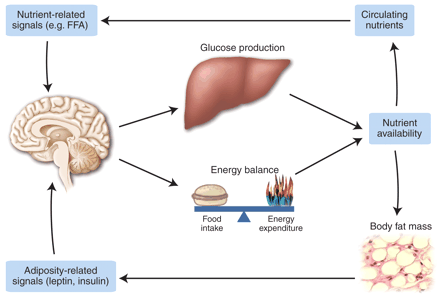
Overweight and obesity are the results of an enduring positive energy balance, that is, when energy intake is larger than energy expenditure. Hence, overweight and obesity prevention requires effective intervention programmes targeting behaviours that contribute to both sides of this energy balance. These so-called energy balance-related behaviours include dietary behaviours (for example, consumption of fruit and vegetables, or sugar-sweetened beverages), sedentary behaviours (for example, television (TV) viewing or computer use) and physical activity behaviours (for example, sports or active commuting to school).

Interesting, calories in vs. calories out (boldface emphasis mine), and not one thing about hormones or genetics. That’s because it’s science, stupid.

The PA of children seems to compensate in such a way that more activity at one time is met with less activity at another. The failure of PA programmes to reduce childhood obesity could be attributable to this compensation.

Duh!  Parents are responsible for their children especially when they see them blowing up.

Lower insulin sensitivity at childhood may predict subsequent total and central adiposity gain at adolescence. These findings enhance the role of insulin sensitivity as a target of obesity prevention already from the first decades of life.

Or in other words, don’t let your children eat junk food.

Children whose both parents were overweight or obese both before pregnancy and after 16-year follow-up had a strikingly high risk of overweight at age 16 years…parents’ long-term overweight (BMI greater than or equal to25 kg m−2 before pregnancy and after 16-year follow-up) was the strongest single predictor.
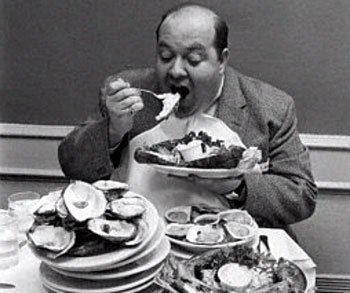
I almost can’t believe that anyone would need proof of this.

Consuming the recommended daily amount of water for children could result in an energy expenditure equivalent to an additional weight loss of about 1.2 kg per year…water drinking could assist overweight children in weight loss or maintenance, and may warrant emphasis in dietary guidelines against the obesity epidemic.

Too much abdominal (visceral) fat increases an individual’s risk of developing insulin resistance and other metabolic disorders. In a Perspective, Hug and Lodish discuss the unexpected finding that blood levels of a hormone produced by visceral fat, called visfatin, correlate with obesity.

Okay, that particular study is from a different journal, but I couldn’t resist (and one more from same journal)

But back to the International Journal of Obesity:

Conclusion: Hormone (serum visfatin) levels are influenced by body fat content in obese children

An association between children’s body mass index (BMI) and overeating has been establishedovereating, impulsivity and reward responsiveness were significantly associated with childhood BMI. Mediation analysis revealed that impulsivity and reward responsiveness equally and significantly predicted BMI indirectly through overeating.

The single most idiotic argument I’ve heard is that overeating is not a cause of obesity–precisely why this will be my last response to such nonsense. I cannot discuss an idea with someone if we don’t speak the same language.  Denying the most basic knowledge we have about physiology puts us on different planets.  Conversation over.

The teenagers who ate at FF restaurants consumed more unhealthy foods and were more likely to have higher BMISDS than those teenagers who did not eat frequently at FF restaurants.

  • That prosperity leads to obesity:

Ethnic minority groups in Western European countries tend to have higher levels of overweight than the majority populations for reasons that are poorly understood. ..Conclusion: Contrary to the patterns in White groups, the Dutch ethnic minority women were more obese than their English equivalents.

It’s only poorly understood because the right questions aren’t being asked.  Essentially the study shows that culture alone isn’t definitive.  However, I propose that it’s the change in culture, particularly entering an environment where conveniences abound.

…higher preferences for sweet and fatty foods compared with the other two groups. Food preferences were also related to all overeating measures, which in turn accounted for a substantial proportion of the variance in BMI…The associations reported in this paper are important from a public-health perspective because of the abuse potential of sweet-fat foods and their strong relationship with obesity.

And that’s that. As I’ve said before, Mr. Stalker, I don’t do peoples’ research for them. But because you showed such diligence in asserting yourself, I thought I would finally accommodate. I didn’t have to go far for supporting articles–one journal, sir, was all I needed. That’s because what we know about obesity isn’t in need of an overhaul, therefore most of what I put forth is BASIC. What is needed is a halt to the notion that the individual isn’t responsible for his or her own weight, and that they are powerless because of their genetics or hormones.

So as I said, I’m done. I will post a few more promised pieces on obesity in the future, and then I move on.

Copyright © 2013 Dr. Nick Campos - All Rights Reserved.