 In the previous post, I discussed several benefits that come from regular meditation practice. One benefit that warrants its own piece is that meditation makes the mind ripe for inspiration. To understand this phenomenon, I will have to introduce a concept, one that is similar to the notions of God, soul, or Higher Mind (next post). Having no way to prove the existence of any of the above, and also having no way to falsify them, these abstract ideas are unprovable and fall into the realm of faith. However, I would like to point out that, despite there being no rigorous way to prove or disprove the forthcoming concept to others, you can gain experiential proof for yourself by doing what the Buddha always encouraged of his students; he’d say, “Ehipassiko,” or come see for yourself.
To understand what I am about to share, you must first understand the spheres that surround the Earth. Although Earth has seventeen known spheres, I will only touch upon five: the geosphere, lithosphere, hydrosphere, biosphere, and atmosphere. A sphere is a three-dimensional shape equivalent to the two-dimensional circle, of which every point on its surface is equidistant from its center. The Earth itself is a sphere. One may think of Earth’s spheres, then, as smaller to larger orbs in, on, and surrounding the globe. The first and smallest is the geosphere, which occupies the space within the Earth’s core. It is the molten rock deep inside the Earth’s surface, magma, as it is called, as well as the mantle and plasticky-layer known as the asthenosphere. The geosphere is what makes up the inner core of the planet.
The next sphere layers outward, starting with the lithosphere, which is the rocky crust of land on the Earth’s surface. Litho- means “rock,” and thus the lithosphere is the mountains, volcanoes, and other rocky surfaces of the planet. Along with the lithosphere, the hydrosphere makes up the surface of the Earth. As its name implies, hydro- means “water,” so the hydrosphere is the Earth’s bodies of water. The biosphere is all the living things on the planet, including humans, animals, plants, fungi, bacteria, and viruses. And then there is the atmosphere, which surrounds the Earth in a sphere just larger than the planet itself. The atmosphere contains the gases needed by living things to breathe and carry out photosynthesis; it maintains pressure sufficient for the presence of liquid water, and it also provides protection from the sun’s ultraviolet (UV) rays.
 Each of these spheres contributes to Earth’s many functions, or to the ecosystems residing on the planet. Another sphere, and the one which I wish to introduce as the abstract, unprovable concept, was postulated by two thinkers at approximately the same time (and through mutual influence on one another). It is called the noosphere. This sphere is the hypothesized sphere of information, named after the Greek nous-, which means “mind” or “intellect.” The two founding conceptualizers of this evolutionary biospheric development are the French philosopher and Jesuit priest Pierre Teilhard de Chardin and the biogeochemist Vladimir Vernadsky. I will not discuss their complete conceptualization of the noosphere. For that, I recommend further reading, specifically Teilhard de Chardin’s The Phenomenon of Man (Harper Perennial Modern Thought)
 Now, how do some ideas lead to innovation that ends up influencing humanity for years, generations, and even millennia? Why do some people get big ideas while others seem to think diminutively? The answer is more complex than I can do justice to in this one article, but the simple explanation is that some people are proficient at clearing their minds of the relentless mind chatter I have referred to in a previous article on mindlessness. As a result, they clear the receiver, thereby enhancing the transmission channels from the noosphere. Furthermore, while almost everyone gets great, inspirational ideas from time to time, not everyone acts on them, which a big mistake in my opinion. A discriminating mind is obviously needed to determine which ideas should be acted on and which shouldn’t, but it seems more common than not for the average person to disqualify their inspirational ideas as crazy, undoable, or unworthy for whatever reason people do. Again, based on my understanding of the noosphere, I believe it is a mistake to discount your downloaded inspirations.
While meditation is not the only practice that can increase your transmissions from the noosphere, it is a simple tool that you can utilize immediately. There is a right and wrong way to meditate, as simple as it may sound, and I find that many people come to my courses without having received proper instruction on the technique and philosophy behind an effective meditation practice. Both elements are necessary as philosophy without technique is empty, and technique without philosophy is blind. So my recommendation is to learn both. If you would love to learn the hows and whys of meditation, as well as other techniques which will strengthen your ability to both tap into and increase the transmission from the noosphere, please contact me. Every great idea has been downloaded from the noosphere; yours are no less great, you simply need to act on them. Tap in, download, and act—it really is that simple. Contact me, and I can help you with each one.




 With this basic intent and action, the practitioner will also need to consider some fundamental elements of our mind which are ingrained and habitual, yet completely contrary to maintaining focus. These mind habits will pull your attention away and take you down paths which are easy to get lost on. By simply having awareness of these habitual behaviors of the mind, you can keep yourself off these temporal paths of past memory and future imagination. I do not mean to knock either memory or imagination, as both serve their purpose, but as I have said, both oppose our intent to maintain focus. Discussing these elements is another of way explaining mindfulness by laying out exactly what it is not.
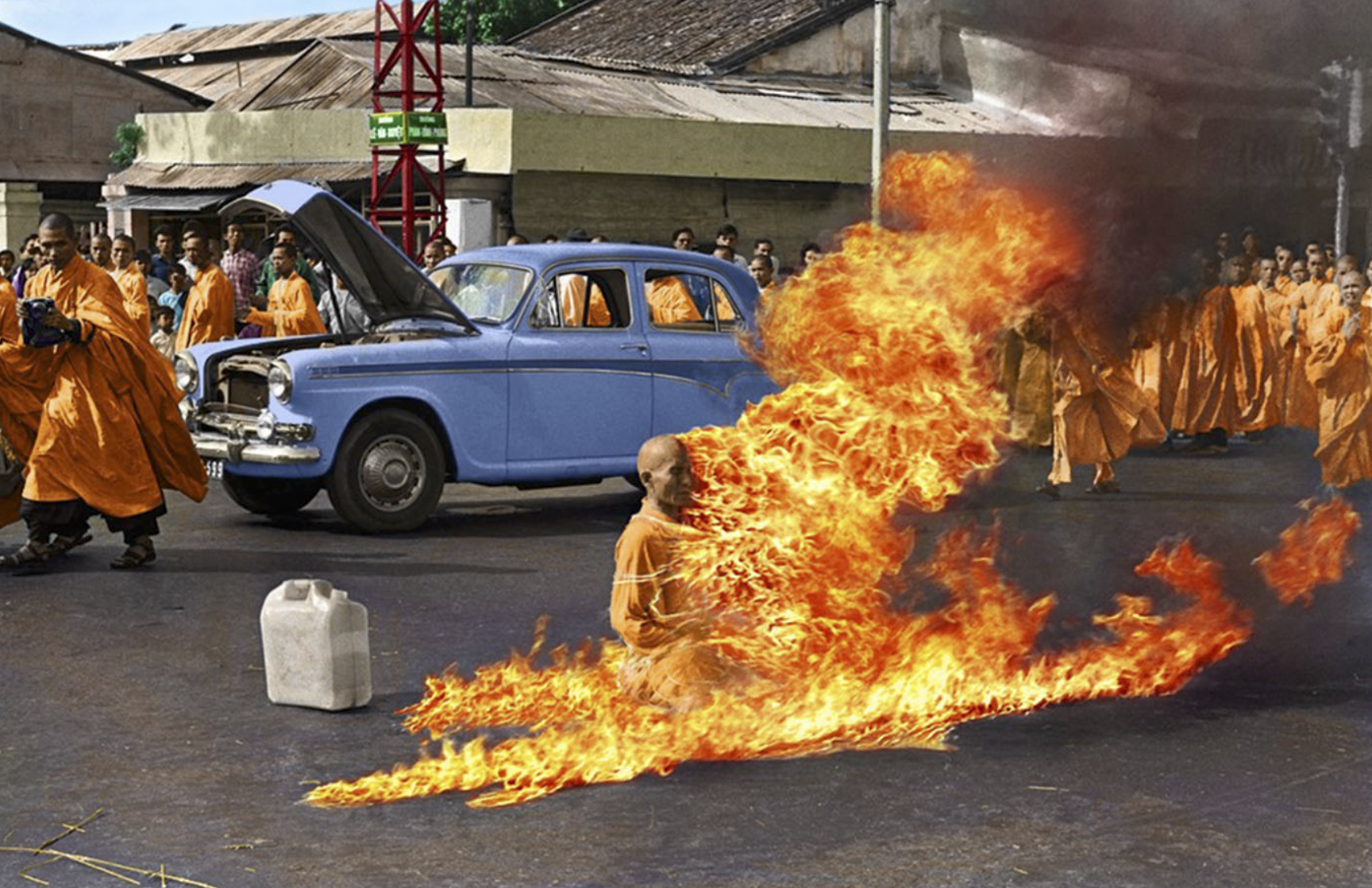


 More importantly, they happen without our taking notice. We do not have to think about our every action. We do not have to initiate every move, only the decision, and sometimes not even that. By freeing our mind of these routine actions, we are able to concentrate more on complex actions and behaviors, we are able to think about abstract ideas, and we are able to self-reflect (as far as we know, the only species that does this). Complex thinking has led to the creation of musical masterpieces, mathematical theories, and technological innovations. It has inspired timeless art, revolutionary science and allowed us to ask and ponder the great philosophical questions of life, those that give our lives meaning. Without an automation of our primary thought system, it is questionable whether we’d have ever accomplished anything more than our most basic survival. Automation of thought is the first and foremost system used by the brain on a regular basis. More than ninety percent of our day is made up of habitual actions. According to Daniel Kahneman, Nobel Prize winning psychologist and economist, ninety-eight percent of our mental processes are of the automatic, effortless, and unconscious kind, even though we tend to believe we are making rational decisions throughout the day. Most people are thus walking through life effortlessly unaware, allowing their automatic thoughts to flow in and out of consciousness, and create a stream of time which ultimately frames their experiences. I like to call this unconscious consciousness – consciously awake, just not aware.
 While many people turn to drugs and alcohol in a futile attempt to quiet the mind-chatter, these mind-alterers actually make matters worse over time. The only way to diminish mind-chatter is to pull the mind into attention. That’s why sports and exercise have been popular since antiquity. By focusing on a physical activity, the mind is forced into what Kahneman calls system 2 thinking, or one which is done with our conscious mind – conscious consciousness – effortful, intentional, and controlled. Making art and music are also amazing mind-chatter reducers. So is doing math, or thinking about anything in detail, like when you strategize or follow a protocol. Anything which forces the mind to focus reduces mind chatter (one reason smart phones have become addictive). However, even these activities, when done repeatedly can become automatic. Without a doubt, people strive to make automatic as many of their activities as possible. We call this mastery. And mastery makes what was once effortful a habituation. As a result, once we master an activity, it does have the potentiality to become an automatic process.



 Obviously, different people want different things. Every person can have a version of the future they envision to some degree. I will explain this idea more fully in a bit. But right now exists opportunity to shape your world in the way you want it. Yes you can shape society too, but do not fall victim to the belief that you can do it against the will of others. To create lasting social change, the hearts and mind of the people must be won over. Let me encourage you to think of any lasting social change, and investigate how it was accomplished. Yes violence has happened in moments of societal change, but the violence itself was not the catalyst to the lasting change, it was the inspired movement of hearts and minds which led to the transformation.
  When forging a path in this new world, it would be wise to focus on your highest values. Those things that act as drivers for your decisions – things you are inspired by daily – are what you should focus on and centralize in your vision. For some people it is family, for others it is service, and for even others it is the beauty of the world (artists, poets, musicians, mathematicians, etc.). There is certainly no right or wrong in this regard, other than the importance you give it to your mission. Simply put: A mission is a plan with a purpose. The purpose is the why you do what you do, while the mission is the vision.
 Finally, and most importantly, is to strive for balance – in your personal endeavors, as well as for the collective or greater good. Understand that regardless of your vision, you will face obstacles in that endeavor. Obstacles are not vision-killers; they are feedback mechanisms that are in place to guide you. Your vision will be shaped and refined by the obstacles you face…and overcome. To do so you may need to alter your plan a bit. You may need to learn more, or you may need to change beliefs or perspectives. I love to read biographies on the greats of humanity to get a sense of their obstacles, their solutions, and their evolution. You will have yours in your unique way. When attempting to elicit change that is resisted by others, try to find a middle ground. Believe it or not, it is possible to exist in coinciding realities with others – that is, many people can live in worlds of their making together, even when it seems that their worlds are diametrically opposed. Find the common ground. How do you get what you love while others get what they love? That may be the very challenge for you to figure out, but what a powerful vision that is. “All you need is love” is not some hokey song lyric, but a profound truth of all human beings: How do I get what I love while you get what you love…? Living in the extreme polarities of any human issue is volatile – it brings the most stress, the least cooperation, and the baddest blood to the table. Finding the center point and striving for a win-win is the greatest achievement one can have, with the highest possibility of longevity. Game theory, a mathematical study, shows unequivocally that people do better when working together.








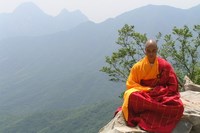



















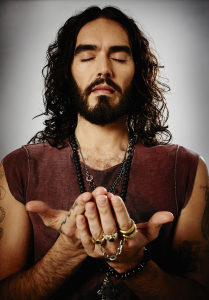 The quest to “find” the Self can be carried out by a number of paths. One such path is meditation.












 Skeptics wish to emphasize that these results should not have tall people worrying about contracting cancer. I agree. Scientific inquiry into everything has value on many levels, but causing unnecessary stress is not one of them. Nobody wants or needs to have the risks associated with uncontrollable traits hanging over their heads, yet science shows what it shows; what can we do? It’s a tough situation really—an access to truth, yes, but unpleasant findings nonetheless. My feeling is just be grateful for the information so that you can monitor yourself throughout your lifetime as you age, and perhaps an inspiration to pick up the health regimen a bit. Hey, we can all do better than what we are doing now, and I even believe that striving for and achieving better fluctuates constantly throughout our lifetime too, so now is as good a time as any. If you are tall: start juicing, get lots of vitamin D (yes, even in the face of these findings on melanoma – adequate sun exposure is waaaaay more important than any melanoma fear, just sun smartly), take omega 3’s, drink lots of water, eat moderately, sleep plentifully, and so on, and you should be fine.