Suffering from insomnia? Trouble falling asleep or getting back to sleep after waking up in the middle of the night? Visualization might be just the thing for you.

About one in every eight persons suffers from some form of insomnia. Not being able to sleep stinks. I’ve been there and it’s miserable. If you don’t know beyond a rough idea how important sleep is to your body’s functioning, please read my eye opening article on the subject.

Insomnia can be caused by many things including stress, anxiety, drugs/medications, caffeine and other stimulants, jet lag and overeating. There’s even something called behavioral insomnia which is when a person worries too much about not being able to fall asleep (me when I have to be up especially early the next morning) and tries too hard to do so. For a great piece on insomnia with excellent tips, check out this great article.

A recent study has shown that by doing a practice called guided imagery – the use of mental visualization to promote physical healing or attitudinal or behavioral changes – insomniacs have been able to improve both the quantity and quality of their sleep. According to Dr. Yara Molen, of Federal University of Sao Paulo in Brazil, subjects “listened to an audio CD right before bed that teaches breathing, relaxation and guided imagery that helps them get rid of their worries and imagine drifting off to sleep.”

I’m not all that surprised of these results, since I’m a huge advocate of visualization in general, and am certain that these techniques can move mountains, let alone get you sleeping restfully. The mind is a powerful thing, and when you think about it, it’s all in our heads anyway. In my upcoming book, The Six Keys To Optimal Health, I discuss in detail the nature and function of sleep, insomnia and some of its many causes (particularly the behavioral aspect), and the power and practice of visualization. Check it out this August on the book’s release.

Researchers at the University of Oregon have found that giving money to charities stimulates pleasure centers in the brain the same way as, get this, sex or food does. In the study, nineteen women were given $100 each and then told they had to give the money away. Their brains were scanned by MRI as the women watched automatic transfers go from their accounts to a local food bank.

The areas of the brain that were stimulated were the caudate nucleus and the nucleus accumbens – areas known for pleasure.
Here’s what I find questionable: would the pleasure centers have been stimulated if the women had to give away their own money. Ha, ha, ha – and they call this science. Sheesh. Please University of Oregon, do the next study on a group of insurance adjusters, would ya? Now that would be moolah well spent.
SAY GOODBYE TO POP-TARTS
Well, Kellogs Co., the maker of Frosted Flakes and Fruit Loops, says it’s going to make its cereals and snacks targeted at kids healthier or stop making them altogether. Following threats of lawsuits by parent and advocacy groups who worry of childhood obesity, Kellogs has decided to step it up and make a healthier version of these long time sugary snacks.
Now wait just a doggone minute here – I like Pop-Tarts. Geez, do you gotta change them just cuz some child abusers have been actually feeding this product to their children forbreakfast? C’mon, most of us levelheads know its candy. What next – organic Abba Zaba?
SPORTS-CREAM FOLLOW-UP
As we discussed a few days ago, the consequences following the death of a young lady who had used excessive amounts of sports cream is that experts are now urging clearer warnings to be used on labels. Some are even suggesting that creams should be only used with medical supervision.
Gotta say it again: don’t take the safety of over-the-counter (OTC) medications for granted. All chemicals are poisons if administered in high doses or over an extended period of time. Read warning labels and teach your children to do the same. Definitely make it your business to know what your kids are taking – and keep abreast of what’s happening in health. It can save your kid’s life.

My wife told me today of a mommy she met at the park. The mommy asked my wife if she gives my daughter soy milk. My wife said no – we don’t drink it so she didn’t really see the point in starting my daughter on it. The mommy then said she only gives her child soy milk, and never cow’s milk, although she has been noticing her child’s teeth were decaying.

Now, pediatricians will o.k. a child’s drinking soy milk instead of cow’s milk if the soy product is fortified with vitamin D and calcium. That’s because soy milk is not as great a source of these two nutrients. Furthermore, soy milk contains compounds – called phytates – that decrease the absorption of calcium and other minerals. Vitamin D is necessary for proper bone development, immune function and cell growth. Calcium is necessary for healthy bones, muscles, blood vessels, and nerves. Both nutrients play a major role in tooth development and health. Deficiency in either can cause weakened or underdeveloped bones and teeth, including tooth decay.

O.k. here’s my problem with what my wife told me. I think there is a major cultural shift happening in this country, and it’s towards natural health. I’m all for natural health – heck, I’m a chiropractor, for crying out loud (and I did write a book about it – The Six Keys To Optimal Health) – however, I think that if you are going to do things naturally, you’ve got be smart about it.

You see, the medical paradigm is actually the safest alternative for people who do not want to think for themselves. On a purely statistical basis, medical wisdom is the safest, lowest maintenance way to care for your body. Do what your doctor tells you and, for the most part (probably around 75% – I’m pulling this number out of my keester, but it’s more for illustrating a point, anyway), you should be o.k. True, for the minority of people, following the conventional wisdom might be harmful, useless, or minimally beneficial at best. So for these people, thinking outside of the box is often necessary.

That’s where “alternative” health practices originated (and in this case we’re discussing natural, but it can just as well mean any other alternative therapy – magnets, leaches, exorcisms, whatever); they came from man’s desire to heal himself outside of what he was told worked, but, unfortunately, hadn’t for him (or his parents, brothers, sisters, cousins, etc.). As the alternative therapy began helping more people, it began to rise within the mainstream, moving closer, itself, to becoming conventional wisdom.

Here’s the point: if you are going to practice natural or alternative health methods, be informed. Don’t give your child a product without knowing everything about that product, and definitely do not substitute a well-known health product (vitamin/nutrient) for one of today’s latest health-food flavors of the month. I know, I know, soy is safe – I just said it, didn’t I? However, if you notice your child’s teeth decaying – WAKE UP! Either look it up and educate yourself, or call your pediatrician or dentist and find out if there’s a vitamin deficiency causing it.

The bottom line is this – if you are going to be the master of your own health, then you gotta know the way to do it: read the instructions, watch the demonstration video, take the weekend seminar. If you don’t have the time to buck up, then just do what conventional wisdom (read: modern medical science) tells you – it’s simply the safest way to go.

Some people mistakenly believe that malnutrition is a condition restricted to the underfed and starving. The truth is that anyone can be malnourished regardless of body shape and size. Malnourishment means simply–lack of adequate nutrition. Case in point: Experts in Britain have disclosed that 2 million obese people in that country are also malnourished.

Total calories is not the definitive factor in the amount of nourishment – energy, nutrients and sustenance – a body receives. To be healthy, and to function adequately, the human body needs calories (for energy), vitamins and minerals (for metabolic processes), and enzymes and antioxidants. If one takes in a large amount of nutrient poor foods – like most processed fast foods – then malnutrition, and obesity, will result.

As I point out in my upcoming book, The Six Keys To Optimal Health, obesity can actually be countered by adopting a diet high in nutrient rich foods. By making sure the body is getting adequate nutrients, one can actually stave off the hunger response, which, along with other things, can then lead to a decrease in weight.

WARNING: OVERUSE OF SPORTS CREAMS CAN BE HAZARDOUS TO YOUR HEALTH

On another note, many chiropractors, including me, use sports muscle cream to massage sore, stiff and spasmed muscles before administering a chiropractic adjustment. They are very useful in working out those tense, tight areas and they feel good, giving the client a warm soothing feeling for about a half an hour following treatment.

A story has just broke of 17-year-old girl in New York who has died following the overuse of such creams. It seems that the girl, a cross country runner, was using the creams “to excess” according to the medical examiner, which included spreading the cream on her legs, wearing adhesive pads, and also using an unspecified third product. These products contain methyl-salicylate, an anti-inflammatory and pain reliever (or analgesic).

As this story gets more attention, please don’t be afraid to have this product used occasionally. As with any medication, it’s overuse that causes problems – addictions, toxicity, death – and not moderate use. Having this lotion used as an adjunct to massage is totally safe, as was pointed out by the medical examiner in the case, this was “the first time that her office had reported a death from using a sports cream”. And another important aspect to the story is just because a medication, spray, salve or ointment is sold over the counter doesn’t mean it is safe to be used indiscriminately. Read labels and use medical products MODERATELY. Nuff said.

Yes, that’s right, even chiropractors need a good adjustment some times. In fact, they probably need it more than the average Joe.

I tweaked my neck ten days ago while drying my hair after a shower. Oh, it was bad – I could barely move my head without excruciating pain. I toughed it out at work, but…it wasn’t good.

I had a subluxation of my first cervical vertebra (the atlas); it was rotated and wedged to the right. Aside from the pain, I had severe muscle spasms of the upper trapezius muscle (upper back and shoulder) on the left, which meant…more pain. I was having trouble sleeping. Every night, I woke up several times throughout my sleep despite the fact that I’m usually a very sound sleeper. And on several occasions, I woke up at 4 or 5 am and couldn’t fall back to sleep – a definite anomaly for me.

I also noticed an increase in symptoms related to allergies. Now, granted it’s been windy here in L.A., I guess I am connecting the allergy symptoms to my subluxation, because the second after I was adjusted today, the symptoms cleared up.

I feel better now, but I know that I’ll have to be adjusted again in a couple of days. I generally try to get adjusted once a week, but in these types of situations I need more. All in all, I’ve been adjusted three times since developing the tweak, each time I felt better than the last. That’s how it works – sometimes it only takes one adjustment, other times, more.

Hey, I’m just happy I’m feeling better. I accept pain an an occasional part of life, but like most people, I don’t love it. I take the presence of pain as a sign that something is not right, and I’ve got to get it checked out and corrected. BINGO – that’s the way the body works.

So, if you’re feeling pain – go visit your chiropractor – don’t wait for it to “go away on its own”, because, the fact is, it probably won’t.

http://www.drnickcampos.com/

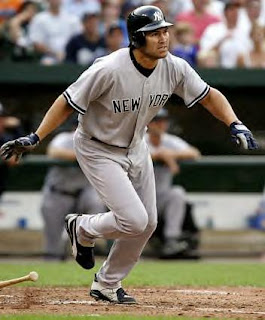
Look who’s singing chiropractic’s praises now – Johnny Damon of the New York Yankees!

The Yankee’s center fielder has this to say about chiropractic care: “Without chiropractic, I wouldn’t be able to play consistently throughout the season. I’ve been under the care of a chiropractor for eight years. I first went [to a chiropractor] because my body was really out of whack from the constant grind of a 162-game schedule.” – taken from interview with To Your Health magazine.
But like many people, Damon was a little nervous about being adjusted at first: “Initially, I admit that I was a little freaked out about the whole neck [adjustment] thing, but now, chiropractic is a must for me.” If you haven’t checked it out yet, read my latest article on what makes the Pop!ping sound during a chiropractic adjustment.
It’s not just Johnny Damon utilizing the incredible power of chiropractic to his advantage but the whole NY Yankees team: “Last year, we had tons of back problems [on the Yankees]. There is no way we could get back and ready for another season without chiropractic.”
He sums it up this way: “Maintaining your health just leads to a better way of life for each individual. Chiropractic, specifically, can improve your posture, your circulation and just really benefit your quality of life in the long run.”
Thanks Johnny – I couldn’t have said it better myself.
If you’ve ever wondered what the popping or cracking noise is when you receive a chiropractic adjustment, log onto: The Pop! for a detailed explanation.

In the news today: Omega-3 fatty acids reduce blood pressure: study. O.k. – if you’re not taking omega-3 FAs today, the question is – why not? Please read my 2005 article: EFA’s – Nature’s Beauty Secret for Healthy Skin. There are so many benefits to taking this supplement that it really needs to be a part of your regular health regimen.

You know what’s the biggest cause of missed work in the European Union’s 27 member states? BACK PAIN!!! Well, you don’t say? What about in America? Same here. Check out these facts from The National Institute of Neurological Disorders and Stroke. Isn’t it fascinating that these countries – our own included – haven’t adopted a chiropractic health plan benefit for all workers. Some company health insurance policies still don’t cover chiropractic, and it’s plain and simple foolishness. Chiropractic has been shown to significantly lower musculoskeletal pain symptoms. View some of the studies here. If your company is not providing you with access to chiropractic care, get on them. They’ll improve productivity, decrease absenteeism, and ultimately create loyal employees (who wouldn’t be grateful?) if they do.
Looks like medicine is looking at a performance enhancing drug to treat congestive heart failure. Sounds interesting anyway, but we’ll have to wait for the conclusion.

Greetings and welcome to Optimal Health – Dr. Nick Campos’ blog on health and wellness news and information.

I will be posting regularly and will discuss some aspect of health, be it tips or news.

My purpose is to bring you health news and information from a slightly different perspective than what you may be used to.

So, come back daily and find out what’s really happening out there in the world of health and wellness.

Dr. Nick Campos
www.drnickcampos.com

So you’ve beaten neck pain this time, and I am sure you don’t want to go through that battle again, so the best thing you can do to avoid a rematch is to be conscious of your posture and biomechanics when you exercise. Biomechanics is the way the body moves, and doing so properly will be the difference between looking and feeling good, or breaking down structurally. That’s right—poor biomechanics will lead to increased joint degeneration, tight muscles, sprains, strains and other injuries. So remember to keep your shoulders retracted when you workout, whether lifting weights, dancing or doing yoga.


Retracted shoulders are the proper biomechanical position for upper body movements, so always keep that in mind when working out. This should keep your neck and shoulders operating smoothly throughout your lifetime. Neck pain is no fun—I speak from experience—so the best defense is a good offense: attack future neck pain by creating the best environment for you neck, shoulders, and upper back to function. You won’t have to suffer or find yourself under the surgeon’s knife one day if you listen to me now. Whether you are trying to beat neck pain now, or prevent it from happening in the future, follow these ten steps and you can’t go wrong.

56569871 (Copy)When it comes to beating neck pain, and preventing it from rearing its ugly head in the future, posture must be addressed. Good posture has so many benefits that not correcting yours now is a huge mistake, but if you have been having neck pain, then you’ll need to do it now anyway, or you just won’t feel better for very long. My absolute favorite exercise to get the good posture ball rolling is the Brugger Relief Position—it’s called a relief position because once your postural muscles become used to the movement, this pose should feel great. Watch the video below to see the proper way to do the Brugger Relief Position:


This position conditions the postural muscles which hold us upright when we sit or stand. It has some similarities to the chest raises, but you do not have to squeeze hard in this one—just light enough to feel the contraction should do. The combined moves in the Brugger are some of the fundamentals of good posture, so practice liberally—five times per day is perfect, and just come back to it periodically throughout your life. Simple. Finally, let’s talk biomechanics:

Next (10 of 10)

Once inflammation has been diminished, muscle spasms reduced, and muscle tissue decontracted it is time for lengthening the muscles of the neck themselves. Although a number of neck muscles could use stretching, the upper trapezius and levator scapula are two of the most common muscles involved in neck pain. Further, due to stress or simply poor posture, both these scapular elevators get short and tight over time. Watch the video below to see the best stretches for the upper trapezius and levator scapula to help beat neck pain:


It is important with these two stretches to do the steps in order; if you miss a step or combine them, you will not feel the stretch, so if you mess up a step, start over from the beginning. Avoid the temptation to pull on your head to help get a better stretch; what I show in the video should be enough. Now let’s talk about posture:

Next (9 of 10)

Schroeder-Piano (Copy)One important factor in beating neck pain is to strengthen and stabilize weak areas such as the upper back and shoulders. Since we spend so much time in activities which have us flexing our upper torsos (think Schroeder playing the piano), it is no surprise that the upper back muscles get weak or inactive as a result. Strengthening this region, then, is of the utmost importance. My favorite exercise to carry out this task is the chest raise—simple and effective…no bells, whistles, benches, cables, kettlebells or five-finger shoes needed. Watch the video below to see how simple the chest raise is to do; but don’t mistake its simplicity for easy—this exercise is tough, especially if your upper back extensors are deconditioned.


People will often ask me if they should do this exercise with weight. The answer is NO! Gravity will provide the resistance. Weights will simply have you recruiting muscles you are not attempting to strengthen. If not challenged by this movement, then you may not be deconditioned. This is a rehab exercise, not a gains exercise. Stick to your tried and true for muscle growth. But like any other contraction, muscle tissue is being micro-torn, which will then repair, so giving a minimum of one day rest between sessions is imperative. Drink lots of water too (two liters), always. And get ready for the next stretch: the neck stretch…

Next (8 of 10)

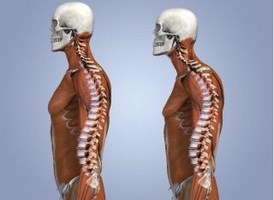
Once you have had your neck pain spasms and hyper-contractions addressed, you can now start stretching. While a number of neck and shoulder muscles will need to be stretched for a comprehensive recovery from your neck injury; one of the most fundamental—one which I give to every one of my patients that has neck or shoulder pain—is the pec stretch. The pectoralis major and minor are the two muscles that make up the chest. Although both will need stretching, the pec minor in particular can be problematic when short and tight. Because of its insertion point on the scapula (shoulder blade), a tight pec minor will roll the shoulders forward and the chin forward and out (anterior head carriage), which creates quite a strain on the neck.

spine-9 (Copy)

Watch the video below to see the best pec stretch to relieve neck pain.


The pec major will also need stretching. Watch this video here (don’t be fooled by the title) to learn the best pectoralis major stretch to relieve neck pain.


Next (7 of 10)

Two things happen to muscle tissue: One is they get short and tight, and two is they can remain in contracted state. Shortened muscles are your typical “tight” muscles, which you can stretch to provide lengthening. Contracted muscle on the other hand can be stretched til the cows come home, and they will not de-contract. Muscle spasms are an extreme example of this hyper-contraction. Try to stretch a spasm and all you will do is make it worse, because the muscle will reflexively oppose the lengthening (that’s why they have spasmed to begin with—the incredible Innate Intelligence of the body). Decontraction is best carried out with a technique called post-isometric relaxation (PIR). As the name implies, it involves relaxations (decontraction) after a light contraction. The idea is we need to contract to relax. Watch the video below for a demonstration on this enormously effective relaxation technique:


PIR is so effective, and hyper-contracted muscle so painful, that this technique alone can be the answer for your chronic neck pain–you know the kind: the one that has sent you to a multitude of doctors, chiropractors, therapists and acupuncturists, none providing the complete relief of that painful neck that you’ve just wanted…to…stretch…out, but it never seems to help. That is usually a hyper-contracted muscle and you need PIR.

Next (6 of 10)

Once the inflammation connected to your neck pain has diminished, you can start to receive muscle work. Muscle work, in this context, can refer to anything from massage, to trigger point therapy, to post-isometric relaxation (PIR). Although it is imperative for inflammation to be reduced, a practitioner can work around any inflamed area, so therapy for the upper back, for instance, can be very helpful to the person suffering from neck pain. Muscle spasm, a common reflexive guarding response to many neck injuries, can also be reduced with electric muscle stimulation. Watch the video to see a demonstration of this type of therapy.


Because the muscles can be such a large component of neck pain, wisdom is in addressing the muscle tissue to return blood flow, break up scar tissue formation, and realign the connective tissue fibers being laid down by repair cells so that this soft tissue can heal properly, and with least potential for creating an environment of chronicity (scar tissue, poor blood supply, trigger points). Once the neck pain muscle spasms have been reduced, those hyper-contracted muscles need to be relaxed.

Next (5 of 10)


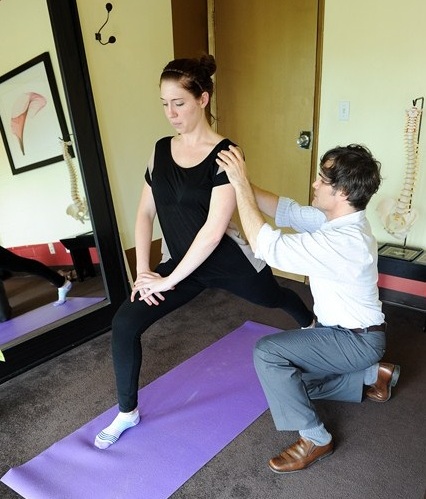
Neck pain - Palm Desert chiropractorIf you are dealing with an acute injury—ligament sprain, muscle strain or herniated disk—you will need to ice the area. The best way to tell if ice is necessary is to poke around the painful area. If the painful points are easily found and are tender to the touch, that is a good indication you need to ice the region. Icing is a very specific activity, which can make or break your healing, so following the proper icing rules is essential. Watch the video below for the proper way to ice an acute neck injury.


Ice breaks inflammation—that vital part of the healing process that can act destructively when allowed to sit around for too long. Inflammation has an interesting characteristic, whereby it causes a diffuse pain (wide area, difficult to pinpoint). As inflammation decreases, pain becomes more localized. These are a few more signs that tell you the need for ice. People often ask about using anti-inflammatories, like Motrin, instead of ice…I wrote a piece on it here, and will leave it to you to read up. Once inflammation has been reduced sufficiently, you can move onto the next step

Next (4 of 10)

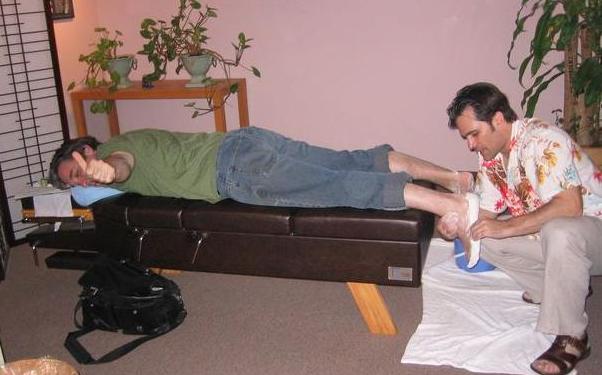
Neck pain - Indio chiropractorA good chiropractor will give you a full evaluation—physical, orthopedic and neurological. Most neck pain has a complex of factors, from spinal, to muscular, to fascial, to disk, and each one needs addressing. Some factors you can take care of yourself, but others just need professional care.


If you have fixated spinal joints (subluxation), you will need a chiropractor to release them. No rest, stretching, exercising, heat, ice, or Advil is going to take that pain away. Only a chiropractic adjustment will do that–by opening the joint and restoring movement. Don’t underestimate this crucial step—it is why so many neck pain cases never fully resolve. Get your neck pain evaluated by a chiropractor for the most comprehensive approach to neck pain relief.


Next (3 of 10)


While flexibility is important for joint opening, strengthening the surrounding knee musculature contributes to improved stability, along with gains in power, speed and balance:

Knee strengthening
Knee strengthening

Wall squats and lunges (graduating from static to walking) can strengthen leg muscles (along with glutes and other surrounding pelvic muscles), as they are compound movements (groups of muscles working together).

Next (7 of 7)


Finally if you have an underlying foot dysfunction (overpronation or over-supination) you increase your susceptibility to knee injury due to faulty biomechanics and diminished proprioception. Foot dysfunction can be helped immensely by a good orthotic shoe insert.

Custom made orthotics to help knee pain

Custom made orthotics to help knee pain

Custom orthotics are best, and for that you will need to visit a professional (like a sports chiropractor or podiatrist). Don’t let your knee pain or injury become chronic, as that can lead to irreversible damage requiring surgery. Follow these tips and keep your athletic performance pain free.

West Hollywood Chiropractor Knee Pain
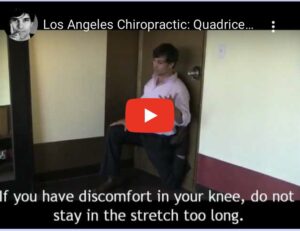
Flexibility is important to joint health, and never more true than with the knee. While undoubtedly every person is different, most people can benefit from some form of stretching, as it is the most effective way to preserve the ‘openness’ of the knee joint. Watch the video below to see four increasing levels of quadriceps stretches. Find the one that’s right for you, and gently open the knee by stretching this main knee extensor regularly:

Flexibility is not the same as instability, so over-stretching is not recommended. Light stretching of the muscles surrounding the knee—which includes the hamstrings and calf muscles (gastrocnemius & soleus)—will do your knees a world of good.

*Some athletes actually perform better in tightness (power sports or positions), so consult with your athletic trainer if you are uncertain about flexibility/non-flexibility needs.

Next (6 of 7)

Copyright © 2013 Dr. Nick Campos - All Rights Reserved.