Posts by: "Dr. Nick Campos"

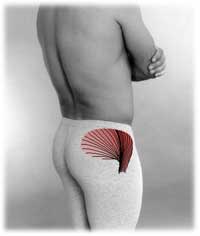
A few posts ago, I showed an excellent exercise to strengthen the gluteus maximus muscles.  Another gluteal muscle that tends to get weak, or lazy is perhaps a better way to say it, is the gluteus medius.  This hip abductor is located on the outer edges of the pelvis, and it functions to hold the pelvis upright as we stand and walk.

When the gluteus medius gets weak, it can leave you susceptible to pelvic subluxations, low back pain and even knee pain.  A recent sports injury and rehabilitation study showed that knee pain and problems in runners could be helped by strengthening the hip muscles, particularly the gluteus medius.

Watch the video below to learn the best exercise–hip abductions–to strengthen the gluteus medius hip muscles.

Good news adventurers, campers, hikers and rangers–a new ointment has been developed that can increase survival rates for those suffering snakebites.  The ointment contains nitric oxide, which has been found to delay the entry of snake venom into the blood stream.

Nitric oxide (NO), not to be confused with nitrous oxide (NO2) or laughing gas, is a chemical messenger in mammals.  It acts as a blood pressure and neurological regulator, and has been shown to lower blood pressure in stroke patients.  NO works by dilating blood vessels (vasodilator), slowing blood flow, and thus decreasing pressure.  It has also been found to slow down the pumping mechanism of the lymphatic system, which is the point of entry for many types of snake venom.  Researchers put two and two together, and came up with an ointment they thought should decrease the entry rates of the toxin into the human body.

Bingo!  They were right.  In two experiments they showed that snake venom was slowed significantly in its entry into the mammalian blood stream.  In the first experiment the researchers injected a venom-like substance into one foot of 15 volunteers, and measured the time it took for the toxin substitute to reach lymph nodes in the groin.

They repeated the experiment, but rubbed the NO-containing ointment into the foot of the volunteer within one minute of the injection.  Amazingly, the transit for the venom-like substance went from 13 minutes to 54 minutes–a more than 4x decrease.

The second experiment looked at the survival rates of rats injected with snake venom.  The rats receiving the ointment continued to breathe 50% longer than rats receiving venom injections alone.

These findings are important as 100,000 people die worldwide every year from snakebites, while another 400,000 must amputate limbs that have been injected with poison. Godsend for snake charmers.

Currently, the most common treatment is to immobilize the patient and restrict blood flow as much as possible until medical assistance is available.

“These results point to a new method of snakebite first aid that may also be useful for bites to the torso or head,” the researchers concluded.

Finally, something snake-oil salesmen can be proud of.

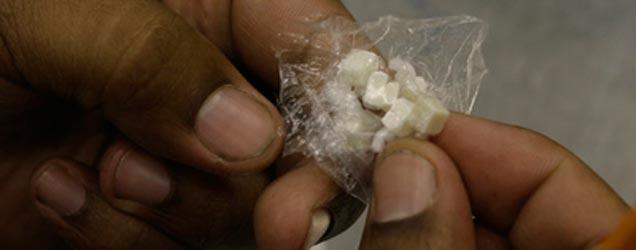
Listen up, cokeheads–we know when you said you’d give your left ear for another bump you didn’t mean it literally!  But junkies in New York and Los Angeles are doing just that: The U.S. Drug Enforcement Agency reports that 82% of street cocaine is laced with the veterinary drug levamisole, which is used to deworm cattle, pigs, sheep…and now junkies.

Levamisole can can also rot the skin off noses, ears and cheeks, doctors says.  Multiple cases of rotted flesh have already been reported.  Eeeeww….

Dealers usually cut the coke with baking soda, but may have turned to the veterinary drug as a way to extend the coke high (studies in rats suggest the drug acts on the same brain receptors as cocaine).  More high, more sales.  But bad for the health: Reports of rotted flesh in the left and right coast’s two biggest cities abound.  Anything for another line…here take my nose.  One doctor reported seeing a man whose entire body was black with dying flesh.

Some users seem to be immune, but others no such luck.  some doctors are comparing the flesh eating effects, and the suppression of white blood cell formation eerily similar to AIDS (Hmmm, seems like somebody has said drugs/AIDS in the same breath before). 

“It’s a little bit like having HIV,” said Dr. Noah Craft, a dermatologist with Los Angeles Biomedical Research Institute in an ABC article. “About 10 percent of those patients will die from severe infections. They may be walking around like a time bomb.”

Dr. Craft believes the problem must be nationwide and we just aren’t seeing the full ramifications yet.

The good news: Once levamisole is cleared from the body, the wounds do heal, leaving behind a shiny scar.  Phew.  And on to another day. 

Just reminds me of one thing: Whether street powder or pharmaceutical crank (think Ritalin, Adderall), drug dealers don’t give F&*# about their customers.  Freakin’ weird.

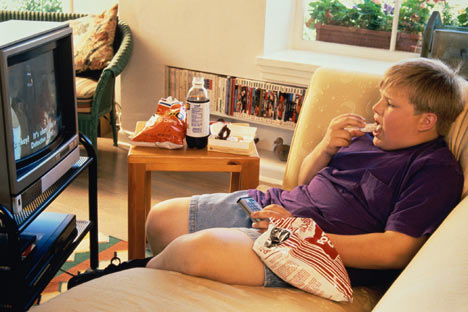
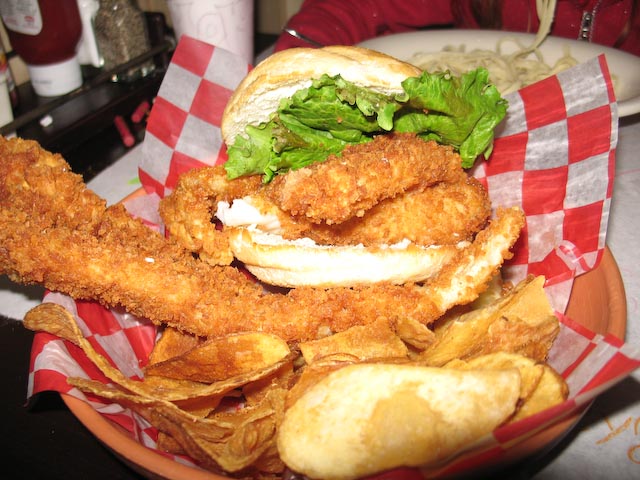
When it comes to weight gain, is one food-like substance worse than another?  Yes, say Harvard University researchers, and the biggest offenders are potato chips!  Whaddayaknow–worse than sodas, worse than fries, worse than candy?  Yup, chips were more than four times more fattening than sweets or desserts.  Dang!  I’d say, “Who knew,” but isn’t it kind of obvious?

The study (actually three studies combined) looked at more than 120,000 people over a twenty year period, analyzing their dietary and lifestyle habits.  The subjects were all health professionals and not obese at the start.  Their weight was measured every four years, and they detailed their diet on questionnaires.  On average, participants gained nearly 17 pounds over the 20-year period.  For each four-year period, food choices contributed nearly 4 pounds, while exercise–for those who did it–cut less than 2 pounds.
This is how foods broke down into the fattening quotient (pounds gained/4 years):

  • Potato Chips — 1.69
  • French Fries — 1.28
  • Candy — 0.41
  • Alcohol (drinks) — 0.41
  • Watching hour of TV a day — 0.31
  • Recently quitting smoking, 5-pound increase
  • People who slept more or less than six to eight hours a night gained more weight.

The researchers conclude that diet is more important than exercise when it comes to gaining or losing weight.  Although I definitely agree with this statement in context of today’s western society, I wouldn’t say that’s a physiological fact, thermodynamically speaking.  Today’s foods may just be harder to burn, but I don’t know that it is true for all foods (and can’t one, technically, get fat from an excess of any food?).  Okay, different subject, I know, but I will agree that our current obesity epidemic ain’t from eatin’ too many carrots.

This is a decent study, but I would say we should put things into perspective.  Many people believe that as long as they work out, they should be able to eat whatever they want…within reason.  Problem is, people grossly underestimate how many calories they are eating at any given time.  A great piece came out in Scientific American last year discussing a study which showed most people, oddly, miscalculate total calories when high-calorie items are accompanied by ‘healthy’ side dishes.  Subjects overwhelmingly assigned less calories to plates with cheeseburgers and celery, than they did to cheeseburgers alone.  Doh!  Think that might happen regularly in real life?

Listen, crap is crap is crap is crap.  Chips are crap, period.  Eat them more than a few times a year (seriously) and expect fatness.  Same for sodas, canned ravioli, frozen tater tots and doughnuts–sorry to break-up the party, but…

Do we really need a study to tell us chips and fries are not Jenny Craig material?  I wish not, but sadly…we do.  So now you know.  Do with it what you will.

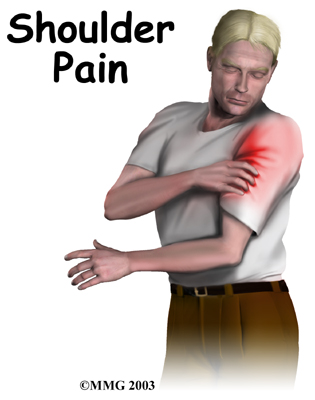
Shoulder injuries are some of the most common conditions people walk into my Beverly Hills sports chiropractic office with, and treating them can be tricky.  I find that shoulder impingement, along with rotator cuff syndrome, has become increasingly problematic for people, especially as people pick up exercise as a lifestyle habit.  Now everyone knows that I think doing so is of mega-importance to achieving and maintaining great health, but it’s not without its challenges.

First, without proper form, most people lifting weights can cause injury to themselves.  So form is foremost, period.  This is true whether we’re talking about lifting weights, doing yoga, Pilates, or whatever.

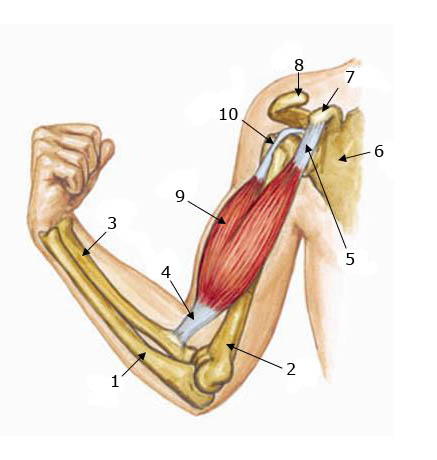
Poor form during shoulder exercises can lead to impingement syndrome.  I find that in stubborn cases of impingement syndrome, the offending agent is an inflamed biceps tendon.  Please don’t take this to mean that the biceps is the primary problem in shoulder impingement syndrome–it’s one of three structures that can get inflamed–but it is the most often missed and neglected during the treatment process.

What you can do on your own to speed up the healing process for shoulder impingement syndrome is to ice and stretch.  Watch the video below to see the best home stretch for a biceps tendonitis.

When dealing with a stubborn shoulder injury (that means chronic, not one you’ve just hurt), go see a sports chiropractor right away.  But you can help your own case by icing and stretching your shoulder, particularly the biceps.  Enjoy.

Summer’s here–time to cool down.  Put the kids in the portable pool and forget about it, right?  Wrong!  Every five days a child dies in a portable pool–this according to a recent U.S. study, first of its kind.

From 2001-2009 there were 209 deaths and 35 near-drownings of children, 94% of them under five, and 81% happening in summer.  Horrible.

“The anecdotal evidence was suggesting that because portable pools are readily available in many convenience stores and malls, and they’re relatively cheap, parents would pick them up, take them home, quickly assemble them, and all this would be done without a lot of forethought about the safety aspects,” said senior author, Dr. Gary A. Smith, director of the Center for Injury Research and Policy at Nationwide Children’s Hospital in Columbus.

The study looked at portable pools, from wading pools less than 18 inches deep to inflatable pools and other soft-sided pools that can reach depths of 4 feet.  Researchers at Nationwide Children’s Hospital and Independent Safety Consulting in Rockville, Md. They say the findings are comparable to drownings related to in-ground pools.  Unfortunately, portable pools don’t have the many safety nets–like pool covers, fences, alarms, and removable and lockable ladders–that in-ground pools can have.

The Association of Pool & Spa Professionals supports “layers of protection,” and the study underscores the importance of active, undistracted adult supervision, said Carvin DiGiovanni a senior director at the Alexandria, VA-based association.

Listen parents–no kidding!  You can’t leave kids in, or near, a pool of any sort unsupervised.  Same goes for bathtubs.  I sure most everyone heard the news of the child drowning in the tub, while mom went to play on FacebookDuh!

I don’t mean to bash people here, because I cannot think of a more painful experience than losing one’s child to a bad mistake.  Nobody’s suggesting that people should be helicopter parents, but c’mon…gotta supervise the little tykes in the water, period.

According to the researchers: children were supervised by adults in fewer than half (43%) of the drownings and near-drownings, and that most (73%) were at home.

Further, the study showed that CPR was administered to the drowned or near-drowned child only 15-17% of the time.  Researchers conclude that it’s high-time every parent learned CPR.  I couldn’t agree more.  Take it from a guy who saved his own mother’s life with basic CPR–you’ll wish you knew it when the time comes unexpectedly.

Feeling sick, or maybe a little limp–ditch the Tylenol and Viagra, baby, take a bite of iguana.  That’s right, the reptilian vegan of Central and South America is a regional delicacy making its way up to North America.  Salvadoran immigrants pay big bucks for the languid lizard’s meat, as they believe it to have magical cure-all properties ranging from fighting the common cold to improving sexual performance.

Border officers in San Diego last week stopped a man trying to sneak iguana meat across the U.S.-Mexico border.  Odelay, pinche Iguana-runner–whatchoo got under them fishes?  159 pounds of prime pink iguana flesh, ripe for consumption.

Okay, okay…before you get grossed out: Central and South American people have been eating the Green and Black variety for 7000 years.  Iguanas are now raised on farms for such consumption, and Salvadoran and American businessmen have been bringing the meat to the U.S. to help provide a “taste of home” for Latinos now living in the States.

The meat is said to have a taste similar to chicken, but a bit stronger and tougher. At $14 a pound (retail), or about $50 for the average purchase, it isn’t for ordinary meals. Still, “the demand for them is higher than we can provide,” says Frank Rodriguez of Distribuidora Cuscatlan, an importer of foods from El Salvador.

The seized iguana meat from last week was turned over to U.S. Fish and Wildlife Service agents, and the man, and American, was arrested. The meat had an estimated value of $4,500.

Well, I don’t usually knock people’s culinary preferences because I know people gotta do what they gotta do, but methinks the wild iguana population in El Salvador be shrinking. According to one 2006 report, the Salvadoran government, in response to over-hunting and habitat destruction, has cracked down on the gaming of iguanas. So, although it may be a natural cure for erectile insufficiency, I don’t know that bringing this little ‘taste of home’ to an enormous market like the U.S. (and reportedly Asia) is all that great for the little Latin American lizard. 

Do what you gotta do; but with more bust like these, this lizard delicacy might just become the next caviar. $$

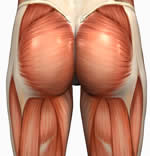
Low back pain, hip pain and knee pain can all originate from a weak pelvic girdle.  When the muscles of the butt and pelvis get weak, the low back loses support–add in a weak abdominal core and you’ve got a recipe for disaster.

In my West Hollywood chiropractic office, I always evaluate the pelvis and buttocks muscles, which are also known as the gluteals.  The gluteus maximus is the main muscle of walking, as it is the primary hip extensor–a movement necessary to bring the leg back during walking (gait) cycle.  The gluteus medius is the muscle that holds the pelvis upright as we stand.  When the glutes get weak–or perhaps lazy is a better word–they need to be isolated and strengthened. 

No muscle can be totally isolated because muscles work together–synergistically–as a group.  However, there are two exercises that are outstanding for isolating the gluteal muscles as much as possible.  The first is called gluteal bridges, and if you watch the video below, you can see a great version that will not only strengthen the gluteus maximus muscles, but will also help correct any muscular imbalances that are in place, whereby one side becomes stronger or weaker than the other.  The second exercise is called hip abductions and we’ll save that for another post.

You should have your work cut out for you with the gluteal bridges I demonstrate in the video, so watch and practice.  If you are not sore the next day, then you aren’t doing them right.  But don’t worry, you’ll be sore…

Have you ever had “stomach flu?”  Gastroenteritis–man it’s the $#!*$.  I got it again this weekend, and I must say…makes you feel like dying.  President Zachary Taylor died of gastroenteritis in 1850.  You’re probably thinking, “No S#*T!,” but believe me he gave more than he had…I speak from experience.

Now this post isn’t about my horrid weekend.  It’s about what I call perspective balancing.  Sometimes we take life for granted–we get all high on ourselves, thinking this or that was built for us specifically (whatever our own personal this or that’s happens to be at any given time).  Let’s just say we might even believe that our $#!T doesn’t smell.  And that’s when life teaches us otherwise.

No, no, no…I don’t believe we get gastroenteritis to teach us any metaphysical lessons.  But what I know for sure is that when you are curled up on the couch…alone…writhing in severe pain…wanting to puke at every Jack in the Box commercial that comes on the tube, but you have no strength to even reach over to the remote and turn that crap off (no pun intended…well, okay, maybe just a little)…there is a strange little mind thing that occurs…you realize you ain’t all that, and it could be Zachary-Taylor-time any day, any hour, any minute.  And it makes you realize…all the crap you worry about, all the crap you think you are doing or NOT doing…really doesn’t matter because…well, anything beats gastroenteritis…even a root canal.

Perspective balancing is what happens as you writhe in pain from gastroenteritis, and even more so when you stop.  The sky looks brighter, the birds sound more cheerful, everyone is your brother–better than LSD, I tell ya–you gotta try it sometime.  But heed my warning: it’s definitely not for the faint at gut.

*Thank you’s to Jen R. for inspiring this piece with her question, and to foodborne illness for making me see the light (hallelujah, free again!)

Stop the presses, stop the presses–this just in: California might require condoms in porn! That’s right–Cal/OSHA officials have drafted rules to require porn performers to use condoms and other barriers in sex scenes to prevent being infected with sexually transmitted diseases.

The 17-page draft proposal will be discussed at a public meeting in Los Angeles on June 7.  The draft would then go to the state’s Occupational Safety & Health Standards Board for a ruling on whether it becomes part of state code.

I know you think I’m obsessed with this story, and that’s because..I am.  This is groundbreaking–it could spell the end of porn as we know it.  I can see it now: Porn industry moves out of California, and sets up shop in Nebraska.  Holy Cornhuskers!

Some major porn producers have opposed the use of condoms in straight films.  Their beefcake is exactly that they think nobody will want to watch latex-laden sex, and so they fear the industry will have to move out of California (and into the back-alleys, no pun intended).  We’ll see how many free speech groups come to the rescue of smut.

Oh well, nanny-state here we come.  If we can’t smoke, eat fast food, carry guns or watch condom-less porn, what next?  I’m thinking they’ll start to limit our prescription drugs and vaccines…nah!!!

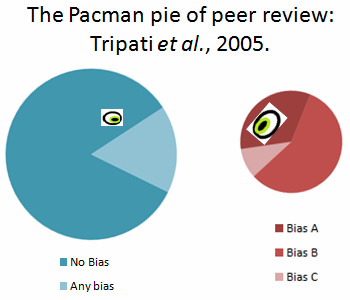
Another blow to the ‘genetics-is-the-answer-to-everything’ faction of medical science.  According to a recent study published in the Journal of the American Medical Association (JAMA), researchers often overstate the importance of biomarkers as links to disease, by citing papers that report the strongest associations, even when ensuing analyses downplay the connection.

The study looked at papers on biomarkers–biological characteristics, such as gene or protein activity, which can be used to monitor a person’s health–that had been cited more than 400 times.  These studies were then compared to others on the same biomarkers, and it was found that many papers were reporting stronger links between biomarkers and disease than were actually found in the majority of studies.  Even worse, many papers reported a stronger association than was observed in the largest single study of the same biomarker.

As an example:

A 1991 study that was cited 1,436 times found that patients with a high level of a compound called homocysteine in their blood had a 27.7-fold elevated risk for vascular disease. But a meta-analysis reported only a 1.58-fold increased risk.

Doh!

I love this because I know that there just is no such thing as true objectivity in science.  The fact that science is carried out by humans with beliefs and biases means that it will always veer in the direction of researchers’ own perspectives.  And that’s the way it should be!  Yes, we all want objectivity in science, but puh-leez–the universe (at least as it pertains to humans) is driven by our thought processes.  It is impossible not to affect observations, studies, or science as a whole by the human factor.

It takes a genius (Newton, Einstein, Watson/Crick) to drive a paradigm–the way in which we view the world.  The rest is up to the people of the era: WE direct science, art, politics, philanthropy, economics and education based on our own interpretations of the world.

So yes, there will be citation bias in science.  More reason to scrutinize the ‘genetics-is-the-answer-to-everything’ mind-set.  It ain’t.  In fact, my bias is that it merely plays a supportive role in most health/illness issues.  But that’s not our current paradigm, so I will gleefully chuckle at a distance every time some free-thinking scientists pick up on the current cultural biases at play during our attempts at objective observation.  Watch out climate researchers!

Ha ha ha…nothing like the naivety of youth.  Take medical students for example–they actually think they cannot be influenced by gifts or trips provided by pharmaceutical manufacturers.  Silly little doctors-to-be; it’s like one of my teachers in chiropractic college said, “You think you know exactly what you’ll do until you have trouble paying the rent, your daughter needs braces, and college for your son is right around the corner.”  Ha ha ha…exactly.

Researchers at Harvard Medical School analyzed published studies that included a total of 9,850 students at 76 medical schools in the United States. The investigators found that most of the students had some type of interaction with drug companies and that this contact increased during the clinical years, with up to 90% of clinical students receiving some form of marketing materials from drug makers.

Among the students queried, most believed there was no ethical problem in accepting gifts from drug companies. Their justifications included financial hardship or pointing out that most other medical students accepted such gifts.

Nearly two-thirds of the medical students claimed that drug company promotions, gifts or interactions with sales representatives did not affect their impartiality regarding drug makers and their products.

Yeah, everyone thinks they are above such influence.  I personally think commercials are useless against my steel will, but who’s the fool?  Bottom line: Drug companies wouldn’t waste their time and money on aggressive marketing if it didn’t work.  And going after medical students is a strong step toward successful indoctrination.  Heck, if it works for Coke and Pepsi with the pre-schoolers, why not for Big Pharma and the med-schoolers?

The drug companies have even begun to target their marketing efforts to individual doctors.  They can buy biographical data from the American Medical Association (AMA) and analyze individual doctors personal and prescribing habits.  They can learn which drugs doctors lean toward, and they can even find out a doctor’s taste in dining, hobbies and travel.  Imagine an all expenses paid trip to Hawaii, from your friendly neighborhood pharmaceutical company.  And you think you wouldn’t buckle…now who’s the fool?

Listen, marketing influences consumers…even doctors.  No matter how much a doctor thinks, as a scientist, he is above basic marketing techniques, truth is he is influenced like the rest of us.  One study showed that doctors’ prescribing rates doubled and tripled for certain drugs following an all-expenses paid trip.  But that was just coincidence.

Get smart, med students–you will be influenced by pharmaceutical marketing.  It’s not a problem as long it’s in the best interest of the patient, the public health and the person paying the bills.  Until your profession lays down some regulations limiting contact between med students and pharmaceutical sales reps, you’ll just have to humble yourself to the power of marketing…and keep mind of your post-contact habits.

Most people coming into my Los Angeles sports chiropractic office with numbness and tingling of the hands and fingers believe they have carpal tunnel syndrome.  Interestingly, many of them have been told that by a doctor.  The problem is that they are being told it’s carpal tunnel syndrome, even when it is not.

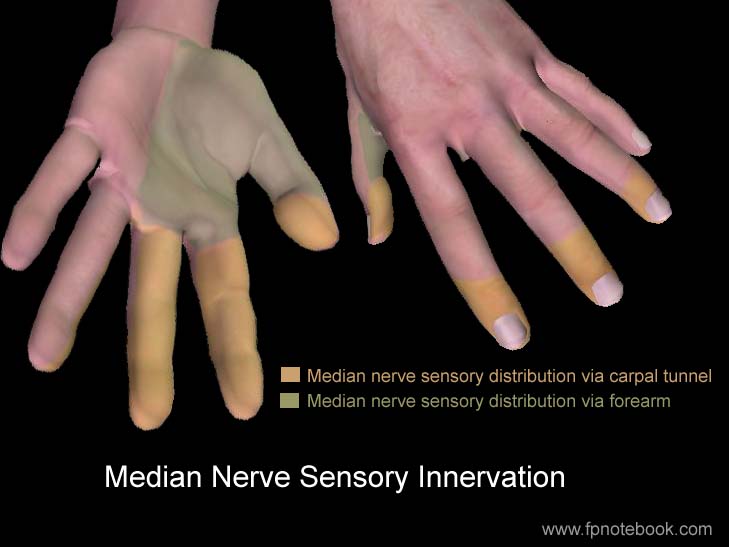
So let me help: Carpal tunnel syndrome is a paresthesia of the median nerve; as a result it is felt as numbness and tingling in the first three digits of the hand–the thumb, forefinger and middle finger (see picture on right).

Numbness and tingling in the last two digits (ring and pinky fingers) is NOT carpal tunnel syndrome.  I will trust that my clients who tell me their GP has diagnosed their 4th and 5th digital numbness as carpal tunnel syndrome just misunderstood what the doctor was saying, because I know the good doctor would not say that…right, doctors?  Right?

OK, numbness and tingling in the last two fingers is called cubital tunnel syndrome, and it involves the ulnar nerve.  If you are reading this and you currently have numbness/tingling in your hand(s) or fingers, please visit your local sports chiropractor’s office.  If you live in Los Angeles, Beverly Hills or West Hollywood, chiropractic is just a phone call away.

As a gift, watch the video below to learn one way to beat carpal or cubital tunnel syndromes.  And then call your sports chiropractor–no need to suffer.

Life happens…and sometimes its intricacies interfere with a well-intentioned exercise program.  The most oft-cited reason people give for neglecting to work out is “no time,” a situation we can all relate in one way or another.  This is precisely why I have a self-imposed rule I call WOAC–work out at all costs!

Get it?  Move your butt, no matter what.  Living by this principle allows me to work out anywhere, anytime: planes, trains, and hotel rooms, I always say.  Another advantage afforded by the WOAC philosophy is “no time is too short.”

Since I can stretch at home or the office, the important thing for me is to go to the gym to pump iron or skip rope.  Essentially it’s “go get in whatever you need that requires special space or equipment.”  Truth is, though, I really could do resistance exercise anywhere, so at the very least it’s my cardiovascular requirements that require specific equipment.

Here is why it matters: Like everyone, I find time to be a limiting factor when it comes to working out–I mean, there’s only 24 hours in a day (which is plenty if you have round the clock access to space or equipment–a home gym, for example).  So when I find that time is limited: WOAC!

The Memorial Day holiday today meant the gym at my apartment complex was closing by 4pm.  I wasn’t ready to go until 3:30 pm.  Now…far too many people would have said, “Screw it,” and picked up a pizza and beer and rationalized why Memorial Day is time for celebrating, and NOT working out.  But because I live by the WOAC principle, I knew that it was plenty of time to bang out a session.  Here is how I did it today:

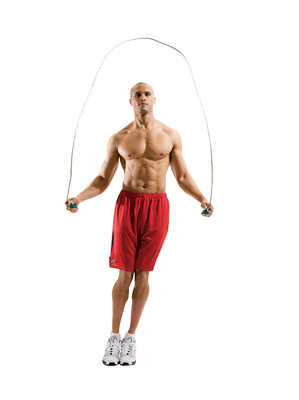
Upon entering the gym, the counter clerk reminded me of the time.  I assured him I wouldn’t be the last person walking out the door. I went right up to the yoga/dance studio with it’s slippery, shiny hardwood floors and proceeded to skip rope–balls to the walls–for ten minutes.  I was winded by five, and dripping sweat at ten.  I needed a rest, so I took one minute to drink a cup of water and catch my breath. 

Next I did plank poses, abdominal crunches, reverse crunches and side planks for my core; then pounded out gluteal bridges and hip abductions for my butt and pelvic regions.  In total, the mat work took me five minutes.  Then I stretched my hips, legs and low back–three more minutes.  Finally, I took two minutes to stretch my arms and chest–areas that I am working on specifically in response to an injury.  Done.  And not the last person to leave, either.

You see, WOAC helps me to get my arse to the gym–moving, sweating, and feeling pumped–even in a short time period.  No excuses for me.  And I guarantee I will be sore tomorrow.  Twenty minutes is all I need–heck, even ten will do.  WOAC…a way of life for me.

Here’s a sure-fire multimillion dollar money-maker for anyone wanting to enter a growth industry in an area of high need.  Consider opening health food stores, fitness clubs, yoga studios, healthy foods restaurants, and mind or bodywork practices in the American South.  The southeastern region of the United States is ripe for the health and wellness industry, as it is currently labelled the Stroke Belt due to the high incidence of cerebro- and cardiovascular diseases.

The 11-state cluster of Alabama, Arkansas, Georgia, Kentucky, Louisiana, Mississippi, North Carolina, South Carolina, Tennessee, Virginia and West Virginia share risk factors that researchers believe are to blame for the increased chance of cardiovascular events and cognitive decline.  Risk factors have been hypothesized to include increased rates of hypertension, low socioeconomic status, high fat diet, cultural lifestyle, quality of health care facilities, smoking, and infections.

The term Stroke Belt was coined in 1965 in response to 50% higher stroke mortality rates in the southeastern U.S.  A new study, called The Reasons for Geographic and Racial Differences in Stroke (REGARDS), looked at 30,000 U.S. adults aged 45 or older from 2003-2007, following them for stroke and cognitive decline.  Participants included 56% from the Stroke Belt states and 44%  from the remaining states in the continental U.S., including the District of Columbia, which researchers collectively termed “non-Belt” states.

For their report on cognitive decline, the investigators included 23,913 REGARDS participants, made up only of African-Americans (38 percent) and European-Americans (62 percent) who reported no history of stroke at baseline and had normal cognitive status at the first assessment.  Researchers assessed brain function using the Six-item Screener (SIS)—a test of global cognitive function that includes item recall and temporal orientation.  Results showed Stroke Belt residents had a greater likelihood of cognitive impairment (18% higher) than non-Belt residents after adjusting for the influences of age, sex, race, and education level. The research team suggests that future studies should examine the impact of migration patterns, urban versus rural residence, socioeconomic factors, and educational quality on cognitive decline.

No doubt, a typical southern lifestyle is not conducive to great public health.  This doesn’t mean there are no healthy people in the south (sometimes I feel I have to say that).  What it does mean is that eating a diet high in fried foods, heavy drinking, smoking, sedentary lifestyle, and unsafe sex will lead to increased illness and shortened lives.  For sure these behaviors happen all over the country, let alone the world.  But the southern U.S. is plagued with high poverty rates; and regional lifestyle differences–like certain foods and activities–could account for the differences in cerebro- and cardiovascular disease rates.

So back to my business idea: The southeastern U.S. is ready for some healthy-choice businesses just like the ones we have on every street corner in the North.  Now I don’t mean to be offensive to my brothers and sisters in the south–I’m not suggesting you ain’t with it.  It’s just that–as an industry–the wellness trade hasn’t yet exploded in the south like it has in the rest of the country.  The explosion and the movement will occur concurrently.

Trust me, if you are an entrepreneur and are looking for an exciting new venture–wellness in the South is it!  Showing people that there is a better way, and then giving them the resources, the choices to live it…well that’s what I find super-exciting!  C’mon, the next John Mackey is ready to arise.  Start in the U.S. south–in my estimation, it’s a goldmine!

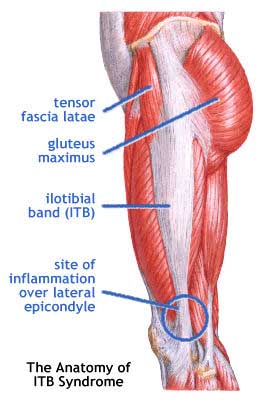
Pain felt on the outer knee, especially in runners, can be due to iliotibial band frictions syndrome (ITBFS).  The iliotibial band (ITB) is the longest tendon in the body.  It is a conjoined tendon, which means it originates from two different muscles–the gluteus maximus (your butt) and the tensor fascia lata (front hip).  When tight, the ITB can snap across the knee joint, causing inflammation and ultimately pain.

Visiting a sports chiropractor is your best bet to relieving this painful knee condition.  In my Beverly Hills sports chiropractic office, I would treat your iliotibial band frictions syndrome with physiotherapy, myofascial release, chiropractic adjustments of the pelvis and knee, and eventually rehab exercises.

The best rehab exercises I know for fixing ITBFS are IT band stretches, and strengthening the inner thighs.  The adductors are the muscles of the inner thighs, and when weak, they are unable to counter the tight ITBs.  This imbalance is one factor leading to ITBFS.  To prevent outer knee pain, try the exercise I demonstrate in the video below.  All you’ll need are some simple yoga blocks, and squeeze away–guaranteed to remove knee pain and improve posture.  Please watch the video below to learn the best inner thigh strengthening exercises available.

Are you a porn star?  Tired of fearing the STD hand-off from one of your peers?  Well fret no more–the industry has now got doctors to help clear you up and keep it private too.  So says an official from the Free Speech Coalition (FSC), an organization heading up a new medical network to service the porn industry.

The Adult Production Health and Safety Services has been created to replace the now defunct Adult Industry Medical Health Care Foundation that closed earlier this month.  Known as the AIM clinic, the San Fernando Valley health clinic was a preferred medical provider for many performers in the multibillion-dollar porn industry, providing a discreet environment for frequent HIV and STD tests.

The AIM clinic was forced to close permanently earlier this month following a series of controversies.  After porn actor Derrick Burts was diagnosed HIV-positive there in December, state and local officials said the clinic failed to cooperate with their investigation into other possible infections. Burts said that instead of getting information from the clinic on how to get follow-up care, he was told to avoid media, change his phone number and leave town.  The clinic was also accused of medical privacy violations after patient information appeared on a website in the run-up to its closure.

The FSC, unfortunately, are not in a position to set up an actual clinic to replace AIM, so they’ve done the next best thing–create a network of doctors to take care of adult film actors icognito.  Doesn’t get much better than that.  Within a week, FSC Executive Director Diane Duke said, performers will be provided a list of labs and clinics where they can get testing and have their results fed into the industry database.

For those that don’t know, the heterosexual porn industry attempts to keep close tabs on its actors, to prevent the spread of diseases like gonorrhea, chlamydia or HIV.  Recent HIV outbreaks in the straight porn industry have shocked those inside as well as the outside public–all the more reason to make sure an updated medical database and medical professionals are at hand to keep the industry safe.  The same safeguards are not in place in the gay porn industry.  It is believed that HIV outbreaks in the straight industry are started by infections incurred in crossover actors–that is, males working concurrently in both industries.  If you don’t get it, don’t ask–you never will.

The new database will tell users whether an actor is available to work or not, depending on whether they have any of the sexually transmitted infections the system tracks.  The system makes an exception for HIV-positive gay performers who still work in sex scenes while using condoms.  Further, the group is reaching out to medical providers with education to ensure sex performers aren’t treated with insensitivity and hostility for their work.

Listen, you may not like the porn industry, but safety there is safety for us all.  Porn stars need good medical care like we all do–maybe even more than the average blow…ehem, Joe.  So this is a good thing as far as I’m concerned.  Safe sex should be the norm–in life and in fantasy.  Good job, Free Speech Coalition.

A reader recently commented on a piece I wrote on vegetarianism and vitamin/protein deficiency.  She said I was wrong when I commented that people should “drop the vegetarian thing” if they wanted to improve their health.  She said she the vegetarians she knows are “extremely healthy,” as they eat eggs, cheese, and some even fish.  She essentially asked me if she’s missing the point, or is it just me that’s crazy (just kidding, Caroline).

By all means I stand by my original point: It is difficult for vegetarians to get sufficient protein.  Now I’m not saying there are no healthy vegetarians–that would be ludicrous; but I will say that many vegetarians I have met don’t appear as healthy-looking to me.  Does that mean they are not healthy?  No.  It’s just an observation.  However, saying that, I do look at people all day, almost every day–I am paid to evaluate health.  But can I prove my observations?  No.

What I am quite certain of is that vegetarians, like all people, need a proper intake of protein on a daily basis.  As far as I know, eating fish is not vegetarian, so we don’t have to discuss that any further.  But, yes, an ovo-lacto vegetarian should probably be okay, provided he or she is getting enough protein every day.

My reader was right when she pointed out that people who eat no meat, fish, eggs or dairy are called vegans.  These people need to get their protein from vegetable sources–beans, avocados, nuts, grains, and so on.  Everybody needs a minimum amount of protein every day (women 46 grams of protein per day, men 56 grams), therefore each meal should contain some.

Since we can all anecdotally speak of whom we know or what our personal experiences are, let it be stated that mine are just opinions.  But since opinions are like…well, you know…I’ve got one too, and I am not afraid to share it.

Yes, vegetarians are often skinny.  Big deal!  Skinny ain’t health.  In fact, for people that exercise, children and teens, and pregnant/lactating women, protein is needed big-time.  I wouldn’t recommend vegetarianism (sorry, veganism) to any of these groups unless it’s a part of a long-standing cultural practice.  For Americans that have picked up vegetarianism for their political beliefs (call it humanitarian, call it what you will), if you are in one of the groups mentioned above–well, I wouldn’t do it.

So my original article was in response to a woman that called me about her 17-year-old daughter who was having some cognitive difficulties.  She suspected vitamin deficiency, and was asking about vitamin testing.  HELLO!  Seventeen-year-old girl, mother concerned about vitamin deficiency?  I stand by my assessment and would say it again and again and again (oh…I guess I am now)–DROP THE VEGETARIANISM.  Give that girl a steak, send her to the gym, slap a little sense into the little princess–you are too young to be playing with your health that way.  The American Dietetic Association and Dietitians of Canada warn that poorly planned vegan diets can be deficient in vitamin B12, iron, vitamin D, calcium, iodine, and omega-3 fatty acids.

We have canine teeth for a reason.  Duh!  We are meant to eat a variety of foods, meat included.  Yes, vegetarians can survive.  They are skinny (couldn’t have anything to do with that in a seventeen-year-old girl, now could it?).  But healthy?  Don’t know.  I certainly wouldn’t take the chance with my daughters.

But hey…for some people their politics is their religion.  Wouldn’t eat a slaughtered animal but no problem eating a plant violently pulled from the ground, removed from it’s life source.  Imagine that…taking the life of a living thing.  Or should plant life be minimized?  To the people that vehemently (and for some, violently) oppose meat eating, pick up a biology book and learn something about the life cycle–life must consume life–crazy thing that.

For those that want to be vegetarians, please…go ahead.  But when it comes to your kids’ health, make sure they do it the right way, that’s all.

Thank you Caroline for stimulating my thoughts…or rant…whichever.

Los Angeles chiropractor Calf stretchSo a couple posts ago, I showed you some excellent stretches for the muscles surrounding the knee joint that are essential for knee rehab.  Stretching the calf muscles–gastrocnemius and soleus–is a major part of this rehab, especially if the knees hurt.  Starting with the downward facing dog is a good, safe bet; but once some length is achieved in these muscles (and, if rehabbing, once stability sets in) you can then take the calf stretches to the next level.

In this video, I demonstrate what I find to be the best calf stretches one can do.  Very important to hit both calf muscles, and I find that the soleus is often over-looked.  When the soleus is left un-stretched, it can lead to things like soleus strain, Achilles tendonitis and plantar fasciitis.

Watch the video to learn some easy and effective stretches you can do regularly at home.  Have fun.

Hamstring pulls, strains and tears can be debilitating, and they are a common injuries in professional American football.  A recent study showed that more than half the hamstring injuries in the National Football League (NFL) were caused in the preseason, and not surprisingly, positions requiring the most sprinting activity were also the most often injured.

A ten year review (1989-1998) of injury data were prospectively collected by athletic trainers for every NFL team and recorded in the NFL’s Injury Surveillance System.  Over the ten years, 1716 hamstring strains were reported with more than half (51.3%) of hamstring strains occurred during the 7-week preseason.  The most commonly injured positions were the defensive secondary, accounting for 23.1% of the injuries; the wide receivers, accounting for 20.8%; and special teams, constituting 13.0% of the injuries in the study.

This study has a few implications: First, professional athletes that require significant sprinting in their sports–baseball outfielders, track and field, soccer, etc–would be wise to adopt a preliminary warming-up period even before the preseason (typically training camp) starts.  Perhaps a structured regimen over a period of one week where physical activity is started slowly, and combined with light stretching (yoga?), chiropractic and massage to decrease the amount of ‘colder’ full-on workouts that might precede the preseason. 

Second, the athletes themselves might want to take a half page or so from the off-season training book of NFL Hall of Fame receiver, Jerry Rice.  Rice was well known for his strenuous workouts between seasons, which likely kept him in the great shape that led to his playing in 189 consecutive games.  Now his regimen might be a little much for the average NFL player, but no doubt his dedication to his body kept him injury free–along with regular chiropractic care–for 12 years!  In the NFL?  Wow!

Finally, for the non-athlete or the weekend warrior–this study should show the importance of warming up before a run, a friendly softball game, or any other activity that includes sprinting of any sort.  Hamstring injuries are not fun–and they can be stubborn healers.  Be smart and warm up right, and hopefully you’ll avoid the unpleasant experience of the strained hamstring.

*Symptoms of a pulled hamstring:

  • Sudden sharp pain at the back of the leg during exercise–most likely during sprinting or high velocity movement
  • Pain on stretching the muscle (bending forward with straight knees)
  • Pain on contracting the muscle against resistance
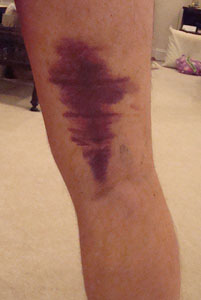
  • Swelling and bruising
  • If the rupture is severe a gap in the muscle may be felt
Copyright © 2013 Dr. Nick Campos - All Rights Reserved.