Currently viewing the category: "low back pain"

Was recently asked by a Twitter follower what the best exercise for the low back would be. My unsatisfying answer: “Well, what do you need a strong back for?” Taken at face value it might seem that I am denying the need for a strong back, but nothing could be farther from the truth, although I do think the pelvic and leg muscles are more likely to be in need of strengthening.

Nevertheless, I think the wisest approach to determining which exercises should be carried out is to think functionally–that is, what are you attempting to improve? Do you need power for a sport, endurance, or is it to alleviate low back pain? Really, the end result matters.

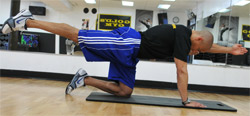
So this particular gentleman disclosed to me that he was having pain and difficulty getting up and out of a chair. Okay…I’ve got an answer for this. The best exercise to reduce pain and difficulty getting in and out of a chair, then…is to get in and out of a chair. Forget back extensions, or superman, or anything like that–be functional: Reproduce the activity you need to do. Doesn’t that make sense? Don’t do biceps curls so that you may jump higher…

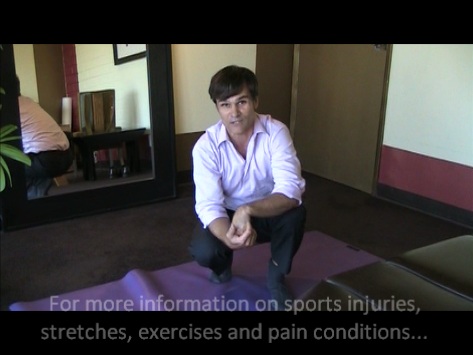
Watch the video below to get the gist of what I mean. You’ll want to observe some basics, like…keeping your back straight, and tightening your abdominal core. If you are uncertain of how to do that, please watch the video on abdominal hollowing and plank pose. While you’re at it, watch the video on pelvic tilting as well. Gaining control of the abdominal core is essential to strengthening the low back.

So, again, before looking to strengthen a particular area, ask yourself for what purpose, because this will dictate the exercise you need to do. Then do a functional exercise–one that simulates the movement–and you should be cool. Enjoy the vid and the exercise. Thank you, Ricardo.

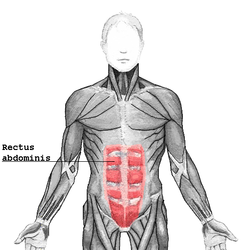
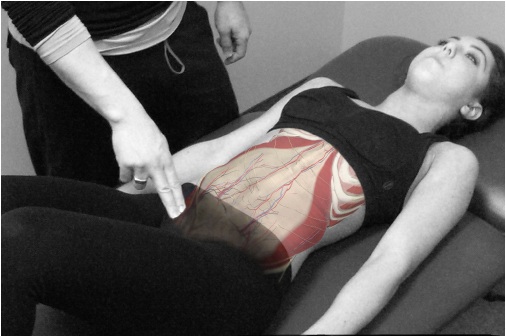
So I’ve showed you now two excellent exercises for the abdominal region–plank pose and abdominal crunches–and hopefully you’ve been doing them, getting sore…but getting stronger too. I would now love to share a phenomenal exercise for the lower abdominals (abs). Although the rectus abdominus is one muscle, we often discuss it in terms of being split into upper and lower sections. So for our purposes here, we’ll consider the lower abs as the abdominals from the belt line down to the pubic bone.

As a sports chiropractor in iron-pumping West Hollywood, I see lots of body builders with low back pain. Now many of them seem perplexed that being in such “great shape” they should have low back pain, but sometimes things we do regularly that don’t seem to be a problem while doing them, actually end up creating problems for us after the fact. Tight hip flexors due to poor low abdominal exercises is one such thing.

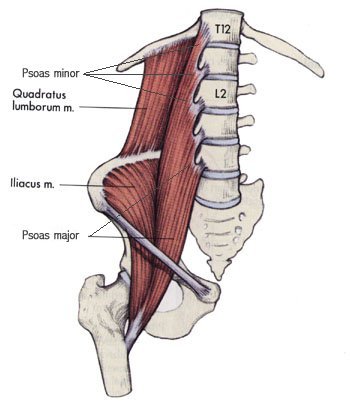
When the hip flexors (and I’m primarily talking about the psoas major here) get tight, they can cause low back pain. I find that a popular exercise for the lower abs–leg lifts–is a primary offender. These hip flexor killers stress the psoas major muscle, which can be felt almost immediately as pain and soreness in the anterior, or front, pelvic/groin region.

I do not recommend leg lifts for most people, as more people than not have tight or hypertonic psoas muscles. However, saying that, some people do have weak hip flexors and can use strengthening, but again, it’s not the norm. If uncertain, please visit your local West Hollywood sports chiropractor  for an evaluation.

Watch the video below to learn what I consider the best lower abs exercises. I will also demonstrate the popular leg lift exercises, and explain exactly how they stress the hip flexors, and what you can do to modify even these to get a great lower ab workout.

We’ve been talking a lot about low back pain, and I’ve showed you some great stretches that might help relieve your low back pain, particularly if the source is muscular. Tight low back muscles can be a major, if not the primary, source of low back pain. But sometimes tight low back muscles are only part of the equation–the muscles of the abdominal core may also be weak, causing instability of the lower back and pelvic regions.

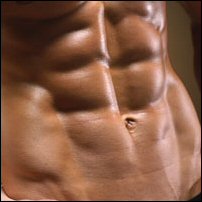
I have showed you a fantastic exercise to strengthen the core called plank pose, and for overall firming and stability it can’t be beat. However, the rectus abdominus muscles are also important, especially for athletes. These abdominal muscles are the ones most hardcore exercisers strive to develop; they are the six-pack of ripped abs fame.

Aside from the aesthetics, however, having strong rectus abdominus muscles are important posturally, and they help maintain the integrity of the internal organs by keeping them fixed firmly in the abdominal cavity. But as muscles of movement, the rectus abdominus flexes the torso–that is, they bring the chest toward the pelvis or vice versa, depending on which end is fixed (or both toward one another if neither end fixed)

How is this important to athletes? Anytime one needs to get up off the ground–as in MMA fighting, wrestling, Ultimate Fighting (PrideFC) or any other martial arts competition–the rectus abdominus is involved. As an endurance muscle, a weak rectus abdominus can fatigue leaving you unable to get up. Think body blows in any fight game. The idea is to wind the opponent. Because the rectus abdominus also assists in breathing, particularly when winded, you can see how important it is for these muscles to be fit.

In the video below, I demonstrate the best exercises to strengthen the abdominal muscles. It’s a standard crunch, but with a few critical nuances. Everybody and their mother knows how to do one version or another of the crunch, but so many are rife with biomechanical faults that I encourage you to watch below and refine your crunches–you’ll get the most out of the exercise if you follow the details I demonstrate. You will need to master these two movements–the abdominal hollow and the pelvic tilt–before you start, so give them each up to a week of practice (depending on your fitness level) before starting on the crunches. And then enjoy.

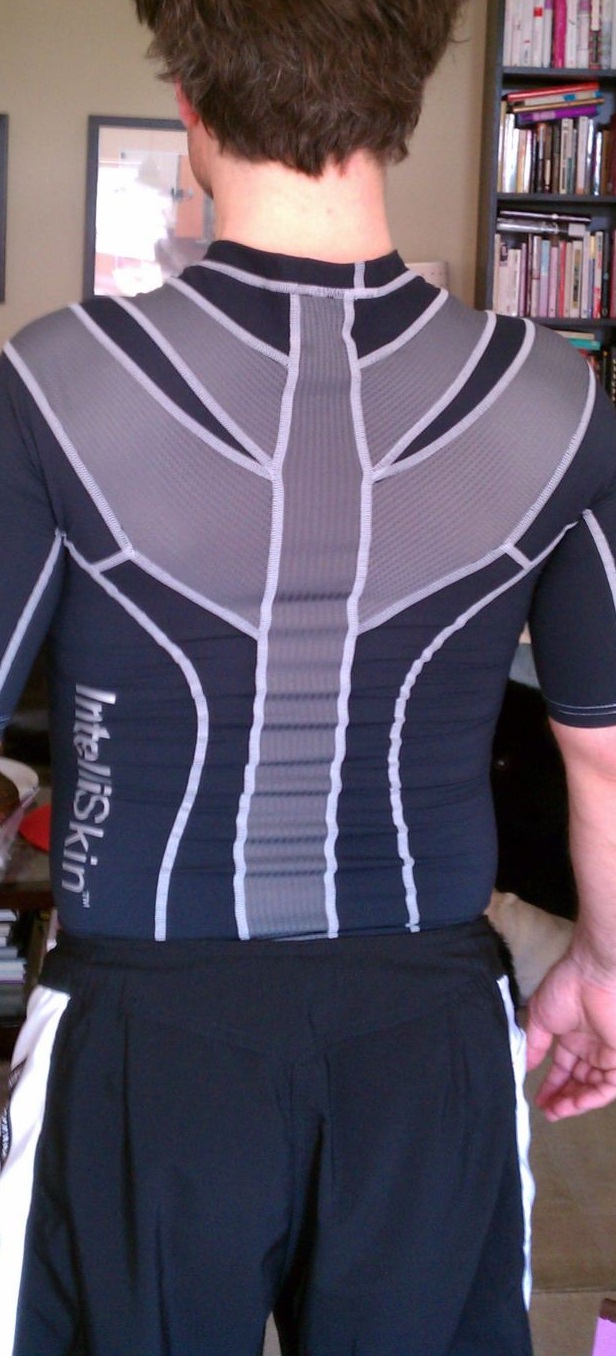
I love this product: Intelliskin PostureCue Performance Apparel is sportswear that improves posture and athletic performance by positioning your frame into the most biomechanically correct alignment. As a result, your body has a greater chance to heal from injuries, and it develops in proper accordance with your specific sport. Now that’s something to get excited about.

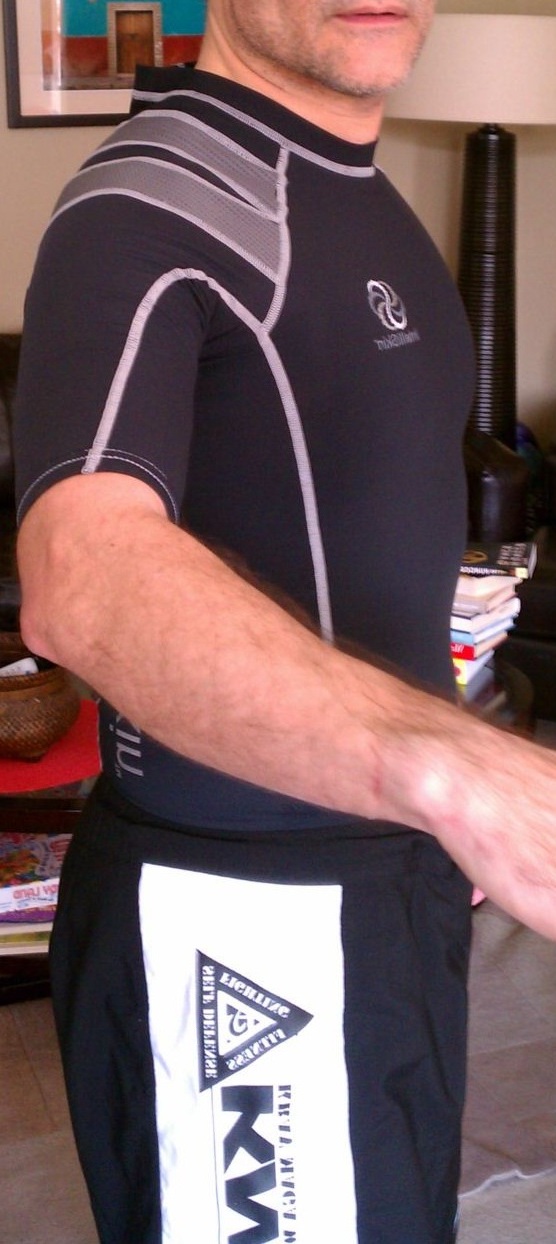
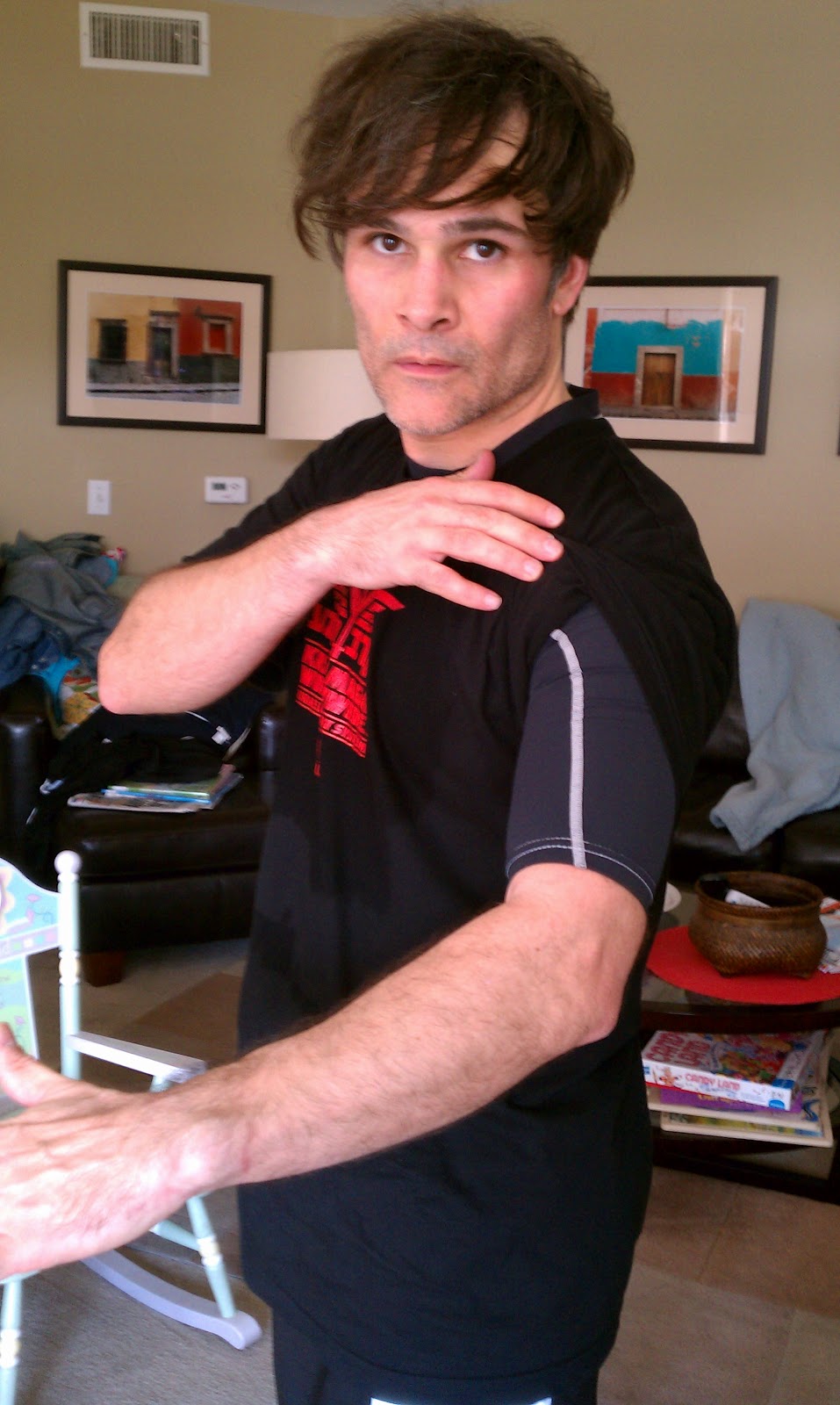
I’ve got the Intelliskin Foundation 2.0 shirt and have been wearing it during my martial arts training. Because I had tweaked my shoulder (subscapularis of the rotator cuff) about a month ago, and it really seemed to be responding slowly, I was merely going through the motions in class. But I finally got smart and donned my Intelliskin Foundation 2.0 shirt and…booyah!…I started seeing amazing results. Here’s how it works:

The shirt is made of 56% nylon and 46% Lycra and is a compression fabric, so it fits snugly, but also expands elastically. It has posture panels, which are strips of material perfectly positioned to pull your shoulders back and expand your chest. The panels are oriented in in specific patterns, similar to the sports taping techniques, developer and designer, Dr. Tim Brown, a sports chiropractor, specializes in.

The shirt design works because it places the body in the correct biomechanical posture–shoulders back, chest expanded, core tightened and compressed. Postural misalignments and muscular imbalances are what often cause overuse injuries–shoulder impingements, chronic neck pain and tightness, and even low back pain–so by helping the body structurally, and neurologically, the Intelliskin PostureCue Performance Apparel helps decrease injuries. But even better, by helping correct the dysfunctions, current injuries do not get exacerbated, and the body can go through an uninterrupted healing process.

Sports chiropractors like myself know how difficult it is to keep athletes from playing through injuries. As a weekend warrior myself, I am no different from your average jock–I’ll only sit for so long. That’s why the Intelliskin was great for me, because I am going to do something…anything…as it’s my way of life. The Foundation 2.0 shirt helps my mechanics when I throw punches or any other upper body movement.

Interestingly, when I first started wearing the shirt I noticed that I’d fatigue earlier, which means I was using muscles that had gotten lazy leading to muscular imbalance. The beauty is that the small stabilizer muscles needing to work during my sport were engaged, fatiguing earlier, yes, but developing along the way. This means the fatigue will not last long as the muscles become conditioned. The increased heat takes a little getting used to, but as the body is the great adapter, it will over time.

Like I said, I love this product. And I recommend it for athletes or anybody trying to heal an injury. Intelliskin has women’s products as well, including a sports bra; and it has its LC-1 Reactivator shorts for lower back and pelvic stability. Check out Intelliskin and get your shirts, shorts and sports bras today–you’ll play longer, and better, in Intelliskin.

I’ve recently shown you a great beginners stretch for the quadratus lumborum (QL), which is an oft overlooked cause of low back pain. When this muscle gets tight it can mimic some of the more severe causes of low back pain, and thus many experts, myself included, believe that a number of “failed low back surgeries” might be due to conditions of the QLs. So what to do?

First, it’s crucial that you visit a sports chiropractor. If you are in West Hollywood, you can call my chiropractic office, and I will evaluate the source of your low back pain. You may need a chiropractic adjustment to your lumbar spine, sacrum or pelvis, as each is factor contributing to low back pain. And if your QLs are tight, then you will need to stretch.

Watch the beginners’ QL stretch video here, and if you do not feel like you are getting a sufficient stretch, then try the more advanced low back pain stretches that I demonstrate in the video below. Remember that the QLs are for side bending among other actions, so the advanced stretch is essentially a side bender. Be mindful of your form, as is true with all exercises and stretches, and remember to roll your body back slightly as you stretch, and you should get great results.

Low back pain is never fun, but what complicates things and makes it harder to get relief is not understanding the source of the pain. So, again, get in to see your West Hollywood sports chiropractor for your low back pain relief, exercises and stretches right away. That’s the best way to get back on your feet quickly and feeling good again.

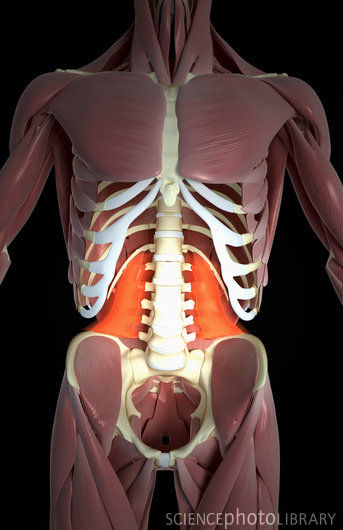
Low back pain comes from many sources–spinal joints, discs, nerves, and of course, chronically tight muscles. One such muscle is the quadratus lumborum (QL); when tight this muscle can mimic the pain of herniated discs or sometimes even kidney pain. Common symptoms are a band of pain going across the back of the lumbar spine, and low back fatigue or tiredness from standing for extended periods.

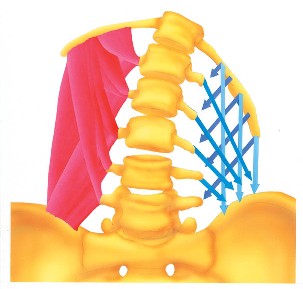
The quadratus lumborum attaches to the lumbar spine from the pelvic crest to the lower ribs. It is a large, thick muscle in the flank. Quadratus stands for four, which is the number of layers present in the QL muscle. It works as a lateral bender of the lower torso as well as an extender of the low back, along with other functions.

If you are having low back pain, you would be wise to get checked by a sports chiropractor. In the meantime, you can try these stretches. If your QLs are tight, you may get some relief from this basic side bending stretch. In an upcoming post I will show a little more advanced stretch, so that you can take your QLs to the next level. Enjoy.

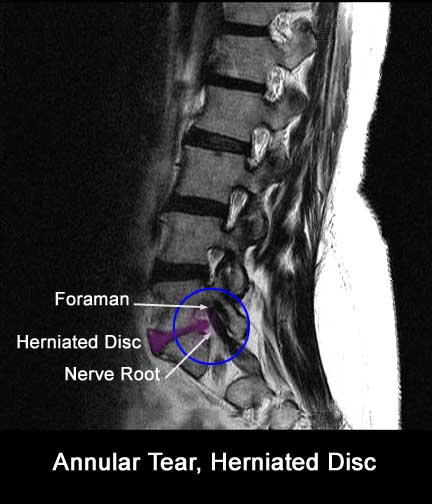
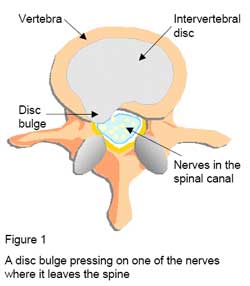
People suffering from low back pain, specifically from herniated disks, might find temporary relief by doing McKenzie back exercises. These low back extension exercises utilize a light pumping action at the low back to help squeeze disk bulges back into the intervertebral spaces.

McKenzie exercises, unfortunately, do not work for everybody–in fact, possibly only ~ 50% of herniated disk low back pain sufferers will respond to extension (some respond better to flexion) movements. The only way to know is…to try. So gently get down to the floor (please work on breaking inflammation with several ice bag applications beforehand, otherwise you might not get back up without help), and push your upper torso upward, while leaving your hips on the ground. Do in a pumping action as demonstrated in the video.

Go slowly. If it is going to work, you’ll feel the improvement rather quickly. You can try two sets of ten pumps, but if the pain gets worse after several pumps, discontinue the practice.

It is of utmost importance to call a chiropractor right away if you are suffering from severe low back pain (especially with numbness and/or tingling). But you can try these low back exercises to see if they provide any pain relief. Low back pain is no fun and it can linger–don’t suffer; call your local neighborhood chiropractic office today.

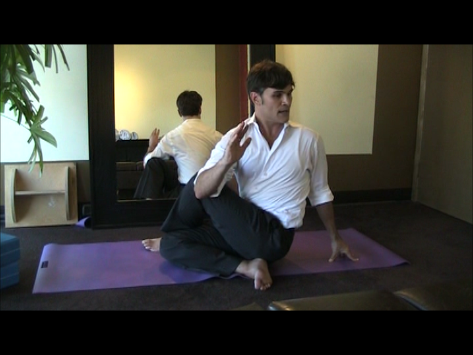
Another great stretch for the low back and hip regions is the twist stretch.  A bit different than your typical piriformis stretches, the twist stretch hits the piriformis, glutes and lumbar spine erector spinae (or paraspinals).  Because of this, the twist stretch is great for relieving low back pain, hip pain, piriformis syndrome, and can even help in some cases of sciatica.

Watch the video below to learn the best technique for doing the twist stretch.  The key that you must remember when doing this low back stretch is to keep your lower back straight, so sitting up straight before twisting is imperative.  If you fail to do this important step, you do risk the potential for injury.  I find this point so important because I observe many people at the gym doing a twist stretch with rounded backs.  Listen, if you want to come see me as a herniated disk patient, then twist with a rounded back.  But if you would rather fix your low back pain, then twist with a straight back–simple as that.  Have fun twisting.

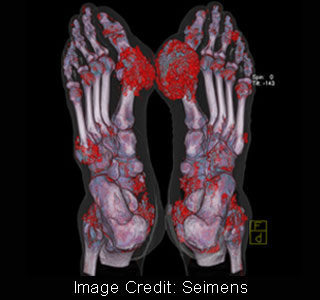
Anybody who has ever been under my care knows the importance I place on the feet.  As our foundation, the feet are directly connected to low back stability.  When foot dysfunction is present it can lead to low back pain, sciatica and even herniated disks.  But foot dysfunction is not only related  to low back issues, it can also cause conditions of the ankles, knees and hips.

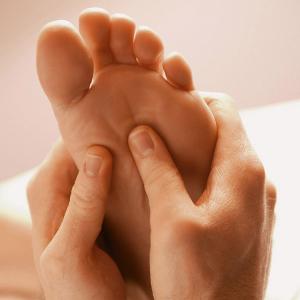
It’s probably no surprise, then, that I recommend custom orthotics for anyone suffering from a foot dysfunction.  But when it comes to caring for the feet, there is much more than simply adding orthotic support.  Like all musculoskeletal regions, the feet benefit enormously from a good bit of rubbing and kneading from massage.

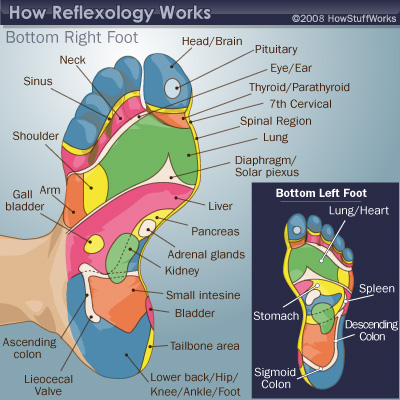
There is a theory that toxins build in the body, and can be carried through the circulation to the feet, thus making it important to periodically get one’s feet massaged.  By massaging the feet, the theory goes, built-up crystal deposits can be taken up by the veins, and removed through the kidneys.  As a result, organs corresponding to the massage or pressure points get a ‘reflex’ stimulation and, in turn, heal the body of various ailments.

Now whether this theory is true or not is debatable, but at the very least foot massage must accomplish what all myofascial release does: it enhances circulation, breaks up muscular adhesions, and frees up joints and muscles to allow greater movement, balance and stability.  But most satisfyingly, foot massage feels good, so it relaxes us and allows us to unwind.

I am such a believer in this type of bodywork, that I am now on a quest to find the best foot massages and techniques from around the world.  I am currently receiving foot massage from the Oasis Relax Spa in West Hollywood.  On a five point scale I would rate them a three.

Some pluses are:

  • hour-long foot massage
  • includes neck, back, face and scalp massage
  • great price ($25)
  • nice, clean and quiet facility
  • lots of parking
  • open daily and long hours: 10am-10pm

Some minuses are:

  • foot massage portion not as long as I’d like, but therapist skill can make difference here
  • English not first language hampers communication–sometimes problematic during instruction (on positioning, and so forth)
  • some variation in therapist skills (I’ve got my favorites and I’m not telling you–find your own!)
  • Don’t always have small bills for change–bring singles, or tip in $5’s and $10’s

I would like to ask all my readers to please tell me where you get your feet massaged, and it can be anywhere in the world.  I want to know the best places for foot health including reflexology practices, and even pedicurists, if they do foot massage.  Please leave your comments below, and tell me why you like your favorite foot massage place.  Let us all help each other to find the best foot massages worldwide, so we can be certain that no matter where we are, we can take care of our feet when the need arises.

Proprioception is our sense of where we are in space.  It tells us about relative position of body parts, as well as giving us information about our movements.  Proprioception is essential to how we move, how we are supported, and how we function.  To be free from low back pain and other musculoskeletal injuries, and to be in good shape both require a conditioned proprioceptive sensory system.

This system can become deconditioned from a number of interrelated factors: lack of regular, challenging movement, previous or current injury, significant change in weight or strength, drug use and/or abuse, and chronically tight muscles.

The list above should tell you that many people today are deconditioned in their proprioceptive senses.  From increased computer time (which means increased sitting), to changes in activity type (sports, music, art to more media driven activities like video games and computers), to poor diets and lack of movement, even from our advanced medical care that has people recovering from injuries that at one time my have been game-enders, people today need to think about their proprioceptive condition.

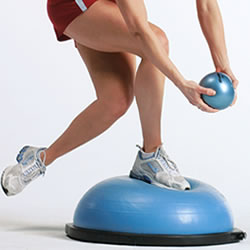
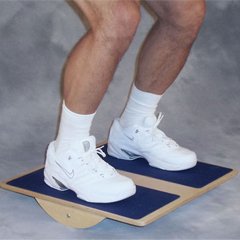
In the next few video posts, I will be discussing and demonstrating excellent exercises for stimulating, and thus conditioning, your proprioceptive system.  Although I usually prefer to give low-tech exercises, I really do think having access to some special equipment will be very useful here. The good news is that many gyms have the equipment you will need.  If for any reason that is not an option for you, you can contact my West Hollywood sports chiropractic office to purchase either a rocker board, wobble board or bosu ball.

Watch the video below for the first instruction on proprioceptive training: the short foot exercise.  You will need to master this to go to the next level.  I would practice the short foot exercise for one week before moving on to the next level.  You will see that by mastering this movement, you will have the foundation for keeping your balance no matter what the challenge.  Learn the short foot and have fun–I’ll see you soon for the next level.

Low back pain, hip pain, butt pain, sciatica–these are all conditions that can occur as a result of a tight piriformis muscle.  But it doesn’t stop there.  Gait abnormalities, hip bursitis and knee pain can also result as secondary disorders related to a tight piriformis muscle.

Stretching a tight piriformis is imperative to prevent these conditions from plaguing you.  And if you’ve already got some of these problems, after you see your friendly neighborhood sports chiropractor, you’ll probably need to stretch your piriformis to bring length to the muscle and help open your hips sufficiently.

In the video, I demonstrate three excellent stretches (really two, with one version having two variants).  Start with the first one–lying on your back–if you are very tight OR you could even do that same stretch while sitting in a chair (although I don’t demonstrate that version in the video).  You can try the other two variants if you have a little more flexibility.

Play with all three to see where you currently are, and then work at that level for two to three weeks.  Once you’ve mastered your current level, you can move on to the next.  Have fun and happy stretching.

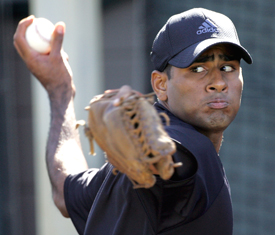
This post is for anybody who suffers from low back pain, but it should interest anybody that plays and/or loves sports, particularly baseball.  A recent study showed that lumbopelvic control in baseball pitchers improved pitching accuracy and endurance.

The study, published in the latest issue of the Journal of Strength and Conditioning, looked at minor league pitchers.  Seventy-five healthy professional baseball pitchers performed a standing lumbopelvic control test during the last week of spring training for the 2008 and 2009 seasons while wearing a custom-designed testing apparatus called the “Level Belt.”  With the Level Belt secured to the waist, subjects attempted to transition from a 2-leg to a single-leg pitching stance and balance while maintaining a stable pelvic position. Subjects were graded on the maximum sagittal pelvic tilt from a neutral position during the motion.

Pitching performance, number of innings pitched (IP), and injuries were compared for all subjects who pitched at least 50 innings during a season.  The belt measurement was taken for each pitcher during the leg transition exercise, with the 7° being the median measurement.  The researchers then assessed the performance of the players over the two seasons.  They found that players with measurements <7° (or the most stable low back and pelvis during motion) had the significantly fewer walks plus hits per inning than subjects scoring ≥7°.  There was no significant difference in injuries between the two groups.  Here’s the take home: Lumbopelvic stabilization–something I work on with all my Los Angeles sports chiropractic patients, particularly those with low back pain, hip pain or any other leg or knee injury–improves athletic performance.  And although this study did not see a correlation between good lumbopelvic stabilization and injury prevention, I can tell you that I see it reduce chronic pain an disability in both athletes and non-athletes alike.

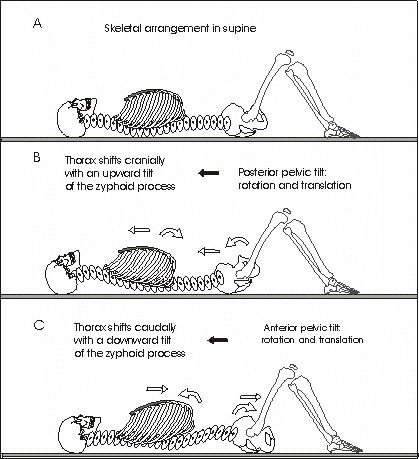
Functional lumbopelvic stabilization comes from a combination of strength, flexibility and balance–three area which I emphasize in my sports rehabilitation practice.  Tight hip flexors, weak glutes and a loss of lumbopelvic control from the abdominals (see abdominal hollows and pelvic tilting) all contribute to loss of stabilization of this vital core area.

True, researchers found no correlation to prevention of injury in the pitchers, as both groups in the study suffered injuries.  But this just shows that sports injuries are multifactorial.  What is unquestionable is that pitching performance did improve with lumbopelvic stabilization, and that I would expect, as I know how important it is in musculoskeletal biomechanics.  I hope you found this study as interesting as I did.

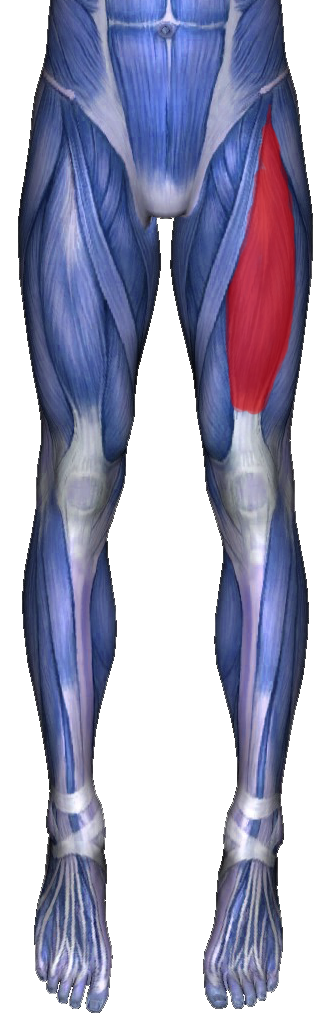
I’ve been showing you stretches to open up your hip flexor complex, which includes the iliopsoas (iliacus and psoas major together) muscle.  Another muscle, which is an integral part of this complex and also needs attention in many people, is the rectus femoris (part of the quadriceps muscle) on the front of the thigh.

The rectus femoris attaches from the front of the pelvis to the shin (tibia).  It is involved in both knee extension (straightening the knee) and hip flexion.  In some people, it may be the hip flexor muscle in need of the most lengthening.  When this muscle is tight, it can lead to a number of problems, most notably low back pain and patellar tendonitis.  In either of these cases, stretching will bring quick relief and also prevent the formation and continuation of a chronic problem.

In the video below, I demonstrate four stretches that are excellent openers for the rectus femoris or quadriceps, and thus the hip, low back and knees.  The are actually four successive levels varying in difficulty and intensity.  You should try each one from the beginning to determine your current level.  When you find the one that challenges you the most, but which you can still do without causing too much pain or loss of balance, practice it for one to two weeks before trying the next level.

Within that time, you should be able to master the current level, if you do the stretch every day; and by moving on to the next level, that one will then become challenging but doable.  A principle of all exercise, whether we are talking weight lifting, cardio or stretching, is that you will have to try the next highest level at a lower intensity (whether that means reps, duration, increased intensity of stretch, or whatever) before you will be able to do it regularly and with greater ease.  For example, you won’t be able to master the third level stretch in the video until you can do the second level with some ease; then by taking it to the next level, and practicing, even if it’s uncomfortable, for a shorter period should in time allow you to do that next level comfortably (as comfortable as a stretch can be), and so on to the next level beyond that.  In other words, you won’t be ready for the next level until you do it repeatedly, and ultimately, that will become your next level of mastery (also a metaphor for life!)

Try these stretches to add even greater opening of your hip flexor complex.  I guarantee that once you master all four levels of this rectus femoris stretch, your low back, hips and knees will thank you.  And you’ll also see some amazing improvements in your posture.  Try them, you’ll see.

Last month I showed you a great stretch for the hip flexors, specifically the iliopsoas muscle.  The high lunge stretch I demonstrated is excellent for hitting the lower fibers of the psoas, while also engaging some of the iliacus fibers as well.

The stretch I demonstrate in the video below will round out hip flexibility by stretching the upper fibers of the psoas muscle.  When done correctly, you should feel the stretch up higher into the belly and high groin areas.  You will also need to do a pelvic tilt, so mastering that move will be key in getting the best stretch of the psoas.

Remember that the psoas muscle is a major player in some low back pain syndromes, very often causing a referred pain along the sides of the spine, and could go up as high as the lower mid-back.  The psoas as a source of low back pain is often missed by practitioners, who’ll work on the low back muscles, unfortunately to no avail.

Always the smartest thing to do if you have low back pain is to go see a doctor–preferably a sports chiropractor.  But if you know your psoas is tight and playing a part in your low back pain, then by all means do this stretch.  If stretching the psoas doesn’t seem to provide any relief, then make sure you get in to see your chiropractor right away.

Watch the video below to get the best instruction of stretching a tight psoas muscle.  And for those of you that know this stretch–yes, it is also know as a “runners stretch”.  Enjoy.

Summer is my favorite time of year.  I love nothing better than a summer day at the pool–swimming, sunning, staring.  Staring?  Yes staring.  As somebody who spends most of his time looking at bodies, I simply can’t help but notice–and be intrigued by–the variety of differences and similarities among people when it comes to physical structure.  No better place than the pool for a little weekend science.

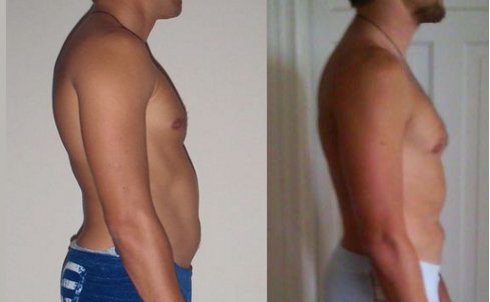
One thing I’ve noticed is that, as people age, the gravity-induced musculoskeletal stresses that shape their bodies do so in predictable ways.  For instance, I notice that both men and women are prone to developing excessive low back arch, which could easily be mistaken (by them) for a belly (beer belly, immaculate conception, etc).

During my career as a sports chiropractor, and probably no less a result of the city in which I’ve chosen to practice, I have met numerous people that look into, and undergo, tummy tuck procedures, usually done in an attempt to free themselves of this suspected baggage.  On more than one occasion, I’ve actually gotten to observe post-vacuumed mid-sections, and I must say…I haven’t always seen much of a difference.

Excessive arch (hyperlordosis)       Normal Arch

So being naturally curious, I always feel compelled to ask why.  As I mentally compare these bodies–of both the liposuctioned, yet belly-retained, and of the people that I observe poolside–I notice the downward projection of the belly button, which is more a consequence of hyperlordosis–or excessive arch–than it is of belliness (see photo to right to get better picture of what I’m talking about).

Having a reference point is a must, because I have to be sure that it’s simply not normal posture (which would then, in fact, implicate the bulge as being a belly, after all–still following me?).  Fortunately, the pool where I live has a wide variety of people of every race, creed, color, size, ethnicity, sex and age.  A researchers dream!

Compared to younger people (yes, a purely subjective categorization…but I’m calling this observation, not fact), I find that older people tend to have more arch, which I ascribe to tight hip flexors.  Listen, I evaluate enough people to know that many of us, especially those with low back pain, have tight hip flexors.  I also know that a hyper-arched low back is the postural consequence of tight psoas muscles (part of the hip flexor complex)…so it’s not rocket science.

Here’s the point: If you find that the ‘belly’ you see when looking in the mirror doesn’t go away no matter how many sit-ups you do, or how little you eat, and you’ve even been contemplating surgical enhancement, why not start by stretching?  Regular flexibility work, particularly focused on the hip flexors–psoas major, iliacus, quadriceps femoris (quads)–might just be the answer.

Gravity affects us all.  We can let it do it’s thing over time (and try to counter with a tummy tuck, which is often only negligibly successful) or we can invest the energy NOW (it’s never too late) to stretch the tight, short muscles that have been deformed by gravity, and return to the youthful posture we’ve all once had (and some still have).  It’s your choice, but I think if you try the latter you’ll be pleasantly surprised.

Low back pain is the fifth most common reasons for physician visits in the U.S.  One third of them report persistent back pain of at least moderate intensity one year after an acute episode, and 1 in 5 report substantial limitations in activity.

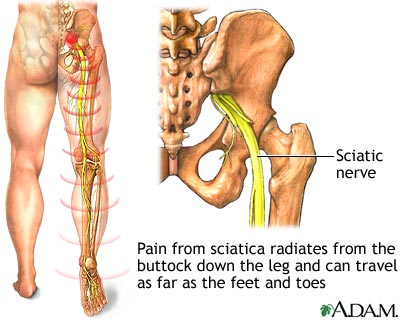
Sciatica–a painful nerve irritation–can accompany low back pain and can sometimes be present on its own.  Sciatica and low back pain together very often result from disc herniation, predominantly in the lumbar spine.

Several treatment options exist, but which ones are most effective?  A 2010 study set out to determine the efficacy of two of these treatments–chiropractic adjustments or surgery.  Forty patients were chosen through elective referral by primary care physicians to spinal neurosurgeons.  Patients were chosen on the basis that they had already failed at least three months of nonoperative management including treatment with analgesics (pain killers), lifestyle modification, physiotherapy, massage therapy, and/or acupuncture.

The patients were randomly split into two groups: those to receive chiropractic adjustments and those to receive microdiscectomy (surgical removal of the herniated disc–cool video here).  Crossover to the alternate treatment was allowed after three months.

Researchers found significant improvement in both groups.  Hmmm…so, by this study, chiropractic and disc surgery were better than pain killers, lifestyle modification, PT, massage and acupuncture to relieve chronic, stubborn sciatica.  Okay, I’ll buy that (well, I am a chiropractor, you know?).  But which one is better?  We’ve gotta have a ‘better’, don’t we?

The results showed that the two treatments came out exactly the same for all outcome measures for the majority of subjects one year post-treatment.  However, eight patients did crossover from chiropractic to surgery, while three crossed over from surgery into chiropractic.  The three that did not benefit from surgery failed to benefit from chiropractic as well.  The eight chiropractic-didn’t-work-for-me crossovers, however, did benefit from the disc surgery…and get this…they did so to the same degree as their surgery-first counterparts.  Dang–now that’s a good study!

Here’s the take home: When dealing with chronic sciatica due to herniated disc, try chiropractic first, period (authors believe first line should be drugs, physical therapy and lifestyle modification…but I don’t).  If the chiropractic doesn’t work, go ahead and get the surgery (although I still think I would try chiropractic, rehab and orthotics [if foot dysfunction present] seriously for at least one year before making that decision).  If you do it this way, you won’t hurt yourself  (at least within three months) by waiting on the surgery–you will still likely benefit as if you went surgery right away–AND if chiropractic works for you (as it did for a majority in the study), you’ll be better off physically and financially, because remember, you’ll never be the same or better following a surgery, and microdiscectomies aren’t cheap (unless, of course, you are lucky enough to live where there’s socialized medicine, and then somebody else will pick up the tab).

Finally, if you decide to get the surgery and it doesn’t work for you (10-20% failure rate), understand that there’s no going back–chiropractic probably can’t help you then.  Get it?  Good.

Low back pain, hip pain and knee pain can all originate from a weak pelvic girdle.  When the muscles of the butt and pelvis get weak, the low back loses support–add in a weak abdominal core and you’ve got a recipe for disaster.

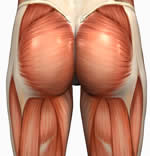
In my West Hollywood chiropractic office, I always evaluate the pelvis and buttocks muscles, which are also known as the gluteals.  The gluteus maximus is the main muscle of walking, as it is the primary hip extensor–a movement necessary to bring the leg back during walking (gait) cycle.  The gluteus medius is the muscle that holds the pelvis upright as we stand.  When the glutes get weak–or perhaps lazy is a better word–they need to be isolated and strengthened. 

No muscle can be totally isolated because muscles work together–synergistically–as a group.  However, there are two exercises that are outstanding for isolating the gluteal muscles as much as possible.  The first is called gluteal bridges, and if you watch the video below, you can see a great version that will not only strengthen the gluteus maximus muscles, but will also help correct any muscular imbalances that are in place, whereby one side becomes stronger or weaker than the other.  The second exercise is called hip abductions and we’ll save that for another post.

You should have your work cut out for you with the gluteal bridges I demonstrate in the video, so watch and practice.  If you are not sore the next day, then you aren’t doing them right.  But don’t worry, you’ll be sore…

Life happens…and sometimes its intricacies interfere with a well-intentioned exercise program.  The most oft-cited reason people give for neglecting to work out is “no time,” a situation we can all relate in one way or another.  This is precisely why I have a self-imposed rule I call WOAC–work out at all costs!

Get it?  Move your butt, no matter what.  Living by this principle allows me to work out anywhere, anytime: planes, trains, and hotel rooms, I always say.  Another advantage afforded by the WOAC philosophy is “no time is too short.”

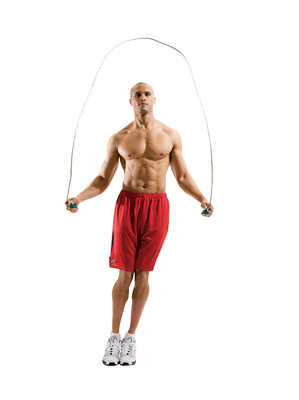
Since I can stretch at home or the office, the important thing for me is to go to the gym to pump iron or skip rope.  Essentially it’s “go get in whatever you need that requires special space or equipment.”  Truth is, though, I really could do resistance exercise anywhere, so at the very least it’s my cardiovascular requirements that require specific equipment.

Here is why it matters: Like everyone, I find time to be a limiting factor when it comes to working out–I mean, there’s only 24 hours in a day (which is plenty if you have round the clock access to space or equipment–a home gym, for example).  So when I find that time is limited: WOAC!

The Memorial Day holiday today meant the gym at my apartment complex was closing by 4pm.  I wasn’t ready to go until 3:30 pm.  Now…far too many people would have said, “Screw it,” and picked up a pizza and beer and rationalized why Memorial Day is time for celebrating, and NOT working out.  But because I live by the WOAC principle, I knew that it was plenty of time to bang out a session.  Here is how I did it today:

Upon entering the gym, the counter clerk reminded me of the time.  I assured him I wouldn’t be the last person walking out the door. I went right up to the yoga/dance studio with it’s slippery, shiny hardwood floors and proceeded to skip rope–balls to the walls–for ten minutes.  I was winded by five, and dripping sweat at ten.  I needed a rest, so I took one minute to drink a cup of water and catch my breath. 

Next I did plank poses, abdominal crunches, reverse crunches and side planks for my core; then pounded out gluteal bridges and hip abductions for my butt and pelvic regions.  In total, the mat work took me five minutes.  Then I stretched my hips, legs and low back–three more minutes.  Finally, I took two minutes to stretch my arms and chest–areas that I am working on specifically in response to an injury.  Done.  And not the last person to leave, either.

You see, WOAC helps me to get my arse to the gym–moving, sweating, and feeling pumped–even in a short time period.  No excuses for me.  And I guarantee I will be sore tomorrow.  Twenty minutes is all I need–heck, even ten will do.  WOAC…a way of life for me.

We hear a lot about the abdominal core (especially since it’s been designed by Navy SEALSjust kidding) for good reason, it’s nature’s support belt–it stabilizes and protects the lower trunk, the pelvis and the spine.  The term “core” is a current buzzword in fitness circles, but it’s more than just the abdominals.  It’s a group of muscles working together, dynamically to stabilize the body during movements.  It’s includes abdominal muscles for sure, but low back, pelvic and spinal muscles contribute to the function of the core.

The video below shows an outstanding exercise–the abdominal hollow–I give to all my West Hollywood chiropractic clients to strengthen their core.  I call it a basic building block because, despite its effectiveness as a solitary movement, it is an integral part of numerous compound exercises that I give my clients as they advance through a sports rehab routine.  Simply put, it’s the best fundamental strengthening exercise anybody can benefit from, no matter what shape you are in.

Watch the video below to learn how to do the powerful abdominal hollow exercise, and do it daily.  I guarantee within six weeks of doing this exercise every day, your core will be solid and your low back will have more support, leading to–less injury and less low back pain.  Have fun.

Low back pain is the most common ailment walking, er…limping into my Los Angeles, Beverly Hills and West Hollywood chiropractic office. Of all the spinal regions of the body, the lumbar spine, or low back is the most complicated when having to determine the source of pain.

Low back pain can be musculoskeletal, meaning from the joints, muscles or tendons (other tissues, too, but mainly these); or it can be from organic causes. Organic causes of low back pain include, but are not limited to cardiovascular disease, cancer, digestive disorders, kidney stones, and sexually transmitted diseases. Every one of these requires medical attention.

If your issue is caused by a musculoskeletal problem, then nobody better than a chiropractor to help relieve your low back pain. Chiropractors address more structures and tissues than any other bodywork specialist. We adjust the joints, work out muscle tension, strengthen weak muscles, lengthen short/tight muscles, and correct foot dysfunction. Furthermore, chiropractors are doctors, which means you’ll get an accurate diagnosis AND treatment that goes beyond a drug quick-fix (I’m not knocking it, just clarifying the difference in solutions) in the same office (no out-referral).

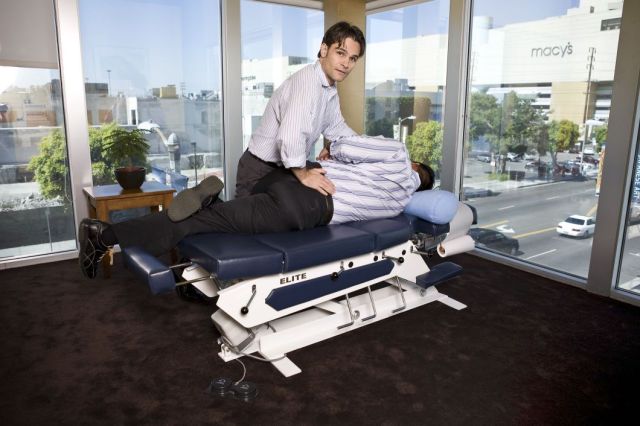
When it comes to assessing and treating low back pain, nobody does it better than a chiropractor. Watch the video below to see a chiropractic adjustment for low back pain in action. If you are having low back pain, especially if it’s been around for awhile, do not hesitate, go see a chiropractor for a real solution.

Copyright © 2013 Dr. Nick Campos - All Rights Reserved.