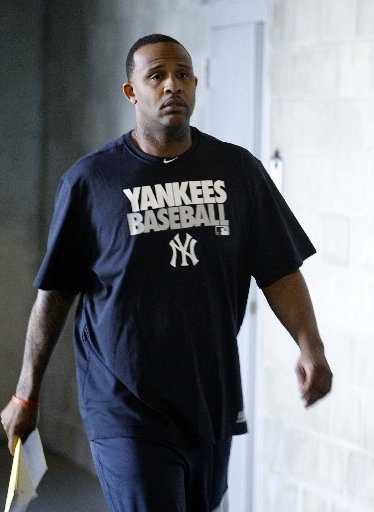
New York Yankees pitcher CC Sabathia is reporting to spring training 25 lbs lighter.  The secret: He kicked the Cap’n Crunch.  Aw yeh, the former fat-boy is weighing in at a svelte 290, not bad for a 6’7″ frame.  And to think he did it all with one simple change.  Just think of what that might mean for you or your kids!

Sabathia, the Yankees ace, weighed in at a whopping 315 lbs last season, when he was knocking down a full box of Cap’n Crunch every day!  Each box of Cap’n Crunch has 12.59 servings, each serving has 12 grams of sugar, making a box of the sugary cereal contain a total of 151 grams of sugar.  Further, the nutritional info on the box lists the number of calories at 217 per double serving.  Therefore, a full box of Cap’n Crunch contains 1,366 calories.  Dang!

To put this into perspective, a soda (Coke, let’s say) contains 40 grams of sugar and 150 calories per 12 oz. can.  More perspective: one teaspoon of sugar equals about six grams; therefore, a can of soda has about seven teaspoons of sugar (see video below**).  Even more perspective: Most sugar packets found in the U.S. have approximately 4 grams of sugar, thus a can of soda contains ten packets of sugar (U.S.).

Now back to Sabathia.  His one full box of Cap’n Crunch a day gave him a sugar equivalent of drinking 4 sodas, 25 teaspoons of sugar, or 38 sugar packets.  Nice, CC…nice.

*A report released in 2009 by the Rudd Center for Food Policy and Obesity at Yale gave Cap’n Crunch’s Crunch Berries the worst nutritional score of any cereal marketed to children and families. ~ from Wikipedia

How about your kids?  Do they eat Cap’n Crunch?  Fruit Loops?  Frosted Flakes?  Do they drink soda?  These cereals and soft drinks have been staples in the American diet for the last fifty years, and it’s not because people aren’t consuming them.  It’s not just 6’7″ professional athletes eating this junk, either.  It’s little Timmy, and little Rainflower, and maybe even you.

Listen, next time you’re thinking about feeding Junior the Cap’n Crunch, why not just give him a Snickers bar?  Same amount of sugar as in a two-serving bowl of the Crunch.  And is it any wonder we are in the midst of an obesity (and diabetes) epidemic?

**Please watch the video below to get great perspective on the amount of sugar contained in a soda:

Saw the film Black Swan last week (I know…I’m so December 2010), and it stimulated some thoughts on dance and chiropractic.  The latest thriller from one of my favorite film-makers, Darren Aronofski, is an outstanding piece on the human psyche under the self-imposed pressures of excellence.  But I’m not writing this as a film critique; instead, I want to talk about something that grabbed my attention immediately: the accurate portrayal of the physical demands of ballet, and interestingly, what the lead character, Nina, used to help her handle the rigors of her art–chiropractic!

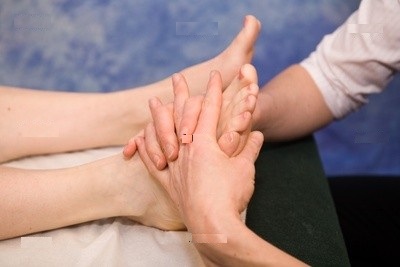
Now let me start by saying that I could find nothing by googling “Black Swan+chiropractic,” making me wonder if I had just imagined what I saw.  But…well, I did see Natalie Portman‘s character, Nina Sayers, getting her spasmed diaphragm released, a favorite therapy among some chiropractors.  And, for sure, I saw her get her ankles and feet adjusted.  I know I did, because it is a regular service I provide for my Los Angeles, Beverly Hills, and West Hollywood chiropractic clients…so it caught my eye.

It was a fast scene, split second, easy to miss.  But because it’s a treatment I do every day, I was like…“Wow!  A tibiotalar adjustment.  Cool!

But my exhaustive research brought up nothing.  Hmmm….Let me try, “Black Swan+physical therapy,” and…there…it…was…hidden right under my nose (on IMDB no less, du-uh-uh-uh!):

Due to a twisted rib injury, Natalie Portman had to receive physical therapy during filming. According to the director Darren Aronofsky, Portman is actually undergoing a real physical therapy session in one scene with the actual physical therapist.”

OK, ok…physical therapist…performing chiropractic…something that profession, along with medicine, condemned as quackery only three decades ago.  Harumph…

Well I guess that doesn’t take away from the fact that professional dance is grueling–a sport, similar to basketball in the types of moves a performer makes; similar in the stresses placed on the body. Professional dancers need regular bodywork, and for many of them chiropractic is the choice.

In fact, dancers are the professional athletes that have gravitated to my office the most for sports chiropractic care.  When the dancer’s body aches or is acutely injured, nothing beats chiropractic to help him or her return to the stage.

I treat the dancers in my office with safe, effective chiropractic care.  Like other athletes, a professional dancer’s livelihood depends on his or her optimally functioning body.  Nothing supersedes chiropractic in helping the body heal, musculoskeletally.  Nothing.

Black Swan is a great movie–check it out.  But keep your eyes open for the chiropractic treatments performed by a physical therapist; and remember, ballet and all other dance forms require an optimally functioning body for optimal performance.  Chiropractic is the right choice for dancers to stay healthy and heal from any injuries sustained in their grueling art.

Dance…chiropractic…of course.

Last month, I posted twice on how to relieve neck pain.  Whereas the first post dealt with the anatomy of neck and upper back pain, and the second with techniques I do in my Los Angeles sports chiropractic office, this post describes things you can do on your own, at home, to take a proactive role in correcting your chronic neck problems.

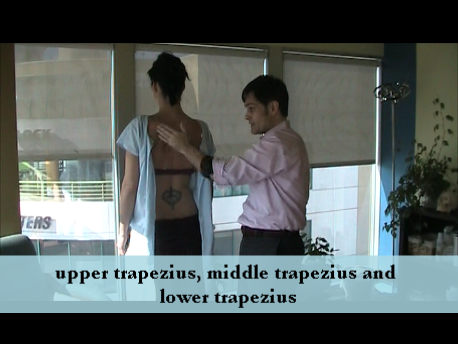
In the video below I demonstrate two outstanding neck stretches that focus on the upper trapezius and levator scapulae muscles.  Although these two have similar attachment points and functions, they require slightly different movements.  It is important to follow the steps laid out in the video–miss one, and you won’t get the proper stretch.  If you have trouble getting down the nuances of each stretch, just do the basic stretch I show first–believe me it’ll do wonders.

If you have chronic neck pain, it would be wise to visit a chiropractor.  With chiropractic adjustments, massage and neck stretches, your neck problems should clear up nicely.  If you are in Los Angeles, Beverly Hills or West Hollywood, come get your neck pain relief at my sports chiropractic office–you’ll be happy you did.

Passing the joint may not be a marijuana thing after all, as recent research shows the penis to be filled with receptors for THC, marijuana’s active ingredient.  As a result, marijuana may have a negative impact on male sexual performance, ultimately leading to erectile dysfunction.  Doh!

Rany Shamloul, a physician with appointments at the University of Ottawa and Queen’s University in Canada as well as the University of Cairo, conducted a review of studies on marijuana to determine how weed affects male sexual function.  He found that many of the studies were not only contradictory, but rife with problems as well.

Some early studies found marijuana to have positive effects, sexually, for men.  For instance, in a 1982 survey 75% of men reported sexual enhancement from smoking marijuana (…love weed, baby).  But a study published last year in the journal European Urology found the penis to contain receptors for tetrahydrocannabinol (THC), the active ingredient in the Mary Jane.  The receptors are located mainly throughout the smooth muscle of the penis.  Additional lab studies suggest that THC has an inhibitory effect on the muscle.

Says Shamloul, “This is a more serious effect on the erectile function because the smooth muscle makes up 70 percent to 80 percent of the penis itself.”

According to The United Nations Office on Drugs and Crime, 162 million people worldwide use marijuana every year.   More than 22 million use it daily.  That makes understanding long-term effects important, Shamloul said.

Check it and weep, stoners.

As Shamloul says, many of the older studies showing marijuana to have positive effects on sexual performance are flawed in their lack of controlling for perceptual alterations caused by the THC itself.  Other studies from the same year showed male marijuana smokers to have twice the rate of erectile dysfunction as non-smokers.  Another study showed the effects of marijuana on sexual function to be dose specific–small doses having positive effects and larger doses working in the negative.

“What we are really missing are clinical studies,” Shamloul said. “We are stuck with only animal studies and molecular studies, and some clinical studies done in the ’60s and ’70s, most on a very small number of men… We need well-designed, placebo-control studies examining marijuana’s effect in both the short-term and long-term.”

Hmmm…pot and sex…any volunteers?

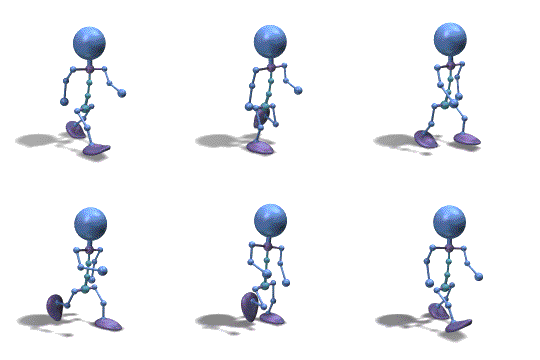
I often have to explain overpronation to a number of my Los Angeles, Beverly Hills and West Hollywood chiropractic clients.  I have finally found a video (please see below) that does a great job illustrating what happens to the feet during the gait cycle when overpronation is an issue.

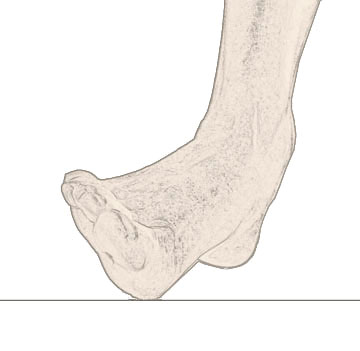
Overpronation is an excessive turning in of the feet (to be more accurate for you doctors out there–pronation a combination of eversion, abduction and dorsiflexion).  Pronation is a natural movement that we all do (or are supposed to do, anyway) during the foot-strike phase of the gait cycle (walking).  Pronation is necessary to adapt to the surface of the ground when we take a step.

Overpronators, then, turn their foot in excessively causing a chain of events occurring up the foot, leg and thigh, and eventually into the back, which can lead to excessive wear and tear on joints and cause pain.  Some common maladies attributable to overpronation are:

The real way to correct overpronation, and thus prevent any of the above issues from becoming chronic and leading to breakdown, is the use of custom-made orthotics.  Despite a current trend toward believing (hoping?) that barefoot running is the solution to all foot dysfunction, low back pain, goiter, syphilis and every other malady of the modern world, I can assure you I have seen nothing better for resolving musculoskeletal problems caused by overpronation than orthotics (and, believe me, people have been trying).

Watch the video below to get a clear picture of what is happening during overpronation.

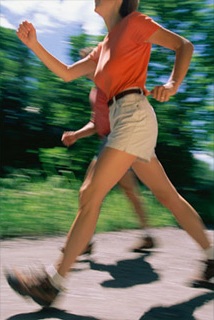
Good news for active adults–brisk walking improves memory by increasing the size of a brain region directly responsible for processing information to be stored.  This has promising implications for preventing age-related cognitive degeneration seen in Alzheimer’s disease.

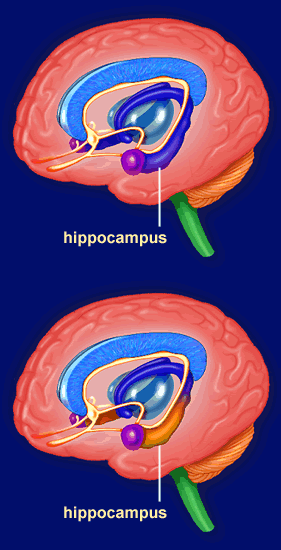
The hippocampus region of the brain grew by 2% in study subjects that walked briskly.  The study, led by researchers at the University of Pittsburgh and University of Illinois at Urbana-Champaign, looked at 120 sedentary people, aged 55 to 80.  They were divided into two groups: Half began a program of walking for 40 minutes a day, three days a week to increase their heart rate; the others only did stretching and toning exercises.

Memory improved in both groups, showing that physical activity in general has cognitive effects.   Preliminary studies have shown that aerobic exercise leads to reduce brain atrophy in early-stage Alzheimer’s patients, and that walking leads to slight improvement on mental tests among older people with memory problems.

The hippocampus is known to shrink slightly in people as they age, and this is, in fact, what happened to the stretch-only group.  The brisk walk group, though, did show increases in hippocampal size, leading researchers to believe this physiological effect sustains memory.

Kirk Erickson, professor of psychology at the University of Pittsburgh and thepaper’s lead author, said in a statement, “The results of our study are particularly interesting in that they suggest that even modest amounts of exercise by sedentary older adults can lead to substantial improvements in memory and brain health.

So get up and start walking, folks.  It’s never too late.  What you do today might just preserve your marbles for another couple decades.  So just do it–walk!..for the health of your hippocampus.

Just finished reading an article that was as good an analysis on obesity as I think you’ll find today.  The latest issue of Scientific American featured a piece titled, How to Fix the Obesity Crisis, and it does a great job of explaining the multi-factorial complexity of today’s obesity epidemic.

The article discusses the numerous metabolic, genetic and molecular process that might be involved in the mechanism of developing obesity, but it focuses on the behavioral approaches to breaking mental patterns involved in overeating and poor food choices.  The history on the obesity epidemic is pretty good, too.

Where I think the article fails is that it still approaches obesity from the same mechanistic thinking that has been unable to figure out the malady to begin with.  This sentiment can be summed up by the line,

“Maybe someday biology will provide us with a pill that re-adjusts our metabolism so we burn more calories or resets our built-in cravings so we prefer broccoli to burgers.”

Continuing to hope for a magic bullet that will allow us to live a faulty life style consequence-free is foolish. That IS the problem!  I’m going to leave my full assessment for a later time, because I think the article is worth reading.  But stay tuned.

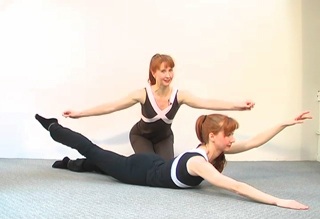
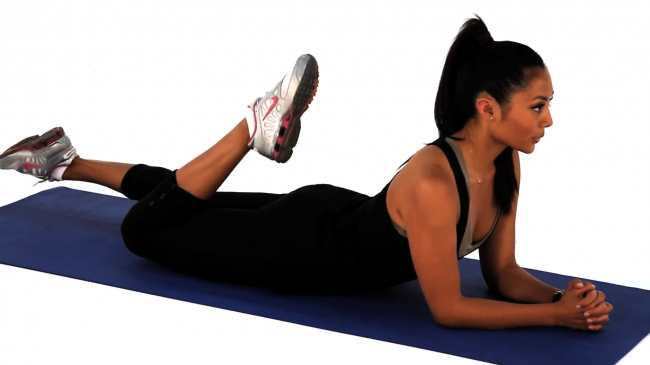
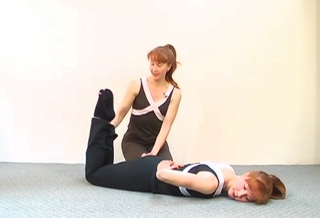
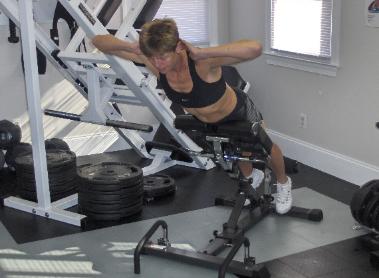
When it comes to strengthening the lower back, Pilates swimming mat exercises beat straight back extensions every time.  So says a recent study out of Brazil, which looked at Pilates mat exercises to distinguish which was the best exercise to increase strength and endurance of the lumbar spine paraspinal muscles (multifidi to be exact).  We know that by strengthening the spinal stabilizers of the low back–paraspinals and abdominals (the core)–chronic low back pain can be resolved and prevented.

The study involved measuring muscle activity during three Pilates mat exercises with surface electromyography (sEMG).  The three exercises were (all done face down):

  1. swimming (great video here)–essentially a cross-crawl pattern of lifting opposite side arm and leg while extending the back, alternating sides through several repetitions
  2. single leg kick–the subject’s back arched, supporting herself with forearms on the floor, flexing one foot then the other in a repeating pattern
  3. double leg kick–the subject moving from head and shoulders down and knees bent, to her back fully arched and arms extended behind her, and then back to head down/knees bent in an alternating manner

The results showed that the greatest activity of lumbar paraspinal muscles (an indicator of more efficient strengthening and stability) occurred in the swimming or cross-crawl pattern.  This study confirms that, at least for strengthening and stabilizing the low back, a cross-crawl pattern is superior to same-sided (ipsilateral) movements, or contracting both sides together.  Why?

Cross-Crawl Pattern

It’s because the cross-crawl pattern actually simulates the way we move.  Muscles of the low back and pelvis fire in an alternating pattern, going from glut to opposite side paraspinals to same side paraspinals, in that order.  When we become lax or de-conditioned in this region–watch out!–chronic low back pain.  In fact, studies show that weak paraspinal muscles are a good indicator of future low back pain.

This study’s upside is that we have a good indication of which movements of the lumbar spine are most functional–again, the cross-crawl.  The downside is, we don’t know if Pilates mat exercises are more effective than using the Roman chair or machines.  My feeling is they are–Pilates mat exercises most closely resemble our natural movements; this leads me to believe that the exercises done in the natural lumbar range of motion will have the greatest contractile strength, and thus the greatest increase in the endurance of the muscles.  Although the Roman chair and machines undoubtedly strengthen low back muscles, the very nature of their low-functionality (we don’t really do those movements naturally) probably makes them poor endurance building exercises comparatively.

I want to touch on something many people probably don’t know: Chocolate and grapes are poisonous to dogs!  What?!?!  That’s right, and I’m certain most people aren’t aware of, since my vet has recommended grapes as snacks for our dogs.  But here it is, right here.  And raisins too.  OK, OK…just thought I should mention that.

First, chocolate is a toxin to canines.  Dark chocolate is worse than milk chocolate by a factor of eight.  In practical terms, one ounce of milk chocolate per pound of Fido’s body weight will kill him; whereas it would take only 1/8 oz of dark chocolate per pound of body weight to kill a pooch.  So keep your Cadbury hidden if you know what’s good for your pet.

Veterinarian Tina Wismer, senior director of veterinary outreach and education at the American Society for the Prevention of Cruelty to Animals (ASPCA) says, “Dogs love chocolate and they are gluttons. They won’t stop eating it.”

She goes on to say that over the past few years, there has been a slight increase in the number of chocolate-caused deaths and a larger increase in the number of dogs ingesting life-threatening doses of methylxanthine, which is found in chocolate

Then there are grapes.  Researchers have only found out about grape and raisin toxicity to dogs over the last four or five years.  Apparently the fruit can cause renal failure in canines, although it is currently unknown why.  Only three-quarters of a pound of grapes is necessary to cause very significant toxicity in a dog.  Both seedless and seeded grapes can cause problems, with symptoms including diarrhea, vomiting, weakness, not eating, increased drinking, and abdominal pain.  Undigested pieces of grapes or raisins may be found in the stool.  Acute renal failure develops within 48 hours of ingestion.

So, although this a blog about human health, with dog being man’s best friend, I thought many of you would appreciate hearing what kinds of household items can take out your beloved pooch.  Make note and poison-proof your house–you and Butch should be rollin’ for a few more years that way.

Listen up pet lovers: Be super-careful with your drugs, as they top the list of toxins poisoning household pets.  From dropped pills to medication packets lying around, domestic animals can be sickened by ingesting human drugs.  One ASPCA hotline reports that it received approximately 40,000 calls last year for animals poisoned by human medication–that’s in one city alone!  Dang!

Pet owners do not always know what their pets have gotten into–they just see the animals exhibiting symptoms, like lethargy, vomiting, seizures or refusing food.

The top toxins sending pets to veterinary ERs are over-the-counter meds, antidepressants, and…Ritalin!!!  Ha ha ha ha…no kidding.  Guess little Johnny ain’t paying attention the way he’s supposed to on the dope.  Just try watching your dog fer chrissakes.  Here are the top ten poisons taking out household pets:

  1. Human medication
  2. Pesticides
  3. Rodenticides
  4. People food
  5. Veterinary medications
  6. Chocolate
  7. Household toxins (cleaners)
  8. Plants
  9. Herbicides
  10. Outdoor toxins (like antifreeze and fertilizers)

So clean up your garage, put the Easter candy up high, and please…please…keep your kid’s Ritalin off the floor.

People presenting to my Beverly Hills chiropractic office with neck pain and stiffness can expect a comprehensive evaluation to determine the source of their discomfort.  What I find in the large majority of these people is that sitting in a hunched forward posture for several hours a day either driving or working on a computer leads to tight, sore muscles of the neck and upper shoulders.

The muscles most commonly afflicted are the upper trapezius and levator scapulae muscles.  These two shoulder elevators develop spasm and trigger points when held continuously in a shrugged position–the common postural position of somebody slumping forward.  The muscles will also, over time, develop shortness and tightness or lose length.  Further, being in the contracted state that persistent shrugging causes, the muscles ultimately have difficulty relaxing or going into a rest position.  This is felt by the person suffering as “constant neck stiffness and tightness” that is unrelieved by anything they try whether stretching or massage.

My sports chiropractic work focuses on de-contracting contracted muscle.  I do this through a technique called post-isometric relaxation (PIR), which takes advantage of muscle fiber physiology to get the muscles to understand, neurologically, to relax.  PIR is more than a stretch; in fact, you cannot stretch out a hyper-contraction.  Many people try, but make matters worse.  All muscles have receptors in place that prevent excessive stretching of the tissue.  Stretching into a contraction makes these receptors fire, contracting the muscle even more.  Doh!

Watch the video below to get an idea of how PIR works.  And if you have neck pain and stiffness that seems unresponsive to stretching and massage, call your local sports chiropractor for a full neck pain assessment.  If you are in Los Angeles, Beverly Hills or West Hollywood, sports chiropractic and PIR is just a phone call away.

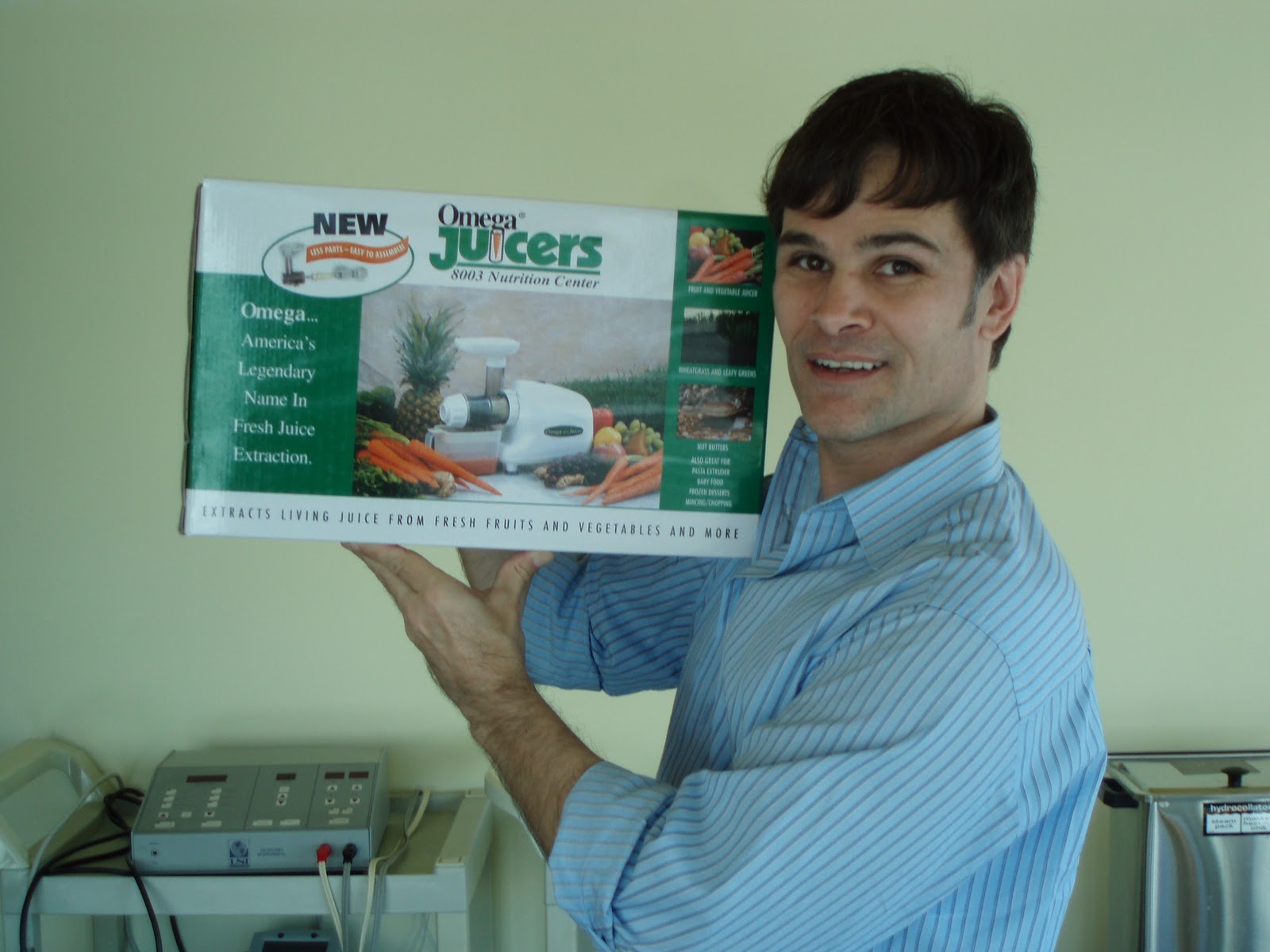
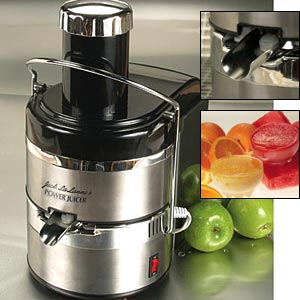
Got myself a birthday gift this week: The Omega J8003 Fruit and Vegetable Juicer.  Booyah!  Made a promise to myself to imbibe lots of fresh carrot and beet juice daily, and so being a man of my word…ta da!!!

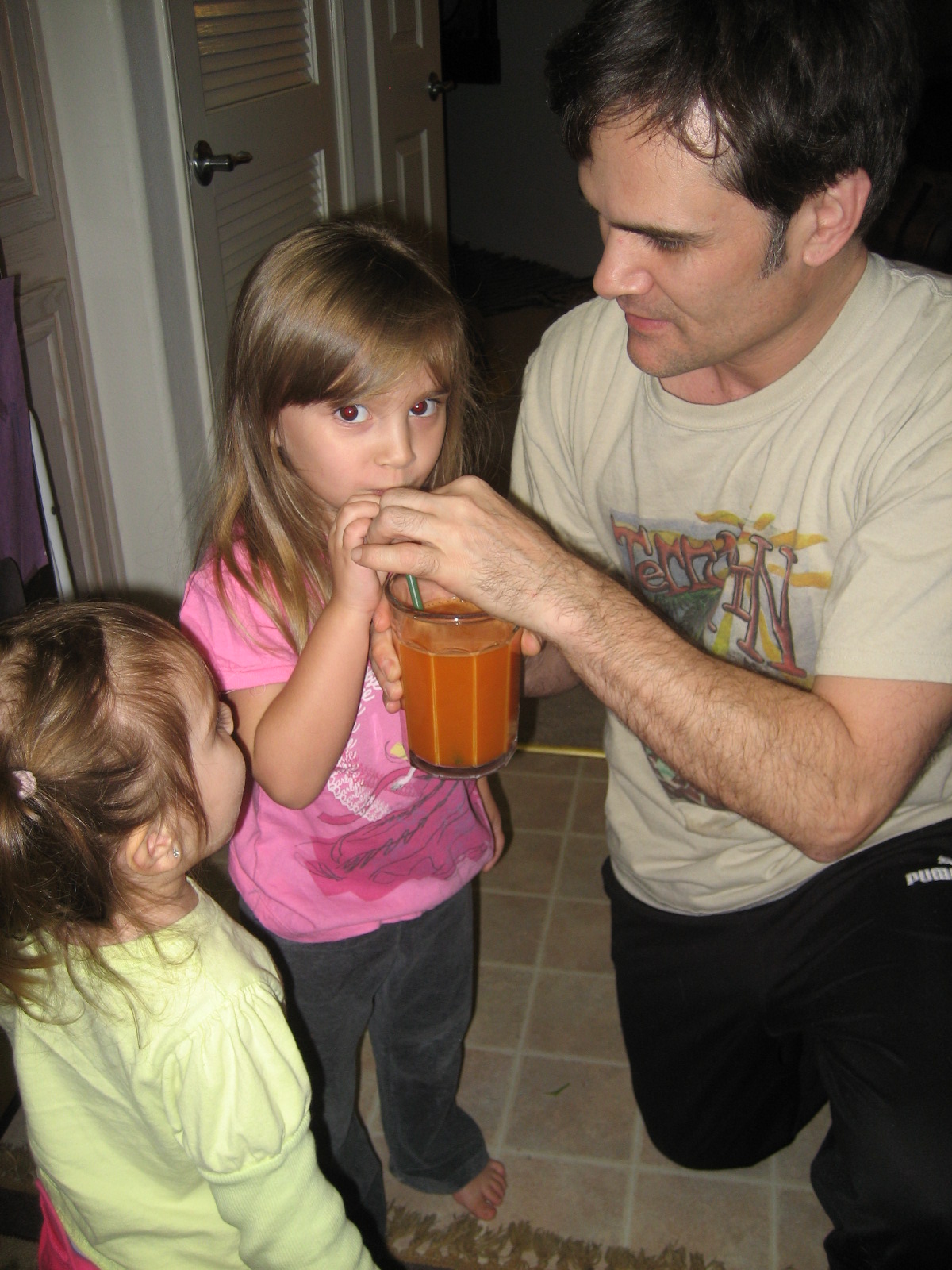
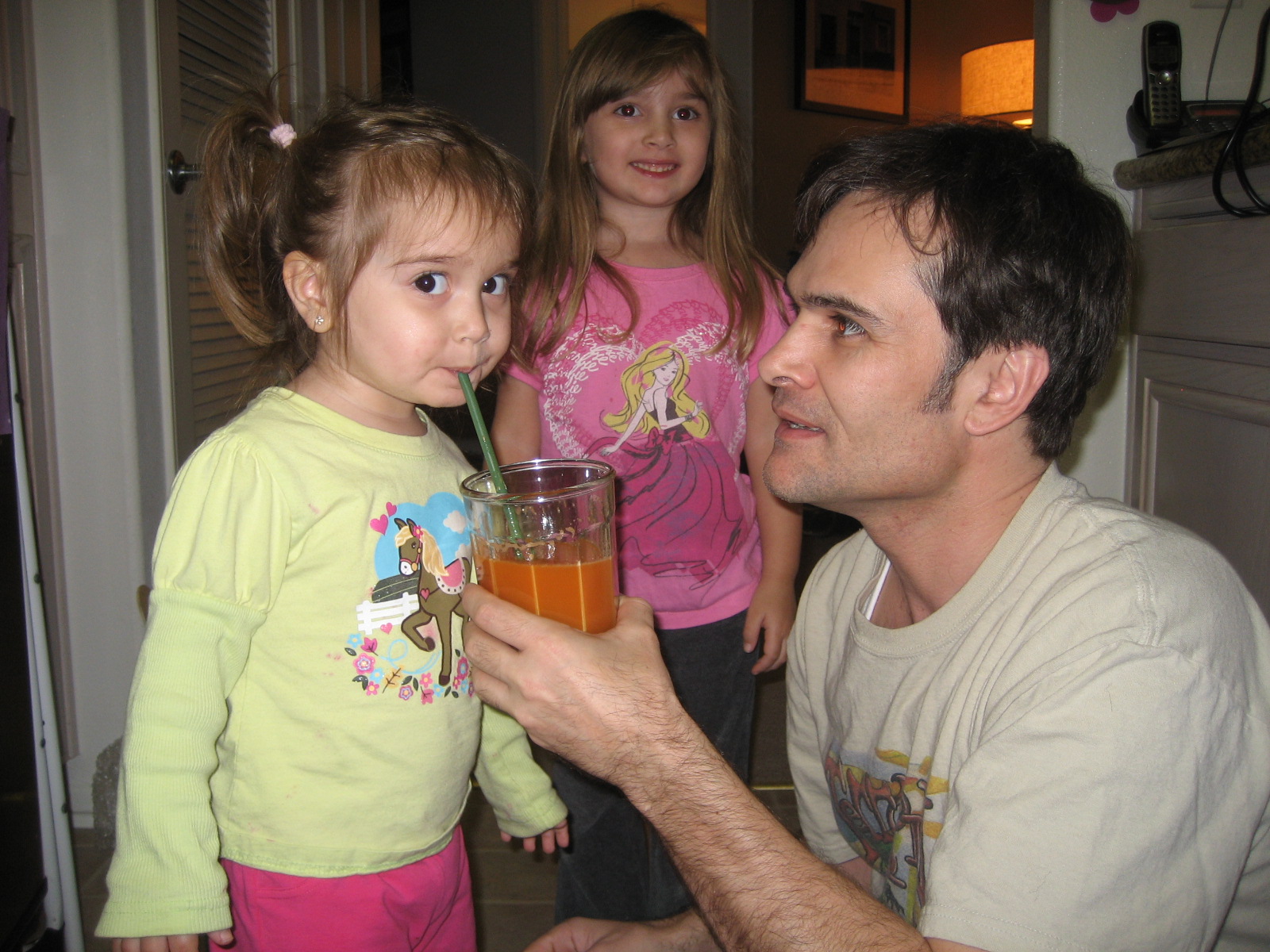
The Omega came highly recommended by a dear friend and avid juicer, who has “tried them all.”  Made my first glass of carrot-ginger juice today, with the help of my girls, and boy-howdee was it good.  Look how much fun we had cranking it out–never thought the girls would like it, too.  Bonus!

Fresh juices are the way to go.  Want great health?  Then juice, period.  The vitamins and nutrients you get from fresh juices are the tops.  And why spend $7.00-$8.00 a pop at the local health food store (Erewhon in L.A.) when you can make a a$$-kicking glass at home for under $2.00 (probably less, but I’m still shopping for the best deals on carrots–any suggestions?)

The Omega is great–easy to put together, easy to use, and dang-easy to clean.  That was a BIG consideration for me because the last thing I need is more work.  I was done in 15 minutes, start to finish, and that included washing the carrots.

So if you’re wondering why I’ve turned orange, don’t think spray tan: It’s the fresh beta-carotene, baby.  Aw yeah! 

Next up: Aspara­gus, car­rot and apple juice!

Having neck pain?  The location and origin of your neck pain can tell you a lot, most importantly, what you can do about it.  Do you need a sports chiropractor, a massage therapist, or is this something you can take care of on your own?  Read the article here to get a better understanding of where your neck pain might be coming from, and watch the video below to help determine how you might find neck pain relief.

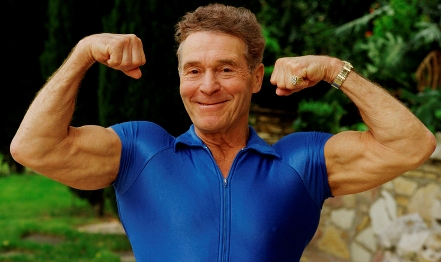
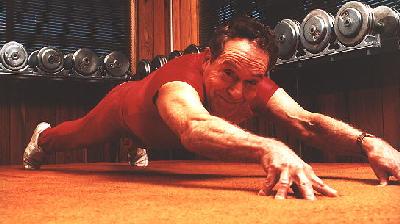
A hero of mine has passed today: Jack Lalanne died this afternoon at his home in Morro Bay, Calif.  He was 96.  The cause was respiratory failure as a result of pneumonia.

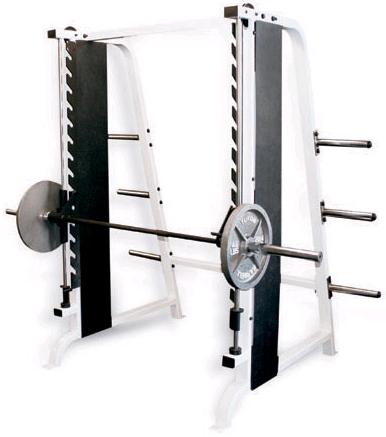
LaLanne was the godfather of the modern physical fitness movement.  I remember as a kid watching him every morning at 7 am while my mom made breakfast.  He made exercise a household activity, and had many other contributions to the world of health.  He invented the Jumping Jack exercise, as well as the Smith machine (a weight-training machine that has a barbell fixed within steel rails, allowing only vertical movement).

A little known fact is that he was a Doctor of Chiropractic.  Yeah, baby!  And a huge advocate for juicing.  He was a bodybuilder, a vegetarian, and believe it or not, a skeptic of organic foods, which he believed were “a bunch of bull.”

LaLanne was one of the first to advocate weight-lifting for women.  At a time when it was believed that lifting would cause women to look big and bulky, LaLanne was always one step ahead of the crowd when it came to health and fitness.

The Jack LaLanne Show” was the longest running television exercise program.  It was started in my home town, San Francisco–perfect for us hippies and weirdos…but we made him an icon.  LaLanne became a popular inspirational speaker, author of several books, a recording artist (for exercise records), a video producer, and promoter of exercise equipment, many vitamin supplements and two models of electric (one his own, Power Juicer).  He made famous the phrase, “That’s the power of the juice!”

Jack LaLanne was definitely one of my heroes.  He lived an amazing life, contributing greatly to the world we live in today.  He will continue to inspire me, as he has for my entire life.  Thank you, Jack LaLanne for inspiring me to follow the path of natural health and healing that I have chosen.

Stop the presses: German porn star “Sexy Cora” died last week after undergoing her sixth breast augmentation.  The porn actress, real name Carolin Berger, went into a coma on January 11, 2011 following the breast enlargement surgery.  Apparently she suffered two heart attacks during the procedure; she was 23 years old.

The BBC reports that Berger was increasing her silicone implants from 18 oz. to 28 oz.  The two surgeons who performed the operation are being charged with negligent manslaughter related to her death, according to prosecutors.  The Hamburg clinic where she underwent the procedure has released a statement saying the doctors deeply regret Berger’s passing and are saddened by her death.

“Sexy Cora” was also known for being a contestant on the German version of “Big Brother” in 2009.

I’m not reporting this story simply because I’m obsessed with breasts; instead I see it’s relevance in the face of an inordinate increase in the number of breast augmentation surgeries performed every year (for kids, too).  Although we tend to think of these operations as “routine”–or in other words, harmless–I think it’s important to make note that any invasive procedure comes with risks.  Yes, 23-year-olds can have complications related to surgery.  That’s why the doctor’s office has you fill out the forms that say, “I understand I might die.”  OK, just as long as you understand.

Yes, yes, yes…relative to the number of breast augmentation surgeries performed every year, the risks are very low.  I know, I get it.  And of course, that was her SIXTH such surgery!  Which is another point I think is relevant: Just like tattoos, breast enlargements can be addictive.  Nevertheless, these are points to consider if you are thinking about getting a boob job.

Listen, I’m no morality pusher…do whatever the hell you please.  But consider this: Trying to “improve” yourself surgically is a perception issue.  Feeling less attractive, low self-esteem, or the unable to wear the clothes you’d like, or whatever other reason women have for changing their chest sizes, won’t go away just because you increase your breast size.  You might escape your self-criticism briefly, but eventually, if the mental component isn’t addressed, you’ll be back to square one.

Nothing else explains six breast augementations by the same person.  And frankly, doctors performing more than three breast augmentation surgeries (I want a boob job; I want to go back to natural; No, I really liked my boob job–I want another) probably should be responsible if something goes wrong; otherwise, who is going to be the level-headed one?

Don’t expect the porn star to play that role, doc.  RIP “Sexy Cora”.

Listen up pet lovers: Sleeping with the dog or cat might be hazardous to your health.  That’s right–the midnight snuggle with Max-the-mutt just might cause you to get sick; so says a recent report being published in the upcoming issue of the public health journal Emerging Infectious Diseases.

According to the report, domestic animals can carry a number of microorganisms like bacteria, parasites and viruses.  Yuck!  And these infectious agents can cause anything from mild to life-threatening illnesses.  Double yuck!

Two hundred and fifty zoonotic diseases that can be spread from animals to humans are known, and of those, more than 100 can be transmitted by domestic pets.  Although the risks are low compared to the numbers of people that sleep with their pets, scientists and veterinarians just want you to know the risks are still there.

“Having a pet in the bed is not a good idea,” Bruno Chomel, report co-author and professor of zoonoses at University of California School of Veterinary Medicine at Davis said.

As I said earlier, the spectrum of diseases transmitted from pets to owners varies, but some of the more common ones are hookworm, ringworm, roundworm, cat scratch disease and drug-resistant staph infections, the report said.  One of the cases referred to was of a 69-year-old man who caught meningitis from his dog licking his hip-replacement wound all night as they laid in bed.  Puke-bucket, anyone?

Especially at risk are people with weakened immune systems—children under 5, the elderly, HIV+, cancer patients–but everybody can decrease their risk of catching zoonotic diseases by practicing a few good hygiene habits:

  • Wash hands with soap and hot water after handling pets, especially puppies, kittens or any aged cat or dog with diarrhea.  Those “high-risk pets,” Chomel says, are more likely to harbor an infection that could be passed to people.
  • Immediately wash any area licked by a pet.
  • Keep animals free of fleas and ticks, routinely de-worm them and have them regularly examined by a veterinarian
  • The authors also discourage owners from kissing their cats or dogs and sharing a bed with them.

Because most zoonotic infections are under-diagnosed or not reportable to health authorities, no one really knows how many cases occur each year.  One expert, Dr. Peter Rabinowitz of the Yale School of Medicine, believes the numbers are in the millions.  He says, “We think there are probably a lot of infections that happen and nobody really figures out that it came from the pet.”

Before anybody gets all up in arms about this report (I know you pet-lovers…), consider this: Sleeping with Killer might be just as risky to his health as it is for yours.  Last year, a cat in Iowa was reported to have contracted H1N1 (swine flu) from his owner.  Unfortunately, pets don’t have their infectious disease reporting down yet–so for now they suffer in silence.

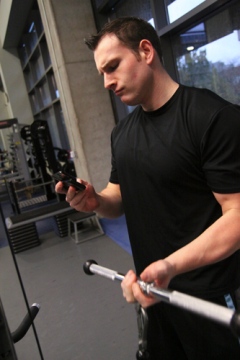
I have seen the future of exercise, and I can’t say I like it.  Aerobitexting seems to be all the rage.  Tonight, I observed 50% of the people in the gym playing with their smartphones while doing something that resembled working out.  Gawd…am I the only one who finds this dorky?

I don’t know, maybe I’m just from the old school, but…doesn’t exercise warrant…focus???  OK, if watching a YouTube video demonstrating stretching, an exercise or something like that, then I get it.  Useful technology making life more productive…yeah, I’m all for it.

But texting…reading e-mails…facebooking?   D’-or-key…with a capital D!  And dangerous, too: exercise does require focus; in fact, if want to increase your risk of injury in the gym, just lose focus–it’s almost guaranteed.

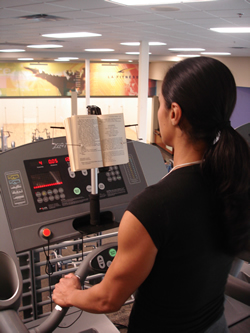
Listen, this ain’t new.  People have been doing distracted workouts for years.  Boob-tubes attached to cardio equipment, computers on stationary bikes, and my all-time favorite: reading a novel while huffing on the treadmill.  Whatever.

WTF is so important that you can’t sweat your nards off without checking the latest tweets(Puff, puff) Oh boy, Justin Bieber’s trending right now!

Yep, I’m from the old school: When I go to the gym, I work out–that’s it.  Go figure.

*If you’re reading this while on the treadmill, pump your fist in the aiy-er.  Oops…sorry.

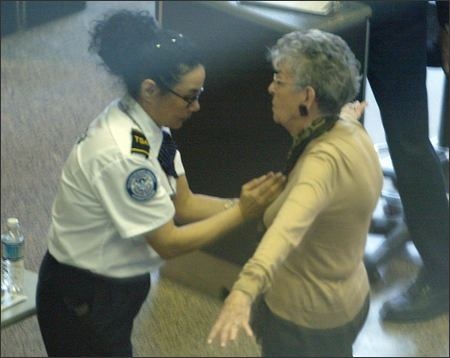
It was just a matter of time before it would be necessary for me to make a Gargantuan decision–airport x-ray or pat-down.  What to do, what to do?  (sweat, sweat, sweat).

Uh…can I get the pat-down instead?

You mean opt-out?

Yeah, opt-out.

TSA person 1: We got an opt-out here?  TSA person 2: Opt-out!  TSA person 3: Opt-out?  TSA person 4: We got an opt-out!  (Sirens blaring)

I guess the airport security would rather not have to actually do a pat-down, as it took a full 10-minutes (no exaggeration) to get the frisker to come a-friskin’.

So I was a bit surprised by the lack of people requesting a pat-down.  I was the only one!  The airport (LAX) was particularly packed that afternoon, and everyone was walking through the radiation machines.  Hmmm…

I’ve heard lots of talk amongst my chiropractic clients and on news shows that people were going to refuse the scanner…but not that afternoon.  And I was again the only one to opt-out on my return from Houston’s Bush International airport.  Now the Transportation Security Administration (TSA) reports that most Americans prefer the scanners to a pat-down.  What the heck???

Are people really that trusting of the government?  I’m no conspiracy theorist, but why would anybody want more radiation than they already get from the dentist and doctors?  Duh!  Perhaps people don’t understand that x-ray can lead to cancer.  Did you ever wonder why they place lead shields on you when you get an x-ray?  Frickin’ duh!  And we don’t know if cumulative exposure increases risk.  If it does, then every time you travel by air should put you at greater risk.  Even worse is that studies have shown that men exposed to x-rays close to fertilization fathered children with heightened risk of developing leukemia.  Still OK with it?  Hey, it’s your life.

With the pat-down, it was no different than a typical police search (not that I know anything about that!!!)  Once my down-patter finally showed up (apologetic, of course), it was quick and painless.  He asked if I was worried about the excess radiation.  I said yes.  He said he understood–he was worried about his children getting brain cancer from cellphones.  I told him he could probably stop worrying.

So, overall, I found the pat-down pretty simple.  In a way I’m glad there weren’t many people waiting to get pat-down–it would have made my wait that much longer.  But do I get it?  Not really–but like I said…it’s your life.

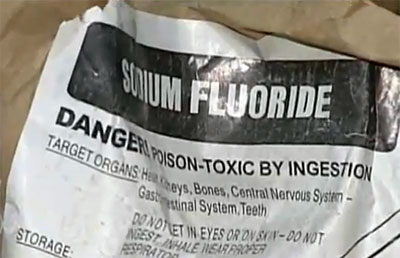
Well surprise, surprise–the U.S. government has finally woken up to its dangerous practice of adding fluoride to drinking water.  A recent report discloses that an increase in “spotting” of childrens’ teeth due to the added mineral has become a concern for health officials.  Oh thank goodness…now perhaps they’ll exonerate Bruno and Galileo, as well.

According to the report, the federal government plans on lowering the recommended fluoride levels in drinking water from an outrageous 4 milligrams per liter to 0.7 mg/L of water–the first recommended lowering of fluoride levels in public drinking water in the last 50 years!  This a result of the increasing changes in childrens’ teeth over the last three decades.

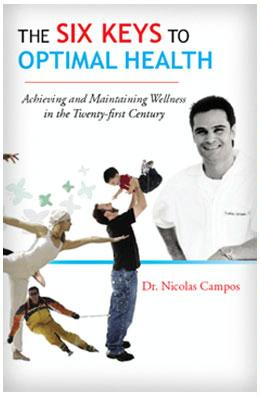
I don’t know if anybody is as pissed off as I am about this total disregard for public health from the federal government.  I speak in detail of this horrific practice in my book, The Six Keys to Optimal Health.  My research into the fluoridation of drinking water was extensive, as I consulted with many experts in the field; and they all agreed–fluoride in the drinking water is dangerous!

So why has the government continued this practice, despite numerous groups speaking out against it (including the Fluoride Action Network, Beyond Pesticides, and Environmental Working Group, which all threatened legal action if the EPA did not lower its ceiling on fluoride)?  The power of the American Dental Association (ADA), that’s why!

If you haven’t heard me say it before, you might be surprised to learn that I believe the dental association is the most crooked since auto mechanics and used car salesmen.  With virtually no alternative to American dentistry, this industry is free to practice, advise, and get rich as they please, with the public health taking the hits.  The mass fluoridation of the drinking water supply is greatest example of this abuse of power.

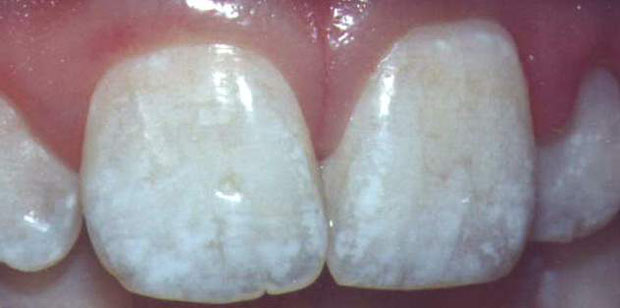
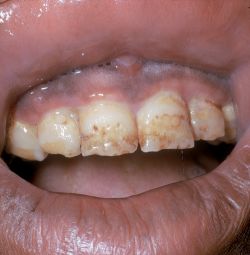
The Centers for Disease Control and Prevention reports that the splotchy tooth condition, called fluorosis, is unexpectedly common in kids ages 12 through 15. And it appears to have grown much more common since the 1980s.  No kidding–experts have warned of this for years.

The report also states that about 2 out of 5 adolescents have tooth streaking or spottiness because of too much fluoride. In some extreme cases, teeth can even be pitted by the mineral–though the powers that be now claim many cases are so mild that only dentists notice it. They say the problem is generally considered cosmetic.  I do not believe this assessment for one instance.

A scientific report five years ago said that people who consume a lifetime of excess fluoride–an amount over EPA’s limit of 4 milligrams–can lead to crippling bone abnormalities and brittleness.  Duh!  Read my book, Kathleen Sebelius!

Speaking of the Health and Human Services Secretary, she could make a final decision on details of the changes within a few months. Why should it take so long, I wonder?

Whereas some health officials are said to be concerned about cavities, I wonder out loud why we all (especially children) should  be put at risk for something addressed by simple tooth brushing.  To insinuate that we need more than brushing and dental cleanings is ludicrous.  Doesn’t anybody else see the enormous scam the Dental Association has levied on us–pay us hundreds of dollars for cleaning, buy special toothbrushes (that you can get in my office!), floss your teeth, stay away from sweets…but wait, that’s not good enough, suckers–we’ve got to dump fluoride in the drinking water, too.  Never mind that it’s an unsubstantiated practice: It’s all based on belief, not empirical evidence.  Read my book.

I was infuriated when Los Angeles succumbed to ADA pressure and started fluoridating in 2007.  And I praise the city of Portland, Oregon for holding out on this bogus practice.  Europe does not take part in the dangerous dumping of fluoride into the drinking water supply.  Is it because they do not care for the health of their people?  Quite the contrary–it’s because they do.  Stay tuned–I will keep you informed of further developments.

**Fluoride levels in drinking water were lowered in 2015 – first time lowered in 50 years! 

One of the biggest messages I try to put forth in this blog is that human beings are amazing self-healing, self-regulating life forms.  We operate under the laws of the universe, and as such, by obeying some very fundamental principles regarding life, our ability to experience great physical health and well-being is magnified.  It doesn’t matter whether you have any particular genetic, anatomic or physiologic disposition–you can experience great health, as well as a fulfilling life, by observing basic principles.

This is as true for the “normal” individual as it is for the ADD-labeled person.  Whenever somebody comes to me with this or that problem, my first investigation as a doctor is to find out if they are observing the basics.  So that’s what I want to finish off with regarding ADD.  It’s of mega-importance that your ADD-labeled child is practicing the healthiest lifestyle possible.  But take note, and do not mistake this very crucial point: What I discuss here is NOT a treatment regimen for ADD.  I do NOT believe that an attention deficit is a disorder, therefore nothing needs treating, especially as we would think in a mechanistic sense.  Instead, what I put forth here will allow any child to thrive physically and mentally, because these are fundamental health principles.

There are no absolutes when it comes to health.  No one practice is more important than another–let’s just get that straight right from the beginning.  Instead, health is like a puzzle, and each practice is a piece to that puzzle.  I will for brevity’s sake only touch upon each puzzle piece.  If you want more, then I highly recommend reading my book, The Six Keys to Optimal Health.  In it you will find most of these points discussed in full detail, along with tips on how to best implement and maximize each practice.

First and foremost is diet and nutrition.  It should go without saying that good nutrition is paramount to a healthy functioning body, but I wonder sometimes.  Too many parents feed their children foods that are, well…suspect.  Here is a basic: foods should be whole and natural.  I’m not saying organic or hormone free or anything like that.  If that’s what you prefer, awesome!  But what I mean is “not processed”.  Lots of fresh fruits and vegetables, fresh meats and dairy, wholesome grains, minimal sugar, minimal fast food (or none at all, like my kids), and definitely, with no exception: NO SODA!

Soda consumption should be the biggest no-no for an ADD-labeled child.  No, I don’t think soda causes ADD.  Soda is garbage for anybody, and that much sugar consistently cannot be conducive to mental sharpness.  Sad fact is that many parents will have to kick their own liquid garbage habit, too, if they want to keep their kids off it.

Next is exercise*.  Kids need to spend time playing and moving!  Period.  It is a standard recommendation for ADD-labeled kids to exercise often, and I couldn’t agree more.  Get your kids moving everyday–that’s what our bodies (and all life forms) are meant to do.  Don’t try operating outside of universal laws and then also expect good health. *Check out this interesting article on children, exercise balls, and focus.

Next, bodywork.  If you haven’t taken your ADD-labeled child to see a chiropractor, then you are doing them a great disservice.  Subluxations (misaligned and stuck vertebrae) are extremely disruptive to the nervous system and the mind.  I have seen hundreds of children go into a state of ease and calm following a chiropractic adjustment.  Time to learn more about chiropractic and give it a try if your knowledge and experience are limited.

**Throughout these posts, a regular reader and friend, has been kind enough to share her understanding and insight of primitive movement patterns and neurological development.  I am so fascinated and intrigued by this field of study that I intend to investigate it further.  She swears by its benefits, and I respect her knowledge and judgment.  I will keep you informed as I learn more.  Thank you K.O.

Sleep is next.  But we could just as well call this rest and recuperation.  If your child is not sleeping properly, then they are aging faster and breaking down more quickly.  Sleep is essential to life.  Many metabolic and regenerative processes occur while we sleep.

And don’t discount dreaming.  Although we still understand little about this ubiquitous function, I believe it has an important role in our mental brain states (no, I do not think dreams are symbolic).

If your ADD-labeled child is on Ritalin, then I would expect his or her sleep to be disrupted, particularly deep and REM sleep.  Think about that–it’s just another way that these dangerous drugs can hurt your child.  If they are also hopped-up on soda…(sigh) heaven help them.

Next is minimizing toxins.  Lot’s of things are toxins, but the ones I find most prevalent and damaging are…drum roll pleaseprescription and over-the-counter drugs.  Nothing wrong these meds periodically when needed, but as a society, Americans are way too over-medicated.  Just look at the Ritalin numbers: 90% consumed in the U.S.  Sad.

Finally is the mental health.  When it comes to your ADD-labeled child, they want what every child (and every person, for that matter) wants–love and acceptance for who they are.  So, again, help them find what they love–they know what it is, because they do it all the time.

Be it sports, be it music, be it socializing, be it fashion–find it, nurture it, and help them be inspired by it.  Pressuring your kid–directly or passively–is not going to help.  When a child senses that you are worried, frustrated, or disappointed, they know it; and trust me this only will add to their stress and inability to perform.  Let them know you love, honor and support them in whatever they love doing, and they will reward you by excelling.  No, they may never excel in school, but plenty of people live amazing lives that were not the result of traditional schooling.

There you have it–like pieces to a puzzle.  Each one important, but neither more-so than any of the others.  In fact, they work synergistically, but I’ll leave that topic for you to read in my book.

Once again, I sincerely hope I’ve helped people facing some tough decisions regarding their own ADD-labeled child.  If I can have helped you see your beautifully unique and gifted genius in a new light, then I am pleased.  If I’ve influenced you to reject the dangerous chemical poisons that the ADD establishment wants to numb your child on, then I am honored.  If I’ve given you some ideas on how to inspire your child to be all that they can be, then I am utterly grateful that I could contribute.

Thank you for reading.

Copyright © 2013 Dr. Nick Campos - All Rights Reserved.