Shoulder pain can have many causes and presentations. Although a painful shoulder might seem like a standard situation, it’s important to distinguish what type of problem you might be dealing with. You can therefore do a self-assessment to determine if your shoulder injury is something you can treat yourself at home, or whether you’ll need to visit a sports chiropractor.

Watch the video below to learn how to self-assess your shoulder pain and what steps you can take if you need shoulder treatment to avoid surgery. Although shoulder surgery is sometimes needed, many forms of rehabilitation can prevent shoulder, arm and back pain from leading to the knife. But you’ve got to know how to approach things first. Watch the video below.

If you need a sports chiropractor, come visit my Los Angeles, West Hollywood or Beverly Hills sports chiropractic office.

Just when you thought it was all safe–you threw out the eggs, you tossed the Wal-Mart sandwiches–here goes another Listeria warning: Listeria monocytogenes found in raw milk cheese produced in Missouri and sold in four California counties, including Los Angeles, according to the California Department of Food and Agriculture.

The listeriosis causing bacteria was found in two raw milk products labeled, Morningland Dairy Raw Milk Cheese Garlic Colby and Morningland Dairy Raw Milk Cheese Hot Pepper ColbyThe products were shipped from the Missouri plant to locations in Los Angeles, San Diego, Mendocino and Santa Cruz counties.

Listeriosis can be life threatening and is especially risky for pregnant women, newborns, the elderly, and immunocompromised people (HIV, cancer).  Symptoms of listeriosis include fever, muscle aches, and sometimes nausea or diarrhea. If infection spreads to the nervous system, meningitis can occur.

If you like raw cheese and Morningland is your brand, move it to the same location you did the eggs and sandwiches–in the garbage.

Your doctor’s decision to pull the plug might be connected to his or her religiosity.  Yes, doctor’s belief in God may color their views on ending life.  So says a recent British study that shows nonreligious doctors to be twice as likely as religious ones to make decisions that could end the lives of their terminally ill patients.

The study surveyed more than 3,700 doctors across the UK, of whom 2,923 reported on how they took care of their last terminal patient.  Doctors who described themselves as “extremely” or “very nonreligious” were nearly twice as likely to report having made decisions like providing continuous deep sedation, which could accelerate a patient’s death.  Doctors taking part in the survey ranged from neurologists to family practitioners, with those specializing in elder and palliative care also included.

The author of the study, Dr. Clive Seale, professor at Barts and the London School of Medicine and Dentistry, concluded that doctors and patients should discuss beliefs in order to best comply with a patient’s end of life wishes.  Whereas “nonreligious doctors should confess their predilections to their patients,” Seale also found that doctors who were religious were much less likely to have talked about end of life treatment decisions with their patients.   

Doh!  Looks like neither side is honoring the patient.  Bad doctors, go to your rooms!  No, seriously–probably a good idea to have this discussion upfront, doctors.  Kind of like, “Were gonna cut your penis off, is that okay with you?”  Duuuh!  You’ve got to ask.

In those rare events when patients are unable to communicate their wishes, doctors must not simply rely on their own values, but that they “should take all reasonable steps to maximize the patient’s ability to participate in the decision-making process.”

So here’s my suggestion: Discuss your end of life wishes with your doctor on your first visit.  If you have a doctor now, discuss it at your next appointment, and have them write it down in your chart.  Even better, get your wishes documented in a will or trust.  Don’t leave it to your physician who probably has his own beliefs.  Finding out your doctor’s belief system while getting your last sedation will probably bum your trip out.  Or if you’d rather a little help…a pious position might just stand in the way of your peaceful passing–probably not the way you want to go.  So do the smart thing now–discuss it with your doctor first chance you get.

If tainted eggs ain’t bad enough, we’ve now got contaminated deli meats to contend with.  According to the US Department of Agriculture (USDA), Zemco Industries of Buffalo, New York, has recalled approximately 380,000 pounds of deli meat that may be contaminated with a potentially life threatening bacteria.

The deli meats, distributed to Wal-Marts nationwide, may be contaminated with Listeria monocytogenes, which was discovered in a retail sample collected by inspectors in Georgia. The USDA has received no reports of illnesses associated with the meats.  Wal-Mart notes that the voluntary recall is of meats that are ingredients in their Marketside Grab and Go sandwiches, but not individual packages of deli meat.

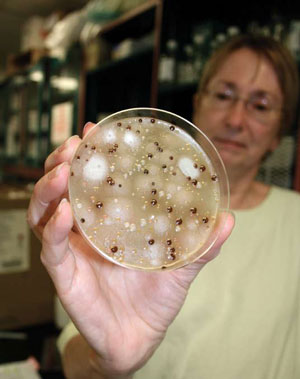
Copyright Dennis Kunkel Microscopy, Inc. (www.denniskunkel.com)

Copyright Dennis Kunkel Microscopy, Inc. (www.denniskunkel.com)

Listeria monocytogenes is the causative agent of listeriosis, the leading cause of death among food-borne bacterial pathogens with fatality rates exceeding even Salmonella and Clostridium botulinum.  Listeriosis is rare and most commonly affects immunocompromised people–newborns, the elderly and people with immune deficiency syndromes. Pregnant women are at a higher risk.

Symptoms of listeriosis are fever, muscle aches and vomiting, and less commonly nausea and diarrhea. If the infection spreads to the nervous system it can cause meningitis, an infection of the covering of the brain and spinal cord, which can lead to headache, stiff neck, confusion, loss of balance and convulsions.  Symptoms usually last 7-10 days.


“Listeriosis can cause miscarriages and stillbirths, as well as serious and sometimes fatal infections in those with weakened immune systems, such as infants, the elderly and persons with HIV infection or undergoing chemotherapy,” the USDA said.

The products being recalled are:

  • 25.5-pound cases of “Marketside Grab and Go Sandwiches BLACK FOREST HAM With Natural Juices Coated with Caramel Color” with the number 17800 1300
  • 28.49-pound cases of “Marketside Grab and Go Sandwiches HOT HAM, HARD SALAMI, PEPPERONI, SANDWICH PEPPERS” with the number 17803 1300
  • 32.67-pound cases of “Marketside Grab and Go Sandwiches VIRGINIA BRAND HAM With Natural Juices, MADE IN NEW YORK, FULLY COOKED BACON, SANDWICH PICKLES, SANDWICH PEPPERS” with the number 17804 1300
  • 25.5-pound cases of “Marketside Grab and Go Sandwiches ANGUS ROAST BEEF Coated with Caramel Color” with the number 17805 1300.

The meats were produced on dates ranging from June 18 to July 2, 2010. The “Use By” dates range from August 20 to September 10, 2010.

If you shop at Wal-Mart and buy their Grab and Go sandwiches, better grab and throw…that crap away–listeriosis is serious business.


Knee pain happens. Athletes and weekend warriors might find themselves with swollen, painful knees due to sports injury or simple overuse. Knee pain and swelling often needs to be checked by a sports chiropractor, but you can do some things at home that can help the healing process and prevent the painful knee from becoming a chronic injury.

Icing the knee at the painful injury site (see video) for 15 minutes at a time is crucial. Ice will decrease knee swelling and prevent the rapid formation of scar tissue. Ice saves–don’t forget this principle. Wrapping the pained knee in an ACE bandage will provide stability and prevent further knee injury. Then staying off the knee–NO SPORTS!–is essential.

Swelling can signify a torn knee ligament–like the ACL (anteriorcruciate ligament), PCL (posteriorcruciate ligament), MCL (medial cruciate ligament) or LCL (lateral cruciate ligament). Ligament tears can be rehabilitated conservatively, thereby avoiding knee surgery. A torn meniscus can also be conservatively treated. Meniscal tears can go through knee therapy and rehab successfully, but what is necessary is a proper knee diagnosis. If what you have is a simple knee sprain, then ice, therapy and rehab will get you back into your sport quickly.

If you have a painful knee injury get in to see a sports chiropractor right away. If you live or work in my neighborhood, come visit my Los Angeles, West Hollywood or Beverly Hills sports chiropractic office for knee pain relief today.

Hey, try my new workout…designed by Navy SEALs.  Oh, and my new supplements…designed by Navy SEALs.  And I’ve got this great new chiropractic adjustment…yup, you guessed it, designed by Navy SEALs.  In fact, if YOU have anything you’d like to sell, just add the line “designed by Navy SEALs” to the title or label and voilà, instant top seller.

I’m laughing at all the stuff Navy SEALs seem to have time to design–from training programs (two major ones I’ve found–I guess Navy Seals North and South have competing workouts) to exercise equipment, to diets (swear), fighting two wars hasn’t stopped this elite fighting force from providing YOU, the American consumer, a kick-ass fitness routine.

C’mon, anybody can be a Navy SEAL!  Just do the workout…see!

“Designed by Navy SEALs,” along with “organic,” “all natural,” “hormone-free,” and other BS labels are a way to market products.  Hey, I’m not knocking it, I’m just enjoying the absurdity of it all.  If you want to believe that your new program is designed by the Navy SEALs (as opposed to some dude who was simply in the Navy SEALs, and is now laughing all the way to the bank), then be my guest.  Just watch out for the Green Berets.

This blog brought to you by UC Berkeley Molecular Biologists.

Danger Will Robinson: U.S. residents that have purchased eggs in the last couple of month might need to toss them due to a massive salmonella outbreak that has 266 illnesses in California alone linked to the chicken embryos.  Hold the omelets, hold the presses, check your eggs–if they come from a company called Wright County Egg of Galt, Iowa better throw them out.

According to health officials at the Centers of Disease Control (CDC) and various state health departments, 228 million eggs, or the equivalent of 19 million dozen-egg cartons, have been recalled by the Wright County Egg company.  That number has been increased to nearly 32 million dozen-egg cartons.  The eggs have been distributed around the country and packaged under the names Lucerne, Albertson, Mountain Dairy, Ralph’s, Boomsma’s, Sunshine, Hillandale, Trafficanda, Farm Fresh, Shoreland, Lund, Dutch Farms and Kemp.

Salmonella food poisonings have increased in Arizona, California, Colorado, Illinois, Minnesota, Nevada, North Carolina, Texas and Wisconsin.  No deaths have been reported.

Salmonella is the most common cause of food poisoning.  The bacterium responsible–Salmonella enteritidis–is responsible for 20% of all cases.

Most of the cases have been centered around restaurants in California, Colorado, Minnesota and North Carolina.  They are not necessarily breakfast joints–many cases are from restaurants that have raw egg in the salad dressing or dropped into soups.

Although cases have been reported since June, the recall on eggs started last week.  Once again, check eggs from the companies listed above, and if you’re unsure, dump them

Well gents, when it comes to chicks, it’s not what you’ve got in your pocket that matters, but what you’ve got in your pocketbook.  Your lady’s propensity to orgasm is directly linked to your wallet.  So says a 2009 study of five thousand women showing a strong correlation between the reported wealth of their mates and the number of orgasms they experience.  Humbling, I know.

The study, a statistical analysis of data collected from the Chinese Health and Family Life Survey, looked at women, aged 20-64, representing 60 different regions in China, and controlled for such factors as female age, educational attainment, happiness, health, relationship duration, regional differences, and differences between partners in educational attainment and wealth.  Researchers found that the wealthier the male, the more orgasms their female partners reported.  Due to the sensitive nature of the survey, takers were allowed to answer privately and anonymously.

Despite being able to control a large number of variables, the study’s authors did admit that the results could be due to response bias.  In other words, it is possible that women with frequent orgasms over-reported their partner’s wealth or that women with perceived “high-quality” mates over-reported climax frequency.

This study is important because it adds credence to a controversial view on female orgasm.  A split within evolutionary biology circles pits those that believe female orgasm is an adaptive trait, serving a role in securing high-quality mates, and those that think it is simply a by-product of the ejaculatory response in men.  Seriously folks, this is a big issue.

These results seem to support the adaptive view, as earning power and wealth could be perceived by women as high-quality survival traits.  Biologically speaking then, women might respond functionally to this advantage, leading to a favorable sexual response: The Big O.

Although at least one interpretation has any desirable trait increasing the frequency of female orgasm, I don’t think it’s that simple.  I don’t believe that physical attractiveness or education level are necessarily associated with survival success, but financial wealth certainly is.

By no means does this Chinese study make a definitive correlation.  It does, however, open the door for further investigation.  An interesting point is that the cohort (Chinese women), despite having many cultural differences from western women, may represent females as a whole.  A 1989 study showed that women across 27 countries placed high value on resource acquisition, or buying power, in potential mates.

What can I say?  I love this study, because…well, it’s something we men have always suspected, especially judging (on our end) by what she is doing with him.  And now we know.

Two sisters in Sylmar are wanted in connection with the death of a 22-year-old woman from an injection of silicone into her buttocks.  The women allegedly ran an illegal cosmetic fillers business, and were investigated as recently as last month after several other women complained following silicone injections into their faces or butts causing them to fall ill.  The victim died of respiratory stress.

Sisters, Guadalupe Viveros, 53, and Alejandra Viveros, 50, are now on the lamb, as police suspect they might have fled to Mexico.  The 22-year old woman, Mayra Lissette Contreras, of Pacoima died Friday.

The sisters were taken into custody June 21 for practicing medicine without a license, police said. They were held on $20,000 bail before being released.  They are thought to have a long list of clients in the Sylmar area, officials said. Alleged victims are asked to contact detectives at (818) 834-3115.

Women, be careful of illegal cosmetic “enhancement” rings.  If it ain’t a doctor or registered nurse–don’t f*#king do it!

Natural or natural-like, which would you prefer?  More importantly, how should manufacturers be allowed to label their products if they are, say, pretty-much natural?  That is the question currently facing the chicken industry and U.S. government as chicken producers duke it out over use of the word “natural” in food labeling.

The U.S. Department of Agriculture (USDA) has a policy of allowing the term “natural” to be applied to any product not flavored artificially or preserved with chemicals.  OK, so far so good…but wait…it doesn’t have restrictions on chicken injected with water, salt or chicken broth, a common practice for many of the biggest chicken producers in the country.

Big chicken manufacturers like Tyson Foods and Pilgrim’s Pride use such techniques to make the chicken juicier or more flavorful.  But other chicken producers like Perdue, the nation’s third largest poultry producer after the aforementioned two, are crying fowl.  They believe the use of the term natural should not be applied if any ingredients are added, period.

“Our labels say natural or all natural only if there is nothing added,” Perdue spokesman Luis Luna said. “Under no circumstances is it acceptable to label poultry that has been enhanced with water or broth or solutions as natural, or all natural.”

Perdue has joined a group called the Truthful Labeling Coalition, which has hired a lobbyist and launched an advertising campaign.

Part of the issue for consumers is that some people have illnesses that are sensitive to salt, and therefore neglecting to label salt-injected poultry could be problematic.  Further, proponents for stricter regulations on food labeling feel that transparency is best to allow consumers to make best choices for themselves.

Representatives for the big-two chicken producers parry.  Gary Rhodes, spokesman for Pilgrim’s Pride, said the company simply wants to offer its customers a choice.

“We offer both 100 percent natural enhanced and non-enhanced fresh chicken,” Rhodes said. “It really depends on what the customer wants. It’s all about choice.”

Hmm….and now the government is getting involved (they actually do something useful?…sheesh, I was starting to get worried).  California Sen. Barbara Boxer has called a press conference for the USDA to “immediately prevent sodium injected chicken from using the ‘natural’ label and require all poultry producers to identify added ingredients in print large enough to ensure that consumers can make informed choices.”

I have got to side with Sen. Boxer and the truth in labeling crowd.  It has been apparent to me for years that companies are simply jumping on the wellness bandwagon because it sells products (check out my great podcast on the subject).  Whether or not they actually sell healthy products seems incidental.  Tag it with “natural”–big market there; we’ll sell a bundle.

I think it’s important for consumers to keep their own eyes open.  Don’t trust manufacturers to give you all the information you require.  For instance, bottled water companies have no restrictions preventing them from attaching pictures of mountain springs to their product even if the water comes from a basement tap.  And many companies use the term “natural” very loosely.  Sorry, but it’s the consumer’s responsibility to be on top of what’s in a product because…it’s your health.

Saying that, I do think regulations should be tighter on food labeling.  I have no problem with companies selling crap in the guise of food.  Just be straight in what your ingredients are so we can all know what kind of crap we are buying.  If that means restricting the use of the term natural, similarly to what they’ve done with the term “organic,” then it seems fine by me.

Other than that, buyer beware.

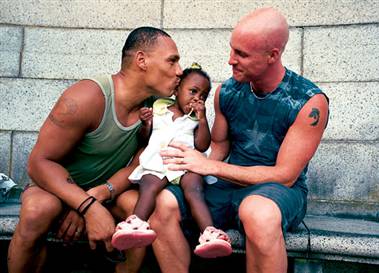
When it comes to child development for adopted children, whether they are raised by hetero or homosexual parents matters not.  All that matters is parenting style, not sexual orientation.  So says a recent study to be published in the August issue of the journal Applied Developmental Science.

The study looked at 106 adoptive preschool-age children living in different parts of the United States and found that they were all developing well regardless of whether their parents were gay, lesbian or heterosexual.

I want to say “no sh*t!” considering all that matters anyway is love.  But I guess some people need proof.  Case in point: some states like Michigan and Mississippi have laws prohibiting same-sex couples from adopting children, and the issue remains controversial throughout the country.

All I can say is “What?!?!”  Are you freakin’ kidding me?  With the thousands of children in need of loving homes, we are still actually debating this?  Holy hieroglyphics!  That’s cave-person morality.  You mean to tell me that there are children praying to be adopted and loved, and we need proof that sexual orientation has no effect on child development?  And what precisely are we afraid of?  Certainly not that they might be raised in a primitive culture, as this antiquated dilemma of whether or not same-sex couples can provide a child with love and a good home knocks us back into the Pleistocene.

I didn’t need this study, but I know some people do.  So I really hope we can get past this nonsense and allow all types of people to raise beautiful, healthy families without having to prove their worth–sexually–as parents or people.

Good news for weekend warriors: Rehab is shown to prevent knee surgery.*  This may seem like a no brainer to some, but common orthopedic wisdom is that ACL tears–a common type of knee injury in athletes–almost always require surgery. New research shows, however, that rehab-first may be a better option.

A study of Swedish amateur athletes–mostly soccer players–found that those who got anterior cruciate ligament (ACL) surgery right away plus physical therapy fared no better than those that got the knee rehab first; and although 50% of the rehab-first subjects eventually required surgery, they were not any worse off than had they gotten the surgery early on.

The implications of this study are that people suffering from ACL tears can and should try rehab before going under the knife.  If it isn’t obvious, all surgery has inherent risk due to the invasive nature of the procedure.  Also, at $10K+ per pop (no pun intended), these results are economically encouraging.  If you end up needing surgery later, you can still get it with little fear of turning out worse for waiting.

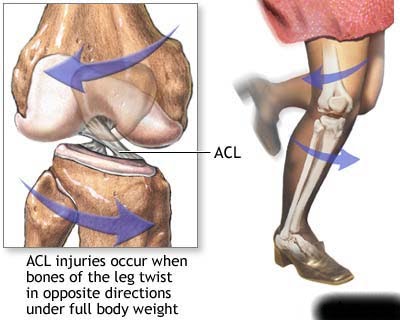
The anterior cruciate ligament (ACL) is one of four major ligament of the knee.  Its function is to prevent forward, or anterior, movement of the tibia (shin bone) on the femur (thigh bone).  It is the most commonly injured ligament in the knee.  Football, soccer and basketball players are particularly prone to ACL tears, as are skiers, as a result of the pivot and twist motions required in these sports.

Approximately 200,000 Americans go through ACL reconstruction each year, although many people can get by with a knee brace and rehab.  But, of course, getting the surgery depends on how the injury affects one’s lifestyle.

The study’s results showed that both the surgery-first and rehab-first groups fared about the same when it came to things like pain, performance in sports and how much their knee interfered with their lives.  Of those that received rehab first, about 40% needed to get the surgery later, and this group fared no better or worse than those that didn’t get the surgery at all.

One problem with the study is that the results were only measured after two years, so there could be some changes later.  The researchers will be doing a follow up at five years to study outcomes at that time.  Also, it appears that the rehabilitation group showed some signs of trouble with the meniscus, a cushioning disk in the knee joint, which some doctors think could increase the risks of degenerative arthritis in the future.

I find this study interesting and the results encouraging, because I was also under the impression that ACL tears pretty much required surgery.  Being a Los Angeles sports chiropractor, I see my fair share of knee injuries, and torn ACLs definitely limp into my office from time to time.  But now I’ll be a little less quick to refer the client out to an orthopedist.  Six months of rehab might be just fine in some of those cases.  Thank you, Swedes, for the great work!

*A Randomized Trial of Treatment for Acute Anterior Cruciate Ligament Tears

Richard B. Frobell, Ph.D., Ewa M. Roos, P.T., Ph.D., Harald P. Roos, M.D., Ph.D., Jonas Ranstam, Ph.D., and L. Stefan Lohmander, M.D., Ph.D.
N Engl J Med 2010; 363:331-342July 22, 2010

Ah New York–first in business, first in fashion and now first in…BEDBUGS!  Zoinks!  That’s right, bedbugs are taking a bite out of the Big Apple and all it’s inhabitants.  Blood sucking, creepy, crawling bedbugs…yeccch!

According to New York City officials, one out of every fifteen new Yorkers is getting chowed on by these nasty critters.  Anybody else itchy right now?  Despite their not being germ-carrying illness-spreaders, they do cause mental anguish in the people whose homes they have infested.  Some infestations have been so bad that more than a few apartment dwellers have had to throw out their belongings and start anew.  I swear I’m itching as I write this.  

I reported on the current national bed bug infestation last year.  It was one of my biggest hitting posts.  One well-known exterminator contacted me for links showing just how bad this bedbug epidemic has gotten.  As I reported in last year’s post, this is the biggest resurgence of bedbugs since World War II.

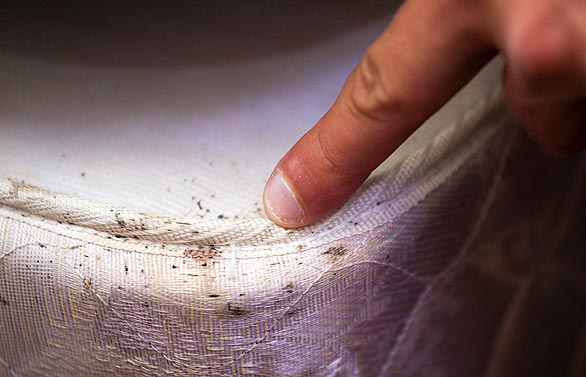
In New York City, bedbugs have been found in theaters, clothing stores, office buildings, housing projects and posh apartments.  And of course, they like to live in beds–in the cracks and crevices of mattresses.

Bedbug bites are often characterized by three raised, welt-like bumps in a row, which are indistinguishable from mosquito bites. They can be very itchy and hyper-irritating.  Most victims never actually see the bedbugs.  What they do see are the bites, blood on bedsheets and their waste, which looks like black pepper. They are known for being extremely difficult to eradicate and can go a year without feeding. 

NYC Mayor Michael Bloomberg’s administration submitted a community health survey to city inhabitants and nearly 6%, or 400,000 respondents, said they have battled bedbugs over the last year.  In 2004, residents filed 511 complaints, while in 2009 they filed 11,000.  Why the resurgence?  Experts believe that increased global travel and decreased use of some pesticides like DDT might be to blame, but they do admit that nobody is really certain.

“This is happening globally, and I don’t think anybody has figured out exactly why,” said Daniel Kass, the city’s deputy commissioner for environmental health. “So what we’re left with is managing them and keeping them from spreading. They’re going to be with us for some time.”

Oh, poor New Yorkers.  Although the resurgence of bedbugs is worldwide, New York does everything in a  big way.  Not exactly what they want to be known for.  My only advice, if you might be traveling to NYC, or anywhere for that matter, check your lodging’s bedbug status.  Just so you know…bedbugs love to travel too.

Find Facebook pointless? Step off: Facebook and other social media can be great for the health.  In fact, anything that gets people interacting regularly can impact health positively. So says a recent study showing that people with strong social relationships have 50% less chance of dying early than people without such support.

According to the study, a meta-analysis examining social relationships and their effects on health, low social interaction was

  • equivalent to being an alcoholic
  • equivalent to smoking 15 cigarettes/day
  • more harmful than not exercising
  • two times more harmful than obesity

And increasing one’s social interactions had a bigger impact on premature death than taking an adult vaccine to prevent pneumonia or taking drugs for high blood pressure.

The authors of the study, a team at Brigham Young University in Utah, suggest that government policymakers should look at ways to help people maintain social relationships as a way of keeping the population healthy. They speak specifically in relation to seniors, as that part of the population has the greatest chance of living in isolation.

May I suggest seniors’ play centers? Oh, people could go to these centers to play cards or board games, watch sporting events or exercise. They could hold classes, have speakers and host other fun events. I know that many communities have these clubhouse-type centers already—I know of a few in Florida, myself—but I think this might be a useful expenditure of government money. Why not? If social interactions have such a high impact on health, then why not spend a little money on it? Make the clubhouses nice and have one in every neighborhood.

Everybody dive into Facebook, Twitter and any other social media that allows people to interact 24/7—it’s good for the health!

A rare fungus is being blamed for fifteen deaths in the Pacific Northwest from British Columbia to California over the last six years.  Don’t worry grungers…not your magic mushrooms, but a fungus called Cryptococcus gattii, which grows on or around trees.  Breathing its microscopic spores can cause persistent cough, headache and shortness of breath, and even pneumonia or meningitis in some people.

Before you get too freaked about it, the risk is still very low.  First, it’s still a relatively rare species in North America–C. gattii is found primarily in the tropics.  Second, the people who have died from infection of the fungus in the U.S. and Canada all had predisposing illnesses.  Third, many more have likely contracted illness related to the fungus but it has been mild.  So you don’t have to avoid nature or the outdoors just yet.

The fungal illness showed up initially in British Columbia, Canada in 1999.  It has since migrated southward, and in 2004, there have been 43 cases in Oregon, 15 in Washington, one in California and one in Idaho, the CDC reported this week.  Canadian officials report 272 illnesses since cases were first detected.  The death rate there from the fungal infection have been reported at 9%.

Humans are not the only ones becoming infected, either.  To date more than 50 cases of cats, dogs, ferrets, elk and porpoises have been reported in the U.S.

Living in Southern California, I can’t help but think of Coccidioides immitis, the causative agent in Valley fever.  Hoping my brothers and sisters up in Vancouver, Seattle and Portland don’t have to deal with that type of scenario.  I, along with doctors in the region and public health officials, will be keeping eyes and ears open.  I’ll keep you informed.

Bravo to OBGYN!  They’re taking their heads out of their keesters and changing the guidelines to repeated C-sections.  “Once a cesarean, always a cesarean” is going the way of bloodletting.  According to a recent report, the American College of Obstetrics (ACOG) is easing restrictions on which women will be allowed to have a vaginal childbirth following a previous cesarean.

It has been the policy of the ACOG to deny women the choice of a vaginal childbirth in order to prevent uterine rupture at the scar from the previous surgery.  However, the chance of this actually happening is less than 1%.

Despite the low risk, most obstetricians and hospitals insist on performing the riskier surgery.  In fact, the number of women going through “vaginal birth after cesarean,” or VBAC, has gone from 3 in 10 fifteen years ago to less than 1 in 10 today.

“Why?” you might ask.  Because the rare uterine rupture could lead to emergency C-sections, and many smaller, rural hospitals are not equipped to perform them.  Emergency C-sections are much riskier than planned ones, and in ill-equipped small hospitals, it could be life-threatening.  Add to this a few high-dollar lawsuits and no surprises that the choice of VBAC has been denied to many women.

The numbers don’t lie though, and c-sections are expensive, so the National Institute of Health (NIH) strongly urged steps to reverse that trend that saw one third of hospitals and half of doctors banning VBAC.  Talk about no choice.

Dr. William Grobman of Northwestern University and co-author of the guidelines said women’s choice is “what we want to come through loud and clear….there are few times where there is an absolute wrong or an absolute right, but there is the importance of shared decision-making.”  Indeed, good doctor.

Nearly one third of all births is by cesarean, and even the most medical-worshiping patrons must admit…this number is very high.  Although C-sections can be lifesavers in some cases, they do, in fact, increase the possibility of complications in the next pregnancy, some life-threatening, like placental abnormalities or hemorrhage.

The ACOG in its wisdom states that C-section scars are now located on the lower part of the uterus, further diminishing chance of rupture during VBAC.  And of those who attempt VBAC, say the ACOG, between 60-80% will deliver vaginally.  Of the 20-40% that do not…well, they’ll get a C-section.  No harm, no foul.

I realize what a touchy subject this is among doctors and women.  I am reminded of a previous post where a reader lambasted me for not understanding the discomforts of pregnancy and labor because, had I, I would not be so glib in badmouthing C-sections.  Sheesh…I didn’t realize how some people just want a quick knife and be done with it.  I get it now.

But here’s the beauty of it for you women who despise the natural way of furthering the species: You can still have your choice of a planned cesarean.  Can’t fathom the push and contract?  No problem.  C-sections are available.  But for the women that actually would like to connect with nature, the restrictions were BS, and now they can try without some doctor denying them their rights.  So you get yours, they get theirs, and we’re all one big happy family.

ACOG did right.  Bravo to them.

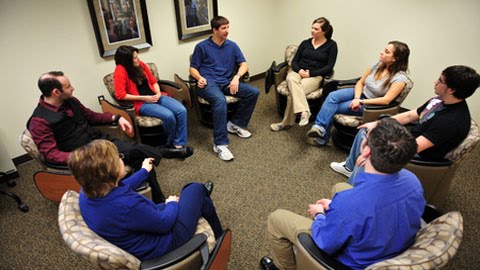
Quite a blow being dealt to group therapy for drug rehab: Studies show it leads to greater drug use by teen abusersGo figure. According to one study, teenagers at high risk for drug use were more likely to smoke cigarettes and have disciplinary problems at school later in life if they had been enrolled in a teen focus group about drugs. In other words, the environment influenced behavior. Wow, groundbreaking!  In academic speak the phenomenon is known as deviancy training—the negative influence of friends on teen behavior or simply bad influence.

Researchers and some former teen group drug therapy members say that sitting in groups talking about drugs caused the teens to want to do more of the drugs they were abusing at the time. Even more counterproductive is that it made many of them want to try drugs they had never done before but had just heard about in therapy.  Ha ha ha ha ha ha ha….comedy.

Dr. Nora Volkow, director of the National Institute on Drug Abuse (NIDA) says, “Just putting kids in group therapy actually promotes greater drug use.”

Okay so what’s a better solution? Experts suggest that private counseling for teen drug abusers with their families in tow may be a better option.  I couldn’t agree more. In 2000 one researcher from the University of Miami department of epidemiology and public health found that among teens assigned to peer-therapy groups (in treatment for a minimum of four weeks) 17% reduced their marijuana habit, but 50% ended up smoking more. Hmmm…and 57% of teens who were assigned to family therapy showed a significant decrease in drug use, while 19% used more. I’m sold, how ’bout you?

Experts believe that part of the problem is inherent in the philosophy of group drug therapy in general, as advocated by twelve-step programs like Alcoholics Anonymous (AA). The first step encourages participants to admit they are “powerless” over their addiction and to surrender to a higher force.

Although this approach does help many addicts overcome their addictions, some experts believe that teens have difficulty interpreting this message and see it as being doomed to a life of addiction; in other words, some teens may feel defeated and labeled, so they give in to their urges believing that attempted abstinence is futile.

Despite individual and family therapy trumping group rehab in studies, the twelve-step model is still favored by institutions. Why? The obvious reason is economics. Group sessions just bring in more money: when 10-20 individuals can be seen in one hour, it doesn’t take an accountant to add up the dollars. Add to that the wide-availability of 12-step programs, as well as the fact that many drug counselors are former drug abusers and stay true to the method that worked for them, it’s no wonder that it is the method of choice to break teens of their drug-abusing habits.

Oh well, just another story showing the inefficiency of the familiar. It’s so hard for people, institutions, societies and nations to change even in light of a proven better way.  That’s what this blog, Optimal Health, is all about—change—so I know how slowly it can drag sometimes. But I appreciate studies like these, and the unsung heroes that try to spread the word. It’s the only way.

I have been and continue to be critical of twelve-step programs, because I see them as just a substitution for the addicting substance. I guess if you have to choose an addiction, AA is a little less hard on the body, but definitely not easier on the mind, as the addictive personality often gets hopped up on meetings. Just my observation. I am certain without question that individual work can break an addiction, and having families participate should only solidify the benefit. Putting teens in a group with their drug-using peers only makes for a short term dry party—once released, they’ll be back to using with a vengeance. At least that’s what the data shows.

Finally a genetic excuse for obesity that actually makes sense.  Researchers show that an omega fatty acid imbalance can lead to obesity.  But even more interesting is that this imbalance, and the associated obesity, can be passed on from generation to generation.

A recent French study looked at the role of omega intake and fat deposition in mice.  Four generations of mice were fed a 35% fat diet with an omega imbalance now common in much of the developed world–that is, a high ratio of omega-6 fatty acids relative to omega-3s.  The results were progressively fatter mice at birth, generation after generation.

In my book, The Six Keys to Optimal Health, I discuss the importance of bringing the omega balance to 1:2 omega-6:omega-3.  Currently the typical imbalance in western cultures is 15:1 in much of Europe and up to 40:1 in the United States.  Omega-3s are important to many functions including cholesterol balance, blood pressure, reducing heart disease and stroke, preventing blood clots, preventing diabetes and much, much more.

Omega-3 fatty acids are found plentifully in fish and flax oils, although fish liver oils are a more potent source.  Omega-6s, on the other hand, are high in vegetable oils, breads, grains and poultry–things we eat copiously in the typical American diet.

But what about passing fatness on to successive generations?  Experts believe that the link between omega imbalance and obesity is epigenetic; in other words, the imbalance in mothers influences an offspring’s genes during development.  Whoa!  That’s right–the omega-6:omega-3 ratio in the breast milk of American women has gone from an average of 6:1 to 18:1.  Holy milkshakes!  Exactly.

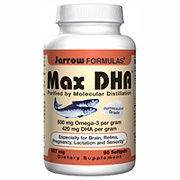
I recommend a few things to bring the omega ratio back into healthy balance.  First and foremost is reducing your intake of high omega-6 containing foods.  So breads, high carbs, vegetable oil–cut ’em.  Then I suggest you supplement with a good omega-3 fatty acid.  I carry a great brand in my Los Angeles, Beverly Hills and West Hollywood chiropractic office.  Check this article for all the information you need on omega-3 fatty acids.

Stop the cycle of obesity in your family–get your omega fatty acids balanced.  And don’t think it’s too late for your children, either.  Feed them well (healthily, not in hordes), get them moving, and give them omega-3 fatty acids–that should break the inheritance pattern.  Remember, health starts in the home.  Now how’s that for epigenetics!
New York Yankees owner George Steinbrenner, the Boss, died this morning of a heart attack at 80.  The boisterous owner of the famed Bronx Bombers was taken to St. Joseph’s Hospital in Tampa, Fla., and died at about 6:30 a.m.

Steinbrenner bought the Yankees in 1973 and was well known for his iron fist rule and public feuds with Billy Martin and Yogi Berra.  Steinbrenner went through 20 managers during his first 23 years as owner.  Despite these challenges, Steinbrenner’s Yankees won seven World Series, 11 American League pennants and 16 AL East titles, epitomizing greatness in sports.

Steinbrenner’s had been in decline for several years.  As his health declined, control of the team was handed over to his sons Hal and Hank.

He appeared at the new Yankee Stadium just four times: for the 2009 opener, the first two games of last year’s World Series and this year’s homer opener, when captain Derek Jeter and manager Joe Girardi went to his suite and personally delivered his seventh World Series ring.

“Winning is the most important thing in my life, after breathing,” Steinbrenner was fond of saying. “Breathing first, winning next.”

Steinbrenner is survived by his wife, Joan, four children and 12 grandchildren.

New York will be a little less lively without the Boss.

Here’s a spectacular story of nature and technological potential all rolled into one fascinating physiological process–the incredible human immune system.  Researchers have found previously unknown antibodies that might prevent HIV from entering cells.  This immune system soldier could potentially be the key to discovering a long-awaited vaccine against the illusive virus.  The magnificence of the human body never fails to amaze me.

According to researchers, the newly found antibodies (three to be exact) neutralize more than 90 percent of a group of HIV-1 strains, involving all major genetic subtypes of the virus.  They do so by acting as gumming agents tying up the lock that the HIV virus “picks” in order to enter a cell.

These antibodies only appear to exist in some people, and even in the fortunate carriers they fail to make enough to totally clear the virus.  Enter human technology: The idea scientists have is to coax the body, through a vaccine, to produce the virus-neutralizing antibody.

Scientists admit that they are several years away from fully developing the vaccine but remain hopeful.  “The goal is to vaccinate individuals and have their own immune systems make an antibody like this,” said Dr. John Mascola, a vaccine researcher and co-author of two new studies on the soldier antibodies. “To do that, we have to design a new vaccine, study it first in animal models and then try it in small scale human studies, and see if it does what we expect it to do. That takes a quite a bit of time and effort.”

I have no doubt we will be hearing more about these antibodies in the future.  They exist and have now been uncovered; we are sure to learn much more about where they come from, how they operate, and whether they are truly unique to some, or if we all have the potential to develop them.  Pretty cool, huh?

Copyright © 2013 Dr. Nick Campos - All Rights Reserved.