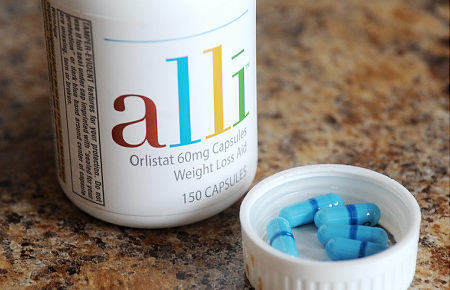
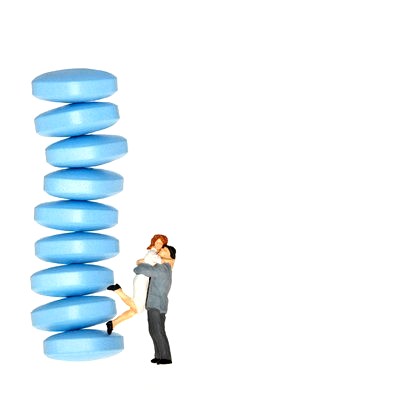
An over-the-counter weight-loss drug has been implicated in causing rare cases of liver disease, U.S. health officials said on Wednesday.  The drug, orlistat—available by prescription as Xenical, and over-the-counter (OTC) as Alli—has been reported in 13 cases of severe liver damage.  With some 40 million people worldwide taking the drug, a few experts think it’s not much to worry about.  But I do—I’ve been warning about Alli for well over two years, and now this.

Investigators are currently uncertain if orlistat is actually causing the liver disease or if there is just an association; some think there might have been a contamination, while others blame the problem on the “slower metabolism” of some its takers.  Heavens.

The FDA started a review of orlistat for possible incidents of liver damage in August 2009. That announcement followed reports of 32 cases of serious liver injury, including six cases of liver failure between 1999 and October 2008. Two of those cases occurred in the United States.

Most of those patients complained of  jaundice, weakness and abdominal pain—all signs of hepatic (liver) damage.  27 of the 32 cases were bad enough to require hospitalization.  The cases reported yesterday, were all rated 4 or 5 in the Drug Induced Liver Injury Network scoring system.  Said an FDA official, “Basically, a ‘5’ means resulting in death or liver transplantation, and a ‘4’ means it was severe and required hospitalization.”

I touched on this OTC weight-loss drug in my podcast on lifestyle drugs (Episode 3) in August 2007.  I said even then that the side effects looked harrowing, as the drug’s label warned against wearing white pants while on the medication, since Alli could cause an uncontrollable case of the runs.  Nice.

I asked the question then, “Would people really rather poop their pants than change their diets and go to the freakin’ gym?”  Dang!  And here we are two years later with “some people metabolizing orlistat differently” such that they are at risk for severe liver damage.  Again I ask, would you rather take that risk, regardless of how small, for something you can do on your own?  That is amazing to me.

Anyone who reads this blog knows that I do not subscribe to the I-just-can’t-lose-weight-no-matter-what-I-try theory.  Bull pits!  That is a physiological impossibility, easily provable…yet not necessary, because, ultimately, it’s just an excuse.  I find it much more useful to either make the commitment, and then do the work, or just accept one’s obesity—LOVE IT!  Why choose severe liver damage over anything else?  Yes, you are going to die…so am I…so are the doctors who are telling you to take the diarrhea drug for weight-loss…we all are.  What makes you think one way is better than another?  At least you get to go out doing what you love—eating.  Beats dying with poop all over your white pants.

And to think, some experts are shrugging this off by saying it’s only 13 in 40 million.  What a freakin’ world we live in.

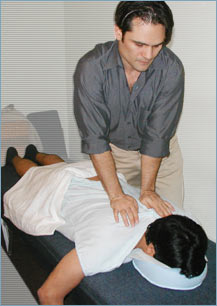
Upper back pain is becoming more and more common as computers play a bigger part in our daily lives.  I recently showed you how chiropractic adjustments can help relieve upper back pain.  Another useful approach to use in combination with chiropractic care is physiotherapy, including electric muscle stimulation, heat and deep tissue massage.

Sports chiropractors will use various modalities to help reduce muscle spasm and soreness of the upper and mid-back.  Electric muscle stimulation, or e-stim as it is sometimes called, helps reduce spasm by puttin the muscles in a brief and alternating contracted state.  This contraction/relaxation cycle is actually necessary to break the neurological disruption that is preventing the muscles from relaxing on their own.  Some medical doctors attempt to do this with muscle relaxant drugs (albeit through a different mechanism), but electric muscle stimulation is a physical modality to address a physical problem.  Watch the video above to see e-stim in action.

Heat helps by bringing blood to the area, which also allows muscles to relax.  Once the e-stim and heat therapy is complete, a session of myofascial therapy, or deep-tissue massage does wonders at breaking up knots, trigger points, sore areas, and any adhesions in the muscle tissue.  Then, the pièce de résistance, of course, is the chiropractic adjustment, which opens the stuck joint and brings normal movement back to the spine.


Watch the video to get a taste of what you can expect in a sports chiropractic office where you might be getting treated for upper and mid-back pain.  If you find yourself in Los Angeles, Beverly Hills or West Hollywood, please come visit my chiropractic office to get relief for your upper back pain woes.

Hey! Listen up!  .  Wha…huh?  You heard me, earplugs—taking erectile dysfunction drugs can deafen you.  Oh…

According to a recent study out of the University of Alabama, Birmingham, there may be an association between the onset of hearing problems and the use of phosphodiesterase type 5 inhibitors (PDE-5i), which includes Viagra, and Cialis.  This has been known since 2007 when the U.S. Food and Drug Administration issued labeling adjustments for these medications to more prominently display warnings about hearing loss risks.  This followed reports of sudden hearing loss that year among users of these drugs.  The current study simply confirms the connection.

The finding stems from an analysis of survey data concerning more than 11,500 men over the age of 40 that had been collected by the federal Agency for Healthcare Research and Quality between 2003 and 2006.
They found that men who said they used PDE-5i drugs had twice the risk for developing hearing loss as those who did not.

Although more studies need to be conducted, scientists believe that it has to do with the original use for the drugs, which was as a medication for pulmonary hypertension.

“PDE-5i medications work in erectile dysfunction patients by their ability to increase blood flow to certain tissues in the body,” said one researcher. “It has been hypothesized that they may have a similar effect on similar tissues in the ear, where an increase of blood flow could potentially cause damage leading to hearing loss.”

Well, for now I guess it’s a choice men have got to make.  Something tells me I know which one will be most popular.  Huh?…

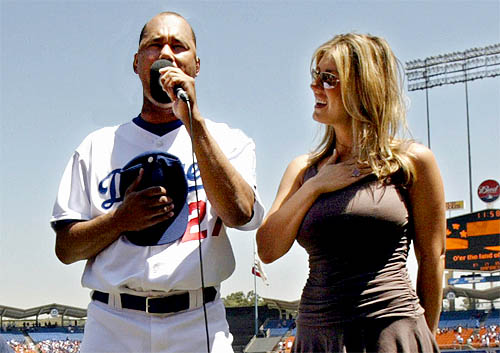
It’s Lima time no more.  Former Major League Baseball pitcher, Jose Lima was found dead at 6am this morning, an apparent victim of a cardiac arrest; he was 37.

The man famous for his on-field antics was found collapsed at his home by Pasadena paramedics at 6am Sunday morning.  His family says that he exhibited no signs of ill health, and he was out with them Saturday night and dancing later that evening.

Lima played thirteen years in the Major Leagues, pitching for Detroit, Houston, Kansas City and the New York Mets.  He pitched for Los Angeles in 2004 (his only season with the team), winning thirteen games and giving the Dodgers their first playoff victory since 1988.  Although often despised by opponents, teammates learned to love the high-energy hi-jinx of Lima, as they realized that was truly who he was.

“He was a showman, a hot dog. But he’d win games; and I think a lot of times, it wasn’t his ability but his ability to will himself to do it,” Dodgers Manager Joe Torre said. “In talking himself into it, I think he sort of intimidated some of the opposition too.”

Lima last season in the Majors was with New York in 2006.  He did a stint with some minor league teams, including Long Beach in 2009, with the hopes of being picked up by a big league club.  His agent Dan Evans told the Los Angeles Times, that despite being a tough transition for most players, Lima actually embraced it.

He is survived by his five children and a brother, Joel, a Dodgers minor league player, the Dodgers said. He was divorced. 

Well, you know what I think when young people drop dead of cardiac failure…cocaine.  There I said it.  I hope I’m wrong, but in the absence of some unknown heart dysrhythmia, drugs are probably to blame.  As an athlete, it’s unlikely that he had coronary disease.  With five children, a divorce, and end to his baseball career…well, it’s the most likely candidate in my estimation.  Call me crazy.

Anyway, an autopsy will be performed shortly, and the cause of death should be uncovered then.  Either way, we’ll miss Jose Lima–players like him make the game fun to watch.  RIP Lima Time.

Doing yoga helps cancer patients overcome sleep problems.  So says a recent study to be presented at the annual meeting of the American Society of Clinical Oncology (ASCO) to be held in Chicago this June.  According to the study, yoga also improved quality of life, reduced fatigue and reduced the need for sleep medications in cancer survivors.  Now how ’bout that?

The study looked at 410 patients who had finished treatment two to 24 months before and who had reported greater-than-average sleep disruptions (80% of cancer patients have trouble sleeping while undergoing treatment, and about two-thirds say the problems persist after treatment ends). Almost all of the participants were women, and three-quarters had had breast cancer, although the cancer had not spread. None had done any yoga in the past three months.  Participants were randomized to either receive regular follow-up care for cancer survivors or to receive regular care plus two 75-minute sessions of yoga per week for four weeks.

Emphasis was on doing postures (asanas) breathing from the diaphragm rather than the chest (pranayama) and on mindfulness, visualization and guided meditation.
Here are the results:

  • 22% of yoga participants reported improvement in sleep quality, while only 12% of controls reported the same
  • 31% of yoga participants who had started out with clinically impaired sleep quality recovered vs. only 16% of controls
  • 42% in yoga group had reduced fatigue, compared to only 12% in the control group
  • 20% of yoga participants had reduced daytime sleepiness, while only 5% of controls had the same 
  • 6% on average in yoga group reported their quality of life improved, while none in the control group did
  • While the yoga group was able to get by with less sleep medication, people in the control group actually used more.

Pretty amazing, but not surprising.  I know firsthand the multitude of health benefits of practicing yoga, as I have been involved in my own practice for 10 years.  What is remarkable is the degree and rapidity with which cancer survivors respond to yoga practice.

The combined focus on physical activity, mental focus and breathing is a recipe to benefit all people.  Yoga has been around for thousands of years precisely because it has taught people a way of enhancing their life forces.  If yoga has the ability to transform the lives of cancer survivors, then it certainly has the ability to do the same for you and me.  I’m doing yoga daily; I encourage you to do the same.  Yoga will transform you.

Shoulder pain can be debilitating.  When it hits, you need relief…fast.  Since a number of things can cause shoulder pain, like shoulder impingement, rotator cuff syndrome, and frozen shoulder, it’s wise to get yourself checked out, preferably by a sports chiropractor.  But until you can get into a chiropractic office, the best thing you can do to relieve your shoulder pain is to ice it.

Icing a sore shoulder can be done at home with a pre-made ice pack, which I carry in my Los Angeles, Beverly Hills and West Hollywood chiropractic office, or you can make one at home.  Watch the video above to learn exactly how to ice your sore, painful shoulder before you get in to see your sports chiropractor.


Well, parents–Mozart won’t make your kids smarter–sorry. I know, I know what you’ve heard: classical music improves brainpower. Well, it’s wrong. So says a recent Austrian study that looked over 3,000 subjects.

According to psychologists at the University of Vienna, who looked at over 40 studies and unpublished research, there is no evidence that listening to Mozart will do anything for anyone’s cognitive powers.

Researchers report that they could find no psychological or cognitive benefit to listening to Mozart music, despite a famous 1993 study claiming it does. The study, published in Nature, showed a link between listening to Mozart and improved spatial task performance (judging distances, depth, direction, motion and mental rotation).

Following the ’93 study, parents, day-care centers and schools rushed to purchase Mozart and music by other composers to start exposing children to classical music. But these recent findings show that this notion is a myth.

Aw well, it was worth a try folks. But, you know, think about it–were Europeans in general, and Austrians more specifically, spatially advanced relative to people from other cultures? Wouldn’t the myth of classical music enhanced brain power suggest just that? Uh…DUH!

No doubt music is nourishment for the soul. And it might even have cognitive and psychological benefits, but how one type of music is more beneficial than another is just silliness to me. Music, like all art, is subjective. The vast variation of the world’s music, throughout all of history, should attest to that. Musical tastes differ among people and cultures; yet we are all moved by music, and that has to have some effect.

Music probably has more of an effect on spirit and soul than on brain development, but good luck in proving that one. By my estimate, music inspires all of us in one form or another. I personally don’t need it to improve my children’s spatial cognition. If it inspires their hearts, then that’s good enough for me.


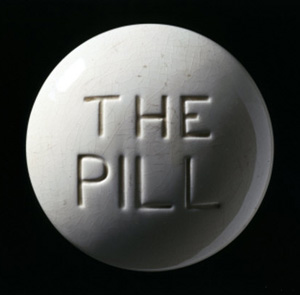
It’s the 50th Anniversary of the birth control pill. Happy Anniversary!!! Oral contraceptives survived puritanical objections in the 1960s to become women’s first choice in protection. Yay! Woohoo! Yipee!

But wait–it’s not all cake and champagne for the Pill. Recent reports say that the Pill may lower sex drive in women who use it. Doh!

That’s right, a recent study out of Germany showed a relationship between oral contraceptives and loss of libido. The study, published in the May 4th issue the Journal of Sexual Medicine, looked at more than 1,000 female medical students in Germany found that women who used hormonal methods of birth control–mostly oral contraceptives–had lower levels of sexual desire and arousal than women who used non-hormonal methods like condoms or no contraception at all.

Coming from a questionnaire assessing sexual function, the study does not show a causal relationship between using the Pill and lowered sex drive, it merely shows an association. Further studies will be needed to determine if the hormonal changes caused by the Pill actually lead to decreased female sexual desire.

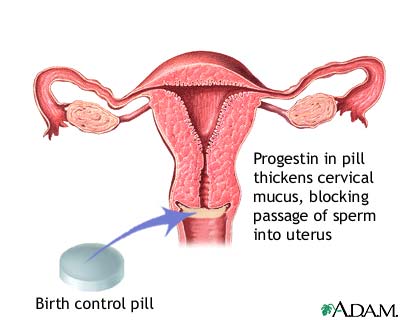
During a woman’s menstrual cycle, hormones fluctuate, causing sexual drive to ebb and flow along with them. At ovulation, sexual desire is at its highest. The Pill blocks ovulation with a surge of hormones, fooling the body into thinking it’s pregnant–no need to ovulate if fertilization has already occurred.

Researchers believe that free circulating testosterone is responsible for sex drive in women. Although still uncertain of the connection, testosterone has been shown to relieve a form of female sexual dysfunction called hypoactive sexual desire disorder (HSDD). The Pill, think researchers, affects the circulation of free testosterone in the blood, leading to loss of libido.

Several criticisms of the study point out its limitations. First, study participants were asked only whether they were in a stable relationship, not how long they had been in a relationship. One critic points out that it is well known that sexual frequency and desire tend to plummet over time. Kim Wallen, an Emory University professor of psychology and neuroendocrinology, says:

“We know that long-term relationships increase the risk of female sexual dysfunction–a condition easily treated with a new partner, which is many times more effective than any drug or hormone.”

Word to that, Kim Wallen. Another weakness of the study is that is was observational and not controlled. Women were not assigned methods of contraception, they had already chosen them. There could be an underlying predisposition for women with lowered sex drives to choose oral contraceptives over other methods of birth control.

Finally, some believe that characterizing lowered sex drive as a dysfunction is erroneous, as it may simply be relational. Hmmm…I’d have to agree with that one. Some people want it more than others, no doubt. But as far as correlations go, I think this is an interesting one. What they’ve got going for them on this study is it was the largest of its kind to look at this question, and it took a homogeneous group–German women of the same age, educated, and relatively healthy–and found an interesting correlation. I think the scientist may be on to something here.

Anyway, I think this whole deal has a sort of ironic twist to it, don’t you? No better way to prevent pregnancy than not doing it. I guess in that regard the Pill has hit its mark. Happy Birthday Pill.


It’s been a while since I touched on the subject, but a new survey shows that people over 45 are having less SEX, and feeling less satisfied than they were ten years ago. They also happen to be more open to sex outside of marriage…hmmmm. The survey conducted by the AARP was completed by 1,670 Americans, 45 years and older. The results were compared to the same survey given in 1999 and 2004. Ten years ago 41% of respondents said non-marital sex was wrong, while only 22% said so on the new survey. Despite this openness among the middle aged and elderly, as a whole, their sexual activity has decreased by 10% since 2004. Further, five years ago 51% of this set responded that they were satisfied with their sex lives; however, only 43% said so on the new survey. As an interesting twist, unmarried people in relationships had sex more frequently and with more satisfaction than respondents who were married. According to the AARP’s sex and relationship expert, sociologist Pepper Schwartz, “Long-term married couples may get a little less interested. Older people in non-married relations work harder at it and enjoy it more.” As far as gender differences go, no surprises here: Men think about sex and engage it more often than women, and are about twice as likely as women (21 percent versus 11 percent) to admit to sexual activity outside their primary relationship. Men are more than five times as likely as women to say they think of sex at least once a day, and nearly three times as likely to say they engage in self-stimulation at least once a week. But unfortunately, only 12 percent of the survey’s sexually active single males reported using condoms. Tsk, tsk geezers–no glove, no love applies to you, too. The clap shows no age preference. So now you know. Finally, when asked what would improve their sex lives:

  • 20% of the women and 37% of the men said better health
  • 14% of the women and 26% of the men said better personal finances.

Ah, always the struggle between cash and capability. I find these survey results very interesting, and we can speculate in every kind of direction as to what is causing the trend. For instance, Ms. Schwartz, the sociologist evaluating the survey believes that the decrease in sexual activity is due to the recent economic downturn. And judging by the small number of responses to the affirmative (mentioned above), one could make that connection. But perhaps there is more. Maybe the growth of the internet, and the availability of sexually explicit material make it easier for people (men, mostly) to have their urges and desires satisfied. Since I know from the first law of thermodynamics (conservation of energy) that nothing is ever really missing, then sexual energy must also be conserved. Hmmm…people over 45 aren’t having sex with each other, then where are they having sex? Further, with privacy being factored into the equation, it would make sense that men (the gender increasingly more satisfied with their sex lives, compared to women according to Dr. Stacy Tessler Lindau, professor of medicine at the University of Chicago), more than ever before, can engage in sexual activity (albeit with their computers) without the possibility of embarrassment. And according to experts, men are not the only ones consuming online porn. Women also consume pornography, although they increasingly prefer written material. Increased use of online pornography could be at least one factor accounting for this survey’s findings…including the increased liberalism toward non-marital sex. Nothing wrong with that, just a transformation of where and how people are experiencing sex, if my thoughts are correct, that is. If I am right, then we can all rest securely knowing that we are operating within universal laws of conservation. Now that’s something to be satisfied with.

Upper back pain is one of the most common maladies entering chiropractic offices today. From sitting hours in front of a computer to your favorite reading book, many of our daily postures cause sore, aching upper backs. There is a quick and long-lasting solution: Chiropractic.

Through chiropractic adjustments, muscle stimulation and release, as well as rehabilitation stretches and exercises, a sports chiropractor can help you relieve acute or chronic upper back pain effectively. In my Beverly Hills, Los Angles and West Hollywood chiropractic office, we provide safe, and comfortable chiropractic adjustments to the spine, while treating the muscles to remove pain. A little heat or ice to relax the muscles and break inflammation and your upper back pain will be a thing of the past.

Don’t suffer with that nagging upper or mid-back ache any longer. Visit a sports chiropractor for a long-term solution.


Enigma time: stomach cancer is up in young white adults, while rates in all other adults has declined. In fact, the chances of developing this cancer among 25 to 39 year old whites has climbed by almost 70% in the past 30 years. Although the risks for developing this cancer in young adults is still very low, the racial differences has scientists baffled.

According to a recent study by the National Cancer Institute, which examined new cases of cancer in the lower stomach from 1977 to 2006, the incidence for young white adults rose from .54 per 200,000 to about 1 per 200,000. At the same time, the incidence of lower stomach cancer in young black adults actually declined by about 42%. The rates for other races also declined, but numbers were not specified.

The study focused on lower stomach cancer and not upper stomach cancer, which has been linked with gastric reflux. These two cancers together are the fourth most common type of cancer worldwide. In American men, stomach cancer is among the top 10 most common cancers in blacks, Asian-Americans, Hispanics and American Indians. It’s also among the most common cancers in Asian-American women.

Lower stomach cancer is thought to result from chronic infection with the bacteria, Helicobacter pylori, the same bacteria responsible for many stomach and peptic ulcers. It has also been linked with diets high in salt and salt-preserved foods (cured meats, fish, beef jerky, etc.) and low in fresh fruits and vegetables. The incidence of lower stomach cancer has historically been higher in Asia and other countries where salt-preservation of food is more common.

Stomach cancer rates have been declining around the world, however, due to improved food preservation methods and better hygiene. This makes the increase seen young white adults so much more perplexing. Experts believe that increased salt intake among all young adults has something to do with it, but further investigation is needed.

I think that proving a dietary connection will be difficult, as eating habits among varying races in the U.S. can’t be all that different to account for such a change. I’d like to propose a mental component to this increase in stomach cancer among young white adults. There is no denying that the mind influences the body, and it is a long neglected aspect of health in general. American culture is far too intertwined to account for a non-genetic behavior difference as what we are seeing here. I do believe, though, that psychological patterns can be developed among groups or cohorts. It is an area that we would be wise to investigate in health care–an unexplored frontier, if you will; one I am certain will be the next gateway to understanding.


Low back pain can be caused by a number of things, but one of the most common disorders I see in my West Hollywood sports chiropractic office happens to be a gait dysfunction. Our gait–or the way we walk–is dependent on a number of factors, one of which is the structural make-up (or breakdown) of our feet.

One such dysfunction is called overpronation, which is an excessive turning out of the feet from the heel during the gait cycle. Overpronation is usually the result of flat feet or collapsing arches. This excessive turning out causes a dysfunctional chain of events up the legs and to the low back. Some common symptoms, along with low back pain, are shin splints, sciatica, tight hips, and poor posture, among other things.

The answer to low back pain caused by overpronation is to have custom orthotics made for your feet. We cast orthotics in my West Hollywood chiropractic office, and within two weeks you’ll a comfortable and effective pair of shoe insert arch supports that are made specifically for your natural arch.

Please watch the video above to see overpronation in action, and a sample of custom-made orthotics. If you are having low back pain and you suspect that your feet may be part of the problem, please contact your local chiropractor today. If you are in West Hollywood, Beverly Hills or Los Angeles you can contact this chiropractor and we’ll evaluate your feet so you can kick low back pain to the curb.

Ever hear of the ol’ bait and switch? That’s where a company advertises an amazing deal–let’s say top of the line laptop computers–and when customers come in looking for the item, they are told they’ve been sold out…we do, however, have these lesser brand laptops at a comparable price. Doh!

Well, bait and switch is exactly what I think of when I see the latest report on seasonal flu vaccine. According to the Center of Disease Control and Prevention (CDC), seasonal flu vaccine was doled out in record numbers this past season, with 40% of the population getting inoculated. Suckers! The jump was most dramatic in children but increased in healthy adults under 50 as well.

What led to this massive increase following a year (2008) of record low seasonal flu shot inoculations? Experts believe the jump was attributable to fears over the swine flu. Gary Euler, one of the authors of the study looking at last years flu vaccination numbers, said, “We do have a pandemic driving that.” Uh huh. No kidding.

Let’s see…what’s the best way to revamp a flaccid flu vaccination program? Let’s scare the s#!t out of the public with news of a “new” form of flu. Let’s remind them of former flu pandemics that claimed thousands of lives. Let’s show a real concern for the safety of people by recommending mass inoculations for the public. If it fails, at the very least a renewed vigor in seasonal flu might be stimulated. Hmmmm.

Now do I think there is some conspiracy of old white men sitting in their arctic fortress plotting world domination through dissemination of bio-warfare? No. But I do think it is too easy to overreact to a situation that is probably harmless. But how can you be sure? Because hordes of people get regular flu every year; they rest, drink fluids, moan and groan, and eventually get better–every year, without exception. I think inoculating for flu is necessary only under extreme circumstances. I believe it is much more important to build natural immunity, that way, we evolve along with the microorganism.

But there is certainly benefit to spreading panic–governments look like they care (there’ll be no Katrina for this administration), pharmaceutical companies turn massive profit, doctors/public health officials are needed, and other waning fears get a recycle. With that much to gain in spreading fear, why wouldn’t several groups participate, even if unintentionally?

Why it matters is because this type of sickness/fear agenda is precisely what is wrong with the health paradigm in the western world. Pushing the notion that we need outside elements–drugs, vaccinations, the government–to experience health and well being, and not our own Innate Intelligence, is absurd. And using tactics like fear, or bait and switch, doesn’t muster any more trust in Big Brother for me.

At least this is how I feel with regard to flu and swine flu. Come the day we see swine malaria…well, maybe then I’ll be a little scared.


As important as practicing healthy habits is, discontinuing (or better yet never starting) poor health habits can add years to your life–twelve to be exact; this according to the findings of a recent study. Let’s see, twelve years ago I was…DANG that’s a long time! Check it:

The study tracked nearly 5,000 British adults for 20 years, and looked at the following four bad health habits:

  • smoking
  • drinking too much
  • inactivity
  • poor diet

Researchers found that people partaking in these habits had a substantially increased risk of death, and they seemed 12 years older than people in the healthiest group. Doh!

Of the research subjects having all four habits (314 people), 29% died through the study period. The subjects having none of the habits (394), only 8% had died. The people involved in the study were adults aged 18 and older, but 44 years old on average. The most common cause of death among subjects was heart disease and cancer, both caused by the unhealthy habits studied.

The healthiest group included never-smokers and those who had quit; teetotalers, women who had fewer than two drinks daily and men who had fewer than three; those who got at least two hours of physical activity weekly; and those who ate fruits and vegetables at least three times per day.

“You don’t need to be extreme” to be in the healthy category, said lead researcher Elisabeth Kvaavik of the University of Oslo. “These behaviors add up, so together it’s quite good. It should be possible for most people to manage to do it.”

Tis true. It is one of the major premises in my book, The Six Keys to Optimal Health. Healthy habits are cumulative. Start slowly and add habits one by one. For example, start with bodywork, like chiropractic care, and get out of pain. Once pain starts to subside, start exercising. Cut out sodas next. Then start eating more fruits and vegetables, and so on. It doesn’t have to all be done at once. Pick up a few healthy habits, then go for the more challenging ones, like quitting smoking or drinking or mainlining speed. Having a foundation of a handful of healthy habits will get you through a lot easier than trying to kick a habit cold turkey with nothing to fill the void.

By reducing faulty health habits you could add twelve years to your life–no small amount once you start getting up there. Add to that a few healthy habits and woo-boy you might even tack on another twelve. Think of that. What will you do with the time?


Tennis elbow, also known as lateral epicondylitis, is pain experienced on the outer part of the elbow and forearm. It is common in tennis players, usually from poor form or faulty equipment, but really anybody that uses their hands regularly, in work or in play, can develop tennis elbow.

Tennis elbow is a muscular issue where micro-tears of the muscles of the forearm are causing elbow pain and discomfort on gripping or carrying items. Even shaking hands can be an excruciating endeavor when tennis elbow is present–not a good thing. So having this condition warrants a trip to your local sports chiropractor for evaluation and treatment.

To find out how you’ll be treated for tennis elbow, especially in my Beverly Hills chiropractic office, please watch the video above; and you can get even more information on the causes and symptoms of tennis elbow by reading the article at this link.

If you are experiencing outer elbow and forearm pain and difficulty gripping or carrying items, don’t hesitate–call your local sports chiropractor today.


Hung out today at the Los Angeles Times Festival of Books held on the UCLA campus. What a great event! Got to listen to Holly Robinson and Rodney Peete talk about their autistic son, RJ. What a treat!

This post is not about autism, or the Peetes; it’s about something they said that stirred some thought in me. As they discussed RJ’s growth and battle through autism, they said they were able to, “check off all the things the doctor had said he’d never be able to do.”

Now that got me to thinking about how so many doctors tend to absorb themselves in the diagnosis—got to call it something, give it a label. Then all these preset parameters come along with the diagnosis, and the one being diagnosed becomes exactly that, the diagnosis itself. That has never been my method in my Beverly Hills chiropractic practice, although I do get a handful of people insisting on having a diagnosis (conditioning, I guess). For these people, I play the game, but I always tell them I prefer not to get caught up in labels. There’s a real danger there; people start to identify too heavily with their labels. They start to become their condition (illness, disease, disorder, etc). I am very pleased the Peetes didn’t follow this path.

Medical diagnosis serves a purpose: it’s a way of organizing information common among a group of people experiencing a particular set of symptoms. But I think doctors would be wise to see the bigger picture–the possibilities that exist in treatment and healing. I know, I know…sometimes all they have is a hammer…but there is more than what medical science pushes. It takes a healer to know the difference. Not all doctors are healers; many, if not most, are technicians. The doctor that gave the Peetes RJ’s diagnosis was likely a technician. Safe in his diagnosis, covering all bases to avoid liability. Bravo! Well done; a perfect display of modern medicine—think science and law all wrapped into one. But healing? Not by my definition.

Perhaps it’s peoples’ responsibility to take charge of their own health? That’s certainly the message I promote, since health comes from within. But doctors are facilitators—they assist in the healing process, and as such, I think giving the patient a dose of hope helps the prognosis. No doctor knows whether any one individual will be just another statistic in a particular condition. Doesn’t every person deserve to be considered one of the odds beaters until proven otherwise?

Anyway, I went up and talked to Rodney Peete during the book signing (Not My Boy!), and commended his and his wife’s decision to “think outside of the box.” I’ll let you read the book on your own to find out how the Peetes did this. He was gracious toward my praise and said that it is “amazing how things open up for you,” when you think outside of the box. I asked him what his thoughts were on receiving the diagnosis and daunting checklist of things his son would never be able to do. He said that some doctors are all too willing to nail that type of diagnosis without even blinking an eye.

Yes, I know—not thinking outside the box. Bless the Peetes for finding another way.

I’d also like to plug Holly Robinson Peete’s book, My Brother Charlie, written with her daughter Ryan Elizabeth (who read the book onstage today—very well done!)

Former Poison frontman, Bret Michaels has been hospitalized with a brain (subarachnoid) hemorrhage; he was in critical condition, but is now stable. Michaels’ publicist reported to People magazine’s website that the 47-year-old rocker was hospitalized Thursday with a severe headache. Doctors discovered bleeding at the base of his brain stem.

Michaels was currently a contestant on the third season of Donald Trump’s NBC competitive reality show, “The Celebrity Apprentice.” Trump said in a statement today that he was “deeply saddened” to hear of Michaels’ condition.

Michaels had an emergency appendectomy last week at a private care facility for diabetics after complaining of stomach pains before he was scheduled to perform at Sea World in San Antonio, Texas. He later wrote on his website that though the surgery “has taken its toll,” doctors expected him to make a full recovery.

My thoughts and prayers go out to Bret Michaels and his loved ones. Hoping he makes a speedy and full recovery.

Here’s something to get freaked out about: The U.S. Food and Drug Administration has announced plans to step up oversight of infusion drug pumps, those commonly used medical devices that deliver fluids—liquid nutrients and medicines like insulin, morphine, chemotherapy or anesthesia—into a patient’s body. These devices are used in both hospitals and homes.Over the past five years, the FDA has received reports linking 710 deaths to infusion pumps and more than 56,000 reports of problems in total. Not good for the average trusting medical patient. The number of deaths is likely an underestimate according to officials at the FDA.

In the past, problems with the pump were attributed to human error–like a mistyping of info by a doctor or nurse. However, now FDA officials believe that software and design issues are actually at the root of many of them. Whoops!

This is a scary notion considering the widespread use of infusion pumps. The mother of my children had one hooked up during both child births. And to think, we are just now hearing of the dangers. I guess we are all human guinea pigs of sorts when it comes to advancing medicine. Pumps are also given to failed back surgery patientsyikes! Sorry, we can’t fix you–let’s pump drugs into you 24/7. Yeah, that’s my kind of health care.

The FDA is essentially asking manufacturers to provide more detailed design and engineering information to FDA for new pumps. The FDA also wants manufacturers to try out the devices in settings where they are commonly used, and when necessary, it wants to be able to inspect the manufacturing plant before approving the device.

In the meantime, take care of your health and stay out of the hospital–those places can be dangerous.


Knee pain is a common injury in athletes, especially tennis and basketball players, as well as dancers. Knee pain comes in many forms, but if it is along the perimeter of the knee and feels sore or burning, then it is possible that a patellar tendonitis is the cause (also known as Jumper’s Knee).

Tendinitis is rarely a primary condition–it is usually secondary to something else. In the case of patellar tendonitis, the primary cause could be either tight muscles or foot dysfunction. To find out what is causing your knee pain, it is important to get evaluated by a doctor, preferably a sports chiropractor.

Watch the video above to see how we treat patellar tendinitis in my Los Angeles, Beverly Hills and West Hollywood sports chiropractic clinic.


Watch out, Snooki–tanning beds can be addictive. You heard right, guidos and guidettes–if you gotta GTL*, just know you might be a junkie. This from a recent study showing that “tanning addiction” is a real phenomenon; and heavy users…Mike “The Situation”…are more likely to suffer from anxiety symptoms and substance abuse.

The research, carried out by professors from the Memorial Sloan-Kettering Cancer Center and the University at Albany, State University of New York, examined 421 students, including 229 who had used tanning beds in the last year. Of those, 70% showed signs of tanning addiction. Further, regular tanning salon users had a higher likelihood of drug and alcohol use.

Pump your fists in the ai-yair!

Much has been said about the dangers of tanning salons, particularly the heightened risk of developing skin cancer. Despite this, however, recreational tanning continues to grow among young adults. Why? Addiction, say experts.

According to the authors of the study, interventions similar to those of drug addiction may be necessary. “Treating an underlying mood disorder may be a necessary step in reducing skin cancer risk among those who frequently tan indoors,” Catherine Mosher and Sharon Danoff-Burg, lead researchers of the study, said in the Archives of Dermatology journal.

All I can say is I’m not surprised. Anything that perceptually enhances looks–tanning, Botox, plastic surgery–has the propensity to lead to addiction. Many people get addicted to working out. Oh well. Hey, you gotta look good on The Shore…in December! Whatever. I think people should do what the hell they want–suffer the consequences like the rest of us idiots before you. If it don’t kill ya, Juice Box…it’ll certainly make you bronzer.

*GTL=gym, tanning, laundry–the guido credo.

Copyright © 2013 Dr. Nick Campos - All Rights Reserved.