Posts by: "Dr. Nick Campos"
Pregnant?  Boy or Girl?  Don’t know?  Throw some spaghetti on the wall; if it sticks…  Or better yet, see how low your belly hangs, that’ll tell ya.  Or if your nails are growing fast and strong, you’re having a…

Okay, okay, these old wives tales may not offer much, but I’ve got something surprising for you–gender-detecting blood tests being sold online.  That’s right, you can find out whether it’s a boy or girl with surprising accuracy by simply purchasing a testing kit online.  And this kit’s no slouch–it accurately determines gender at seven weeks, a full three weeks earlier than conventional gender testing.

Researchers recently analyzed 57 published studies of gender determining blood tests done in rigorous research or academic settings–though not necessarily the same methods or conditions used by direct-to-consumer firms.  The blood tests analyzed use the polymerase chain reaction (PCR) to determine the presence or absence of the Y chromosome, which would signify a male (XY) or female (XX) gender respectively.  The test is approximately 95% accurate

The analyzed test can detect fetal DNA in mothers’ blood. It’s about 95 percent accurate at identifying gender when women are at least seven weeks’ pregnant–more than one month before conventional methods. Accuracy of the testing increases as pregnancy advances, the researchers concluded.  Conventional procedures, typically done for medical reasons, can detect gender starting at about 10 weeks.

The researchers pointed out the need to question couples purchasing the tests to determine what the results will be used for.  Although the benefits of the tests are as screens for genetic illnesses, particularly gender specific ones, there is some concern about couples using such tests for gender selection and abortion.

No tests sold directly to consumers, online or otherwise, were actually analyzed; and some doctors interviewed disclosed that they will not provide gender identifying tests, including amniocentesis, for anything other than genetic disease screening.  Companies like Consumer Genetics Inc., based in Santa Clara, CA, sells an “early gender” blood test called Pink or Blue online for $25 plus $265 or more for laboratory testing.

These tests are not available to customers in India–where the costs of marrying off girls has contributed to a cultural preference for boys–or China, which has limits on one child per couple and a traditional preference for male heirs, contributing to abortions.  Consumer Genetics Inc. also won’t test blood samples unless women sign a consent form agreeing not to use the results for gender selection.

Without a doubt, every new breakthrough has a plus and minus associated with it.  As genetic testing becomes more prevalent, we will see more people designing the perfect child for them.  Yes, it will almost always start out as a simple ‘screening’ for genetic diseases, but seriously…how many couples will avoid the temptation of choosing gender, eye color, hair color, skin tone or sexual orientation?  Will some traits be genetically modified out of the species?

Makes me wonder what undesirable…’scuse me, challenging, conditions or traits will be consciously selected out of the gene pool.  Hmmm…could be yours.  Think about it.

This post is for anybody who suffers from low back pain, but it should interest anybody that plays and/or loves sports, particularly baseball.  A recent study showed that lumbopelvic control in baseball pitchers improved pitching accuracy and endurance.

The study, published in the latest issue of the Journal of Strength and Conditioning, looked at minor league pitchers.  Seventy-five healthy professional baseball pitchers performed a standing lumbopelvic control test during the last week of spring training for the 2008 and 2009 seasons while wearing a custom-designed testing apparatus called the “Level Belt.”  With the Level Belt secured to the waist, subjects attempted to transition from a 2-leg to a single-leg pitching stance and balance while maintaining a stable pelvic position. Subjects were graded on the maximum sagittal pelvic tilt from a neutral position during the motion.

Pitching performance, number of innings pitched (IP), and injuries were compared for all subjects who pitched at least 50 innings during a season.  The belt measurement was taken for each pitcher during the leg transition exercise, with the 7° being the median measurement.  The researchers then assessed the performance of the players over the two seasons.  They found that players with measurements <7° (or the most stable low back and pelvis during motion) had the significantly fewer walks plus hits per inning than subjects scoring ≥7°.  There was no significant difference in injuries between the two groups.  Here’s the take home: Lumbopelvic stabilization–something I work on with all my Los Angeles sports chiropractic patients, particularly those with low back pain, hip pain or any other leg or knee injury–improves athletic performance.  And although this study did not see a correlation between good lumbopelvic stabilization and injury prevention, I can tell you that I see it reduce chronic pain an disability in both athletes and non-athletes alike.

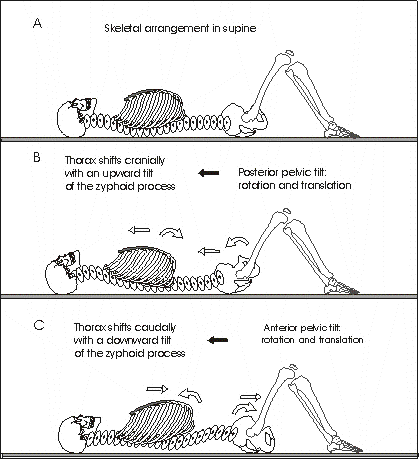
Functional lumbopelvic stabilization comes from a combination of strength, flexibility and balance–three area which I emphasize in my sports rehabilitation practice.  Tight hip flexors, weak glutes and a loss of lumbopelvic control from the abdominals (see abdominal hollows and pelvic tilting) all contribute to loss of stabilization of this vital core area.

True, researchers found no correlation to prevention of injury in the pitchers, as both groups in the study suffered injuries.  But this just shows that sports injuries are multifactorial.  What is unquestionable is that pitching performance did improve with lumbopelvic stabilization, and that I would expect, as I know how important it is in musculoskeletal biomechanics.  I hope you found this study as interesting as I did.

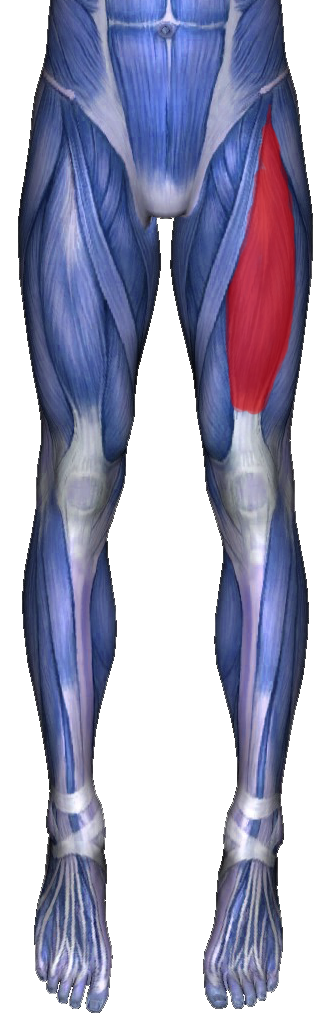
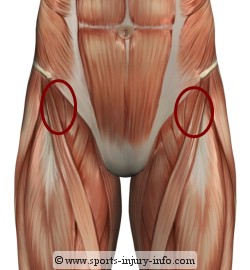
I’ve been showing you stretches to open up your hip flexor complex, which includes the iliopsoas (iliacus and psoas major together) muscle.  Another muscle, which is an integral part of this complex and also needs attention in many people, is the rectus femoris (part of the quadriceps muscle) on the front of the thigh.

The rectus femoris attaches from the front of the pelvis to the shin (tibia).  It is involved in both knee extension (straightening the knee) and hip flexion.  In some people, it may be the hip flexor muscle in need of the most lengthening.  When this muscle is tight, it can lead to a number of problems, most notably low back pain and patellar tendonitis.  In either of these cases, stretching will bring quick relief and also prevent the formation and continuation of a chronic problem.

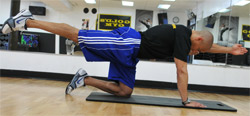
In the video below, I demonstrate four stretches that are excellent openers for the rectus femoris or quadriceps, and thus the hip, low back and knees.  The are actually four successive levels varying in difficulty and intensity.  You should try each one from the beginning to determine your current level.  When you find the one that challenges you the most, but which you can still do without causing too much pain or loss of balance, practice it for one to two weeks before trying the next level.

Within that time, you should be able to master the current level, if you do the stretch every day; and by moving on to the next level, that one will then become challenging but doable.  A principle of all exercise, whether we are talking weight lifting, cardio or stretching, is that you will have to try the next highest level at a lower intensity (whether that means reps, duration, increased intensity of stretch, or whatever) before you will be able to do it regularly and with greater ease.  For example, you won’t be able to master the third level stretch in the video until you can do the second level with some ease; then by taking it to the next level, and practicing, even if it’s uncomfortable, for a shorter period should in time allow you to do that next level comfortably (as comfortable as a stretch can be), and so on to the next level beyond that.  In other words, you won’t be ready for the next level until you do it repeatedly, and ultimately, that will become your next level of mastery (also a metaphor for life!)

Try these stretches to add even greater opening of your hip flexor complex.  I guarantee that once you master all four levels of this rectus femoris stretch, your low back, hips and knees will thank you.  And you’ll also see some amazing improvements in your posture.  Try them, you’ll see.

According to a recent Scientific American article titled, How to Build a Better Learner, neuroscientists believe that the cognitive functions of good learning depend heavily on what psychologists call ‘executive function‘.  Executive function encompasses cognitive attributes such as attention, working memory (what you can hold in your mind with regard to recently learned material), and gratification delay.  They believe that these abilities can predict whether a child will, succeed academically in the future.

One of those attributes in particular–the ability to delay gratification–scientists believe is the foundation of better learning.  And more importantly, they believe it is a teachable skill.  One program, called Tools of the Mind, tried in some low-income school districts where children typically have poorer  academic outcomes, trains children to resist temptations and distractions, as well as to develop working memory and flexible thinking.

The techniques seem so powerful that some educators and economists are now contemplating public policy measures to ‘improve self-control’ as a way to “enhance the physical and financial health of the population and reduce the rate of crime.”  These are the remarks of authors of a recent study which appeared in the journal, Proceedings of the National Academy of Sciences USA.

I find this an interesting concept, albeit a potentially misguided one.  Although I agree that children, and therefore people, fare better in life when they are able to practice discipline and delay immediate gratification, and I also agree that these are the foundations for successful academic learning, I do take exception to the idea of making ‘self-control’ a public policy, in the form of a required class or instruction for children, because I know that it will also have a backlash.  Self-control can be taught, but I think it’s better to lead by example (in the family), than pushing it through a curriculum.  Anything forced on children will have a significant amount of resentment accompanying it.

I just do not believe a program like this will succeed in its goals of enhancing health and finances, or in reducing crime, simply because children that have trouble controlling their impulses will never be forced into practicing self-control.  Yes, many children will respond favorably to the program, but I beleive these same children would do well anyway, no matter what their programs.  Okay, perhaps a handful that wouldn’t otherwise get to learn about self-control and delayed gratification might benefit, but an equal amount will actually do worse as a result of the forced behavior.  Many will seek immediate gratification even more, as a rebellion toward authority.  Listen, some children can’t conform to classroom rules right now for the same reasons, and so they are labelled as having a disorder, and they are drugged.

This type of program will actually create poorer physical and financial health and likely increase crime (if not in number, than in severity).  It’s a fallacy to believe that every child will respond to any program, let alone a  majority.  More likely, there will be gradations of responses–some good, some poor, and everything else in between.  But again, I contend, when something becomes mandated, the rebellious members of society will revolt and actually go against the grain.  That’s life.

What also bothers me is that it seems very similar to what religions do right now, as far as teaching morality in their schools and churches.  Our current public policy, however, has been to veer away from the moralistic teachings of religious institutions, so why package it as something new, with just a different name, under the guise of a psycho-therapeutic and neuroscientific approach to child development?  It’s gratification delay!  It’s what the church and moral majority have been preaching for forever!  Why is it okay now?

It was always okay.  Political ideologues got hold of something they wanted to do away with, and are now realizing it was actually serving a purpose all along–amazing when those discoveries are made, when science and religion coincide.  Nevertheless, you mark my words, if it does become public policy, this type of program will create a bigger, badder sociopath to counter the hordes of children being ‘taught’ self-discipline.

I’ll bet Steve Jobs didn’t consider this one: Apple technology might just be the origin of a new pain syndrome–iPad neck.  I’m serious.  iPad neck is walking into my office, and for a little while it’s had me confounded.  But I see it all now.  iPad technology is perfectly positioned for creating stiff necks.

Think about iPad technology: Flat tablet computer that can be placed on a table or other flat surface (coffee tables, beds, even on bent legs while lying in bed).  But such a device laid horizontally flat forces the neck into a flexed position–that is, chin toward chest.  And used propped-up against the legs while lying in bed…well, that’s extreme flexion, and guaranteed over time to cause neck pain and stiffness.

Listen, there are three common activities that are killers, and guaranteed to cause chronic neck pain: watching T.V. in bed, long-term reading or studying (otherwise known as student-neck), and now iPad necking.  The prolonged neck flexion required by these activities will cause neck pain and stiffness.

When the neck remains flexed it causes a strain on the deep neck muscles, which have to remain contracted to counter the neck flexion.  I know it would seem as if the extensors (muscles along the spine on the back of the neck) relaxed during neck flexion, and they do, so why do iPad neckers feel pain in the back of the neck?  They do so because the deeper neck muscles contract to keep the head flexed, and these muscles refer pain to the back of the neck.

Okay, no problem…a chiropractor or massage therapist can work it out.  It would seem so…but what about when the pain remains after several treatments?  It means the client is unknowingly iPad necking every night.  So any bodywork practitioners reading this better ask your clients if they are working the iPad like they just spent $500 (which basically means ‘every waking moment’, so they can get their money’s worth).

Once iPad necking has been established, you’ll have to enter the rabid dog cage and tell that person they’ll have to give up iPad necking in bed at night and maybe even take a week’s break altogether to bring some much needed relief to the poor beaten up neck.  Please wear gloves and a beekeepers helmet, because taking an iPad from a user is like taking chocolate from a premenopausal junkie.  Expect shrieking.

Anyway, that’s my observation.  iPad neck is real.  I’m seeing more and more of it in my office everyday (read this L.A. Times article on iPad users using in bed).  And while the latest technology is certainly good for some things, tech designers aren’t often schooled in spinal biomechanics.  Maybe they should be.

This post is inspired by something I encounter regularly in my Los Angeles sports chiropractic office: Getting the right ice-bag for the job.  Ice is ice, right?  It all decreases or prevents inflammation, yes?  No!

I’m writing this to explain it clearly–you gotta get the ice right. 

$2 Ice Bag

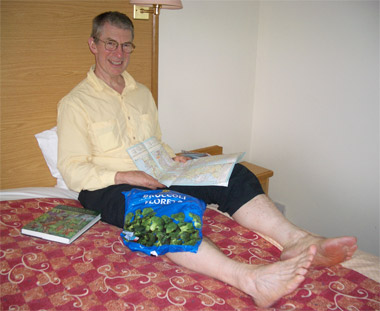
Many doctors (god bless ’em) recommend using a frozen bag of peas…  Look at the photo on the right.  Look how stupid that man looks with frozen broccoli on his knee.  Looks like he’s in a hotel.  Looks like he’ll be throwing away that bag of broccoli.  Looks like he wasted food and two dollars.  Disposable culture gone wrong.

Doesn’t every hotel have an ice machine?  Duh!  Fill a plastic bag with ice–it works like a charm.  Plain and simple: frozen vegetables are not good ice packs.  They do not retain the cold long enough, and once defrosted, you’ve got to eat or toss.  Nobody has broken an inflammation with a bag of frozen vegetables.

Home-Made Ice Bag works fine 

In fact, I like a home-made ice bag just fine.  They do the trick as it needs to be done.  The only knock I have against them is that they are a pain in the arse to make if you have to ice a lot, and so many people neglect their icing as a result.  So, as a matter of convenience, I don’t think these are the way to go.

As far as I’m concerned, a pre-made ice-pack is best addition to your ice-bag arsenal.  The gel material inside these babies freezes into ice crystals, yet it still retains it’s gel-like properties, allowing the cold-pack to contour to your body–invaluable when talking about icing a knee or shoulder with their sharp curves.  Keep the bag in the freezer when not using it, and it will always handy when needed.  I have several ice-packs of different sizes in my freezer, some have been with me for more than ten years.  No kidding.

First two sizes ideal; last fairly useless

In those instances where you need to ice several times a day, nothing is more convenient than having a freezer full of pre-made ice packs.  You can even nail the injured area with ice several times in the same hour really making mince-meat out of the inflammation.  But be cautious: bags that are too small will not remain cold for very long, and therefore I don’t find them very useful.

Crappy Short-Acting Pre-Mades

Another no-no, as far as I’m concerned is using the crappy little packs they hand out at hospitals.  Sorry, they may be inexpensive for the hospital, but they’re darn-near worthless otherwise.  We were sent home with a few after the birth of each of my daughters.  I was actually offended.  What the heck are these going to do? I wondered.  We tried them.  They sucked.  End of story.

For Ice Coolers

 Same with those packs for ice coolers or lunchboxes.  They’re usually too small and/or too hard.  Yeah, try icing a knee with one of those.  Your inflammation won’t go away, and you will stop icing.  I see these scenarios all the time.

Listen, for the inflammation of a joint or muscle, nothing beats ice.  It’s the guaranteed way to decrease the pain and inflammation associated with musculoskeletal injuries.  If you are active like me and many of my clients, you need pre-made ice bags in the freezer.  You’ll tweak something here or there, or have a full-on injury.  Icing immediately (or at least within the first 24 hours) saves many a chronic condition.

Use a barrier like a paper towel  

Also, don’t forget: Never put ice directly on your skin.  Use a thin material as a barrier–I like paper towels, but tee-shirts, thin jeans, and so forth, are okay.  Terry towels are too thick, so avoid using them.

Drop the frozen bag of peas nonsense, and grab a good pre-made ice pack from your chiropractor, physical therapist or online.  I wouldn’t get anything smaller than a 6″ x 12″ (for shoulders, knees, ankles, and so on) and I’d have at least three of those, and I would grab at least two 12″ x 12″ bags as well for larger areas (neck/upper back, low back, buttocks).  I use Polar Ice packs (see photo above), but there are many other decent ones on the market.

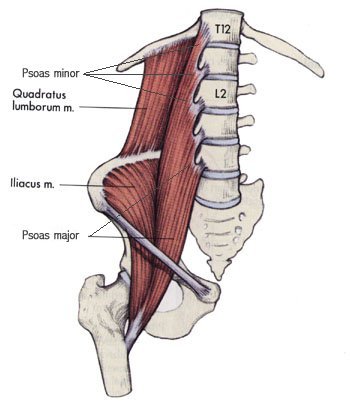
Last month I showed you a great stretch for the hip flexors, specifically the iliopsoas muscle.  The high lunge stretch I demonstrated is excellent for hitting the lower fibers of the psoas, while also engaging some of the iliacus fibers as well.

The stretch I demonstrate in the video below will round out hip flexibility by stretching the upper fibers of the psoas muscle.  When done correctly, you should feel the stretch up higher into the belly and high groin areas.  You will also need to do a pelvic tilt, so mastering that move will be key in getting the best stretch of the psoas.

Remember that the psoas muscle is a major player in some low back pain syndromes, very often causing a referred pain along the sides of the spine, and could go up as high as the lower mid-back.  The psoas as a source of low back pain is often missed by practitioners, who’ll work on the low back muscles, unfortunately to no avail.

Always the smartest thing to do if you have low back pain is to go see a doctor–preferably a sports chiropractor.  But if you know your psoas is tight and playing a part in your low back pain, then by all means do this stretch.  If stretching the psoas doesn’t seem to provide any relief, then make sure you get in to see your chiropractor right away.

Watch the video below to get the best instruction of stretching a tight psoas muscle.  And for those of you that know this stretch–yes, it is also know as a “runners stretch”.  Enjoy.

Well it’s about time.  The government is finally putting its foot down and proposing that food companies be required to label meat products appropriately.  That is, any meat having added ingredients–like chicken broth, teriaki sauce, salt or water–should say exactly what it contains.  As you might expect, the proposed plan has meat industry execs fuming.

Most consumers are unaware of these practices and assume that all meat is just that–all meat.  But according to the USDA, about one-third of poultry, 15% of beef and 90% of pork may have added ingredients, which comes out to about 40% of all raw, whole cuts of meat.  The rule will not apply to ground beef, which will be allowed (and does) have added ingredients.

As it stands now, meat is only labeled as “enhanced” or that it contains “added solutions,” which the government rightly believes might be misleading, or not understandable, to the average consumer.  Some of the labeling is also likely not visible.  If the rules are finalized, the label would now have to be part of the product title. An example of the new labels would be “chicken breast–40% added solution of water and teriyaki sauce,” according to USDA.

A National Chicken Council spokesperson says that the industry is now split as some chicken contains added ingredients, while others don’t.  For those that do add ingredients to poultry, the level of additives is generally 15-18% of the piece of meat.

Red meat producers initially objected to the proposed rules.  The American Meat Institute called it “wasteful” and “unnecessary” and said it would cause prices to go up for consumers.  But consumer groups have been lobbying for years to have the truth in labeling rule enacted, as they say some additives are unhealthy.

I’m sure that some of the additives used to ‘beef’ up meats is harmless, but why shouldn’t the buying public know exactly what they are purchasing?  If you are going to buy food, don’t you want to know exactly what’s in it?  I do.  Let me make the decision as to what I want to put in my body.  Further, if I’m paying for a food item by the pound, why do I want to pay more for added water?  Duh!

I like this rule, and I hope it passes.  I pointed out the same in my book, The Six Keys to Optimal Health, regarding the “cage free” label, and I haven’t been shy about my thoughts on the use of the term “natural” used on other food items.  Yes, buyer beware, but also make food companies disclose everything on a label including whether something is genetically modified.  I do not belong to the camp that wants to do away with these foods entirely, as I beleive they serve a purpose, but it should be our choice as to whether we want to buy them or not.

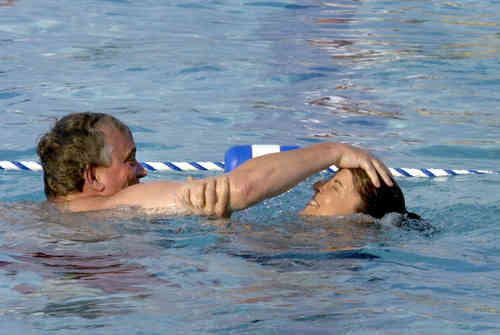
Another summer-fun warning: Don’t horse around in the swimming pool–it could kill you.  Seriously.

Last weekend, while sitting at the pool, I noticed two young girls, probably in their teens or early twenties, playing a strange game of dunking each others heads in the water and holding it down for several seconds.  Although it was probably only ten seconds at a time, I couldn’t help but think…how stupid.

It got me thinking of a story I read the week before in the New York Post of two young men in their twenties found floating face-down in a Staten Island public swimming pool.  These guys were playing games too, although theirs was of a different nature.  They were practicing breath-holding as a way to condition themselves for an upcoming entrance exam for the Air Force’s elite Battlefield Airmen commandos.

One of the men died at a hospital that day, while the other died five days later.  Both men were twenty-one years old.

These were no out-of-shape poor swimmers, either.  One was a city lifeguard, and heading to the Air Force, the other wanted to be a Navy SEAL.  Making it matters worse, they were only in three feet of water.  Apparently, the men suffered cardiac arrest while holding their breath for an extended period.  Because of the large size of the swimming pool, lifeguards did not see nor respond to the men quickly enough to save them.

The men were regulars at the pool, conducting their conditioning routine by swimming and doing underwater situps (duh!), as well as other aquatic workouts.  A spokesperson for the Air Force stated that the military advises against certain breath-holding exercises or swimming underwater at length to avoid “shallow water blackout,” which can lead to drowning.

So that brings me back to my original point: What is with the stupid water games?  Dunking heads?  Listen, if you didn’t know before, now you know–you can blackout, even in shallow water, and you can drown.  You can have cardiac arrest like our two young countrymen who were both by all accounts in “excellent-shape.”  Don’t think it will happen to you?  This tragic story out of New York shows it can happy to anyone, even the most unlikely victims.  Don’t be foolish in the water.

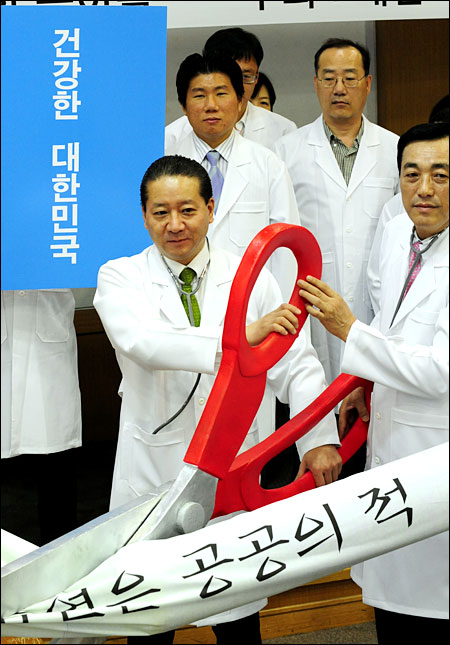
If you want to get a sense of what’s really wrong in health care today, look no further than the Republic of Korea (South Korea).  South Korea is currently a microcosm of the western world with regard to its health care policies, prejudices and oppressions.  Take the current persecution of chiropractic doctors and other health professionals not recognized by Korean law.According to Dynamic Chiropractic:

A World Federation Chiropractic (WFC) press release dated June 30, 2011, the federation notes that the Korean Chiropractic Association, which once boasted upwards of 60 members, “is currently reduced to 17 members because of the hostile environment to chiropractic practice in Korea.” According to the release, the two medical associations have been reporting chiropractors to the police for years and show no signs of letting up.

Sources in South Korea report that the Korean Medical Association (KMA) and Oriental Medical Doctors’ Association (OMDA) are taking measures to rid the country of chiropractic and other alternative disciplines.  The associations are filing formal complaints against doctors of chiropractic and their clinics, and like in the U.S. decades ago, chiropractors are being jailed simply for practicing in accordance with their chosen profession.  Current KCA president, Dr. Taeg Su Choi, has been prosecuted five times since 2003.

Dr. Taeg Su Choi

Chiropractic came to Korea in the early 1990s, when Dr. Yong Serb Song, returned to his homeland from Palmer College of Chiropractic.  The founder and first president of the KCA, Dr. Song was convicted three times, while his son and daughter, fellow Palmer graduates Dr. Joonn-Han (Steven) Song and Su-Hie (Katrina) Song, have also faced prosecution.

Some convicted chiropractors, including Dr. Katrina Song, have appealed to the Constitutional Court, the WFC discloses.  Their argument has been that Koreans have a constitutional right to choose and receive natural forms of health care that relieve pain and suffering, and that chiropractors have a constitutional right to offer those services.  Freakin’ amen and hallelujah!

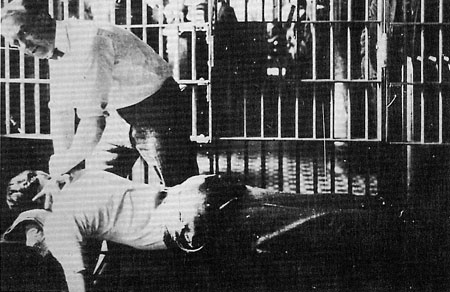
This type of professional persecution is nothing new to American chiropractors, as many of our ancestors were jailed for providing the–gasp!chiropractic adjustment.  Is anybody else amazed at how powerful a professional organization–like the AMA and KMA–can actually be?  I mean when otherwise upstanding citizens looking to help their fellow man by relieving pain and suffering are jailed, while medical mistakes that actually kill people, and pharmaceutical atrocities (like cooking books, manipulating data, putting out product that hasn’t been approved) are turned the blind-eye, something’s got to be seriously wrong.  Just incredible.

Chiropractors can help their Korean chiropractic brothers and sisters by donating to the KCA here.  Anyone else wishing to help can get more information and also donate here.  Let’s not let another country go the way of the U.S. with a medical monopolization of health care.  Let the people have freedom of choice.

Got stinky feet?  Aside from lowering your chances of finding and keeping a mate, you probably get bitten by mosquitoes a lot.  Okay, I’m joking about the mating thing, but the mosquitoes is true–so says a recent study out of Africa that showed mosquitoes are attracted to the musky odor of human feet.  The results are so promising that the Gates Foundation will fund a further project out of Tanzania to determine how traps can be produced affordably, and how they can be used to fight malaria.

Researchers from Tanzania’s Ifakara Health Institute replicated the smell of stinky socks, following the observation that mosquitoes were attracted to smelly feet (made by a Dutch scientist in another study).  Using a careful blend of eight chemicals (one a poison to kill the suckers), the odor proved to attract four times more mosquitoes than a human volunteer, and the poison killed 95% of them (not the volunteer).  Booyah!

Although the global infection rate of malaria is going down, there are still more than 220 million new cases each year. The U.N. estimates almost 800,000 of those people die. Most of them are children in Africa.

The research team initially received a grant from the Bill and Melinda Gates Foundation for $100,000 two years ago. The project has now been awarded an additional $775,000.

Not bad, and you thought stinky feet weren’t good for anything. Well, it appears that even foot-brie can play a role in planetary betterment.  Just goes to show you how one man’s curse can be another man’s pesticide.

Teens and binge drinking ain’t nothing new–but understanding the ways in which heavy drinking affects teenage females is.  So says a recent study looking into the effects of alcohol on the teen brain.  Researcher at the University of California, San Diego (UCSD) and Stanford University found that binge drinking–four or more drinks for women, and five or more for men–hits the brains of teenage girls harder than it does teen boys.

Functional magnetic resonance imaging (fMRI) studies were conducted on 95 teen volunteers in the San Diego area, including 40 binge drinkers and 55 controls.  The volunteers self-reported how much and how often they had tied one on in their lifetime, and how much alcohol they’d consumed in the three months prior to the study.

The teens performed a spatial working memory task while the researchers observed brain activation using fMRI. Spatial working memory is the ability to perceive the space around you and then remember and work with that information, which could affect such tasks as driving, sports, and using a map.  Previous studies have shown spatial working memory to be impaired by heavy drinking.

The results showed eight different regions of the brain in teenage girls that were affected by the heavy drinking…but here’s the kicker: The detrimental cognitive effects lasted well beyond the study period.

“Long after a young person–middle school to college–enjoys recovery from a hang-over, this study shows that risk to cognitive and brain functions endures,” said Edith Sullivan, a professor in the department of psychiatry and behavioral sciences at Stanford University School of Medicine. 

Comparatively, teen boys had only four regions of the brain related to spatial activity affected by binge drinking.  These results showed that developing girls are more susceptible to neurological effects of alcohol. Some potential reasons are that girls’ brains develop two years ahead boys, hormonal differences, and the lowered amount of alcohol needed to affect women due to slower rates of metabolism, higher body fat ratios, and lower body weight.

These are frightening results since 3 in 10 American teens in the final year of high school reported binge drinking in the past month.  Especially scary for teen girls and their parents.  As peer pressure increases, so do the risks young ladies take by hitting the bottle hard.  And because of the lingering effects, the detriments may affect their studies, their safety and their health.

No easy answer to this problem as we were all young once.  My personal feeling is that I feel immense gratitude for the numerous stories on the nightly news of teen accidents, celebrity overdoses and drunken car crashes, teen sexting screw-ups, and other SNAFUs.  It’s what I’ll use, hopefully, to deter my own daughters from taking up teen binge drinking.  But the truth is you never know what they’re going to do.  I’ll mention these results to my girls when the time comes, and just hope they have other ways of expressing their youthful energy.

You’ve heard of “good” cholesterol and “bad” cholesterol–now meet their wicked stepbrother, “ultra-bad” cholesterol…so bad, it forms stickier plaques, and makes its carrier even more susceptible to heart disease and stroke.  Who’s got this badass sticky-plaque cholesterol?  Diabetics.  But before you think that’s not you…let me add prediabetics to the mix as well.

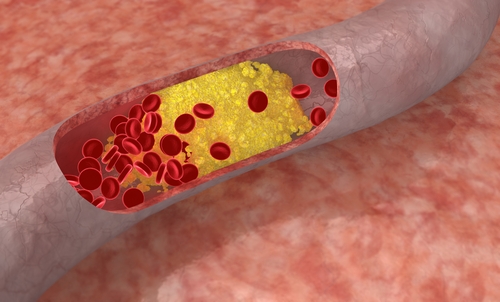
British scientist have found the super-sticky cholesterol by essentially recreating in the lab.  By glycating low density lipoproteins (LDLs), that is, by adding sugar groups to the molecule, they turned the “bad” LDLs into “ultra-bad” MGmin-LDLs.  The added sugar groups change the cholesterol’s shape, making it stickier and more likely to attach to blood vessel walls.  Once cholesterol sticks to the arterial walls, the plaques narrow the lumen (space), reducing blood flow and thus increasing the probability of heart attack or stroke.  Diabetics and prediabetics are at risk due to the higher levels of sugar circulating through the blood.

Of course, the discovering scientists (University of Warwick in the UK) and the medical community is excited because the findings uncover how a common type 2 diabetes drug, metformin, fights heart disease by blocking the transformation of normal LDL into the super-sticky LDL.  Which of course means greater possibilities for new drugs.

But my interest is from a different angle.  It’s for me to stand on a soap box and say: Please people, listen, decrease your sugar intake or remove it from your diets altogether.  Processed sugar is one of the greatest health impediments of the modern world.  The number of illnesses and organ diseases attributable to excess sugar in the diet are astronomical.

While in doctor school, I read 1,500 pages of pathology text required for the curriculum, and it was my observation that excess sugar (along with tobacco and alcohol use) is one of the primary causes of disease in contemporary civilization.  And our foods are filled with it.  Sugar is in everything!  From cookies and cakes, to sauces, meats, breads, cereals, soups, stews, children’s food…and the list goes on and on.

Fast food is laden with sugar.  But be not afraid…here, wash it down with a soda.  Yes, the American drink of champions!  I know I’m a freakin’ bummer, but somebody has to say it.  Drop the sugary, frosted, high fructose corn syrup-laden CA-RAP before your arteries get filled with super-sticky MGmin-LDLs.  Dang!  Seventy-nine million people in the United States today have prediabetes.  Freakin’ duh!

Let me put it in perspective: You know how you think the guy or gal you see smoking a cigarette is going to have a heart attack one day?  Now you can do the same for the soda drinker.  Think about it.

Previously I showed an exercise called abdominal hollowing, which as I explained is essential for strengthening the abdominal core.  A strong core leads to stabilization of the low back through a tightening of the musculature surrounding the area, as well as through the tightening of the thoracolumbar fascia.

Another exercise to help strengthen the abdominal core, as well as assist in stretching the hip flexors, is called pelvic tilting.  A pelvic tilt is bringing the pubic bone and belly button closer together.  It essentially engages the psoas major muscles to either pull them out of the equation as a contributor to abdominal crunches, OR to get a better psoas stretch during the hip flexor lunge or runners stretch.

Watch the video below to get a handle on pelvic tilting.

Summer is my favorite time of year.  I love nothing better than a summer day at the pool–swimming, sunning, staring.  Staring?  Yes staring.  As somebody who spends most of his time looking at bodies, I simply can’t help but notice–and be intrigued by–the variety of differences and similarities among people when it comes to physical structure.  No better place than the pool for a little weekend science.

One thing I’ve noticed is that, as people age, the gravity-induced musculoskeletal stresses that shape their bodies do so in predictable ways.  For instance, I notice that both men and women are prone to developing excessive low back arch, which could easily be mistaken (by them) for a belly (beer belly, immaculate conception, etc).

During my career as a sports chiropractor, and probably no less a result of the city in which I’ve chosen to practice, I have met numerous people that look into, and undergo, tummy tuck procedures, usually done in an attempt to free themselves of this suspected baggage.  On more than one occasion, I’ve actually gotten to observe post-vacuumed mid-sections, and I must say…I haven’t always seen much of a difference.

Excessive arch (hyperlordosis)       Normal Arch

So being naturally curious, I always feel compelled to ask why.  As I mentally compare these bodies–of both the liposuctioned, yet belly-retained, and of the people that I observe poolside–I notice the downward projection of the belly button, which is more a consequence of hyperlordosis–or excessive arch–than it is of belliness (see photo to right to get better picture of what I’m talking about).

Having a reference point is a must, because I have to be sure that it’s simply not normal posture (which would then, in fact, implicate the bulge as being a belly, after all–still following me?).  Fortunately, the pool where I live has a wide variety of people of every race, creed, color, size, ethnicity, sex and age.  A researchers dream!

Compared to younger people (yes, a purely subjective categorization…but I’m calling this observation, not fact), I find that older people tend to have more arch, which I ascribe to tight hip flexors.  Listen, I evaluate enough people to know that many of us, especially those with low back pain, have tight hip flexors.  I also know that a hyper-arched low back is the postural consequence of tight psoas muscles (part of the hip flexor complex)…so it’s not rocket science.

Here’s the point: If you find that the ‘belly’ you see when looking in the mirror doesn’t go away no matter how many sit-ups you do, or how little you eat, and you’ve even been contemplating surgical enhancement, why not start by stretching?  Regular flexibility work, particularly focused on the hip flexors–psoas major, iliacus, quadriceps femoris (quads)–might just be the answer.

Gravity affects us all.  We can let it do it’s thing over time (and try to counter with a tummy tuck, which is often only negligibly successful) or we can invest the energy NOW (it’s never too late) to stretch the tight, short muscles that have been deformed by gravity, and return to the youthful posture we’ve all once had (and some still have).  It’s your choice, but I think if you try the latter you’ll be pleasantly surprised.

Low back pain is the fifth most common reasons for physician visits in the U.S.  One third of them report persistent back pain of at least moderate intensity one year after an acute episode, and 1 in 5 report substantial limitations in activity.

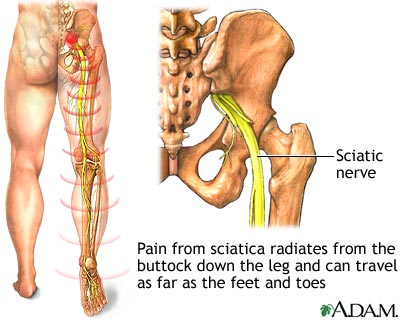
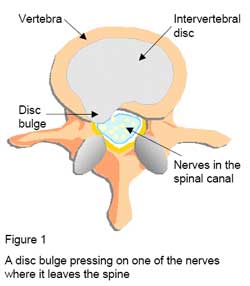
Sciatica–a painful nerve irritation–can accompany low back pain and can sometimes be present on its own.  Sciatica and low back pain together very often result from disc herniation, predominantly in the lumbar spine.

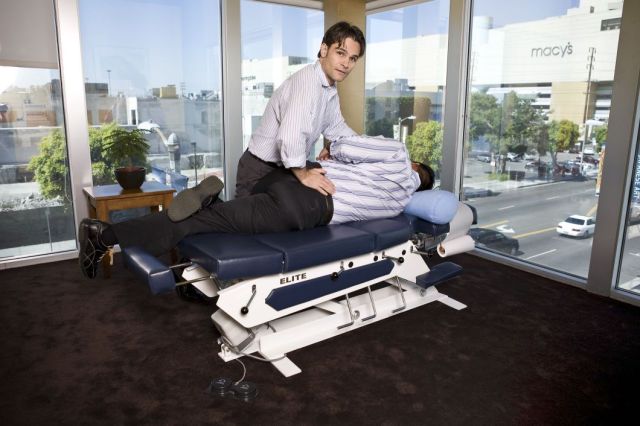
Several treatment options exist, but which ones are most effective?  A 2010 study set out to determine the efficacy of two of these treatments–chiropractic adjustments or surgery.  Forty patients were chosen through elective referral by primary care physicians to spinal neurosurgeons.  Patients were chosen on the basis that they had already failed at least three months of nonoperative management including treatment with analgesics (pain killers), lifestyle modification, physiotherapy, massage therapy, and/or acupuncture.

The patients were randomly split into two groups: those to receive chiropractic adjustments and those to receive microdiscectomy (surgical removal of the herniated disc–cool video here).  Crossover to the alternate treatment was allowed after three months.

Researchers found significant improvement in both groups.  Hmmm…so, by this study, chiropractic and disc surgery were better than pain killers, lifestyle modification, PT, massage and acupuncture to relieve chronic, stubborn sciatica.  Okay, I’ll buy that (well, I am a chiropractor, you know?).  But which one is better?  We’ve gotta have a ‘better’, don’t we?

The results showed that the two treatments came out exactly the same for all outcome measures for the majority of subjects one year post-treatment.  However, eight patients did crossover from chiropractic to surgery, while three crossed over from surgery into chiropractic.  The three that did not benefit from surgery failed to benefit from chiropractic as well.  The eight chiropractic-didn’t-work-for-me crossovers, however, did benefit from the disc surgery…and get this…they did so to the same degree as their surgery-first counterparts.  Dang–now that’s a good study!

Here’s the take home: When dealing with chronic sciatica due to herniated disc, try chiropractic first, period (authors believe first line should be drugs, physical therapy and lifestyle modification…but I don’t).  If the chiropractic doesn’t work, go ahead and get the surgery (although I still think I would try chiropractic, rehab and orthotics [if foot dysfunction present] seriously for at least one year before making that decision).  If you do it this way, you won’t hurt yourself  (at least within three months) by waiting on the surgery–you will still likely benefit as if you went surgery right away–AND if chiropractic works for you (as it did for a majority in the study), you’ll be better off physically and financially, because remember, you’ll never be the same or better following a surgery, and microdiscectomies aren’t cheap (unless, of course, you are lucky enough to live where there’s socialized medicine, and then somebody else will pick up the tab).

Finally, if you decide to get the surgery and it doesn’t work for you (10-20% failure rate), understand that there’s no going back–chiropractic probably can’t help you then.  Get it?  Good.

Low back pain can come from many sources, but one common cause is tight hip flexors.  The hip flexor complex is made up of three muscles–the psoas major, then iliacus, and the rectus femoris of the quadriceps femoris group.  The psoas and iliacus together form the iliopsoas complex.  The hip flexors do just that, they flex the hip.  In people that sit a lot, or those that do either excessive or incorrect abdominal exercises are prone to developing hip flexor tightness or spasm

When the hip flexors get tight, the pain is referred down the low back, in a longitudinal pattern down the side of the spinal column.  The best thing to do to get immediate relief is to visit a Los Angeles sports chiropractor.  For the long-term solution, however, you will want to stretch and lengthen the iliopsoas and hip flexor complex.

One thing to be cautious of is the spasmed or hypertonic psoas.  A person–very often a flexible female–can have long hip flexors, but have a muscle spasm happening in either the psoas or iliacus muscles.  This can be very painful, particularly in the hip region, front or back.  In these instances, the person will need to see a sports chiropractor or physical therapist (or a good massage therapist) to have the spasm released.

Watch the video below to learn one of the best hip flexor, iliopsoas stretches available.  Have fun and stretch daily.

Listen up, people, to words of wisdom:

“Any intervention that you do to a patient, whether it be surgical or radiation, is never going to make the person (function) better than they are at the present time.” ~ Dr. Tracey Krupski, an assistant professor of urology at the University of Virginia

This statement was in reference to a recent study of 152 men that underwent prostate removal surgery (some only partially).  The men were counseled to educate them of the risks, like erectile dysfunction (ED) and urinary incontinence, and surveyed before the surgery.  The survey questions asked about their expectations of urinary, bowel and sexual function a year post-surgery.

About half of men expected that they would have the same function after surgery as before, and 17% of men anticipated better sexual function after the surgery.  Better sexual function…hmmm….

Following up one year later, the researchers found that  just 36% of men’s expectations for urinary function matched the true outcomes, and 40% of the expectations for sexual function matched reality.

Daniela Wittmann, the sexual health coordinator in the urology department at the University of Michigan and a researcher on the study, said doctors are unable to tell patients specifically how well they are likely to recover their urinary and sexual functions.

“We can only (inform them) in terms of overall statistics, we can’t predict for the individual man” how well he will recover, Wittmann said, “which means that, if in doubt, people tend toward being hopeful and optimistic.”

Duh!  Not that knowing the risks to sexual and urinary function should, or would stop men from getting the surgery; but what’s important to me is that I’m sure most people feel this way with any medical intervention.  Sure, we can call it hopeful…but we can just as well call it misguided.

Far too many people think the progress of modern medicine is such that we can be made ‘good as new’.  Some even believe that we can become bionic–better, stronger, faster…c’mon, geez!

Let me reiterate what the good Dr. Krupski said: You are never going to come out of a surgery or radiation the same or better than you were before.  Duh!  This ain’t science fiction, people!  I know, I know…you saw it in a movie…not there yet!

Listen, you gotta have your prostate removed, so be it.  But elective c-sections, ass-implants, low back surgeries, two, three, four carpal tunnel surgeries, double mastectomies, hysterectomieswhat the f….????? You better understand that the minute your tissue is cut–YOU AREN’T THE SAME!

I see it everyday in my Los Angeles chiropractic practice: people coming in following a bad auto accident, and we work hard to get them back to one hundred percent.  How many do we actually get there?  Not many.  Trauma is trauma.  Cut the flesh…it ain’t a paper cut.  I had an appendectomy five years ago–I’m not the same; wiser but not ‘better’.  That’s a fantasy, peeps.

Let me spell it out:  If you’ve got a choice between letting the innate healing ability of the body do its thing, or removing a body part, think hard.  Looking at enhancing yourself surgically, think hard.  Doctor recommending a ‘routine’ surgery, think hard.  That’s all.  If you still decide to go for it, and they have you take a survey…check the box next to, “not the same; a bit worse.”

Stop acting surprised!  Can’t you see that the bigger a thing gets, the more corrupt it becomes?  Wake up!…and welcome to today’s medical industry.  Yes, the same medical industry that has brought us Quackwatch, medical ethics, and the healthcare monopoly–oh, that medical industry.  Yes, yes, yes…not the glorified one depicted in Grey’s Anatomy or the talk show circuit, but the real deal.  Oh you really don’t know?  Hmmm..all right, check it:Device manufacturing giant Medtronic, and doctors paid by the company to carry out research, are under investigation by the Senate Finance Committee to determine whether the company failed to report serious side effects from the bone-growth agent Infuse in clinical studies.

The product was introduced in 2002 to help bones heal after spinal surgery and has been used in about 500,000 patients.  Since its arrival on the market, it has also been linked to some cases of cancer, male sterility, throat swelling and leg pain.  Some doctors in the spinal community believe that a “small number, fewer than five” fatalities may have even resulted from its use, though no published data points to any deaths.

Medtronic, its paid researchers, and its practices were attacked by a prominent US medical journal, The Spine Journal, its authors alleging that they failed to report adverse events to the journals that publish them.  Through thirteen trials involving 780 patients, “industry-funded researchers did not report a single adverse advent involving Medtronic’s Infuse Bone Graft,” said the three US-based doctors that co-authored the review article.

The reviewers went on to point out that the paid researchers of “nearly all the trials had financial ties with the manufacturer, with investigators earning as much as $26 million per study.”  The product brings in about $900 million in annual revenues for Medtronic, according to US media.

In 2008, the US Food and Drug Administration (FDA) issued a public health notice about “life-threatening complications” associated with the product, also known as recombinant human Bone Morphogenetic Protein (rhBMP), when used in the upper or cervical spine.  According to the FDA:

“FDA has received at least 38 reports of complications during the last four years with the use of rhBMP in cervical spine fusion.  These complications were associated with swelling of neck and throat tissue, which resulted in compression of the airway and/or neurological structures in the neck. Some reports describe difficulty swallowing, breathing or speaking.”

Last week the Senate Finance Committee sent a letter to Medtronics asking it to “produce documents related to its controversial bone growth product Infuse.”  The senators raised concerns that the company knew of the adverse effects of Infuse but failed to report them.  Now why would a medical device company do that?  Here are $900 million reasons, which is the annual revenue brought in by Infuse.

Here’s the game, folks: Big Daddy medical device manufacturer invents product promising billions.  Doctors are hired to conduct research and make it look promising; they are compensated handsomely.  Adverse effects are…whoops…left out of publication, and research papers sent to journals.  Journals rave, FDA approves manufacture and sales to the ever trusting American, then world, markets.  Company makes beaucoup bucks, some people get sick, some die; company pays out restitution or go-away money; everybody happy.

Listen, I’m not a “medicine and Big Pharma are evil” kind of guy.  On the contrary, I believe strongly that both industries are invaluable to human life and progress.  However, anything that gets too big, gets corrupt; and modern medicine is not immune.  Bravo to to the doctors calling out Medtronic for its heinous practices.  They knew, and they hid, the truth–that deserves the highest punishment…whatever that is.

But don’t for a second think that as western medicine grows to its behemoth monstrosity that it is above influence, corruption and greed.  We all are.  The bigger we get, the more we think we are above the rules…and doing what’s right.  The medical industry is all of us, our potential unleashed.  Let us be the ones, then, to rein it in.

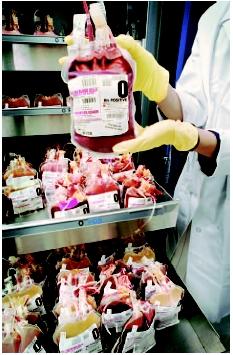
Know what’s cheaper than gas and water today?  Your blood.  You heard right, blood is so readily available that doctors have been using it like an endlessly replenish-able commodity.  Blood transfusions are all too common a medical procedure–heck, we can even call them routine 

Throw some blood at it, Trapper, that should fix things…good, good…control the bleeding, my ascot! 

But not so fast, a U.S. government advisory committee is calling for national standards on when a blood transfusion is needed–and how to conserve this precious resource.

Apparently, much variability exists among doctors as to how much of the red oil is ordered during any given procedure.  For example, some surgeons try to boost the blood of anemic elderly patients with a pint or two, when other measures could be taken.

All the variability shows “there is both excessive and inappropriate use of blood transfusions in the U.S.,” advisers to Health and Human Services Secretary Kathleen Sebelius concluded earlier this month. “Improvements in rational use of blood have lagged.”

Other doctors bypass bleeding control, and simply order a few pints instead.  Why not?  Well, for me the why not is simple.  I don’t want someone else’s blood over my own.  If I need it, yes…gimme some heme and a little globin too, yo!  But if I can get by on my own, then duh!

But this is just another peril of medical modernization–taking our rich supply of back-up blood for granted.  Blood banks–like the American Red Cross–welcome the idea, as they try to balance how to keep just enough blood on the shelves without it going bad or running short.

The U.S. uses a lot of blood, more than 14 million units of red blood cells a year.  Between 1994-2008, blood use climbed 40%, Dr. Richard Benjamin, chief medical officer of the Red Cross, told the Health and Human Services Advisory Committee on Blood Safety and Availability. In many years, parts of the country experienced spot shortages as blood banks struggled to bring in enough donors to keep up.

As an oddity, blood use has actually dropped since the recession, roughly 6% over two years, Benjamin says, although he couldn’t say why.  Maybe financial considerations affect more than we think, including medical rations.  Interesting at the very least.

Transfusions are not risk free: Some people experience allergic-style transfusion reactions and other complications, sometimes fatal ones, despite the dangers of contracting HIV or other viruses being very rare today.

Multiple studies have proven the overuse of blood in U.S. hospitals: One study showed a difference between two hospitals, tracking over 100,000 patients, of 8% blood transfusions in one, while the other was up to 93%.  Survival rates at the two hospitals were not significantly different.

Another study last fall examined Medicare patients who received blood for various reasons over a 10-year period, and found those who live in the South are the most likely to get a transfusion and those who live in the West, least likely.  Overall, the U.S. uses about 49 units of blood for every 1,000 patients, substantially more than Canada or Britain where those transfusion rates are in the 30s, Benjamin says.

All I can say is the bigger western medicine gets, the more mundane its application.  Ah Charley, all you need is a new kidney; you’ll be good as new, you’ll see…and don’t worry, you won’t have to stop taking your heart meds.  Crazy!

We’ve become so numb to the magnitude of medical intervention that a blood transfusion is like getting an oil change at Jiffy Lube.  No doubt, modern medicine is awe-inspiring, but c’mon–I know people that get a surgery every year (I am NOT kidding!).  Is it any wonder conventional wisdom supposes there’s a ‘health care crisis’?  I’ll say there’s a crisis all right…but it’s in the respect for human health and universal laws.  Think about it.

Copyright © 2013 Dr. Nick Campos - All Rights Reserved.