What do you think—should courts decide how you care for your child’s health? Tough question, since the law is ultimately supposed to protect people, and children are often in need of such safeguarding. But how much is too much?

A Minnesota judge ruled yesterday that a 13-year-old cancer patient must be evaluated by a doctor to determine if the boy would benefit from restarting chemotherapy over his parents’ objections. The family belongs to a Native American spiritual organization called the Nemenhah Band, which believes in natural healing. The boy—who is considered a medicine man and an elder in the group–has been diagnosed with Hodgkin’s Lymphoma. Apparently he has made the decision himself to refuse chemotherapy (he only went through one session) and instead treat the cancer with nutritional supplements and other alternative therapies.

The treating oncologist, Dr. Bruce Bostrom, from Children’s Hospital and Clinics of Minnesota has stated that the boy’s tumor had shrunk after the sole chemotherapy session. Other doctors have said that the boy has a 90% survival rate if he continues with chemotherapy; but if he opts out, they say, he only has a five percent chance of survival.

The family, and the boy according to his legal team, want the right to choose whatever treatment option best suits them. But the court has ruled that the boy is unable to properly make that decision, stating that he has a learning disability* and can’t read. According to Judge John Rodenberg, the boy has only a “rudimentary understanding at best of the risks and benefits of chemotherapy. … he does not believe he is ill currently. The fact is that he is very ill currently.”

And so the judgment is that the boy must adhere to the doctors orders regarding chemotherapy, and if the parents refuse, the boy will be taken in protective custody. But it gets even more complicated. Check this out: If the boy refuses the chemo–hold onto your hats–doctors do not yet know how they will administer the drugs to him. Why don’t they just pin him down and inject it into him by force? Isn’t that the way to ensure compliance—gangstick ’em, Frances Farmer style?

Tsk, tsk, tsk…now if I haven’t heard it all. OK, first let me accede: these Nemenhah Band people are a bunch of nuts—no doubt about it. But who the hell is the government to step in and tell people what to do with their own bodies. Ok, ok…if the kid was absolutely clueless in all this, then maybe the parents are negligent and responsible for child abuse. But this kid knows what he wants. No, he doesn’t understand the full implications. Nonsense! He knows enough; and anyway, who the hell understands the full implications? Nobody has a complete handle on cancer; if they did, it wouldn’t be the new second leading cause of death worldwide.

Here’s the main problem with this ruling: At what point is governmental protection simply intrusion? Sure this is a tough case—as I’ve said, the family is teetering on the brink of lunacy. But ruling for court mandate in these complicated cases can far too easily lead to the same in other less complicated cases—like mandatory vaccinations, or worse, court-ordered psychiatric drugging of children, particularly those in “protective custody” (to get your bloodcurdling, read this frightening essay on state-prescribed medicating of children).

To what degree do we want our freedoms taken away, like the right to choose what each of us deems right for our family’s health and well being? It seems innocuous enough, this case in Minnesota—for sure it’s dealing with loonies right up there with Christian Scientists, those nut jobs refusing any medical treatment at all because of their belief that God will protect them. But this case is bigger, much bigger, because it’s deciding where Big Brother has the right to step in and dictate what we can and cannot do with regard to our families’ health. No vitamins—doctors say they aren’t necessary. Vaccinate your children or go to jail—like in Belgium. And absolutely, positively, without question you must take your pharmaceuticals because…well…doctor knows best. Just one question: What the hell are they going to do if that kid dies anyway? Doh!

*Learning disorder was a term coined by the psychiatry profession in 1963 to include children in the ever-growing envelope of mental disorders and to provide funds for disabled children in schools.

I hate to say I told you so, but well…I did. Here’s the latest on American health insurance habits: Americans spend more on medical care than their foreign counterparts. But not their own money…oh no, uh uh…Americans spend more insurance dollars, because the perception is that their health is somebody else’s responsibility.

According to new research conducted at George Washington University, insured immigrants spend less on medical expenses than U.S.-born citizens, even after accounting for lower levels of insurance coverage. Well, no kidding; you don’t say. In fact, overall health care spending was 20% less for American immigrants, even when controlling for factors like health status and age.

No surprise to me–I’ve been reporting on the convoluted American health paradigm for quite some time. Americans, in general, think that health care is an entitlement–which might not be a problem if the average citizen did all they could to take care of themselves. But when a large number of all illnesses are lifestyle related, it really skews the stats, doesn’t it?

The authors of the study point out that these results “contradict the popular belief that immigrants are a drain on the U.S. health system.” I agree. But even more telling in my opinion is that Americans overuse the medical system for one simple reason: They aren’t footing the entire bill. Truth is that all insured people foot the bill for those using health care the most–the obese, drug addicts (both recreational and pharmaceutical), and the neglectful. And our current government wants to now give us more to pay for with universal health care. You really think this is the answer to “fixing” the health care crisis? Wake up call: not only is there not a crisis, but universal health care is going to cost way more than ever imagined. You’ll see.


Does more activity in school cause kids to be more active out of school? Nope, not according to research conducted in Great Britain. In fact, children may have a “set-point” for activity; and once reached, it may shut down a child’s further activity for the day.

206 children, ages 7-11, were followed for one week for four consecutive school terms and their activity levels measured and recorded by accelerometers–the devices currently used in video game controllers. They were set on three different physical education schedules–9.2, 2.4, or 1.7 hours per week. The accelerometers recorded the kids’ duration and intensity of activity.

The researchers found that those kids most active in school were least active outside of school or at home. Those least active at school were most active when outside of school. They believe that people in general have a “personal set point” that determines their activity level, and they will tend to reach it one way or the other.

This information comes at a useful time, while public health official and educators attempt to deal with the rising obesity problem amongst children, and shoots down the assumption that more opportunities for activity will lead to just that. As co-researcher Alissa Fremeaux, from Peninsula Medical School puts it, “These findings have implications for anti-obesity policies because they challenge creating more opportunity for children to be active–by providing more playgrounds, sports facilities, and more physical education time in schools–will mean more physical activity.

I think the interesting thing about these findings is that we have had this sense intuitively about activity levels being sort of personalized to each individual. But in trying to deal with obesity in general, and in children specifically, we have been searching for answers, and it may not be in activity levels at all. In fact, an earlier study this week has showed that most obesity is due to overeating, not lack of physical fitness. So bravo to the researchers looking hard at this stuff. It looks like we are getting a clearer picture.

Listen up, women: Probiotics may help you shed post-pregnancy weight. But there’s a catch. You’ve got to start them early, first trimester to be exact.

Recent research conducted in Europe has shown that pregnant women given probiotics in the first trimester of pregnancy were less likely to develop central obesity, which is characterized by a body mass index of 30 or higher or a waist circumference greater than 31.5 inches. At one year following childbirth only 25% of women given probiotics developed central obesity, compared to 43% given diet advice alone. 40% of women receiving neither probiotics nor advice developed central obesity.

Although preliminary, this study is good news for women worried about losing the post-delivery pounds. Nothing beats getting back into nature and walking the birthing weight off, but taking probiotics throughout pregnancy is a helpful addition, especially since it offers so many other benefits as well.

Want to stay slim? There’s a secret regimen that far too few people are taking advantage of these days–it’s called sleep. You got it–catching enough z’s is yet another way to keep your body lean and mean.

A recent study conducted by the European Center of Taste Science in Dijon in central France has found that people who are sleep deprived had greater feelings of hunger than people getting adequate sleep; and these same sleep deprived people went on to satisfy their hunger by consuming an additional 550 calories (equivalent to one large hamburger).

Another separate study conducted at Maastricht University in the Netherlands found that children who got less sleep in puberty than when they were younger gained more weight compared to children whose sleep patterns did not change.

To me these findings make sense. Since we replenish our energy stores and ATP stockpiles during sleep, not getting enough leads to lower energy. It would appear to me that the body would attempt to increase its energy through any means possible, including increasing calorie intake. But is that efficient?

The bottom line here is that the sleep process is essential to many functions from energy production to wound healing to cognitive function. It’s one of the six keys to optimal health. When we rob the sandman the global health takes a hit. And now we know sleep deprivation contributes to weight gain–definitely not efficient. So get your rest and stop burning the candle at both ends–you might see you waistline shrink as a result.

On March 25, 2009 Good Morning America aired this piece on chiropractic and blood pressure. A pilot study conducted in 2007 showed that chiropractic adjustments reduced blood pressure significantly offering hope to the millions of people plagued by high blood pressure in the U.S.

The study conducted out of the Rush University Hypertension Center in Chicago showed that hypertensive study subjects provided with specific chiropractic adjustments (and sans meds) lowered their blood pressure by an average of 17 mmHg systolic and 10 mmHg diastolic. The study was a double blind, placebo-controlled design, and the study cohort was 70% male with a mean age of 53. The subjects receiving placebo (sham adjustment) showed little change in blood pressure.

Well this is exciting news for people with hypertension. It shows that there are alternatives to medications for treating hypertension (high blood pressure). Hypertension affects one third of all Americans, so this is huge for the country as a whole. High blood pressure increases the risk of heart attack or stroke, and all medications have side-effects. Interestingly, the study showed no side-effects for the chiropractic adjustments.

Of course, organized medicine is embracing this study cautiously. That’s okay…truth is truth is truth is truth is truth. The chiropractic technique used in the study was Upper Cervical Specific or NUCCA. Check out the GMA video below to get the full story.

Another tragedy in the entertainment world: legendary Las Vegas showman Danny Gans died in his home early this morning; he was found by his wife at 3:00 am, “having trouble breathing.” The cause of death, as of now, is unknown. Gans was reportedly in good health at the time of his death.

Gans, eleven-time Vegas Entertainer of the Year, was well-known for his rapid fire imitations of famous celebrities from Tony Bennett to Al Pacino to Sarah Vaughn. He also sang, proclaiming himself a “musical impressionist.” Gans started his career on Broadway doing a one man show in 1995, but then moved to Vegas in 1996 starting at the Stratosphere, then moving to the Rio, and eventually the Mirage, where he signed a $150 million-a-year contract in 2000. Gans won the prestigious Entertainer of the Year 11-times in a row–an impressive feat considering that his competition included the likes of Cher and Celine Dion. Gans changed venues again this year, moving to the Encore, a sister property of Wynn, Las Vegas.

Gans did not start out as an entertainer. He was drafted by the Kansas City Royals out of high school, and played in the minor leagues. An injury ended his baseball career, but a small film roll in the hit movie Bull Durham gave him the entertainer bug. He started as a traveling performer working mostly corporate functions before moving on to Broadway.

Gans will be sorely missed both by his colleagues in the entertainment world and his adoring public. I find this especially sad because Danny Gans was in the prime of his life. He was in great shape, they say–a probability knowing how important one’s health is to performing day in and day out. Although the cause of death is currently unknown, I wouldn’t be surprised if this is yet another tragic drug overdose. If Gans wasn’t using recreational drugs, then my guess he is just another victim of pharmaceutical overload. I hope not, but healthy young people don’t just die in their sleep–something else must have happened.

My heartfelt condolences go out to the Gans family. Here’s to a great entertainer that will be for ever immortalized in Las Vegas and the world over.

Walking around in pain? Disabled? You’re not alone: Twenty percent of Americans have a disability, according to new reports out of the Centers of Disease Control (CDC). The CDC reports that the number of people with disabilities rose 7.7% over a six year period. From 1999-2005, the number of disabled Americans has reached 48 million. Pretty pathetic considering most of the top disabilities have a sound solution. Let’s take a look:

  • Arthritis was the leading cause of disability, affecting 8.6 million people
  • Back and spine problems were next at 7.6 million people
  • Heart related disabilities knocked down 3 million people
  • Women were more disabled than men
  • And the CDC predicts that the overall numbers will continue to rise as baby boomers age

What makes this scenario sad is that most of the disabilities hobbling our countrymen are treatable or preventable. Arthritis, low back pain, neck pain and other musculoskeletal pain conditions are all effectively treated by chiropractic care. But are doctors recommending it to their patients? Seeing that less than twenty percent of the population is taking advantage of chiropractic care, it’s not surprising that the numbers of disabled are so high.

Fortunately, the younger generations are turning to chiropractic to prevent future disabilities. I see it in my own practice. Baby boomers come, but not as much as Gen Xers and Millennials. I guess what grandma and grandpa tended to pass on, kids are embracing. Very smart youngsters, very smart. You don’t have to take on the family legacy and fulfill the CDC’s prediction of “more disabled” by 2030. On the contrary, if instead we do what the CDC recommends to stop the trend–that is, focus on “disability prevention” through safe, effective chiropractic care, then I’m certain these numbers will come down.

I think the younger generation gets it–Keep getting adjusted by your chiropractor for health, wellness, prevention and pain relief, and leave the baby “disability” boom behind.

Put those carrot sandwiches down, hippies: your alfalfa sprouts might be contaminated. The Food and Drug Administration (FDA) and the Centers of Disease Control (CDC) has issued a warning that raw alfalfa sprouts may be contaminated with salmonella. This just weeks after the same warning for pistachio nuts, and peanuts earlier this year and last.

The FDA reports that 31 cases of food poisoning with the Salmonella Saintpaul strain have been reported in Michigan, Minnesota, Pennsylvania, South Dakota, Utah, and West Virginia. The warning is for raw sprouts, which authorities believe are harboring the bacteria in their seeds, so washing the spouts will not make them safe. The good news is that only the alfalfa variety seem to be contaminated; all other sprouts appear to be fine.

“Some reported eating raw sprouts at restaurants; others reported purchasing the raw sprouts at the retail level,” the FDA said.

The FDA believes that this current contamination is an extension from an earlier outbreak this year that was reported in Nebraska, South Dakota, Iowa, Kansas, and Minnesota.

Well, another food, another contamination. It seems that food safety is a real issue today, and thankfully the government is making this a top priority. Congress is currently discussing setting up a new food safety agency with more resources than the FDA has. If it tightens up the controls on food quality, I’m all for it. I understand that feeding the masses is a tricky biz, but letting this much contaminated food out onto the markets is just unacceptable. I’ll keep you posted, love children; but until I hear more, stick to the hemp paste.

Mirror, mirror on the wall, which women are thinnest of them all? If you’ve guessed the French, then you’ve guessed right. Indeed, French women are the thinnest in Europe, according to new research conducted by France’s National Institute of Demographic Studies. The kicker, though, is that only half of them think they are too thin. So how thin is too thin?

Five percent of all French women are officially “underweight,” according to World Health Organization (WHO) standards. On the plus side, France is the only European nation whose women and men are both solidly in the normal weight category. But the proportion of overly thin women in France has long been the highest among all European nations.

The significance of this study is that it sheds light on what one culture sees as the norm with regard to body weight. In other European countries such as Britain, Spain and Portugal, women there tend to over-estimate their skinniness–that is, more women think they are too thin than actually are, according to the WHO standards. WHO uses body mass index (BMI) as an indicator for body weight. BMI is calculated by taking one’s weight in kilograms and dividing it by the square of one’s height in meters. The range of normal weight is 18.5-to-24.9.*

In France, however, only 50% of the women falling below 18.5 BMI think they are too thin. In that culture thin is obviously in. So while many European nations, and America, have a problem with obesity and overweight people, France has the opposite problem…and it is a problem.

We all know that anorexia is a health hazard, so France’s cultural attitudes toward weight perpetuate its own public health issues. The real scary part for the French is that despite being the thinnest women in Europe, many French women consider themselves “too fat.” For French women, “the body is related to beauty, and beauty to being thin,” said one of the scientists conducting the study

It just goes to show you that no culture is immune to body image issues. Too thin is unhealthy, and it doesn’t really look good, at least by health standards. But in France, it’s the look to go for. So I guess when you hear next how healthy the French are, keep this little fact in mind; they may be thin, but too thin isn’t necessarily good for the health.

*Check your own weight status on this BMI calculator (using British units weights).

I’m reaching out to all women reading this, please help me understand something: Why are more and more women who are diagnosed with breast cancer opting to have a double mastectomy, despite the fact that removing the healthy breast adds no increase in life expectancy, whatsoever? Can you please explain what’s going on here.

I want to hear from women (and men who think they might understand) in their own words, because I see an incredible psychological and sociological phenomenon happening. According to new research conducted at the University of Minnesota, Minneapolis, there has been a dramatic rise in women diagnosed with cancer in one breast to have both breasts removed for preventative reasons.

There has been a 188% increase in women choosing the “contralateral prophylactic mastectomy” surgery, and it has researchers baffled. It has me baffled, too; here’s why: The 10-year survival rate for women with ductal carcinoma in situ (DCIS) is 98-99%–that is outstanding! According to Todd Tuttle, one of the scientists on the study,

“Removal of the normal contralateral breast will not improve the excellent survival rates for this group of women. Nevertheless, many women, particularly young women, are choosing to have both breasts removed.”

So, once again, I ask why. This is not an isolated incidence–it’s happening with unusual regularity. Is it a symmetry thing? Is it aesthetic? Is it to not be reminded of the diseased or lost breast. I imagine being a male puts me at a psychological disadvantage to understanding a woman’s thoughts and feelings–or connection–to her breasts. I know it seems odd to say that, since I must have a connection to my testicles, but I don’t think I would opt for removal of a healthy testicle in the event of testicular cancer. And anyway, this doesn’t seem to be happening to men who lose a testicle. But, of course, I am not in that situation, so I wouldn’t really know how I’d react, anyhow.

The researchers also concluded that more studies would be needed to understand “the complex decision-making process leading to contralateral prophylactic mastectomy.” But until then, maybe you could give me your thoughts.

So here we go, what we all knew was coming: A deadly new flu strain–a variant of a swine flu–has moved up from Mexico found its way into the U.S. The never before seen flu strain has reportedly killed 20 people in Mexico and may be responsible for another 40 deaths. Mexico City has gone through a mass quarantine by shutting down schools and canceling public events in an attempt to prevent further transmission. In California, six people have already been infected, although the cases here appear mild so far. Nevertheless, the pig flu is here.

According to the World Health Organization (WHO), tests showed that the virus from 12 of the Mexican patients was the same genetically as a new strain of swine flu, designated H1N1, seen in eight people in California and Texas. This strain is being transmitted human-to-human, which is raising fears of a mass pandemic. Global health authorities, however, are not yet ready to declare it as such.

Analysis of the viral strain shows it to be a combination of swine, avian (bird) and human influenza strains. Typically, humans can catch the swine flu from pigs, but rarely is it transmittable to other humans. Not true of this strain, which is a human variant too–the likely reason for its transmission among humans.

In Mexico, there have been 1,004 reported cases in Mexicali on the border with California. Most of the dead were between 25 and 45 years old, a worrying notion since the typical human flu endangers the very young or the very old. A hallmark of pandemics is that they affect healthy young adults.

The latest word from U.S. authorities is that it is too late to contain the swine flu virus–it’s here. On the positive side, the strain seems to be susceptible to the flu drug oseltamivir, otherwise known as Tamiflu.

Well, this is exactly what I’ve been warning against in my many posts speaking out against flu vaccination. I have always believed that a new flu strain outbreak was imminent; and I believe that people who just bucked up and caught the flu have hopefully been exposed to some elements of the new flu strain. No way to know for sure, but time will tell. It seems a best chance scenario to me anyway, since evolution takes time, and it is therefore possible that those of us who went unvaccinated and were exposed have encountered a degree of immunity to certain aspects of the human portion of this new deadly strain. Like I’ve said, only time will tell, but I prefer to take my chances with natural immunity (in this case) any day.

Oh well, chickens coming home to roost time. I’ll keep you informed.

What do you like to spend your money on? Movies? Clothes? Your hair? Beer? Although at times money may be tight–we always seem to find the dough for what we need. Did you know I used to smoke cigarettes? There were times I was dirt poor, not a piece of bread in my cupboard; but I always had smokes…always.

That’s why I scoff at reports which state that people hold back from health care because of cost. A recent survey claims that 20% of Americans delayed or postponed medical care, mostly doctor visits, because of cost. These surveys are used as fodder for ideologues trying to push an agenda. So of course this latest Thomson Reuters poll, and the many number of polls like it, are simply ammo for the solely political issue of universal health care that is being pushed onto us now.

You know as well as I do that these same people holding off on medical care for financial reasons are going to the movies, roasting at Coachella, drinking at the pub, getting their $750 Jonathin Antin haircuts, and so forth; and they are spending their money for those things because they value them–that is, they get something for their money. Health care often is of subtle value, especially if there is no immediate problem. So, yeah, people will forgo those routine physicals, where you go through the discomfort of a digital probe simply to be told, “Rectum of a twenty-year-old,” because, well, they seem pointless.

I believe this happens because, as I said, health care often has subtle benefits. Unlike an auto problem, for which most people will fork out the cash, no questions asked, opting out of a routine office visit at the doctors won’t strand you on the side of the road.

Now, obviously, neglecting health in this way is foolish. That’s true whether we are talking about passing on a chiropractic wellness visit, a gym membership, or dietary supplements, simply because you gotta stretch the dough and the health regimen just doesn’t fit in this month (and you’ve got to budget as you’re seeing Jonathan next week). It just comes down to what you value.

I’m not judging peoples’ values here; we value what we value. But I don’t care for this political sleight of hand–using ambiguous data to support an agenda. Yes, the recent data collected in the Thomson Reuters poll is ambiguous. Without knowing where else these same people are spending their money, we can’t make any serious conclusions about the prohibitive costs of health care.

“Good night. Don’t let the bedbugs bite,” never rang more true. There’s a resurgence of bedbugs in the U.S., and many people are getting eaten alive without even knowing what’s hit them. Warning: This post is not for the squeamish.

According to the Environmental Protection Agency (EPA), we are in the midst of the biggest bedbug infestation in the U.S. since World War II. The small, flat, oval, and reddish brown insect is infesting hospitals, hotel rooms, college dormitories, and now peoples’ homes. They live in the crevices and folds of mattresses, sofas and sheets. Then, most often before dawn, they emerge to feed on human blood. The EPA is holding their first ever bedbug summit on Tuesday.

Bedbugs are not microscopic–that is, they can be seen with the naked eye. They are , however, small–about 4-5 mm in length. They feed on warm blood, so humans are a favorite meal; but bedbugs will bite pets too in a pinch. This makes it especially hard to control residential infestations.

Since bedbugs neither jump nor fly, they must climb up beds to reach their prey. They sense heat, so a common method of attack is for the insect to climb up the bedroom walls to the ceiling. As they make their way across the ceiling, they’ll feel for heat. Once they feel body heat rising upward, they drop; and the party begins.

Bedbug bites are often characterized by three raised, welt-like bumps in a row. These bumps are indistinguishable from mosquito bites. They can be very itchy, and this hyper-irritating itch is usually the first sign that bedbugs are present. The diagnosis can be made by the three bumps, which are referred to as, “breakfast, lunch and dinner.” Because bedbugs are most active right before dawn, their feeding is rarely felt by the meal-host. Bedbugs feast and go back into hiding, where they come out every five days for more food. They can, however, stay dormant (without food) for up to eighteen months. Grossed out, yet?

The first step in fixing the problem is diagnosing whether an infestation is present. Infestations usually result from the transmission from travelers, students, and even outdoor pets. The next step is detection (usually done by pest control companies), then quarantine (cleaning and keeping clean) and treatment. Treatment can be through systemic (medication) or topical (hydrocortisone) corticosteroids. Applying hot water to the bites is a home remedy that is said to produce great results; mind you, the water must be hot enough to neutralize the poison left by the bedbugs, so it should be somewhat uncomfortable when applied, but not too hot to cause scalding.

OK, we’ll I’m creeped out by this news; especially since my family and I travel enough to increase our chances of infestation. If you are itching uncontrollably, but can find no source of irritant–no mosquitoes, no change of soap or laundry detergent, not eating anything different–then think bedbugs. Look for bites and if you find three in a row, you better figure you’ve become breakfast, lunch and dinner. Call the pest control and get your placed cleaned. Yeccchhh…I’m grossed out too.

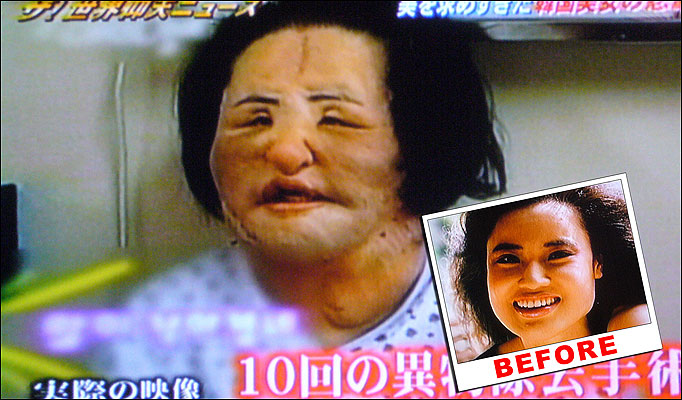
Addicted to looking good? Beware of “beauty injections” being offered in some California and New York salons where the active ingredient is cooking oil. People are dying as a result of this bizarre practice.

The New York city health department is warning that some unscrupulous practitioners are injecting silicone, petroleum jelly, castor oil, mineral oil and cod liver oil into the faces, hips, thighs, breasts and buttocks of people wishing to enhance these body parts. Some of the side effects include “serious infections, nerve damage, respiratory and kidney failure, irreversible disabilities, disfigurement and death,” according to the NYC Department of Health.

Past reports of adverse reactions have focused mainly on transgender women, but Latina women also seem to be receiving the unlicensed, and thus illegal, procedures. In 2007 a 46-year-old Salinas woman died after having Mazola corn oil injected into her buttocks by her “beautician”. And in 2008 a Korean woman was severely disfigured after injecting silicone and cooking oil into her face (see the gruesome pics here).

Sigh…c’mon now! Who the heck thinks that cooking oil injected into the face is going to enhance looks? Dang! Well, I guess I gotta say it for those who don’t know: Do not get any cosmetic procedure done in someone’s house, a hotel room, or the back seat of a car! Please! Go to the doctor, dagnamit! In fact, get the doggone Mazola corn oil…out…of…your…house…NOW! There, that should do it.

Want to get buff, ladies? Try this: Get off the pill. Yup, oral contraceptives may prevent muscle growth in women, current research shows.

A study conducted by researchers at Texas A&M and University of Pittsburgh showed that women not taking the pill had built significantly more lean muscle than women taking oral contraceptives. Seventy-three women aged 18-31 completed a whole body resistance exercise program–half took the pill, half did not. The women were encouraged to eat a half a pound of protein per body weight each day (about a third more than recommended by U.S. nutritional guidelines) to ensure that they got enough protein and calories to build muscle (my West Hollywood/Beverly Hills chiropractic clients will recognize this regimen as I recommend it to people healing from injury along with those wishing to build mass).

After ten weeks of working out–three times per week with weights–the women not taking oral contraceptives had a significant increase in lean muscle mass. And blood samples before and after the training period showed the women on the pill had lower levels of muscle-building hormones such as testosterone and far higher levels of muscle-breaking hormones such as cortisol.

So there you have it all you aspiring Sarah Connors: you want to get buff, get off the oral contraceptives. But fear not: that hard, chiseled body may be just enough contraceptive you’ll ever need. Really.

Arrrgh!!! Went back to the gym this weekend after a two month hiatus, and while stretching on Saturday, got the worst muscle cramp ever in my calf. You know the kind–instant constricting, spasming charley horse; the kind where you feel your muscle moving but are not doing anything to make it move. It’s like an alien head is going to pop out of the calf, stick out it’s tongue and hiss. And then yesterday, I got a massive cramp in my upper back that has been radiating pain into my neck. Let me repeat…arrrgh!!!

So why the cramping? Likely, I’ve been neglecting one of the following:

  1. Proper hydration–likely, since I drink 2-3 cups of coffee per day and probably haven’t been getting my daily two liter water replenish
  2. Magnesium–night cramps are often due to low calcium, but otherwise, think low magnesium
  3. Electrolyte imbalance–nothing a few Gatorades can’t help

Which one? My guess is it’s mostly a hydration issue, with the other two playing a minor part. I have since been a little more conscious of my water intake, started taking magnesium, and I’ll hit the G on my next couple of workouts.

For the current spasms–hot water bottle, chiropractic adjustment, massage (localized and short, five minutes…spouse’s job), some bite the bullet, you get it.

What costs society more, smokers or non-smokers? Think hard because I’m sure you think you know, but you’ll be surprised when you hear the answer. Very good, you guessed right: Non-smokers ultimately cost society more for one simple reason–they live longer!

New research conducted at Vanderbilt University, on the heels of yet another tax increase on tobacco products, shows unequivocally that every pack of cigarettes smoked saves the country 32 cents. That’s right, smokers actually save this country money. Although smokers cost $96 billion a year in direct health care costs and an additional $97 billion a year in lost productivity, they die sooner than non-smokers by about ten years. That additional ten years of life would cost more in general living expenses and further health care costs (Dutch researchers showed last year that smokers cost $326,000 from age 20 on, compared to about $417,000 for thin and healthy people). So why the witch hunt? Well let’s check it out.

What’s the tenor we live by? Life is good, death is bad; avoid death at all costs, right? Truth is that most people don’t want to think about death at all. But let’s not forget about the benefits: Death allows space and resources for new life forms. It maintains the constancy of energy flow. So why do we strive so earnestly to preserve individual life above all else?

Here’s my point: It seems that the goal of modern health care is to maintain life at all costs. Noble, yes, but not necessarily advantageous to humanity as a whole. It also forces us to vilify certain behaviors, certain indulgences–like smoking or obesity or promiscuous sex–that just don’t fit into the “we must live as long as we can” theme.

But I personally appreciate quality of life greatly. Now in that vein, I think smoking can be a detriment to having a quality life–that is, if you value being active, then you probably don’t want to smoke. I speak from experience on this–I smoked cigarettes for twenty years and my life is tremendously better now as a non-smoker for a multitude of reasons. However, I do admit that there were loads of benefits to smoking: it was something I enjoyed immensely to say the least (I talk at length about this in my book, The Six Keys To Optimal Health). So which is more important? I guess every individual needs to decide for himself; but either way, I’ll go with quality of life over quantity anytime.

That’s why I laugh when I see studies like the one above. It goes to show you that some things just aren’t what they seem; and thank goodness for people who actually take the time to think about them in their entirety. I’ll leave you with this: There are many benefits to not smoking, to being physically fit, and to caring for one’s health, no doubt–it definitely is the life I love to live. Saying that, however, there are also benefits to smoking, eating whatever you want, and focusing on things other than health. It’s your call. But don’t let ’em tell you it costs society more–that’s a political game.

Well, it’s that time. Sun’s coming out and you know what that means–go to the tanning salon to get your starter tan. For some people, tanning in a UV bed is a year long practice. Well indoor tanners beware: Tanning beds can up your risk of skin cancer.

British cancer experts report that melanoma, a deadly type of skin cancer, is now the leading form of cancer found in women in their 20s. And based on the current numbers, they predict that it will be the the fourth most common cancer for men and women of all ages by 2024. What makes this especially worrying is that people in their 20s are not generally susceptible to melanoma–it’s usually found in people over 75.

This trend is thought to be the result of heavy tanning salon use. According to one researcher,

“Spending time on sunbeds is just as dangerous as staying out too long in the sun. The intensity of UV rays in some sunbeds can be more than 10 times stronger than the midday sun.”

The World Health Organization (WHO) has recommended that tanning beds be regulated because of their potential to damage DNA. 29 states have regulations against minors using tanning beds without the consent of a parent.

It never ceases to amaze me this tanning salon phenomenon. Someone please tell me, what’s wrong with the sun?!?! Oh no, I gotta be tan…now! Whatever. I personally take the middle ground here: Humans need sun–it provides us with vitamin D. And based on a recent report that Americans on average are low in their D levels, we need more sun.

But the fear mongers (in this case, dermatologists) have been working hard, and have been pushing this “stay out of the sun (and have every freckle burned off)” agenda. So what have people done? They either avoid sun altogether (porcelain dolls) or they go nuts inside the tanning booth (tanorexics). Yeah, yeah, yeah…don’t bother telling me about the Magic Tan. Everybody knows you’ve been sprayed–it’s not fooling anyone.

Listen, we all need sun. Get out and enjoy it. Use sunscreen and don’t allow yourself to get burned. Simple sun-enomics. Avoid the tanning salons, or increase your risks of getting skin cancer. Simple as that.

There’s a phenomenon happening in Asian medical care that mirrors our own practices, yet we seem too blind to see it. According to recent reports, doctors in Asian countries from Hong Kong to Indonesia are overprescribing drugs to patients that often don’t need them. And this overmedicating is driven by profits, experts say. You don’t say. Could that be the dirty little reflection staring “too expensive” American medical care back in the face?

Polypharmacy (overmedication) is very popular [in Asia], it means they use a lot of medicines which are unnecessary, like giving you many types of antibiotics for a cold,” said William Chui, honorary associate professor at the Clinical Trials Center attached to the University of Hong Kong.

Well Dr. Chui, let me wake you up to a harsh reality: It’s not just profits that drive this practice–it’s a faulty paradigm. Health care based on primarily treating illness, while merely paying lip service to healthy behaviors, and shutting out these same practices from insurance reimbursements, maintains this polypharmacy madness. Think about it: Health insurers, which includes the federal government’s Medicare and Medicaid plans, only pay for symptomatic care. This perpetuates the myth that health comes from fighting illnesses.

No doubt, disease care is important; however, it is merely one aspect of human health. Denying all the rest–physical fitness, proper nutrition, regular bodywork, mental health services outside of psychiatry, and so forth–simply says, “It’s not necessary.” Do you think people get confused by this message?

The politicos talk a big game when it comes to health care reform. Wake up and smell the BS, America! Focusing on more of the same “health care”, just subsidized, is insane. Look at Asia if you can’t look at yourself. Put the finger back in its holster, American health care, or point the other four back at yourself; you wrote the book on medical over-consumption. But it’s a heck of a lot easier imagining you see Asia through a window, than recognizing it’s just a reflection in the mirror, now isn’t it?

Copyright © 2013 Dr. Nick Campos - All Rights Reserved.